
Nebraska FSA and NRCS State Office
Electronic Newsletter - June 29, 2026
In This Issue:
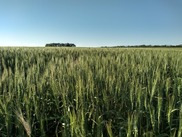
Traffic is picking up at Farm Service Agency (FSA) county offices across the state as folks come in to work with us to complete their 2026 acreage certification. The deadline to sign your FSA 578 for certification of spring crop, perennial forage (pastures) and Conservation Reserve Program (CRP) acres is July 15. As we’ve experienced all kinds of extreme weather, please remember to also report failed or prevented plant acres as part of your certification.
It’s the start of the FSA County Committee election season, with nominations for local county committee representatives being accepted now through Aug. 3. County Committees play an important role in your local agriculture community because they are made up of farmers and ranchers, elected by farmers and ranchers. County Committees provide a local voice on FSA programming and county office operations. Want to learn more? Read the article below and then stop in and visit with your County Executive Director.
With the recent precipitation we’ve been receiving in many parts of the state, it may seem out of place for Nebraska FSA to begin amplifying the availability of drought resources. However, we know many areas, regardless of recent rainfall, remain in the “extreme” to “exceptional” categories on the U.S. Drought Monitor. The impacts don’t go away with an inch or two here and there. If you are a producer of grazing livestock, please note in the article below the availability of FSA programs to address the impacts from drought, and then contact your county office for additional information.
Please take a moment to review the other headlines below for information of relevance to you.
Talk to you in July.
--Hilary
|
There are options for Farm Service Agency loan customers during financial stress. If you are a borrower who is unable to make payments on a loan, contact your local FSA Farm Loan Manager to learn about the options available to you.
Farmers and ranchers also can access assistance through other entities in Nebraska that offer services during financially challenging times. The Rural Response Hotline provides referral and support services for farmers, ranchers and rural residents and their families. The number to call is (800) 464-0258 or visit the website at https://farmhotline.com.
The Nebraska Department of Agriculture manages the Negotiations Program, which offers mediation services for agricultural borrowers, creditors and USDA program participants. Through this program, participants also can access free one-on-one education on agricultural financial and legal matters. For information, call (402) 471-4876 or visit the website at https://negotiations.nebraska.gov/.
The U.S. Department of Agriculture (USDA) Farm Service Agency (FSA) is now accepting nominations for county committee members and encourages all farmers, ranchers, and FSA program participants to take part in the County Committee nomination process. County committee members make important decisions about how Federal farm programs are administered locally. All nomination forms for the 2026 election must be postmarked or received in the local FSA office by Aug. 3, 2026.
Individuals interested in learning about FSA County Committee work, what it takes to be a candidate for election and the requirements to vote, can tune in to a webinar scheduled for Tuesday, July 7, 2026, beginning at 12 p.m. CT. Click here to learn more and register for this free event.
Elections for committee members occur in certain Local Administrative Areas (LAA). LAAs are elective areas for FSA committees in a single county or multi-county jurisdiction. Customers can identify which LAA they or their farming or ranching operation is in by using the tool available at fsa.usda.gov/coc.
Agricultural producers who participate or cooperate in a USDA program and reside in the LAA that is up for election this year, can be nominated for candidacy for the county committee. A cooperating producer is someone who has provided information about their farming or ranching operation to FSA, even if they have not applied or received program benefits.
Read more about FSA county committee elections at this link.
The U.S. Department of Agriculture’s (USDA) Farm Service Agency (FSA) announced eligible landowners have from June 1 until Aug. 31, 2026 to review and consider base acre increases on farms enrolled in the Agriculture Risk Coverage (ARC) and Price Loss Coverage (PLC) programs, as authorized by provisions included in the Working Families Tax Cuts Act, also known as the One Big Beautiful Bill Act.
The Act provides landowners with the opportunity to increase base acres in preparation for enrollment in ARC and PLC beginning with the 2026 and future crop years. Nationwide, up to 30 million new base acres can be added by eligible farms.
ARC and PLC are cornerstone commodity safety net programs that provide financial protection to farmers when market prices or revenues decline. These programs help producers manage risk and maintain the economic viability of their operations amid challenging market and weather conditions.
FSA began notifying eligible landowners, by direct mail, that Base Allocation Summaries outlining potential base acre increases will be available for review beginning June 1, 2026. These Base Allocation Summaries can be accessed online at fsa.usda.gov/arc-plc using a Login.gov account. Landowners who do not currently have a Login.gov account are encouraged to contact their local FSA county office to obtain their Base Allocation Summary beginning June 1, 2026. The Base Allocation Summary should be reviewed and any necessary actions completed by Monday, Aug. 31, 2026.
Read more at this link.
USDA offers disaster assistance and low-interest loan programs to assist you in your recovery efforts during and following drought.
A few key programs that can assist producers include:
-
Livestock Forage Disaster Program (LFP) – provides compensation to eligible livestock producers who suffered grazing losses for covered livestock due to drought on privately owned or cash leased land.
-
Tree Assistance Program (TAP) – provides assistance to eligible orchardists and nursery tree growers for qualifying tree, shrub and vine losses due to natural disasters including excessive wind and qualifying drought.
-
Emergency Assistance for Livestock, Honeybees, and Farm-Raised Fish Program (ELAP) - provides emergency relief for losses due to feed or water shortages, disease, adverse weather, or other conditions, which are not adequately addressed by other disaster programs.
-
Emergency Loan Program – available to producers with agriculture operations located in a county under a primary or contiguous Secretarial Disaster designation. These low interest loans help producers recover from production and physical losses.
-
Emergency Conservation Program (ECP) - provides emergency funding for farmers and ranchers to implement emergency water conservation measures including water systems for livestock and existing irrigation systems for orchards and vineyards.
The Nebraska FSA partnered with the University of Nebraska-Lincoln's Center for Agricultural Profitability (CAP) to present a webinar with additional information on the programs noted above. Click here to visit the CAP webinar website and view the recording.
To establish or retain FSA program eligibility, you must report prevented planting and failed acres (crops and grasses). Prevented planting acreage must be reported on form FSA-576, Notice of Loss, no later than 15 calendar days after the final planting date as established by FSA and Risk Management Agency (RMA).
For more information on these and other programs, contact the County FSA office or visit fsa.usda.gov/disaster.
U.S. Secretary of Agriculture Brooke L. Rollins announced payment rates and the enrollment period for the Assistance for Specialty Crops Farmers (ASCF) program. The U.S. Department of Agriculture (USDA) will issue $1.625 billion in payments to eligible specialty crop producers in response to elevated input costs and market disruptions resulting from foreign competitors engaging in unfair trade practices that impeded specialty crop exports.
Producers who have a Login.gov account could access and submit their pre-filled application starting June 1, 2026. Producers who do not have a Login.gov account or prefer to enroll in person at their local Farm Service Agency (FSA) office could request their prefilled application beginning June 8, 2026. The ASCF enrollment period closes on Aug. 7, 2026.
These payments are authorized under the Commodity Credit Corporation Charter Act and are administered by the Farm Service Agency (FSA). Specialty crop payments are intended to provide financial support to allow producers to pay for production and marketing inputs in the face of significant market disruptions during the 2025 growing season.
Read more on this story, including payment categories and payment rates, at this link.
The U.S. Department of Agriculture’s Farm Service Agency (FSA) is expanding payment limitation and payment eligibility provisions that affect program payments including allowing for the equitable treatment of business entities. Additionally, producers will benefit from an increased payment limitation for certain programs, and a broader definition of farming income that will result in more exceptions to income limitations.
These changes were outlined in the Working Families Tax Cuts Act which provides a large investment in American agriculture by improving eligibility provisions, the farm safety net, disaster assistance, and price support programs. USDA previously announced that this fall, producers will benefit from increased reference prices for major commodities. This announcement gives producers more flexibility in structuring their operations and provides a stronger safety net.
Starting with the 2026 crop year, for payment eligibility purposes, FSA will treat applicable limited liability companies (LLCs) and S-Corporations (S-Corps), and other similar entities, as “pass through entities.” Each member of the qualified pass-through entity who meets actively engaged in farming criteria will help qualify the entity for expanded payments.
Previously, farm operations that were structured as an LLC or an S-Corp were limited to a single payment limitation, which varies by program. Now, partnerships, S-Corps, qualifying LLCs, and joint ventures or general partnerships will be treated the same.
Read more on this story at this link.
Farm loan borrowers who have pledged real estate as security for their Farm Service Agency (FSA) direct or guaranteed loans are responsible for maintaining loan collateral. Borrowers must obtain prior consent or approval from FSA or the guaranteed lender for any transaction that affects real estate security. These transactions include, but are not limited to:
- Leases of any kind
- Easements of any kind
- Subordinations
- Partial releases
- Sales
Failure to meet or follow the requirements in the loan agreement, promissory note, and other security instruments could lead to nonmonetary default which could jeopardize your current and future loans.
It is critical that borrowers keep an open line of communication with their FSA loan staff or guaranteed lender when it comes to changes in their operation. For more information on borrower responsibilities, read Your FSA Farm Loan Compass.
The U.S. Department of Agriculture’s Natural Resources Conservation Service (NRCS) in Nebraska is extending the deadline to offer critical assistance to Nebraska farmers, ranchers, and forest landowners affected by recent wildfires. This sign‑up for the Environmental Quality Incentives Program (EQIP) will remain open and applications are being accepted from producers impacted across the state until July 31, 2026.
Nebraska NRCS is actively providing both technical and financial assistance to help landowners recover from wildfire damage and restore the health and productivity of their working lands. NRCS understands the value and the need to extend this emergency EQIP opportunity, eligible producers may receive support for a variety of conservation practices, including:
- Repairing or replacing damaged livestock grazing system infrastructure,
- Restoring and or replacing valuable forage resources essential for livestock needs.
Producers affected by the wildfires need to contact their local USDA Service Center as soon as possible to complete an application and early start waiver if necessary. NRCS staff are available to assess damage, develop conservation plans, and help determine which practices best support recovery efforts.
For more information about EQIP or to locate your nearest USDA Service Center, select this active link Nebraska NRCS EQIP.
|
July 3, 2026 – USDA Service Centers closed for federal holiday
July 15, 2026 – FSA deadline to report all spring-seeded crops, perennial forage and Conservation Reserve Program (CRP) acres
July 15, 2026 – End of primary nesting season for CRP program purposes
July 31, 2026 – NRCS deadline for EQIP applications for wildfire assistance
Aug. 3, 2026 – FSA deadline for producers to file nomination form for FSA County Committee candidacy
Aug. 7, 2026 – FSA deadline for applications for the Assistance for Specialty Crop Farmers program
Aug. 12, 2026 – FSA deadline for applications to the Supplemental Disaster Relief Program, Stages 1 and 2
Aug. 25, 2026 – FSA deadline for applications for the Emergency Conservation Program (ECP) in several wildfire-impacted counties
Aug. 31, 2026 – FSA deadline for landowners to review their base acre update allocation summary
***Please note any above NAP calendar reference may not be inclusive for all NAP-covered crops; NAP participants should contact their County FSA Office to confirm important program deadlines.
OPERATING/OWNERSHIP
Farm Operating: 5%
Farm Ownership: 5.875%
Farm Ownership - Joint Financing: 3.875%
Farm Ownership - Down Payment: 1.875%
Emergency - Actual Loss: 3.75%
FARM STORAGE FACILITY LOAN
3-year term: 4%
5-year term: 4.125%
7-year term: 4.250%
10-year term: 4.375%
12-year term: 4.625%
MARKETING ASSISTANCE
Commodity Loan: 4.75%
Top of page
Nebraska FSA and NRCS State Office
|
Farm Service Agency
1121 Lincoln Mall Suite 330
Lincoln, NE 68508
Phone: (402) 437-5581
Fax: (844) 930-0237
|
Natural Resources
Conservation Service
1121 Lincoln Mall Suite 360
Lincoln, NE 68508
Phone: (402) 437-5300
|
|
|
Hilary Maricle, FSA
State Executive Director
hilary.maricle@usda.gov
FSA State Office
Tim Divis, Deputy SED
Cathy Anderson, Product. & Compliance
Pat Lechner, Price Support & Conserv.
Mark Wilke, Farm Loans
Nick Elting, Administrative Officer
|
Robert Lawson, NRCS
State Conservationist
robert.lawson@usda.gov
FSA State Committee
Scott Spilker, Chair, Beatrice
Crystal Klug, Member, Columbus
Brent Robertson, Member, Elsie
Rylee Wagner, Member, Winnetoon
John Walvoord, Member, Waterloo
|
|
Find your local USDA Service Center at farmers.gov.
Visit the Nebraska FSA website at www.fsa.usda.gov/ne.
Visit the Nebraska NRCS website at www.nrcs.usda.gov/ne.
|
|






