
Louisiana USDA-FSA Updates - June 2026
Table of Contents:
Greetings from the Farm Service Agency,
I recently attended church and while making the announcements to the congregation, a gentleman made a remark regarding prayer for few days of dry weather! I couldn’t help but think he must be a farmer (which he was) because just a couple weeks prior he had spoken about the need to pray for rain! It is good that we do not control the weather because like the thermostat in most homes, it would be a roller coaster ride!
Certainly, much of our state has in recent months suffered with severe, and in some locations, exceptional drought. While El Nino seems to have brought a change to the weather pattern in some locations, recent rainfall totals may have exceeded our hopes or immediate needs. In general, the rainfall has been very beneficial, but not uniform. We can only hope and pray for beneficial weather patterns in the coming weeks and months, as we know that summer is an important time in the production of our crops.
While we have all been focused on the drought and more recently the rainfall, FSA is and has been hard at work providing support to many areas of the farming community. Currently 50 parishes have qualified for the Livestock Forage Disaster Program, and we are taking applications from interested livestock producers. For more information on drought assistance, check out the recent drought assistance blog from USDA Under Secretary Richard Fordyce.
Recently FSA rolled out a major provision of the Working Families Tax Cuts Act, also known as the One Big Beautiful Bill Act, and notified eligible landowners of the first opportunity since 2002 to add additional crop acreage bases for covered commodities. Landowners can access the base allocation summary report from their home or office with a Login.gov account, or by visiting your local county office. Visit fsa.usda.gov/arc-plc for more information.
Signup for the Assistance for Specialty Crop Farmers or as we refer to it, ASCF, started on June 1 and will continue through August 7, and the opportunity to enroll in SDRP 1 and 2 for 2023 and/or 2024 crop losses is also available through Aug. 12.
Lastly, FSA is working with producers to complete crop acreage reports which as you know creates a significant amount of traffic in the county office. Please contact your local county office and make an appointment to report your crop acreage before the July 15 deadline. Don’t forget about FSA’s Direct and Guaranteed Loan programs and the opportunities they offer to secure working capital for eligible borrowers. In closing, as always thank you for what you do each day to feed and clothe this nation. Remember that everyone can’t come into FSA on the last day, so please help us help you by making your appointments early!
Craig A. McCain
FSA State Executive Director Louisiana
The U.S. Department of Agriculture’s (USDA) Farm Service Agency (FSA) announced eligible landowners have from June 1 until Aug. 31, 2026 to review and consider base acre increases on farms enrolled in the Agriculture Risk Coverage (ARC) and Price Loss Coverage (PLC) programs, as authorized by provisions included in the Working Families Tax Cuts Act, also known as the One Big Beautiful Bill Act.
Signed into law by President Donald J. Trump on July 4, 2025, the Act provides landowners with the opportunity to increase base acres in preparation for enrollment in ARC and PLC beginning with the 2026 and future crop years. Nationwide, up to 30 million new base acres can be added by eligible farms.
ARC and PLC are cornerstone commodity safety net programs that provide financial protection to farmers when market prices or revenues decline. These programs help producers manage risk and maintain the economic viability of their operations amid challenging market and weather conditions.
FSA began notifying eligible landowners, by direct mail, that Base Allocation Summaries outlining potential base acre increases will be available for review beginning June 1, 2026. These Base Allocation Summaries can be accessed online at fsa.usda.gov/arc-plc using a Login.gov account. Landowners who do not currently have a Login.gov account are encouraged to contact their local FSA county office to obtain their Base Allocation Summary beginning June 1, 2026. The Base Allocation Summary should be reviewed and any necessary actions completed by Monday, Aug. 31, 2026.
Farm operators often maintain detailed historical planting records. Early communication between landowners and farm operators will ensure the Base Allocation Summary is accurate and all necessary actions are completed by the deadline.
To be eligible for new base acres, a current covered commodity must have been planted or prevented from being planted on the farm during the 2019 through 2023 crop years. The farm’s average planted and prevented planted acres during that period must exceed the total existing base acres for all covered commodities in effect on Sept. 30, 2024, excluding unassigned base acres. FSA farm total base acres cannot exceed the farm’s total cropland acres. If eligible requests exceed the nationwide cap of 30 million acres, USDA will apply an across-the-board, prorated reduction to all approved new base acres.
For additional information, producers should contact their local FSA county office or visit U.S. Department of Agriculture online at fsa.usda.gov/state-offices.
In this Ask the Expert, Jack Carlile, Farm Loan Manager for the USDA Farm Service Agency (FSA), answers questions about farm operating loans and when producers should apply in order to secure funds for the current crop year.
As the Farm Loan Manager for the Cherokee County Service Center, Jack is responsible for managing the loan making and loan servicing activities for five counties in northeast Oklahoma. His office provides services for over 650 farm loan customers. Jack was raised on a cross bred cow/calf operation that his grandparents started. Over the years, each generation has added to the operation by purchasing additional pasture. The operation also grows and bales their own hay. Jack’s agriculture background and degree in agriculture economics from Oklahoma State University help him better understand the financing needs of his producers.
Who can apply for FSA Farm Loans?
Anyone can apply for FSA’s loan programs. Applications will be considered on basic eligibility requirements. To apply for a loan, you must meet the following general eligibility requirements including:
- Be a U.S. citizen or qualified alien.
- Operator of a family farm or ranch.
- Have a satisfactory credit history.
- Unable to obtain credit elsewhere at reasonable rates and terms to meet actual needs.
- Not be delinquent on any federal debts.
To read the full blog visit farmers.gov/blog/ask-the-expert-farm-operating-loan-qa-with-jack-carlile.

USDA is here to help you prepare for and recover from hurricanes and related tropical weather activity. The 2026 hurricane season begins on June 1, and USDA is asking producers to prepare their operations for potential impacts explore recovery resources.
USDA’s Farm Service Agency, Natural Resources Conservation Service, and Risk Management Agency offer a suite of disaster assistance programs to help you recover from the impacts of natural disasters.
Get Prepared
|
USDA’s Farm Service Agency (FSA) offers disaster assistance and low-interest loan programs to assist you in your recovery efforts following drought. Available programs and loans include:
-
Non-Insured Crop Disaster Assistance Program (NAP) - provides financial assistance to producers of non-insurable crops when low yields, loss of inventory, or prevented planting occur due to natural disasters including qualifying drought (includes native grass for grazing).
-
Livestock Forage Disaster Program (LFP) – provides compensation to eligible livestock producers who suffered grazing losses for covered livestock due to drought on privately owned or cash leased land.
-
Livestock Indemnity Program (LIP) - offers payments to eligible producers for livestock death losses in excess of normal mortality due to adverse weather. Drought is not an eligible adverse weather event, except when associated with anthrax, a condition that occurs because of drought and directly results in the death of eligible livestock.
-
Tree Assistance Program (TAP) – provides assistance to eligible orchardists and nursery tree growers for qualifying tree, shrub and vine losses due to natural disasters including excessive wind and qualifying drought.
-
Emergency Assistance for Livestock, Honeybees, and Farm-Raised Fish Program (ELAP) - provides emergency relief for losses due to feed or water shortages, disease, adverse weather, or other conditions, which are not adequately addressed by other disaster programs.
-
Emergency Loan Program – available to producers with agriculture operations located in a county under a primary or contiguous Secretarial Disaster designation. These low interest loans help producers recover from production and physical losses.
-
Emergency Conservation Program (ECP) - provides emergency funding for farmers and ranchers to implement emergency water conservation measures including water systems for livestock and existing irrigation systems for orchards and vineyards.
-
Emergency Forest Restoration Program (EFRP) - provides landowners and nonindustrial private forest (NIPF) stewards with financial assistance to restore damaged NIPF acres.
To establish or retain FSA program eligibility, you must report prevented planting and failed acres (crops and grasses). Prevented planting acreage must be reported on form FSA-576, Notice of Loss, no later than 15 calendar days after the final planting date as established by FSA and Risk Management Agency (RMA).
For more information on these programs, contact your local Parish USDA Service Center or visit fsa.usda.gov/disaster.

Are you interested in working with USDA to start or grow your farm, ranch, or private forest operation, but don’t know where to start?
Whether you’re looking to access capital or disaster assistance through USDA’s Farm Service Agency (FSA) or address natural resource concerns on your land with assistance from USDA’s Natural Resources Conservation Service (NRCS), a great place to start is farmers.gov.
Farmers.gov is a one-stop shop for information about the assistance available from FSA and NRCS. The site also offers many easy-to-use tools for farmers, ranchers, and private forestland owners, whether you are reaching out for the first time or are a long-term customer with a years-long relationship with USDA.
With a farmers.gov account you can:
- Complete an AD-2047, Customer Data Worksheet, prior to your first meeting with FSA and NRCS.
- View farm loan payments history from FSA.
- View cost share assistance received and anticipated from NRCS conservation programs.
- Request conservation assistance from NRCS as well as view and track your conservation plans, practices, and contracts.
- View, print, and export detailed farm records and farm/tract maps for the current year, which are particularly useful when fulfilling acreage reporting requirements.
- Print FSA-156 EZ, Abbreviated Farm Record and your Producer Farm Data Report for the current year.
- Pay FSA debt using the “Make an FSA Payment” feature
- Apply for a farm loan online, view information on your existing loans, and make USDA direct farm loan payments using the Pay My Loan feature.
Learn how to create a farmers.gov account today!
|
The U.S. Department of Agriculture (USDA)is maximizing disaster assistance support for producers by issuing a second Supplemental Disaster Relief Program (SDRP) payment to eligible producers who have approved program applications for losses due to natural disasters in calendar years 2023 and 2024.
USDA’s Farm Service Agency (FSA) has already provided $6.7 billion in SDRP payments to eligible producers. Additionally, USDA is extending the program deadline to give producers and FSA more time to address any program application changes that could impact payments. The original April 30 deadline has been extended to Aug. 12, 2026, for SDRP Stage 1 and Stage 2.
Initial SDRP payments were factored at 35%, but after further analysis, USDA is increasing the payment factor to 70%, meaning producers with approved applications will receive an additional 35% of their calculated SDRP payment. Future SDRP payments will also be made using a 70% payment factor.
SDRP Stage 1
The first stage, announced in July 2025, remains available to producers who received an indemnity under crop insurance or the Noninsured Crop Disaster Assistance Program (NAP) for eligible crop losses due to qualifying 2023 and 2024 natural disaster events.
SDRP Stage 2
Stage 2 of SDRP covers eligible crop, tree, bush and vine losses that were not covered under Stage One program provisions, including non-indemnified (shallow loss), uncovered and quality losses.
Eligibility
Eligible losses must be the result of natural disasters occurring in calendar years 2023 and/or 2024. These disasters include wildfires, hurricanes, floods, derechos, excessive heat, tornadoes, winter storms, freeze (including a polar vortex), smoke exposure, excessive moisture, qualifying drought, and related conditions.
To qualify for drought related losses, the loss must have occurred in a county rated by the U.S. Drought Monitor as having a D2 (severe drought) for eight consecutive weeks, D3 (extreme drought), or greater intensity level during the applicable calendar year.
FSA is establishing block grants with Connecticut, Hawaii, Maine, and Massachusetts that cover crop losses; therefore, producers with losses on land physically located in these states are not eligible for SDRP program payments.
For more information on SDRP, please visit fsa.usda.gov/sdrp.
FSA Direct Farm Loan Program borrowers whose loans were closed before Sept. 25, 2024, may be eligible for assistance under the Distressed Borrower Set-Aside Program (DBSA). Similar to DSA, DBSA also provides short-term financial relief by allowing eligible borrowers to delay FSA direct loan payments that are due this year or next year (but not both). You may delay up to one full annual payment per loan and the delayed payment will be moved to the end of the loan term. You will not be required to pay this set-aside installment until the loan’s final due date.
An increased benefit with DBSA is that the principal portion of the set-aside will accrue interest at a reduced rate of 0.125% rather than your loan’s existing interest rate.
To be eligible for DBSA, the borrower must demonstrate financial distress, but their inability to make the upcoming payment does not need to be due to a disaster.
The DBSA application process is similar to DSA as borrowers must provide their local USDA Service Center with a letter requesting DBSA, which must be signed by all parties liable for the debt. The application process also includes providing your actual production, income, and expense records for the last three years. FSA may also request additional information as needed to make an eligibility decision.
FSA Direct Farm Loan Program borrowers whose loans were closed before Sept. 25, 2024, may be eligible for assistance under the Distressed Borrower Set-Aside Program (DBSA). Similar to DSA, DBSA also provides short-term financial relief by allowing eligible borrowers to delay FSA direct loan payments that are due this year or next year (but not both). You may delay up to one full annual payment per loan and the delayed payment will be moved to the end of the loan term. You will not be required to pay this set-aside installment until the loan’s final due date.
An increased benefit with DBSA is that the principal portion of the set-aside will accrue interest at a reduced rate of 0.125% rather than your loan’s existing interest rate.
To be eligible for DBSA, the borrower must demonstrate financial distress, but their inability to make the upcoming payment does not need to be due to a disaster.
The DBSA application process is similar to DSA as borrowers must provide their local USDA Service Center with a letter requesting DBSA, which must be signed by all parties liable for the debt. The application process also includes providing your actual production, income, and expense records for the last three years. FSA may also request additional information as needed to make an eligibility decision.
Operating, Ownership and Emergency Loans
FSA offers farm operating, ownership and emergency loans with favorable interest rates and terms to help eligible agricultural producers obtain financing needed to start, expand or maintain a family agricultural operation.
Interest rates for Operating and Ownership loans for June 2026 are as follows:
FSA also offers guaranteed loans through commercial lenders at rates set by those lenders. To access an interactive online, step-by-step guide through the farm loan process, visit the Loan Assistance Tool on farmers.gov.
Commodity and Storage Facility Loans Additionally, FSA provides low-interest financing to producers to build or upgrade on-farm storage facilities and purchase handling equipment and loans that provide interim financing to help producers meet cash flow needs without having to sell their commodities when market prices are low. Funds for these loans are provided through the Commodity Credit Corporation (CCC) and are administered by FSA.
More Information To learn more about FSA programs, producers can contact their local USDA Service Center. Additionally, producers can use online tools, such as the Loan Assistance Tool and Debt Consolidation Tool to explore loan options.
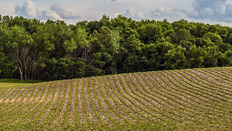
You have a lot at stake in making sure your crop insurance acreage reporting is accurate and on time. If you fail to report on time, you may not be protected. If you report too much acreage, you may pay too much premium. If you report too little acreage, you may recover less when you file a claim.
Crop insurance agents often say that mistakes in acreage reporting are the easiest way for producers to have an unsatisfactory experience with crop insurance. Don’t depend on your agent to do this important job for you. Your signature on the bottom of the acreage reporting form makes it, legally, your responsibility. Double-check it for yourself.
Remember - acreage reporting is your responsibility. Doing it right will save you money. Always get a copy of your report immediately after signing and filing it with your agent and keep it with your records. Remember, it is your responsibility to report crop damage to your agent within 72 hours of discovery. Never put damaged acreage to another use without prior written consent of the insurance adjuster. You don’t want to destroy any evidence of a possible claim. Learn more by visiting RMA’s website.
|
The U.S. Department of Agriculture’s Farm Service Agency (FSA) is expanding payment limitation and payment eligibility provisions that affect program payments including allowing for the equitable treatment of business entities. Additionally, producers will benefit from an increased payment limitation for certain programs, and a broader definition of farming income that will result in more exceptions to income limitations.
These changes were outlined in the Working Families Tax Cuts Act which provides a large investment in American agriculture by improving eligibility provisions, the farm safety net, disaster assistance, and price support programs. USDA previously announced that this fall, producers will benefit from increased reference prices for major commodities. This announcement gives producers more flexibility in structuring their operations and provides a stronger safety net.
Payment Eligibility
Starting with the 2026 crop year, for payment eligibility purposes, FSA will treat applicable limited liability companies (LLCs) and S-Corporations (S-Corps), and other similar entities, as “pass through entities.” Each member of the qualified pass-through entity who meets actively engaged in farming criteria will help qualify the entity for expanded payments.
Previously, farm operations that were structured as an LLC or an S-Corp were limited to a single payment limitation, which varies by program. Now, partnerships, S-Corps, qualifying LLCs, and joint ventures or general partnerships will be treated the same.
For program year 2026 only, farm operations that are structured as LLCs or S-Corps or one of the new qualified pass-through entities must file updated farm operating plans with FSA for program year 2026 by Sept. 15, 2026. After program year 2026, FSA will continue to use June 1 as the date for determining ownership interest in an entity. Producers who have crop insurance or Noninsured Crop Disaster Assistance Program coverage should contact their crop insurance agent or local FSA office before restructuring their farm operation to ensure appropriate timing for restructuring without impacting current insurance coverage.
Members of qualified pass-through entities must provide contributions and be engaged in farming for the entity to be considered actively engaged in farming.
An additional change allows members of all entity types to receive compensation for labor and management contributions and use the same contribution to qualify as “actively engaged in farming.” This update provides consistent treatment of member contributions across all entity types.
Payment Limitation and Attribution
Payment limitation changes include an increased payment limit for the Agriculture Risk Coverage (ARC) and Price Loss Coverage (PLC) program. Starting with crop year 2025, the ARC and PLC payment limit will increase from $125,000 to $155,000. This payment limit will be adjusted going forward annually based on inflation.
Payment limitations are the maximum amount that a person or legal entity can receive for any crop year, directly or indirectly, through certain USDA programs. The same maximum payment limitation that applied to joint ventures and general partnerships will apply to qualified pass-through entities.
The policy change to payment limitation calculations takes effect beginning with program year 2026 for all qualified pass-through entities.
Average Adjusted Gross Income
The Working Families Tax Cuts Act broadened the definition of farming income to be more reflective of modern agricultural business practices. As a result, diversified producers will not be penalized under USDA’s requirements for average adjusted gross income (AGI).
Producers are exempt from the $900,000 AGI cap for conservation and disaster programs if at least 75% of their average gross income is from farming, ranching, or silviculture, which now includes agri-tourism, direct-to-consumer sales, and certain equipment sales.
Additionally, qualified pass-through entities are not required to certify compliance with the average AGI limitation at the entity level. However, members individually must meet average AGI requirements, which is the same requirement for joint operations.
More Information
Producers should contact their local FSA county office for more information or to update their farm operating plan by the Sept. 15, 2026, deadline for the 2026 program year.
The U.S. Department of Agriculture announced the appointment of Colton L. Buckley as Chief of the Natural Resources Conservation Service (NRCS), the nation’s primary private lands conservation agency. Buckley, who currently serves as Associate Chief of NRCS, brings extensive leadership experience in conservation and agriculture policy to the role.
As Associate Chief, he has overseen the agency’s financial and technical assistance programs, management and strategy, science and technology, soil science and resource assessment deputy areas, and partnerships division. Previously, he served as Chief of Staff for NRCS and as Chief Executive Officer of the National Association of Resource Conservation and Development Councils.
Raised on his grandparents’ cattle ranch outside Gatesville, Texas, Buckley has deep roots in production agriculture, and advocacy for practical, producer-led conservation solutions. He holds a Bachelor of Science in Agricultural Services and Development from Tarleton State University and a Master of Arts in Communication from Liberty University. His career includes roles at national and local conservation organizations, rural economic development entities, and service on multiple advisory boards—including the Texas A&M University System Board of Regents, to which he was appointed by Governor Rick Perry.
Jun 19: Office closed for the holidays
Jul 3: Office closed for the holidays
July 15: Crop Acreage Reporting deadline for most other crops.
Aug 7: Application deadline for the ASCF program.
Aug 12: Deadline to apply for the Supplemental Disaster Relief Program (SDRP) Stage 1 and Stage 2.
Aug 31: Landowner deadline to review and consider base acre allocations on farms enrolled in ARC (Agriculture Risk Coverage) and PLC (Price Loss Coverage) programs.
FSA now offers SMS texting; receive text message alerts on your cell phone regarding important deadlines, reporting requirements and updates. Call your local Service Center to schedule an appointment. You can find contact information at farmers.gov/service-locator.
Louisiana FSA State Office
3737 Government Street
Alexandria, LA 71302
Phone: 318-473-7721
Fax: 1-844-325-6942
|
|
Craig McCain
State Executive Director
Farm Service Agency
craig.mccain@usda.gov
Sarah Trichel
State Conservationist
Natural Resource Conservation Service
sarah.trichel@usda.gov
FSA-State Committee:
Julie Baker Richard, Chair
Dale Cambre, Member
Charles Vincent Cannatella, Member
Kristy Jones, Member
Donna Winters, Member
|
Dewanna Pitman
Deputy State Executive Director
Farm Service Agency
dewanna.pitman@usda.gov
Roddric Bell
Regional Director
Risk Management Agency/ Insurance Services
roddric.bell@usda.gov
|
|








