FSA NEWSLETTER -- MAY 2026
 In This Issue:
May is National Beef month in celebration of the importance of the beef industry while honoring farmers and ranchers who raise cattle. Oklahoma ranks second in the nation for beef cattle production with nearly 2.2 million head of cattle, contributing $2.7 billion to the state’s annual economy.
The Oklahoma Department of Agriculture, Food and Forestry launched the 2026 Oklahoma Onion Burger Trail in celebration of the dedicated cattle producers. One of my favorite meals growing up was an authentic onion burger. The Oklahoma Onion Burger Trail highlights Oklahoma’s beef industry with a collection of participating restaurants. I encourage you to travel down Route 66 this summer, while celebrating the Oklahoma beef industry!
As a cattleman, I understand the commitment it takes from all livestock producers to continue growing their operations. In addition to the drought assistance and disaster recovery programs, FSA offers a multitude of farm loan programs to help producers get the financing they need to start, expand, or maintain their family farm. From youth loans, to microloans, and direct loans to emergency loans, FSA can provide financial assistance to a plethora of agriculture producers. In addition to FSA direct loans, the FSA offers guaranteed loans that are made and serviced by commercial lenders such as banks, Farm Credit System institutions, or credit unions. Farm storage facility loans provide low-interest financing for producers to store, handle, and/or transport eligible commodities. The FSFL program can benefit cattle producer through assistance for financing hay and feed storage. I encourage producers to look at the USDA Loan Assistance Tool to see what loan is best for their operation.
With summer approaching, I encourage producers to check in with their county offices regularly to ensure records and leases are accurate in the event additional counties trigger for drought assistance programs.
Kind regards,
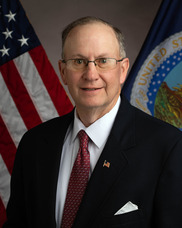
Eddie Fields
|
Are you interested in working with USDA to start or grow your farm, ranch, or private forest operation, but don’t know where to start?
Whether you’re looking to access capital or disaster assistance through USDA’s Farm Service Agency (FSA) or address natural resource concerns on your land with assistance from USDA’s Natural Resources Conservation Service (NRCS), a great place to start is farmers.gov.
Farmers.gov is a one-stop shop for information about the assistance available from FSA and NRCS. The site also offers many easy-to-use tools for farmers, ranchers, and private forestland owners, whether you are reaching out for the first time or are a long-term customer with a years-long relationship with USDA.
With a farmers.gov account you can:
- Complete an AD-2047, Customer Data Worksheet, prior to your first meeting with FSA and NRCS.
- View farm loan payments history from FSA.
- View cost share assistance received and anticipated from NRCS conservation programs.
- Request conservation assistance from NRCS as well as view and track your conservation plans, practices, and contracts.
- View, print, and export detailed farm records and farm/tract maps for the current year, which are particularly useful when fulfilling acreage reporting requirements.
- Print FSA-156 EZ, Abbreviated Farm Record and your Producer Farm Data Report for the current year.
- Pay FSA debt using the “Make an FSA Payment” feature
- Apply for a farm loan online, view information on your existing loans, and make USDA direct farm loan payments using the Pay My Loan feature.
Learn how to create a farmers.gov account today!
FSA offers direct farm ownership and direct farm operating loans to producers who want to establish, maintain, or strengthen their farm or ranch. Direct loans are processed, approved and serviced by FSA loan officers.
Direct farm operating loans can be used to purchase livestock and feed, farm equipment, fuel, farm chemicals, insurance, and other costs including family living expenses. Operating loans can also be used to finance minor improvements or repairs to buildings and to refinance some farm-related debts, excluding real estate.
Direct farm ownership loans can be used to purchase farmland, enlarge an existing farm, construct and repair buildings, and to make farm improvements.
The maximum loan amount for direct farm ownership loans is $600,000 and the maximum loan amount for direct operating loans is $400,000 and a down payment is not required. Repayment terms vary depending on the type of loan, collateral and the producer's ability to repay the loan. Operating loans are normally repaid within seven years and farm ownership loans are not to exceed 40 years.
Please contact your local FSA office for more information or to apply for a direct farm ownership or operating loan.
To increase access to forage for wildfire-impacted producers, FSA recently authorized emergency use of Conservation Reserve Program (CRP) acres authorizing all counties in Arizona, Arkansas, Colorado, Iowa, Kansas, Louisiana, Minnesota, Missouri, Nebraska, New Mexico, Oklahoma, South Dakota, Texas, and Wyoming to donate grazing rights or haying authority to livestock producers affected by the wildfires.
Emergency haying and grazing is available until the beginning of the 2027 primary nesting season (PNS). There are restrictions on activity during the season. The PNS date varies by state and is listed below.
- Arizona: April 1 through July 1
- Arkansas: April 1 through July 15
- Colorado: March 15 through July 15
- Iowa: May 15 through Aug. 1
- Kansas: April 15 through July 15
- Louisiana: April 15 through July 15
- Minnesota:
- North half: June 1 through Aug. 1
- South half: May 15 through Aug. 1
- Missouri: May 1 through July 15
- Nebraska: May 1 through July 15
- New Mexico: March 1 through July 1
- Oklahoma: May 1 through July 1
- South Dakota: May 1 through Aug. 1
- Texas:
- Grazing: March 1 through June 1
- Haying: March 1 through July 1
- Wyoming: May 15 through July 15
If the primary nesting season has already started in your state, CRP participants can continue to donate emergency grazing authority to livestock producers in need during this period in counties eligible for the Livestock Forage Program (LFP) due to drought.
Outside of the primary nesting season, emergency and non-emergency haying and grazing of CRP acres may be authorized to provide relief to livestock producers in areas affected by natural disasters.
FSA also offers non-emergency use provisions for CRP acres as an option during the primary nesting season in Oklahoma.
Producers should contact their local FSA office to determine eligibility, availability and stocking rates or to donate emergency haying and grazing rights to producers in need of forage access.
Major weather events leave damage and destruction in their wake, and often financial and tax records are lost. In the second part of an Ask the Expert series on taxes and dealing with disasters, Dr. Tamara Cushing provides tips for reconstructing records after a disaster. Dr. Cushing is an Extension Forest Business Specialist from the University of Florida, working in the area of taxation.
Learn more about record keeping after disasters.
The U.S. Department of Agriculture (USDA)is maximizing disaster assistance support for producers by issuing a second Supplemental Disaster Relief Program (SDRP) payment to eligible producers who have approved program applications for losses due to natural disasters in calendar years 2023 and 2024.
USDA’s Farm Service Agency (FSA) has already provided $6.7 billion in SDRP payments to eligible producers. Additionally, USDA is extending the program deadline to give producers and FSA more time to address any program application changes that could impact payments. The original April 30 deadline has been extended to Aug. 12, 2026, for SDRP Stage 1 and Stage 2.
Initial SDRP payments were factored at 35%, but after further analysis, USDA is increasing the payment factor to 70%, meaning producers with approved applications will receive an additional 35% of their calculated SDRP payment. Future SDRP payments will also be made using a 70% payment factor.
SDRP Stage 1
The first stage, announced in July 2025, remains available to producers who received an indemnity under crop insurance or the Noninsured Crop Disaster Assistance Program (NAP) for eligible crop losses due to qualifying 2023 and 2024 natural disaster events.
SDRP Stage 2
Stage 2 of SDRP covers eligible crop, tree, bush and vine losses that were not covered under Stage One program provisions, including non-indemnified (shallow loss), uncovered and quality losses.
Eligibility
Eligible losses must be the result of natural disasters occurring in calendar years 2023 and/or 2024. These disasters include wildfires, hurricanes, floods, derechos, excessive heat, tornadoes, winter storms, freeze (including a polar vortex), smoke exposure, excessive moisture, qualifying drought, and related conditions.
To qualify for drought related losses, the loss must have occurred in a county rated by the U.S. Drought Monitor as having a D2 (severe drought) for eight consecutive weeks, D3 (extreme drought), or greater intensity level during the applicable calendar year.
FSA is establishing block grants with Connecticut, Hawaii, Maine, and Massachusetts that cover crop losses; therefore, producers with losses on land physically located in these states are not eligible for SDRP program payments.
For more information on SDRP, please visit fsa.usda.gov/sdrp.
Top of page
USDA Oklahoma State Office
100 USDA
Stillwater, Oklahoma 74074
Farm Service Agency State Office: 405-742-1130
|
| |
|
State Executive Director
Eddie Fields
Eddie.Fields@usda.gov
Deputy State Executive Director
Jaramie Karcher
Jaramie.Karcher@usda.gov
FSA Executive Officer
Janlyn Elwood
Janlyn.Elwood@usda.gov
State Committee Members:
Gaye Pfeiffer, Chair
Ian Chapman
Terry Jurgensmeyer
Ronald Justice
Matt Muller
|
State Conservationist
Jeanne Jasper
FSA Farm Loan Chief
Larry Daniel
Larry.Daniel@usda.gov
State Office Program Chiefs:
J.D Elwood, Production and Payment Eligibility
Sara Grider, Compliance
Kim Haines, Conservation
Madeline Alewine, Public Relations and Outreach
|
| |
|