
Nebraska FSA and NRCS State Office
Electronic Newsletter - May 26, 2026
In This Issue:
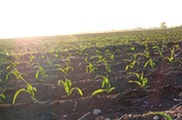
Like many of you, our family has spent the past month and a half working our way through 2026 spring planting. I am excited that we’ve just finished up. I continually keep my fingers crossed this time of year for good weather with limited to no equipment breakdowns, but we all know such complete good fortune is a rarity. I hope you also are nearing the planting finish line and haven’t had to endure too many bumps along the way.
Please keep in mind that as soon as you are done planting, we need to see you in your county office to complete your spring acreage certification. We have thousands of producers to get through this process, so the sooner you report your acres the better. The deadline for spring acreage certification is July 15. This July 15 deadline also includes reporting of your Conservation Reserve Program (CRP) acres and perennial forage (pasture). If they haven’t already reached out to you, call your office to schedule an appointment to complete this annual process.
We had the good fortune of needing to pause planting for a bit during the past weeks as we’ve received some welcome precipitation. It’s dry in our area, as I know it is for many of you. Weather recently has been a mixed bag across the state, with all kinds of “extreme,” from drought, to flooding, to tornadoes, to hail the size of baseballs. If you have suffered damage or loss from recent extreme weather to any part of your agricultural operation, please make sure you are communicating with your FSA county office about those impacts. We aggregate damage and loss reports and may use the information to submit a request for a county-level Secretarial disaster designation, which triggers the FSA Emergency Loan program. You can find already-issued disaster designations at this link.
In closing, I want to reiterate a couple of upcoming, critical deadlines for your awareness:
-
Grassland Conservation Reserve Program (Grassland CRP) - The deadline to submit an enrollment offer into this workings lands conservation program for 2026 is Friday, May 29. See article below.
-
Emergency Conservation Program (ECP) in several wildfire-impacted counties – The deadline to submit an application for ECP assistance in response to the Morrill, Cottonwood, Road 203, Anderson Bridge, Ashby and Minor wildfires is Friday, June 26. See ECP article below.
Good luck with the rest of your planting. Talk to you in June.
|
Producers in many Nebraska counties are eligible to apply for 2026 Livestock Forage Disaster Program (LFP) benefits. LFP provides compensation if you suffer grazing losses for covered livestock due to drought on privately owned or cash leased land or fire on federally managed land.
County committees can only accept LFP applications after notification is received by the National Office of qualifying drought or if a federal agency prohibits producers from grazing normal permitted livestock on federally managed lands due to qualifying fire. To view counties that have triggered for LFP, visit this link.
You must complete a CCC-853 and the required supporting documentation no later than March 1, 2027, for 2026 losses.
For additional information about LFP, including eligible livestock and other criteria, visit fsa.usda.gov or contact your County FSA office.
Deadline to Apply Is Friday, June 26
Farm Service Agency (FSA) currently is accepting applications for the Emergency Conservation Program (ECP) in several Nebraska counties impacted by March wildfires.
ECP has been authorized for implementation in these counties to address damages from these wildfires:
Morrill Fire: Arthur, Garden, Grant, Keith and Morrill
Cottonwood Fire: Dawson and Lincoln
Road 203 Fire: Blaine, Thomas
Anderson Bridge Fire: Cherry
Ashby and Minor Fires: Grant, Garden
(Please note: County FSA offices may be implementing ECP for other wildfires or disasters, outside of those listed above, based on local conditions. Producers should contact their county FSA office for more information on ECP in their area.)
ECP provides cost-share and technical assistance to producers to restore farm and ranch land to pre-disaster conditions following a qualifying natural disaster. ECP signup in the above-listed counties continues through Friday, June 26, 2026.
Approved ECP applicants can receive up to 75% of the allowable cost of the approved restoration activity, with a maximum cost share of $500,000 per natural disaster event.
Approved ECP practices include:
ECP cost-share assistance can provide advance payments for up to 25% of the total allowable cost for all ECP practices before the restoration is carried out. The advance payment must be spent within 60 days.
Read the news release at this link.
Agricultural producers and private landowners have until Friday, May 29, 2026, to enroll in the Grassland Conservation Reserve Program (Grassland CRP). USDA’s Farm Service Agency (FSA) administers Grassland CRP, a voluntary working lands conservation program that enables participants to conserve grasslands while also continuing most grazing and haying practices.
Grassland CRP emphasizes support for grazing operations, plant and animal biodiversity, and grasslands and land with shrubs and forbs under the greatest threat of conversion.
CRP is USDA’s flagship conservation program, providing financial and technical support to agricultural producers and landowners who place unproductive or marginal cropland under contract for 10-15 years and who agree to voluntarily convert the land to beneficial vegetative cover to improve water quality, prevent soil erosion and support wildlife habitat. The Continuing Appropriations, Agriculture, Legislative Branch, Military Construction and Veterans Affairs, and Extensions Act, 2026, extends FSA’s authority to administer CRP through Sept. 30, 2026.
Currently, more than 26.2 million acres are enrolled in CRP, with nearly 10.3 million acres in Grassland CRP. Due to the 27-million-acre statutory cap, only 1.9 million acres are available for all CRP enrollment this fiscal year.
Producers and landowners interested in participating in CRP should contact their local FSA county office before the May 29 deadline.
USDA Farm Service Agency (FSA) reminds you to report prevented planted and failed acres in order to establish or retain FSA program eligibility for some programs.
You should report crop acreage you intended to plant, but due to natural disaster, were prevented from planting. Prevented planting acreage must be reported on form CCC-576, Notice of Loss, no later than 15 calendar days after the final planting date as established by FSA and the Risk Management Agency (RMA).
Additionally, if you have failed acres, you should also use form CCC-576, Notice of Loss, to report failed acres.
For hand-harvested crops and certain perishables, you must notify FSA of damage or loss through the administrative county office within 72 hours of the date of damage or loss first becomes apparent. This notification can be provided by filing a CCC-576, email, fax or phone. If you notify the County Office by any method other than by filing the CCC-576, you are still required to file a CCC-576, Notice of Loss, within the required 15 calendar days.
For losses on crops covered by the Noninsured Crop Disaster Assistance Program (NAP), you must file a Notice of Loss within 15 days of the occurrence of the disaster or when losses become apparent. You must timely file a Notice of Loss for failed acres on all crops including grasses.
To file a Notice of Loss, contact your County FSA office.
To increase access to forage for wildfire-impacted producers, FSA recently authorized emergency use of Conservation Reserve Program (CRP) acres authorizing all counties in Arizona, Arkansas, Colorado, Iowa, Kansas, Louisiana, Minnesota, Missouri, Nebraska, New Mexico, Oklahoma, South Dakota, Texas, and Wyoming to donate grazing rights or haying authority to livestock producers affected by the wildfires.
Emergency haying and grazing is available until the beginning of the 2027 primary nesting season (PNS). There are restrictions on activity during the season. The PNS date varies by state and is listed below.
- Arizona: April 1 through July 1
- Arkansas: April 1 through July 15
- Colorado: March 15 through July 15
- Iowa: May 15 through Aug. 1
- Kansas: April 15 through July 15
- Louisiana: April 15 through July 15
- Minnesota: North half - June 1 through Aug. 1; South half - May 15 through Aug. 1
- Missouri: May 1 through July 15
- Nebraska: May 1 through July 15
- New Mexico: March 1 through July 1
- Oklahoma: May 1 through July 1
- South Dakota: May 1 through Aug. 1
- Texas: Grazing - March 1 through June 1; Haying - March 1 through July 1
- Wyoming: May 15 through July 15
If the primary nesting season has already started in your state, CRP participants can continue to donate emergency grazing authority to livestock producers in need during this period in counties eligible for the Livestock Forage Program (LFP) due to drought.
Outside of the primary nesting season, emergency and non-emergency haying and grazing of CRP acres may be authorized to provide relief to livestock producers in areas affected by natural disasters.
Producers should contact their local FSA office to determine eligibility, availability and stocking rates or to donate emergency haying and grazing rights to producers in need of forage access.
The USDA Farm Service Agency’s (FSA) Direct Farm Ownership loans can help farmers and ranchers become owner-operators of family farms, improve and expand current operations, increase agricultural productivity, and assist with land tenure to save farmland for future generations.
There are three types of Direct Farm Ownership Loans: regular, down payment and joint financing. FSA also offers a Direct Farm Ownership Microloan option for smaller financial needs up to $50,000.
Joint financing allows FSA to provide more farmers and ranchers with access to capital. FSA lends up to 50 percent of the total amount financed. A commercial lender, a state program or the seller of the property being purchased, provides the balance of loan funds, with or without an FSA guarantee. The maximum loan amount for a joint financing loan is $600,000, and the repayment period for the loan is up to 40 years.
The operation must be an eligible farm enterprise. Farm Ownership loan funds cannot be used to finance nonfarm enterprises and all applicants must be able to meet general eligibility requirements. Loan applicants are also required to have participated in the business operations of a farm or ranch for at least three years out of the 10 years prior to the date the application is submitted. The applicant must show documentation that their participation in the business operation of the farm or ranch was not solely as a laborer.
For more information about farm loans, contact the farm loan team at your nearest County USDA Service Center or visit fsa.usda.gov.
There are options for Farm Service Agency (FSA) loan customers during financial stress. If you are a borrower who is unable to make payments on a loan, contact your local FSA Farm Loan Manager to learn about your options.
Farmers and ranchers also can access assistance through other entities in Nebraska that offer services during financially challenging times. The Rural Response Hotline provides referral and support services for farmers, ranchers and rural residents and their families. The number to call is (800) 464-0258 or visit the website at https://farmhotline.com.
The Nebraska Department of Agriculture manages the Negotiations Program, which offers mediation services for agricultural borrowers, creditors and USDA program participants. Through this program, participants also can access free one-on-one education on agricultural financial and legal matters. For information, call (402) 471-4876 or visit the website at https://negotiations.nebraska.gov/.
Are you interested in working with USDA to start or grow your farm, ranch, or private forest operation, but don’t know where to start?
Whether you’re looking to access capital or disaster assistance through USDA’s Farm Service Agency (FSA) or address natural resource concerns on your land with assistance from USDA’s Natural Resources Conservation Service (NRCS), a great place to start is farmers.gov.
Farmers.gov is a one-stop shop for information about the assistance available from FSA and NRCS. The site also offers many easy-to-use tools for farmers, ranchers, and private forestland owners, whether you are reaching out for the first time or are a long-term customer with a years-long relationship with USDA.
With a farmers.gov account you can:
- Complete an AD-2047, Customer Data Worksheet, prior to your first meeting with FSA and NRCS.
- View farm loan payments history from FSA.
- View cost share assistance received and anticipated from NRCS conservation programs.
- Request conservation assistance from NRCS as well as view and track your conservation plans, practices, and contracts.
- View, print, and export detailed farm records and farm/tract maps for the current year, which are particularly useful when fulfilling acreage reporting requirements.
- Print FSA-156 EZ, Abbreviated Farm Record and your Producer Farm Data Report for the current year.
- Pay FSA debt using the “Make an FSA Payment” feature
- Apply for a farm loan online, view information on your existing loans, and make USDA direct farm loan payments using the Pay My Loan feature.
Learn how to create a farmers.gov account today!
The U.S. Department of Agriculture (USDA) is establishing a second national deadline for agricultural producers and landowners to apply for fiscal year 2026 assistance in the Agricultural Conservation Easement Program (ACEP) through the Natural Resources Conservation Service (NRCS). The new deadline for entities to apply is May 29, 2026. NRCS is providing up to $200 million in funding for the application period for agricultural land easements.
ACEP helps landowners, land trusts, and other entities protect, restore, and enhance wetlands; protect the agricultural viability and related conservation values of eligible land by limiting nonagricultural uses of that land that negatively affect the agriculture and conservation values; and protect grazing and related conservation values by restoring or conserving eligible land.
While NRCS accepts applications on a continuous basis, NRCS uses application cutoff periods to assess and rank applications based on their potential conservation impact. NRCS is offering a second national application period for ACEP Agricultural Land Easements with a May 29, 2026, application deadline. A complete Agricultural Land Easement application only requires the following:
- Completed form NRCS-CPA-41A, “Parcel Sheet for Entity Application for an Agricultural Land Easement (ALE) Agreement”,
- Proof of ownership,
- Written pending offer,
- Map or geospatial boundary of proposed easement (NRCS provides an online tool to help you create this map with a geospatial boundary) , and
- Documented access to the easement.
Entities and landowners interested in fiscal year 2026 funding should apply through NRCS at their local USDA Service Center.
|
May 29, 2026 – FSA deadline for Grassland Conservation Reserve Program (CRP) enrollment offers
May 29, 2026 - NRCS deadline for Agricultural Conservation Easement Program applications for agricultural land easements
May 31, 2026 – NRCS deadline for emergency sign-up for Environmental Quality Incentives Program (EQIP) for wildfire-related assistance
June 1, 2026 – 2025 FSA Marketing Assistance Loan availability deadline for corn, dry peas, grain sorghum, lentils, mustard seed, safflower seed, chickpeas, soybeans, sunflower seed
June 19, 2026 – USDA Service Centers closed for federal holiday
June 26, 2026 – FSA deadline for applications for the Emergency Conservation Program (ECP) in several wildfire-impacted counties
July 15, 2026 – FSA deadline to report all spring-seeded crops, perennial forage and Conservation Reserve Program (CRP) acres
Aug. 12, 2026 – FSA deadline for applications to the Supplemental Disaster Relief Program, Stages 1 and 2
***Please note any above NAP calendar reference may not be inclusive for all NAP-covered crops; NAP participants should contact their County FSA Office to confirm important program deadlines.
OPERATING/OWNERSHIP
Farm Operating: 4.75%
Farm Ownership: 5.75%
Farm Ownership - Joint Financing: 3.75%
Farm Ownership - Down Payment: 1.75%
Emergency - Actual Loss: 3.75%
FARM STORAGE FACILITY LOAN
3-year term: 3.875%
5-year term: 4%
7-year term: 4.125%
10-year term: 4.375%
12-year term: 4.5%
MARKETING ASSISTANCE
Commodity Loan: 4.75%
Top of page
Nebraska FSA and NRCS State Office
|
Farm Service Agency
1121 Lincoln Mall Suite 330
Lincoln, NE 68508
Phone: (402) 437-5581
Fax: (844) 930-0237
|
Natural Resources
Conservation Service
1121 Lincoln Mall Suite 360
Lincoln, NE 68508
Phone: (402) 437-5300
|
|
|
Hilary Maricle, FSA
State Executive Director
hilary.maricle@usda.gov
FSA State Office
Tim Divis, Deputy SED
Cathy Anderson, Product. & Compliance
Pat Lechner, Price Support & Conserv.
Mark Wilke, Farm Loans
Nick Elting, Administrative Officer
|
Robert Lawson, NRCS
State Conservationist
robert.lawson@usda.gov
FSA State Committee
Scott Spilker, Chair, Beatrice
Crystal Klug, Member, Columbus
Brent Robertson, Member, Elsie
Rylee Wagner, Member, Winnetoon
John Walvoord, Member, Waterloo
|
|
Find your local USDA Service Center at farmers.gov.
Visit the Nebraska FSA website at www.fsa.usda.gov/ne.
Visit the Nebraska NRCS website at www.nrcs.usda.gov/ne.
|
|






