
New York FSA Updates - May 19, 2026
In This Issue:
|
May 25
|
All Offices Closed for Memorial Day
|
|
May 26
|
Deadline to report prevented plant acres for spring barley, spring oats, spring wheat, and insured onions
|
|
May 29
|
Deadline to Apply for Grassland Conservation Reserve Program (CRP)
|
|
June 1
|
Marketing Assistance Loans and Loan Deficiency Payments Deadline for prior year harvested corn, soybeans and other oilseeds and pulse crops
|
|
June 1
|
Acreage reporting deadline for subsequent year nursery crops
|
|
June 15
|
Acreage Reporting Deadline for onions
|
|
June 19
|
All Offices Closed for Juneteenth National Independence Day
|
|
July 3
|
All Offices Closed for Independence Day
|
|
July 15
|
Acreage Reporting Deadline for Corn, Soybeans, Spring Planted Small Grains and most other crops including CRP and cover crops.
|
|
Aug 12
|
Supplemental Disaster Relief Program (SDRP) Deadline
|
|
Aug 17
|
Acreage Reporting deadline for cabbage, beans
|
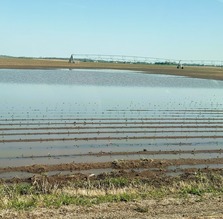
USDA Farm Service Agency (FSA) reminds you to report prevented plant acres in order to establish or retain FSA program eligibility for some programs.
You should report crop acreage you intended to plant, but due to natural disaster, were prevented from planting. Prevented planting acreage must be reported on form CCC-576, Notice of Loss, no later than 15 calendar days after the final planting date as established by FSA and the Risk Management Agency (RMA).
May 10, 2026 was the final planting date for spring barley, spring oats, spring wheat, and insured onions, making Tuesday, May 26th the final date to report prevented plantings to your local FSA office.
To file a CCC-576 for prevented planted acreage, contact your local USDA Service Center.
|
The U.S. Department of Agriculture (USDA)is maximizing disaster assistance support for producers by issuing a second Supplemental Disaster Relief Program (SDRP) payment to eligible producers who have approved program applications for losses due to natural disasters in calendar years 2023 and 2024.
USDA’s Farm Service Agency (FSA) has already provided $6.7 billion in SDRP payments to eligible producers. Additionally, USDA is extending the program deadline to give producers and FSA more time to address any program application changes that could impact payments. The original April 30 deadline has been extended to Aug. 12, 2026, for SDRP Stage 1 and Stage 2.
Initial SDRP payments were factored at 35%, but after further analysis, USDA is increasing the payment factor to 70%, meaning producers with approved applications will receive an additional 35% of their calculated SDRP payment. Future SDRP payments will also be made using a 70% payment factor.
SDRP Stage 1
The first stage, announced in July 2025, remains available to producers who received an indemnity under crop insurance or the Noninsured Crop Disaster Assistance Program (NAP) for eligible crop losses due to qualifying 2023 and 2024 natural disaster events.
SDRP Stage 2
Stage 2 of SDRP covers eligible crop, tree, bush and vine losses that were not covered under Stage One program provisions, including non-indemnified (shallow loss), uncovered and quality losses.
Eligibility
Eligible losses must be the result of natural disasters occurring in calendar years 2023 and/or 2024. These disasters include wildfires, hurricanes, floods, derechos, excessive heat, tornadoes, winter storms, freeze (including a polar vortex), smoke exposure, excessive moisture, qualifying drought, and related conditions.
To qualify for drought related losses, the loss must have occurred in a county rated by the U.S. Drought Monitor as having a D2 (severe drought) for eight consecutive weeks, D3 (extreme drought), or greater intensity level during the applicable calendar year.
FSA is establishing block grants with Connecticut, Hawaii, Maine, and Massachusetts that cover crop losses; therefore, producers with losses on land physically located in these states are not eligible for SDRP program payments.
For more information on SDRP, please visit fsa.usda.gov/sdrp.
The Farm Service Agency (FSA) has noticed a rise in fraudulent scams that target FSA farm loan customers by obtaining publicly available information about your FSA Farm Program participation or Farm Loan information. These unauthorized contacts are made through email, text messages, phone calls, or social media to gain your personal information so the scammer can access your bank account or gain additional personal information.
Signs of a Scam:
- Emails or messages urging immediate action or requesting personal details.
- Unexpected attachments or links in emails from unknown sources.
- Calls or texts claiming to be from FSA requesting passwords, PINs, Social Security numbers, or credit card information.
- Offers that seem too good to be true, particularly investment or debt relief schemes.
- Messages from unfamiliar social media accounts or door-to-door solicitations related to banking.
How to Protect Yourself:
- Always verify communications are coming from official sources. If you have concerns about a contact being genuine, please reach out to your local FSA Service Center directly.
- Do not click on links or download attachments from suspicious emails or texts.
- Use strong, unique passwords and enable two-factor authentication when available.
- Report suspicious activity to FSA immediately and, if applicable, submit a report to the U.S. General Services Administration here.
If you have questions about your FSA accounts, including your farm loans, contact your local USDA Service Center.
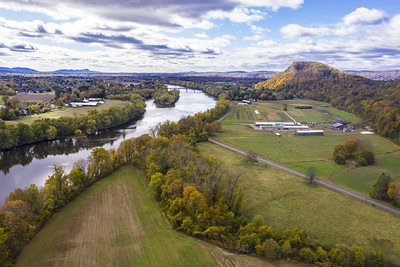
The USDA Farm Service Agency’s (FSA) Direct Farm Ownership loans can help farmers and ranchers become owner-operators of family farms, improve and expand current operations, increase agricultural productivity, and assist with land tenure to save farmland for future generations.
There are three types of Direct Farm Ownership Loans: regular, down payment and joint financing. FSA also offers a Direct Farm Ownership Microloan option for smaller financial needs up to $50,000.
Joint financing allows FSA to provide more farmers and ranchers with access to capital. FSA lends up to 50 percent of the total amount financed. A commercial lender, a state program or the seller of the property being purchased, provides the balance of loan funds, with or without an FSA guarantee. The maximum loan amount for a joint financing loan is $600,000, and the repayment period for the loan is up to 40 years.
The operation must be an eligible farm enterprise. Farm Ownership loan funds cannot be used to finance nonfarm enterprises and all applicants must be able to meet general eligibility requirements. Loan applicants are also required to have participated in the business operations of a farm or ranch for at least three years out of the 10 years prior to the date the application is submitted. The applicant must show documentation that their participation in the business operation of the farm or ranch was not solely as a laborer.
For more information about farm loans, contact your local USDA Service Center or visit fsa.usda.gov.
|

All producers are encouraged to contact their local FSA office for more information on the final planting date for specific crops. The final planting dates vary by crop, planting period and county so please contact your local FSA office for a list of county-specific planting deadlines. The timely planting of a crop, by the final planting date, may prevent loss of program benefits.
|
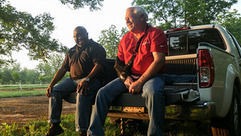
Farm Service Agency (FSA) is committed to providing our farm loan borrowers the tools necessary to be successful. FSA staff will provide guidance and counsel from the loan application process through the borrower’s graduation to commercial credit. While it is FSA’s commitment to advise borrowers as they identify goals and evaluate progress, it is crucial for borrowers to communicate with their farm loan staff when changes occur. It is the borrower’s responsibility to alert FSA to any of the following:
- Any proposed or significant changes in the farming operation
- Any significant changes to family income or expenses
- The development of problem situations
- Any losses or proposed significant changes in security
If a farm loan borrower can’t make payments to suppliers, other creditors, or FSA on time, contact your farm loan staff immediately to discuss loan servicing options.
For more information on FSA farm loan programs, contact your local USDA Service Center or visit fsa.usda.gov.
|
FSA is cleaning up our producer record database and needs your help. Please report any changes of address, zip code, phone number, email address or an incorrect name or business name on file to our office. You should also report changes in your farm operation, like the addition of a farm by lease or purchase. You should also report any changes to your operation in which you reorganize to form a Trust, LLC or other legal entity.
FSA and NRCS program participants are required to promptly report changes in their farming operation to the County Committee in writing and to update their Farm Operating Plan on form CCC-902. To update your records, contact your local USDA Service Center.
The Farm Service Agency’s (FSA) Noninsured Crop Disaster Assistance Program (NAP) provides financial assistance to producers of non-insurable crops, including mechanically harvested forage with NAP coverage, to protect against natural disasters that occur during the coverage, resulting in loss of production, loss of value, or prevented planting of an eligible crop.
If you have NAP coverage on mechanically harvested forage, you must:
- Maintain separate production records for each unit, crop, practice, crop type, and intended use.
- Submit production records to FSA by the designated production reporting date for the crop.
- Notify your FSA administrative county office before grazing, abandoning, or destroying forage acreage reported, on FSA form FSA-578, as intended to be mechanically harvested; and request an appraisal.
- Notify your FSA administrative county office of a loss and timely file CCC-576, Notice of Loss and Application for Payment, Part B, the earlier of:
- 15 calendar days after the disaster occurs, or damage first becomes apparent.
- 15 calendar days after the crop’s normal harvest date.
- If you change your intended use or experience a loss during the coverage period, you must:
- Establish and maintain representative sample areas when an appraisal of the acreage is required.
- Inform your FSA administrative county office of the location of representative sample areas within 15 days of placing the panels.
- Request an appraisal of the representative sample areas at the end of harvest period but before first freeze.
For more information on NAP and NAP compliance requirements you must follow to retain NAP coverage, contact your local USDA service center.
|

Are you interested in working with USDA to start or grow your farm, ranch, or private forest operation, but don’t know where to start?
Whether you’re looking to access capital or disaster assistance through USDA’s Farm Service Agency (FSA) or address natural resource concerns on your land with assistance from USDA’s Natural Resources Conservation Service (NRCS), a great place to start is farmers.gov.
Farmers.gov is a one-stop shop for information about the assistance available from FSA and NRCS. The site also offers many easy-to-use tools for farmers, ranchers, and private forestland owners, whether you are reaching out for the first time or are a long-term customer with a years-long relationship with USDA.
With a farmers.gov account you can:
- Complete an AD-2047, Customer Data Worksheet, prior to your first meeting with FSA and NRCS.
- View farm loan payments history from FSA.
- View cost share assistance received and anticipated from NRCS conservation programs.
- Request conservation assistance from NRCS as well as view and track your conservation plans, practices, and contracts.
- View, print, and export detailed farm records and farm/tract maps for the current year, which are particularly useful when fulfilling acreage reporting requirements.
- Print FSA-156 EZ, Abbreviated Farm Record and your Producer Farm Data Report for the current year.
- Pay FSA debt using the “Make an FSA Payment” feature
- Apply for a farm loan online, view information on your existing loans, and make USDA direct farm loan payments using the Pay My Loan feature.
Learn how to create a farmers.gov account today!
|
Top of page
Farm Service Agency
New York State Office
441 S. Salina St.
Syracuse, NY 13202
Ph: 315-477-6300
http://www.fsa.usda.gov/ny
Click to find your local USDA office.
|
|
State Executive Director
Clark Putman
clark.putman@usda.gov
|
|
New York FSA State Committee
Lawrence K. Eckhardt, Chair
Ryan Timothy Fessenden
Barbara J. Hanselman
Brenden L. Martin
Joseph P. Shultz
|
|
Farm Program Chief:
Jenifer Dean
jenifer.dean@usda.gov
|
Acting Farm Loan Chief:
Christen Koch
Christen.Koch@usda.gov
|
|
________________________________________________________
|
|
Current Interest Rates
|
|
Farm Storage Facility Loans:
3 yr - 3.875%
5 yr - 4.000%
7 yr - 4.125%
10 yr - 4.375%
12 yr - 4.500%
Commodity Loans: 4.750%
|
Farm Loan Programs:
Farm Operating: 4.750%
Farm Ownership: 5.750%
Conservation Loans: 5.750%
Direct Down Payment: 1.750%
Joint Financing: 3.750%
Emergency Loan: 3.750%
|
|








