NH FSA State Newsletter - April 30, 2026
In This Issue:

The Farm Service Agency encourages you to examine available USDA crop risk protection options, including federal crop insurance and Noninsured Crop Disaster Assistance Program (NAP) coverage, before the applicable crop sales deadline.
Federal crop insurance covers crop losses from natural adversities such as drought, hail and excessive moisture. NAP covers losses from natural disasters on crops for which no permanent federal crop insurance program is available. You can determine if crops are eligible for federal crop insurance or NAP by visiting the RMA website.
NAP offers higher levels of coverage, from 50 to 65 percent of expected production in 5 percent increments, at 100 percent of the average market price. Producers of organics and crops marketed directly to consumers also may exercise the “buy-up” option to obtain NAP coverage of 100 percent of the average market price at the coverage levels of between 50 and 65 percent of expected production. Buy-up levels of NAP coverage are available if the producer can show at least one year of previously successfully growing the crop for which coverage is being requested. NAP basic coverage is available at 55 percent of the average market price for crop losses that exceed 50 percent of expected production.
For all coverage levels, the NAP service fee is the lesser of $325 per crop or $825 per producer per county, not to exceed a total of $1,950 for a producer with farming interests in multiple counties.
Beginning, underserved, veterans and limited resource farmers are now eligible for free catastrophic level coverage.
Deadlines for coverage vary by state and crop. Contact your County USDA Service Center or visit fsa.usda.gov.
Federal crop insurance coverage is sold and delivered solely through private insurance agents. Agent lists are available at all USDA Service Centers or at USDA’s online Agent Locator. You can use the USDA Cost Estimator to predict insurance premium costs.
|
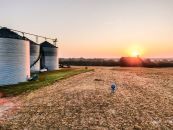
The U.S. Department of Agriculture (USDA) announced loan interest rates for April 2026, which are effective April 1, 2026. USDA Farm Service Agency (FSA) loans provide important access to capital to help agricultural producers start or expand their farming operation, purchase equipment and storage structures or meet cash flow needs.
Operating, Ownership and Emergency Loans
FSA offers farm operating, ownership and emergency loans with favorable interest rates and terms to help eligible agricultural producers obtain financing needed to start, expand or maintain a family agricultural operation.
Interest rates for Operating and Ownership loans for April 2026 are as follows:
FSA also offers guaranteed loans through commercial lenders at rates set by those lenders. To access an interactive online, step-by-step guide through the farm loan process, visit the Loan Assistance Tool on farmers.gov.
Commodity and Storage Facility Loans
Additionally, FSA provides low-interest financing to producers to build or upgrade on-farm storage facilities and purchase handling equipment and loans that provide interim financing to help producers meet cash flow needs without having to sell their commodities when market prices are low. Funds for these loans are provided through the Commodity Credit Corporation (CCC) and are administered by FSA.
To learn more about FSA programs, producers can contact their local USDA Service Center. Additionally, producers can use online tools, such as the Loan Assistance Tool and Debt Consolidation Tool to explore loan options.
|
Severe weather events create significant challenges and often result in catastrophic loss for agricultural producers. Despite every attempt to mitigate risk, your operation may suffer losses. USDA offers several programs to help with recovery.
Risk Management
For producers with coverage through the Noninsured Crop Disaster Assistance Program (NAP), we want to remind you to report crop damage to your local Farm Service Agency (FSA) office. You will need to file a Notice of Loss (also called Form CCC-576) within 15 days of loss becoming apparent, except for hand-harvested crops, which should be reported within 72 hours.
If you have Federal Crop Insurance, contact your crop insurance agent within 72 hours of discovering damage and be sure to follow up in writing within 15 days.
Disaster Assistance
USDA also offers disaster assistance programs, which is especially important to livestock, fruit and vegetable, specialty and perennial crop producers who have fewer risk management options.
First, the Livestock Indemnity Program (LIP) and Emergency Assistance for Livestock, Honeybee and Farm-raised Fish Program (ELAP) reimburses producers for a portion of the value of livestock, poultry and other animals that died as a result of a qualifying natural disaster event or for loss of grazing acres, feed and forage. And, the Livestock Forage Disaster Program (LFP) provides assistance to producers of grazed forage crop acres that have suffered crop loss due to a qualifying drought. Livestock producers suffering the impacts of drought can also request Emergency Haying and Grazing on Conservation Reserve Program (CRP) acres.
Next, the Tree Assistance Program (TAP) provides cost share assistance to rehabilitate and replant tree, vines or shrubs loss experienced by orchards and nurseries. This complements NAP or crop insurance coverage, which cover the crop but not the plants or trees in all cases.
For LIP and ELAP, you will need to file a Notice of Loss for livestock and grazing or feed losses by the application deadline for each program. For TAP, you will need to file a program application within 90 days.
Documentation
It’s critical to keep accurate records to document all losses following this devastating cold weather event. Livestock producers are advised to document beginning livestock numbers by taking time and date-stamped video or pictures prior to after the loss.
Other common documentation options include:
- Purchase records
- Production records
- Vaccination records
- Bank or other loan documents
- Third-party certification
Other Programs
The Emergency Conservation Program and Emergency Forest Restoration Program can assist landowners and forest stewards with financial and technical assistance to restore damaged farmland or forests.
Additionally, FSA offers a variety of loans available including emergency loans that are triggered by disaster declarations and operating loans that can assist producers with credit needs. You can use these loans to replace essential property, purchase inputs like livestock, equipment, feed and seed, or refinance farm-related debts, and other needs.
Meanwhile, USDA’s Natural Resources Conservation Service (NRCS) provides financial resources through its Environmental Quality Incentives Program to help with immediate needs and long-term support to help recover from natural disasters and conserve water resources. Assistance may also be available for emergency animal mortality disposal from natural disasters and other causes.
Additional Resources
Additional details – including payment calculations – can be found on our NAP, ELAP, LIP, and TAP fact sheets. On farmers.gov, the Disaster Assistance Discovery Tool, Disaster-at-a-Glance fact sheet, and Farm Loan Discovery Tool can help you determine program or loan options.
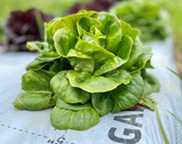
If you want to use the Noninsured Crop Disaster Assistance Program (NAP) organic price and you select the "organic" option on your NAP application, you must report your crops as organic.
When certifying organic acres, the buffer zone acreage must be included in the organic acreage.
You must also provide a current organic plan, organic certificate or documentation from a certifying agent indicating an organic plan is in effect. Documentation must include:
- name of certified individuals
- address
- telephone number
- effective date of certification
- certificate number
- list of commodities certified
- name and address of certifying agent
- a map showing the specific location of each field of certified organic, including the buffer zone acreage
Certification exemptions are available for producers whose annual gross agricultural income from organic sales totals $5,000 or less. Although exempt growers are not required to provide a written certificate, they are still required to provide a map showing the specific location of each field of certified organic, transitional, and buffer zone acreage.
For questions about reporting organic crops, contact your County USDA Service Center.
|
Top of page
FSA in State
James C. Cleveland Federal Building
53 Pleasant St
Concord, NH 03301
Phone: 603-224-7941
Service Center Locator
Farm Service Agency
State Executive Director - Jeffrey Holmes
Deputy State Executive Director - Marilyn Milne
State Committee - Kathleen Sherman, Gary LeClair, Daniel Hicks III, Diane Souther, and Denis Ward
|
|