
New Jersey USDA Newsletter - May 2026
In this issue:
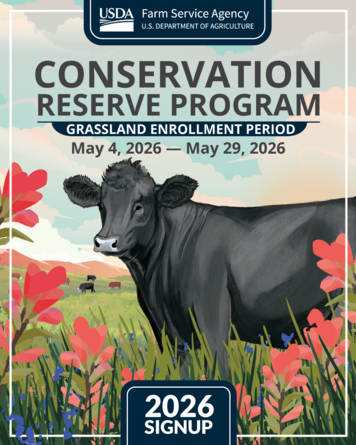
The U.S. Department of Agriculture (USDA) announced that agricultural producers and private landowners can enroll in the Grassland Conservation Reserve Program (Grassland CRP) through May 29, 2026. USDA’s Farm Service Agency (FSA) administers Grassland CRP, a voluntary working lands conservation program that enables participants to conserve grasslands while also continuing most grazing and haying practices.
Grassland CRP emphasizes support for grazing operations, plant and animal biodiversity, and grasslands and land with shrubs and forbs under the greatest threat of conversion.
|
Top of page

Report Noninsured Crop Disaster Assistance Program (NAP) Losses
NAP provides financial assistance to you for crops that aren’t eligible for crop insurance to protect against lower yields or crops unable to be planted due to natural disasters including freeze, hail, excessive moisture, excessive wind or hurricanes, flood, excessive heat and qualifying drought (includes native grass for grazing), among others.
To receive payment, you had to purchase NAP coverage for 2026 crops and file a notice of loss the earlier of 15 days of the occurrence of the disaster or when losses become apparent or 15 days of the final harvest date. For hand-harvested crops and certain perishable crops, you must notify FSA within 72 hours of when a loss becomes apparent.
Eligible crops must be commercially produced agricultural commodities for which crop insurance is not available, including perennial grass forage and grazing crops, fruits, vegetables, mushrooms, floriculture, ornamental nursery, aquaculture, turf grass, ginseng, honey, syrup, bioenergy, and industrial crops.
For more information visit fsa.usda.gov/nap.
Disaster Assistance for Qualifying Tree, Bush and Vine Losses
If you’re an orchardist or nursery tree grower who experienced losses from natural disasters during calendar year 2026, you must submit a Tree Assistance Program (TAP) application either 90 calendar days after the disaster event or the date when the loss is apparent.
TAP provides financial assistance to help you replant or rehabilitate eligible trees, bushes and vines damaged by natural disasters.
Eligible tree types include trees, bushes or vines that produce an annual crop for commercial purposes. Nursery trees include ornamental, fruit, nut and Christmas trees that are produced for commercial sale. Trees used for pulp or timber are ineligible.
To qualify for TAP, eligible orchardists and nursery tree growers must suffer a qualifying tree, bush or vine loss from an eligible natural disaster in excess of normal mortality. The eligible trees, bushes or vines must have been owned when the natural disaster occurred; however, eligible growers are not required to own the land on which the eligible trees, bushes and vines were planted.
The cumulative total quantity of acres planted to trees, bushes or vines, for which you can receive TAP payments, cannot exceed 1,000 acres annually.
For more information visit fsa.usda.gov/tap
|
Submittng Production Losses for Disaster Declarations
Farmers and ranchers know all too well that natural disasters can be a common, and likely a costly, variable to their operation. The Farm Service Agency (FSA) has emergency assistance programs to provide assistance when disasters strike, and for some of those programs, a disaster designation may be the eligibility trigger. When natural disaster occurs, there is a process for requesting a USDA Secretarial disaster designation for a county. You can play a vital role in this process.
If you have experienced a production loss as a result of a natural disaster, you may submit a request to your local FSA county office for your county to be evaluated for a Secretarial disaster designation. Once a request is received, the county office will collect disaster data and create a Loss Assessment Report. The County Emergency Board will review the Loss Assessment Report and determine if a recommendation is sent forward to the U.S. Secretary of Agriculture for the designation.
For more information on FSA disaster programs and disaster designations, contact your local USDA Service Center or visit fsa.usda.gov/disaster.
Top of page
 The U.S. Department of Agriculture (USDA) today announced a second national deadline for agricultural producers and landowners to apply for fiscal year 2026 assistance in the Agricultural Conservation Easement Program (ACEP) through the Natural Resources Conservation Service (NRCS). The new deadline for entities to apply is May 29, 2026. NRCS is providing up to $200 million in funding for the application period for agricultural land easements.
Top of page
 The U.S. Department of Agriculture (USDA) is maximizing disaster assistance support for producers by issuing a second Supplemental Disaster Relief Program (SDRP) payment to eligible producers who have approved program applications for losses due to natural disasters in calendar years 2023 and 2024. USDA’s Farm Service Agency (FSA) has already provided $6.7 billion in SDRP payments to eligible producers. Additionally, USDA is extending the program deadline to give producers and FSA more time to address any program application changes that could impact payments. The original April 30 deadline has been extended to Aug. 12, 2026, for SDRP Stage 1 and Stage 2.
Initial SDRP payments were factored at 35%, but after further analysis, USDA is increasing the payment factor to 70%, meaning producers with approved applications will receive an additional 35% of their calculated SDRP payment. Future SDRP payments will also be made using a 70% payment factor.
Top of page
FSA guaranteed loans allow lenders to provide agricultural credit to farmers who do not meet the lender's normal underwriting criteria. Farmers and ranchers apply for a guaranteed loan through a lender, and the lender arranges for the guarantee. FSA can guarantee up to 95 percent of the loss of principal and interest on a loan. Guaranteed loans can be used for both farm ownership and operating purposes.
Guaranteed farm ownership loans can be used to purchase farmland, construct or repair buildings, develop farmland to promote soil and water conservation or to refinance debt.
Guaranteed operating loans can be used to purchase livestock, farm equipment, feed, seed, fuel, farm chemicals, insurance and other operating expenses.
FSA can guarantee farm ownership and operating loans up to $2,343,000. Repayment terms vary depending on the type of loan, collateral and the producer's ability to repay the loan. Operating loans are normally repaid within seven years and farm ownership loans are not to exceed 40 years.
Top of page
|
After spring planting is complete, agricultural producers should make an appointment with your local County Farm Service Agency (FSA)to complete crop acreage reports before the applicable deadline.
How to File a Report
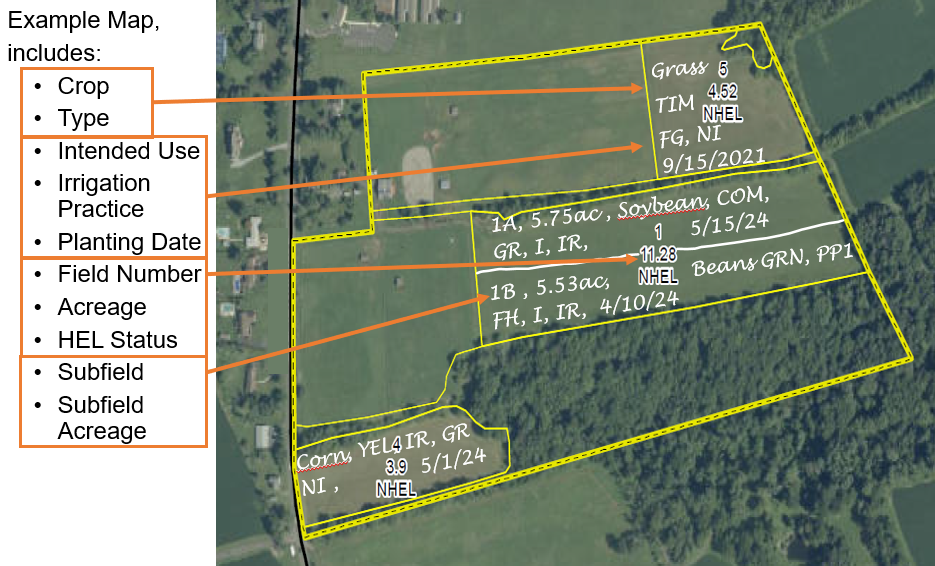
A crop acreage report documents a crop grown on a farm or ranch, its intended use and location. Producers should file an accurate crop acreage report for all crops and land uses, including failed acreage and prevented planted acreage before the applicable deadline. Producers are encouraged to file their acreage reports as soon as planting is completed.
The following acreage reporting dates are applicable in New Jersey:
-
June 16 - Planting Period 1 Cabbage (Atlantic Co Only)
-
July 15 - Soybeans, Corn and Other Spring Planted Feed Grains, Perennial Forage, CRP, Hemp & Most Other Crops, including fruits and vegetables
-
August 15 - Processing Beans
-
September 15 - Planting Period 2 Cabbage (Atlantic Co Only)
To file a crop acreage report, producers need to provide:
- Crop and crop type or variety
- Intended crop use
- Number of crop acres
- Map with approximate crop boundaries
- Planting date(s)
- Planting pattern, when applicable
- Producer share(s)
- Irrigation practice(s)
- Acreage prevented from planting, when applicable
- Other required information
|
 The following exceptions apply to acreage reporting dates:
- If the crop has not been planted by the acreage reporting deadline, then the acreage must be reported no later than 15 calendar days after planting is completed.
- If a producer acquires additional acreage after the acreage reporting deadline, then the acreage must be reported no later than 30 calendar days after purchase or acquiring the lease. Appropriate documentation must be provided to the county office.
Noninsured Crop Disaster Assistance Program (NAP) policy holders should note that the acreage reporting date for NAP-covered crops is the acreage reporting date or 15 calendar days before grazing or crop harvesting begins, whichever is earlier.
Producers with perennial forage crops should check with their local FSA office to see if their crops are eligible for continuous certification, which rolls the certified acreage forward each year until a change is made.
Prevented Planted Acreage
Producers should also report the crop acreage they intended to plant but were unable to because of a natural disaster, including drought. Prevented planted acreage must be reported on form CCC-576, Notice of Loss, no later than 15 calendar days after the final planting date as established by FSA and USDA’s Risk Management Agency (RMA).
Top of page
 USDA is announcing $52 million to help state and tribal governments encourage private landowners to allow public access to their land for hunting, fishing and other wildlife-dependent recreation through the Voluntary Public Access and Habitat Incentive Program (VPA-HIP).
Find out more here.
Top of page
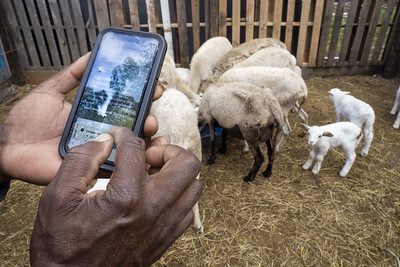
Are you interested in working with USDA to start or grow your farm, ranch, or private forest operation, but don’t know where to start?
Whether you’re looking to access capital or disaster assistance through USDA’s Farm Service Agency (FSA) or address natural resource concerns on your land with assistance from USDA’s Natural Resources Conservation Service (NRCS), a great place to start is farmers.gov.
Farmers.gov is a one-stop shop for information about the assistance available from FSA and NRCS. The site also offers many easy-to-use tools for farmers, ranchers, and private forestland owners, whether you are reaching out for the first time or are a long-term customer with a years-long relationship with USDA.
With a farmers.gov account you can:
- Complete an AD-2047, Customer Data Worksheet, prior to your first meeting with FSA and NRCS.
- View farm loan payments history from FSA.
- View cost share assistance received and anticipated from NRCS conservation programs.
- Request conservation assistance from NRCS as well as view and track your conservation plans, practices, and contracts.
- View, print, and export detailed farm records and farm/tract maps for the current year, which are particularly useful when fulfilling acreage reporting requirements.
- Print FSA-156 EZ, Abbreviated Farm Record and your Producer Farm Data Report for the current year.
- Pay FSA debt using the “Make an FSA Payment” feature
- Apply for a farm loan online, view information on your existing loans, and make USDA direct farm loan payments using the Pay My Loan feature.
Learn how to create a farmers.gov account today!
|
Top of page
Top of page
USDA is an equal opportunity provider, employer and lender. To file a complaint of discrimination, write: USDA, Office of the Assistant Secretary for Civil Rights, Office of Adjudication, 1400 Independence Ave., SW, Washington, DC 20250-9410 or call (866) 632-9992 (Toll-free Customer Service), (800) 877-8339 (Local or Federal relay), (866) 377-8642 (Relay voice users).
|






