News & Updates from the Iowa FSA State Office - April 29, 2026
In This Issue:
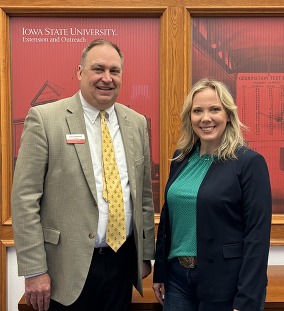
ISU Extension & Outreach Vice President, Jason Henderson pictured with IA FSA SED Starlyn Perdue during a recent meeting
Iowa FSA State Executive Director Starlyn Perdue and members of the State Office team continue connecting with partners, producers, students, and community leaders across Iowa through a wide range of events and outreach activities. These engagements strengthen relationships and showcase the important work underway to support Iowa agriculture and rural communities.
Recent events include a visit to Iowa State University to meet with Extension and Outreach leadership; an evening focused on the future of Iowa agriculture at the Iowa Ag Leaders Dinner; celebrating the next generation of agricultural leaders at the FFA State Convention; recognizing the nation’s upcoming semiquincentennial with an America 250 tree‑planting event at the Iowa State Fairgrounds; and many more events across the state.
These activities reflect Iowa FSA’s continued commitment to partnership, outreach, and service as we work together to support Iowa agriculture.
The U.S. Department of Agriculture (USDA) is maximizing disaster assistance support for producers by issuing a second Supplemental Disaster Relief Program (SDRP) payment to eligible producers who have approved program applications for losses due to natural disasters in calendar years 2023 and 2024. USDA’s Farm Service Agency (FSA) has already provided $6.7 billion in SDRP payments to eligible producers. Additionally, USDA is extending the program deadline to give producers and FSA more time to address any program application changes that could impact payments. The original April 30 deadline has been extended to Aug. 12, 2026, for SDRP Stage 1 and Stage 2.
Initial SDRP payments were factored at 35%, but after further analysis, USDA is increasing the payment factor to 70%, meaning producers with approved applications will receive an additional 35% of their calculated SDRP payment. Future SDRP payments will also be made using a 70% payment factor. Read more...
The USDA Farm Service Agency (FSA) recently announced the appointment of five leaders in agriculture to serve on the Iowa USDA Farm Service Agency (FSA) state committee.
Members of the FSA state committee are appointed by Secretary of Agriculture Brooke L. Rollins and, in support of the Trump Administration’s Farmers First commitment, members of the FSA state committee are responsible for the oversight of farm programs and county committee operations, resolving program delivery appeals from the agriculture community, maintaining cooperative relations with industry stakeholders and keeping producers informed about current FSA programs.
Each FSA state committee is comprised of three to five members including a designated chairperson. The individuals appointed to serve on this committee for Iowa are:
-
Merlin Bartz, Chair (Grafton) - Bartz is the owner and operator of a sixth‑generation diversified farming operation in Worth County, which includes three century farm parcels and was among the first in the county accepted into the Conservation Stewardship Program. He has served in multiple local, state, and federal leadership roles, including as Worth County supervisor, Iowa State Senator and representative, USDA Natural Resources Conservation Service central regional assistant chief, and special assistant to the under secretary of Natural Resources and Environment at USDA.
-
Rebecca Boyer, Member (Ankeny) – Boyer was raised on a row‑crop and independent hog farm in Emmet County, giving her early experience in production agriculture before pursuing a career in law and agricultural policy. She later served as director of government affairs for a statewide cooperative organization, where she advanced member priorities and worked across the agriculture sector, bringing a blend of farm‑rooted perspective, legal training, and policy expertise to the state committee.
-
Tim Couser, Member (Nevada) – Couser is the sole owner and operator of his family row crop farm in Story County, where he manages the day‑to‑day operations and leads projects involving agronomics, biologicals, conservation management, and is a seed corn production grower. He has been active in agricultural leadership and engagement through roles with Story County Cattlemen, the Key Cooperative Board, Lincolnway Energy, and Extension Council.
-
Colin Johnson, Member (Batavia) – Johnson is a fourth‑generation producer who operates a diversified farm that raises corn, soybeans, forages, sweet corn, cattle, and swine, using conservation‑focused practices such as no‑till, minimum‑till, and perennial grazing in Wapello County. He brings more than 20 years of Extension and outreach experience through roles with Iowa State University and agricultural education programs, along with leadership in Farm Bureau, county planning and zoning, and broad collaboration with statewide agricultural organizations.
-
Nathan Nieuwendorp, Member (Inwood) – Nieuwendorp owns and operates a diversified farm that produces corn, soybeans, and swine. He oversees the day management and long‑term strategic planning. He also serves as director of research & strategic initiatives for another family farm operation and has prior experience in actuarial analysis. Nieuwendorp has served in leadership roles for pork producer organizations and church committees.
“These individuals, selected by Secretary Rollins in partnership with key stakeholders in each state, are held in high regard in the agriculture industry and are entrusted to ensure FSA programs are delivered in a manner consistent with federal farm policy and in the best interest of all agricultural producers in their state,” said FSA Administrator Bill Beam. “Their appointment to the FSA state committee is a testament to their standing in the industry and their dedication to the agriculture industry, rural America and President Trump’s America First, Farmers First policies.”
FSA helps America’s farmers, ranchers and forest landowners invest in, improve, protect and expand their agricultural operations through the delivery of agricultural programs for all Americans. FSA implements agricultural policy, administers credit and loan programs, and manages conservation, commodity, disaster recovery and marketing programs through a national network of state and county offices and locally elected county committees. For more information, visit fsa.usda.gov.
Are you interested in working with USDA to start or grow your farm, ranch, or private forest operation, but don’t know where to start?
Whether you’re looking to access capital or disaster assistance through USDA’s Farm Service Agency (FSA) or address natural resource concerns on your land with assistance from USDA’s Natural Resources Conservation Service (NRCS), a great place to start is farmers.gov.
Farmers.gov is a one-stop shop for information about the assistance available from FSA and NRCS. The site also offers many easy-to-use tools for farmers, ranchers, and private forestland owners, whether you are reaching out for the first time or are a long-term customer with a years-long relationship with USDA.
With a farmers.gov account you can:
-
Complete an AD-2047, Customer Data Worksheet, prior to your first meeting with FSA and NRCS.
-
View farm loan payments history from FSA.
-
View cost share assistance received and anticipated from NRCS conservation programs.
-
Request conservation assistance from NRCS as well as view and track your conservation plans, practices, and contracts.
-
View, print, and export detailed farm records and farm/tract maps for the current year, which are particularly useful when fulfilling acreage reporting requirements.
-
Print FSA-156 EZ, Abbreviated Farm Record and your Producer Farm Data Report for the current year.
-
Pay FSA debt using the “Make an FSA Payment” feature
-
Apply for a farm loan online, view information on your existing loans, and make USDA direct farm loan payments using the Pay My Loan feature.
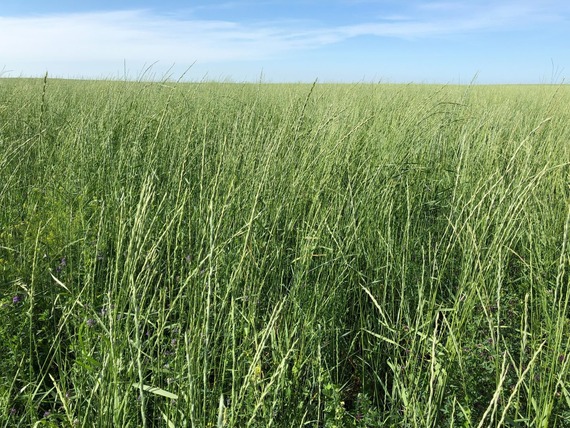
During the last two years of your Conservation Reserve Program (CRP) contract, expiring CRP acreage may be offered through the Transition Incentives Program (TIP).
If you do not plan to re-enroll your CRP acres that expire in 2026 or 2027, TIP may provide up to two additional annual rental payments after the contract expires, if the landowner sells or rents the land to a beginning or veteran farmer or rancher. New landowners or renters must use sustainable grazing or farming methods as they return the land to production. TIP provides an opportunity to support beginning or veteran farmers and ranchers while maintaining conservation benefits.
The deadline to submit a TIP offer is Aug. 14, 2026.
OPERATING/OWNERSHIP
Farm Operating: 4.75%
Farm Ownership: 5.750%
Farm Ownership - Joint Financing: 3.750%
Farm Ownership - Down Payment: 1.750%
Emergency - Actual Loss: 3.75%
FARM STORAGE FACILITY LOAN
3-year term: 3.625%
5-year term: 3.750%
7-year term: 3.875%
10-year term: 4.125%
12-year term: 4.375%
MARKETING ASSISTANCE
Commodity Loan: 4.625%
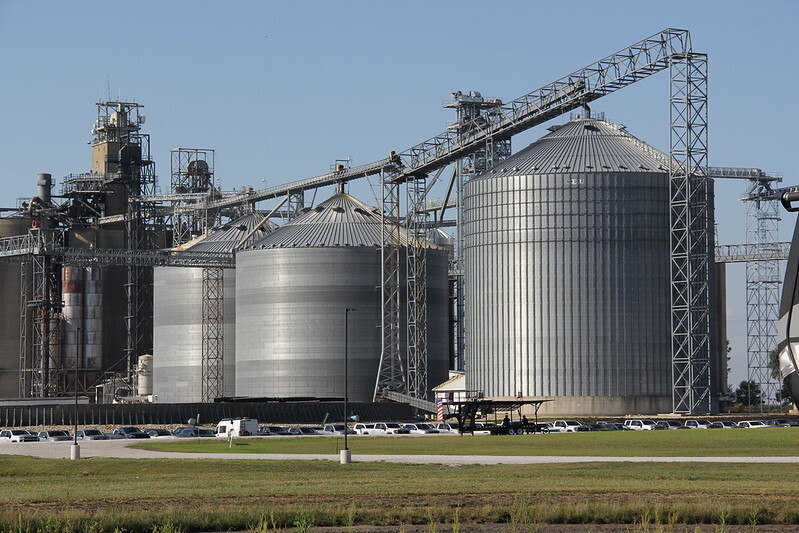
The Farm Service Agency’s (FSA) Farm Storage Facility Loan (FSFL) program provides low-interest financing to help you build or upgrade storage facilities and to purchase portable (new or used) structures, equipment and storage and handling trucks.
Eligible commodities include corn, grain sorghum, rice, soybeans, oats, peanuts, wheat, barley, minor oilseeds harvested as whole grain, pulse crops (lentils, chickpeas and dry peas), hay, honey, renewable biomass, fruits, nuts and vegetables for cold storage facilities, controlled atmosphere storage, floriculture, hops, malted small grains, maple sap, maple syrup, rye, milk, cheese, butter, yogurt, meat and poultry (unprocessed), eggs, and aquaculture (excluding systems that maintain live animals through uptake and discharge of water). Qualified facilities include grain bins, hay barns and cold storage facilities for eligible commodities.
Loans up to $50,000 can be secured by a promissory note/security agreement, loans between $50,000 and $100,000 may require additional security, and loans exceeding $100,000 require additional security.
You do not need to demonstrate the lack of commercial credit availability to apply. The loans are designed to assist a diverse range of farming operations, including small and mid-sized businesses, new farmers, operations supplying local food and farmers markets, non-traditional farm products, and underserved producers.
When we take care of soil, we are taking care of everything it supports. That is why soil is where it all begins.
Held annually since 1955 from the last Sunday in April through the first Sunday in May, Stewardship Week unites communities in celebrating and protecting our natural resources. Conservation districts and their partners host workshops, field visits, and community events to promote soil health, water quality, and pollinator habitats. Learn more...
In this Ask the Expert, Tina Mellinger answers questions about Farm Service Agency (FSA) Youth Loans. Tina is a Farm Loan Manager in Ohio and has worked for FSA for 37 years. Her FSA farm loan team makes an average of around 50 loans each year, with around five of those being Youth Loans. Her entire career has been centered around loan-making. At the beginning of her career, she worked for Rural Development making home loans.
Tina grew up on a 50-cow dairy farm in southeastern Ohio. She earned an animal science and ag education degree from the Ohio State University.
Iowa FSA State Office
10500 Buena Vista Court
Des Moines, IA 50322
Phone: 515-254-1540
Service Center Locator
Farm Service Agency
State Executive Director - Starlyn Perdue
Deputy State Executive Director - Karen Rawson
Iowa State Committee
Merlin Bartz - Chair
Rebecca Boyer - Member
Tim Couser - Member
Colin Johnson - Member
Nathan Nieuwendorp - Member
|
|