
Minnesota FSA Updates - April 15, 2026
In This Issue:
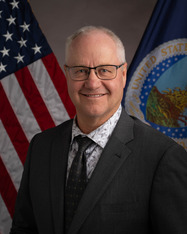
Greetings from the State FSA Office!
I’m happy to extend warm springtime greetings to you for the busy month of April. The signs of spring are everywhere, and with it a new season of optimism. Our farm in Butterfield happens to have new calves, and my grandchildren have big smiles and very muddy boots, which is something many can relate to. Planting the 2026 crop has begun in a few areas, and later this month I would expect much more activity. This is an optimistic time of the year and I’m wishing everyone a successful growing season.
Minnesota FSA offices are very busy this month in both the Farm Program and Farm Loan sections. Please make sure that you meet the upcoming deadlines below.
April 17- General Conservation Reserve Program (CRP)
April 17- Farmer Bridge Assistance
April 24- 2025 acreage reporting deadline for specialty crops eligible for the Assistance for Specialty Crop Farmers program
April 30- Supplemental Disaster Relief Program Stages 1 & 2
May 1- Continuous CRP Second Batching Period
For those seeking additional information, the Farmers.gov programs/deadlines page lists upcoming program deadlines and webinars. USDA is hosting two USDA Beginning Farmer and Rancher Veterans webinars for military veterans and transitioning service members on April 21, 2:00-4:30 pm Eastern and April 22, 2:00-4:00 pm Eastern to learn how to work with USDA and prepare for a career in agriculture. Register for Day 1 (April 21, 2-4:30 pm ET); Register for Day 2 (April 22, 2-4 pm ET)
Speaking of beginning farmers, this has been a focus for me as I understand our rural landscape. There are more farmers over the age of 75, than there are under the age of 35. Creating and introducing awareness to opportunities for the younger generation is very important. An additional challenge is the fact that in many areas, the price of farmland has tripled in value in less than one generation. Earlier this year, the Stearns County FSA leaders hosted a beginning farmer information clinic. It was very well attended and is something we hope to bring to additional counties.
We are getting much more daylight recently and the days can get long. Remember to always keep safety in mind in the shop, barn, fields and roadways. Thank you for what you do to feed the world; it is a privilege to serve you.
Kurt Blomgren
FSA State Executive Director, Minnesota
|
The U.S. Department of Agriculture (USDA) announced that Continuous Conservation Reserve Program (CRP) offers can be submitted during a second batching period that runs through May 1, 2026. Additionally, USDA reminds producers and landowners of the upcoming April 17, 2026, deadline for both the Farmer Bridge Assistance (FBA) program and the General Conservation Reserve Program (CRP) Signup 66. USDA’s Farm Service Agency (FSA) has already made over $9.4 billion in FBA payments to row crop producers in response to temporary trade market disruptions and increased production costs. Landowners and producers still have time to submit General CRP offers to convert highly erodible land or environmentally sensitive acreage to vegetative cover to improve water quality, prevent soil erosion and enhance wildlife habitat.
Continuous CRP Signup 65, Second Batching Period
The first Continuous CRP batching period closed on March 20, 2026. Since acreage remains available, FSA is opening a second batching period and will consider Continuous CRP offers submitted by interested agricultural producers and landowners between March 23, 2026, and May 1, 2026. Offers to re-enroll expiring CRP continuous acreage will be accepted on a first-come, first-served basis. New acreage offered in continuous CRP practices will be considered for acceptance on a first-come, first-serve basis if they support USDA conservation priorities including but not limited to practices that address water quality, such as filter strips and grass waterways, and practices that restore native ecosystems or target specific resource concerns.
Continuous CRP participants voluntarily offer environmentally sensitive lands, typically smaller parcels than offered through General CRP including wetlands, riparian buffers, and varying wildlife habitats. In return, they receive annual rental payments and cost-share assistance to establish long-term, resource-conserving vegetative cover.
CRP is USDA’s flagship conservation program, providing financial and technical support to agricultural producers and landowners who place unproductive or marginal cropland under contract for 10-15 years and who agree to voluntarily convert the land to beneficial vegetative cover to improve water quality, prevent soil erosion and support wildlife habitat. The Continuing Appropriations, Agriculture, Legislative Branch, Military Construction and Veterans Affairs, and Extensions Act, 2026, extends FSA’s authority to administer CRP through Sept. 30, 2026.
Farmer Bridge Assistance
April 17, 2026, is the deadline to submit completed FBA applications. Pre-filled applications are available online to producers with a Login.gov account who timely filed their 2025 crop acreage report for eligible commodities. Producers who have a Login.gov account can access and submit their pre-filled application from fsa.usda.gov/fba. Additionally, producers can also request their pre-filled FBA application from their FSA county office.
General CRP Signup 66
General CRP offers must be submitted by April 17, 2026.
General CRP offers are submitted through a competitive bid process. USDA is close to the 27-million-acre statutory cap with 1.9 million acres available for all CRP enrollments this fiscal year, making enrollment competitive. USDA is focused on accepting the acres that can best deliver real, lasting benefits to soil, water and wildlife.
After the enrollment period closes, General CRP offers are ranked and scored by FSA, using nationally established environmental benefits criteria. USDA will announce accepted offers once ranking and scoring for all offers is completed. In addition to annual rental payments, approved General CRP participants may also be eligible for cost-share assistance to establish long-term, resource-conserving vegetative cover.
Assistance for Specialty Crop Farmers
As a reminder, FSA has reopened the 2025 crop acreage reporting period required for specialty crop producers who want to apply for the Assistance for Specialty Crop Farmers (ASCF) program. Specialty crop producers now have until April 24, 2026, to report 2025 acres to FSA. Announced by U.S. Secretary of Agriculture Brooke L. Rollins on Feb. 13, the ASCF program is designed to help address market disruptions, elevated input costs, persistent inflation, and market losses from foreign competitors engaging in unfair trade practices that impede exports.
To meet upcoming program deadlines, producers should contact their local FSA county office to make an appointment for assistance.
USDA’s Farm Service Agency (FSA) is delivering more than $16 billion in total Congressionally approved disaster relief. FSA is accepting applications for assistance through the second stage of the Supplemental Disaster Relief Program (SDRP) from agricultural producers who suffered eligible non-indemnified, uncovered or quality crop losses due to qualifying natural disasters in 2023 and 2024.
Stage Two covers eligible crop, tree, bush and vine losses that were not covered under Stage One program provisions, including non-indemnified (shallow loss), uncovered and quality losses. Although the majority of payments from the first stage are already in the hands of producers helping them prepare for and invest in the next crop year, Stage One assistance, announced in July, remains available to producers who received an indemnity under crop insurance or the Noninsured Crop Disaster Assistance Program (NAP) for eligible crop losses due to qualifying 2023 and 2024 natural disaster events.
The deadline to apply for both Stage One and Stage Two assistance is April 30, 2026.
SDRP Stage Two Program Details
SDRP Stage Two provides assistance for eligible crop, tree, bush and vine losses not covered under Stage One, including:
-
Non-Indemnified Losses (Including Shallow Losses)
- Insured losses through federal crop insurance that did not trigger a crop insurance indemnity.
- Losses with NAP coverage that did not trigger a NAP payment.
-
Uncovered Losses (Uninsured Losses)
- Includes losses that were not insured through federal crop insurance or NAP.
-
Quality Losses
- Includes quality losses to commodities indicated by:
- A decrease in value based on discounts due to the physical condition of the crop supported by applicable grading factors
- A decline in the nutritional value of forage crops supported by documented forage tests.
- Producers will certify to an SDRP quality loss percentage.
FSA is establishing block grants with Connecticut, Hawaii, Maine, and Massachusetts that cover crop losses; therefore, producers with losses on land physically located in these states are not eligible for SDRP program payments.
For information on program eligibility and to download an application checklist, visit fsa.usda.gov/sdrp.
More information will be provided in early 2026 regarding a separate enrollment period for quality losses covered by SDRP Stage One as well as for insured producers in Puerto Rico who were not included in Stage One because data was not available when pre-filled applications were mailed.
To make an appointment to apply, contact your local USDA Service Center.
During the last two years of your Conservation Reserve Program (CRP) contract, expiring CRP acreage may be offered through the Transition Incentives Program (TIP).
If you do not plan to re-enroll your CRP acres that expire in 2026 or 2027, TIP may provide up to two additional annual rental payments after the contract expires, if the landowner sells or rents the land to a beginning or veteran farmer or rancher. New landowners or renters must use sustainable grazing or farming methods as they return the land to production. TIP provides an opportunity to support beginning or veteran farmers and ranchers while maintaining conservation benefits.
The deadline to submit a TIP offer is Aug. 14, 2026.
For more information or to submit a TIP offer, please contact your local FSA office or visit the TIP webpage.

Farmers can use USDA farm ownership microloans to buy and improve property. These microloans are especially helpful to beginning or underserved farmers, U.S. veterans looking for a career in farming, and those who have small and mid-sized farming operations. Microloans have helped farmers and ranchers with operating costs, such as feed, fertilizer, tools, fencing, equipment, and living expenses since 2013.
Microloans can also help with farmland and building purchases and soil and water conservation improvements. FSA designed the expanded program to simplify the application process, expand eligibility requirements and expedite smaller real estate loans to help farmers strengthen their operations. Microloans provide up to $50,000 to qualified producers and can be issued to the applicant directly from the USDA Farm Service Agency (FSA).
To learn more about the FSA microloan program, contact your local USDA Service Center or visit fsa.usda.gov/microloans.
|
The USDA Farm Service Agency’s (FSA) Direct Farm Ownership loans are a resource to help farmers and ranchers become owner-operators of family farms, improve and expand current operations, increase agricultural productivity, and assist with land tenure to save farmland for future generations.
There are three types of Direct Farm Ownership Loans: regular, down payment and joint financing. FSA also offers a Direct Farm Ownership Microloan option for smaller financial needs up to $50,000.
Direct Farm Ownership Loans can be used to construct, purchase or improve farm dwellings, service buildings or other facilities, and to make improvements essential to an operation.
Applicants must provide FSA with an estimate of the total cost of all planned development that completely describe the work, prior to loan approval and must show proof of sufficient funds to pay for the total cost of all planned development at or before loan closing. In some instances, applicants may be asked to provide certified plans, specifications or contract documents. The applicant cannot incur any debts for materials or labor or make any expenditures for development purposes prior to loan closing with the expectation of being reimbursed from FSA funds.
Construction and development work may be performed either by the contract method or the borrower method. Under the contract method, construction and development contractors perform work according to a written contract with the applicant or borrower. If applying for a direct loan to finance a construction project, the applicant must obtain a surety bond that guarantees both payment and performance in the amount of the construction contract from a construction contractor.
A surety bond is required when a contract exceeds $100,000. An authorized agency official determines that a surety bond appears advisable to protect the borrower against default of the contractor or a contract provides for partial payments in excess of the amount of 60 percent of the value of the work in place.
Under the borrower method, the applicant or borrower will perform the construction and development work. The borrower method may only be used when the authorized agency official determines, based on information from the applicant, that the applicant possesses or arranges to obtain the necessary skill and managerial ability to complete the work satisfactorily and that such work will not interfere with the applicant’s farming operation or work schedule.
Potential applicants should visit with FSA early in the initial project planning process to ensure environmental compliance.
For more eligibility requirements and information about FSA Loan programs, contact your local USDA Service Center or visit fsa.usda.gov.
Marketing Assistance Loans (MALs) and Loan Deficiency Payments (LDPs) provide financing and marketing assistance for wheat, feed grains, soybeans, and other oilseeds, pulse crops, rice, peanuts, cotton, wool and honey. MALs provide you with interim financing after harvest to help you meet cash flow needs without having to sell your commodities when market prices are typically at harvest-time lows. A producer who is eligible to obtain a loan, but agrees to forgo the loan, may obtain an LDP if such a payment is available. Marketing loan provisions and LDPs are not available for sugar and extra-long staple cotton.
FSA is now accepting requests for 202X MALs and LDPs for all eligible commodities after harvest. Requests for loans and LDPs shall be made on or before the final availability date for the respective commodities.
Commodity certificates are available to loan holders who have outstanding nonrecourse loans for wheat, upland cotton, rice, feed grains, pulse crops (dry peas, lentils, large and small chickpeas), peanuts, wool, soybeans and designated minor oilseeds. These certificates can be purchased at the posted county price (or adjusted world price or national posted price) for the quantity of commodity under loan, and must be immediately exchanged for the collateral, satisfying the loan. MALs redeemed with commodity certificates are not subject to Adjusted Gross Income provisions.
To be considered eligible for an LDP, you must have form CCC-633EZ, Page 1 on file at your local FSA Office before losing beneficial interest in the crop. Pages 2, 3 or 4 of the form must be submitted when payment is requested.
Marketing loan gains (MLGs) and loan deficiency payments (LDPs) are no longer subject to payment limitations, actively engaged in farming and cash-rent tenant rules.
Adjusted Gross Income (AGI) provisions state that if your total applicable three-year average AGI exceeds $900,000, then you’re not eligible to receive an MLG or LDP. You must have a valid CCC-941 on file to earn a market gain of LDP. The AGI does not apply to MALs redeemed with commodity certificate exchange.
For more information and additional eligibility requirements, contact your local USDA Service Center or visit fsa.usda.gov.
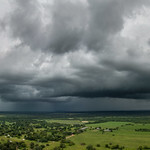
If you’ve suffered excessive livestock death losses and grazing or feed losses due to recent winter or severe storms, you may be eligible for USDA disaster assistance programs.
The Livestock Indemnity Program (LIP) offers payments to you for livestock death losses in excess of normal mortality due to adverse weather and the Emergency Assistance for Livestock, Honeybees, and Farm-Raised Fish Program (ELAP) provides emergency relief for losses due to feed or water shortages, disease, adverse weather, or other conditions, which are not adequately addressed by other disaster programs.
To participate in LIP, you will be required to provide verifiable documentation of death losses resulting from an eligible adverse weather event, and you must complete and submit the notice of loss to FSA no later than the annual program payment application date, which is March 1, 2027, for calendar year 2026 losses. To participate in ELAP, you must submit a notice of loss to your local FSA office no later than March 1, 2027, for calendar year 2026 losses.
You should record all pertinent information regarding livestock losses due to the eligible adverse weather or loss condition, including:
- Documentation of the number, kind, type, and weight range of livestock that have died, supplemented if possible by photographs or video records of ownership and losses;
- Rendering truck receipts by kind, type and weight - important to document prior to disposal;
- Beginning inventory supported by birth recordings or purchase receipts;
- Documentation from Animal Plant Health Inspection Service, Department of Natural Resources, or other sources to substantiate eligible death losses due to an eligible loss condition;
- Documentation that livestock were removed from grazing pastures due to an eligible adverse weather or loss condition;
- Costs of transporting livestock feed to eligible livestock, such as receipts for equipment rental fees for hay lifts and snow removal;
- Feed purchase receipts if feed supplies or grazing pastures are destroyed;
For more information on these programs and documentation requirements, contact your local USDA Service Center or visit fsa.usda.gov/disaster.
|
FSA and NRCS program applicants for benefits are required to submit a completed CCC-902 Farming Operation Plan and CCC-941 Average Gross Income (AGI) Certification and Consent to Disclosure of Tax Information for FSA to determine the applicant’s payment eligibility and establish the maximum payment limitation applicable to the program applicant.
Participants are not required to annually submit new CCC-902s for payment eligibility and payment limitation purposes unless a change in the farming operation occurs that may affect the previous determination of record. A valid CCC-902 filed by the participant is considered to be a continuous certification used for all payment eligibility and payment limitation determinations applicable for the program benefits requested.
Participants are responsible for ensuring that all CCC-902 and CCC-941 and related forms on file in the county office are updated, current, and correct. Participants are required to timely notify the county office of any changes in the farming operation that may affect the previous determination of record by filing a new or updated CCC-902 as applicable.
Changes that may require a new determination include, but are not limited to, a change of:
- Shares of a contract, which may reflect:
- A land lease from cash rent to share rent
- A land lease from share rent to cash rent (subject to the cash rent tenant rule
- A modification of a variable/fixed bushel-rent arrangement
- The size of the producer’s farming operation by the addition or reduction of cropland that may affect the application of a cropland factor
- The structure of the farming operation, including any change to a member's share
- The contribution of farm inputs of capital, land, equipment, active personal labor, and/or active personal management
- Farming interests not previously disclosed on CCC-902 including the farming interests of a spouse or minor child
- Certifications of average AGI are required to be filed annually for participation in an annual USDA program. For multi-year conservation contracts and NRCS easements, a certification of AGI must be filed prior to approval of the contract or easement and is applicable for the duration of the contract period.
Participants are encouraged to file or review these forms within the deadlines established for each applicable program for which program benefits are being requested.
In order to claim a Farm Service Agency (FSA) payment on behalf of a deceased producer, all program conditions for the payment must have been met before the applicable producer’s date of death. If a producer earned an FSA payment prior to his or her death, the following is the order of precedence for the representatives of the producer:
- administrator or executor of the estate
- the surviving spouse
- surviving sons and daughters, including adopted children
- surviving father and mother
- surviving brothers and sisters
- heirs of the deceased person who would be entitled to payment according to the State law
For FSA to release the payment, the legal representative of the deceased producer must file a form FSA-325 to claim the payment for themselves or an estate. The county office will verify that the application, contract, loan agreement, or other similar form requesting payment issuance, was signed by the applicable deadline by the deceased or a person legally authorized to act on their behalf at that time of application.
If the application, contract or loan agreement form was signed by someone other than the deceased participant, FSA will determine whether the person submitting the form has the legal authority to submit the form.
Payments will be issued to the respective representative’s name using the deceased program participant’s tax identification number. Payments made to representatives are subject to offset regulations for debts owed by the deceased.
FSA is not responsible for advising persons in obtaining legal advice on how to obtain program benefits that may be due to a participant who has died, disappeared or who has been declared incompetent.
Top of page
Minnesota USDA Farm Service Agency
375 Jackson Street
Suite 400
Saint Paul, MN 55101
Phone: 651-602-7700
Fax: 855-719-9917
www.fsa.usda.gov/state-offices/minnesota
|
|
Minnesota FSA State Executive Director:
Kurt Blomgren
|
|
Deputy State Executive Director:
Daniel Mahoney
Division Leaders:
Cassie Buck
Lee Crawford
Calvin Gellatly
|
Minnesota State Committee:
Charlie Radman, Chairperson
Jim Kukowski, Member
Jason May, Member
Pamela Uhlenkamp, Member
Scott Winslow, Member
|
|
To find contact information for your local USDA Farm Service Agency office, go to: www.farmers.gov/working-with-us/service-center-locator
|
|








