
Rhode Island Service Center Newsletter - April 16, 2026
In This Issue:
-
April 16, 2026 - RIDEM Forestry Workshop, 5:00-7:00 p.m., South Kingstown Land Trust Barn, 17 Matunuck Beach Road.
- April 17, 2026 - Deadline to apply for the Farmer Bridge Assistance (FBA) Program.
-
April 24, 2026 - ACEP Ag Land Easements, Wetland Reserve Easements & RCPP Entity Held Forest Easements sign-up cutoff date.
-
April 24, 2026 - Deadline for specialty crop producers to report 2025 acres to FSA.
-
April 28, 2026 - RI NRCS State Technical Committee Meeting, 9:30 a.m.-12:30 p.m., USDA Service Center Conference Room, Warwick.
-
April 29, 2026 - RIDEM Forestry Workshop, 5:00-7:00 p.m., North Scituate Library, 606 West Greenville Road.
- April 17, 2026 - Deadline to apply for the Farmer Bridge Assistance (FBA) Program.
-
April 30, 2026 - Deadline to apply for both the SRDP 1 and SDRP 2 programs.

Greetings Conservation Clients & Partners!
April is Earth Month, and we’re celebrating regenerative agriculture as a crucial investment in our farms, forests, and waters.
Over 90 years ago, Congress established the Soil Conservation Service, now USDA’s Natural Resources Conservation Service (NRCS), to combat severe drought and soil erosion that led to massive walls of blowing sand and dust sweeping across the Great Plains all the way to Washington, DC. Since that time, our commitment to soil science and soil health has helped our clients and partners to put conservation on the ground to protect and improve soil, water, air, plants, animals, and energy.
Through our new Regenerative Pilot Program, NRCS promotes conservation management that emphasizes whole farm regenerative practices that improve soil health, enhance water quality, and boost long-term productivity, all while strengthening America’s food and fiber supply. The program supports whole-farm assessments and focuses on key practices such as crop rotation, contour farming and orchards, cover crops, grazing and forest harvest management, forest stand improvement, irrigation water management, mulching, nutrient and pest management, and residue and tillage management.
Spring has sprung – the weather is warming, the land is waking, and NRCS is helping our clients and partners plan for this and future seasons! Is 2026 the year that you’re ready to invest in regenerating your land’s health? Celebrate Earth Month and contact us today.
Tom Morgart
State Conservationist, Connecticut and Rhode Island
|
 The USDA Natural Resources Conservation Service (NRCS) in Rhode Island announces a third signup ranking date of April 24, 2026, for select easement programs.
The Agricultural Conservation Easement Program (ACEP) helps landowners, land trusts, and other entities protect, restore, and enhance wetlands or protect farmland and ranchland through conservation easements. The RI Forest Health Works Regional Conservation Partnership Program (RCPP) Project protects Rhode Island’s privately owned forestlands for wildlife habitat through Entity-Held Easements that help private and tribal landowners, in partnership with land trusts or other entities like state and local governments, to protect forestlands by placing conservation easements. Learn more...
^ back to top

The Rhode Island State Technical Committee meeting will be held on Tuesday, April 28, 2026, from 9:30 a.m.–12:30 p.m. at the USDA Service Center Conference Room, 60 Quaker Lane, Warwick, RI, with virtual option provided.
What is a State Technical Committee?
Every state has a Natural Resources Conservation Service (NRCS) State Technical Committee. State Technical Committees (STCs) serve in an advisory capacity to NRCS and other agencies of the U.S. Department of Agriculture (USDA) on the implementation of the natural resources conservation provisions of the Farm Bill. Chaired by the NRCS State Conservationist, STCs are composed of representatives from federal and state natural resource agencies, American Indian Tribes, agricultural and environmental organizations, farmers, and land owners and managers. Learn more...
^ back to top
|
 The USDA Natural Resources Conservation Service (NRCS) in Rhode Island is participating in two forest landowner workshops hosted by the RI Department of Environmental Management Forestry Division this month:
-
April 16, 5:00-7:00 p.m., South Kingstown Land Trust Barn,
-
April 29, 5:00-7:00 p.m., North Scituate Public Library
The workshops will provide information on resources available for RI woodland owners and stewards and the people and programs that help private landowners and stewards to care for their woods.
Enjoy sandwiches and refreshments while you catch up with the professionals who work with woodland and forestland owners – hear about what they are doing, check out their resources and materials: services, citizen science, workshops, management planning, funding and more. Learn who and what is available to help you care for your land. Email jill@pocassetlandtrust.org to register.
^ back to top
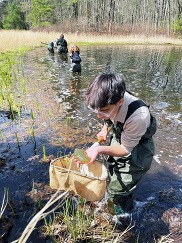
Planning is well underway for the 2026 Rhode Island Envirothon to be held on Friday, May 22, at Goddard Memorial State Park! Teams of Rhode Island middle and high school students from across the Ocean State have been training all year and will participate in three events over the next two months, finishing with the 32nd annual team competition.
Rhode Island Envirothon is an exciting environmental program, perfect for middle and high school students who love the outdoors, animals, and plants, or who are just curious about the world we live in. Volunteers and environmental professionals from state and federal agencies - including USDA-NRCS, non-profit organizations, higher education, and private industry serve as event organizers, station volunteers, subject matter experts and judges.
If you have a school class, club or youth group interested in participating, it’s not too late to sign up! Contact Paul Dolan, at 401-500-0399 or president@rienvirothon.org, or Peter Stetson at petestetson8@gmail.com.
^ back to top
|
The USDA Farm Service Agency (FSA) is reopening the 2025 crop acreage reporting period required for specialty crop producers who want to apply for the Assistance for Specialty Crop Farmers (ASCF) program. The ASCF program is designed to help address market disruptions, elevated input costs, persistent inflation, and market losses from foreign competitors engaging in unfair trade practices that impede exports. Specialty crop producers now have until April 24, 2026, to report 2025 acres to FSA.
Eligible Specialty Crops
ASCF-eligible specialty crops include: (A) Almond, Apple, Apricot, Aronia berry, Artichoke, Asparagus, Avocado (B) Banana, Bean (Snap or green; Lima; Dry edible), Beet (Table), Blackberry, Blueberry, Breadfruit, Broccoli (including Broccoli Raab), Brussels Sprouts (C) Cabbage (including Chinese), Cacao, Carrot, Cashew, Cauliflower, Celeriac, Celery, Cherimoya, Cherry, Chestnut (for Nuts), Chive, Citrus, Coconut, Coffee, Collards (including Kale), Cranberry, Cucumber, Currant (D) Date, (E) Eggplant, Endive (F) Feijou, Fig, Filbert (Hazelnut) (G) Garlic, Gooseberry, Grape (including Raisin), Guava (H) Horseradish (K) Kiwi, Kohlrabi (L) Leek, Lettuce, Litchi (M) Macadamia, Mango, Melon (All Types), Mushroom (Cultivated), Mustard and Other Greens (N) Nectarine (O) Okra, Olive, Onion, (P) Papaya, Parsley, Parsnip, Passion Fruit, Pea (Garden; English or Edible Pod; Dry edible), Peach, Pear, Pecan, Pepper, Persimmon, Pineapple, Pistachio, Plum (including Prune), Pomegranate, Potato, Pumpkin (Q) Quince (R) Radish (All Types), Raspberry, Rhubarb, Rutabaga (S) Salsify, Spinach, Squash (Summer and Winter), Strawberry, Suriname Cherry, Sweet Corn, Sweet Potato, Swiss Chard (T) Taro, Tomato (including Tomatillo), Turnip (W) Walnut, Watermelon.
*Dry edible beans and peas covered by the Farmer Bridge Assistance program will not be eligible for ASCF. Commodities covered by FBA will not be eligible for ASCF.
Program Participation
ASCF payments are based on reported 2025 planted acres. Eligible farmers should ensure their 2025 acreage reporting is factual and accurate by Friday, April 24, 2026. USDA will release commodity-specific payment rates soon after the acreage reporting deadline.
Following completion of acreage reporting, producers are encouraged to prepare for the eventual announcement of the ASCF program application period by creating a Login.gov account. Doing so ensures that once FSA starts taking ASCF program applications, those producers who wish to apply online will experience an expedited application and payment process. Assistance will also be available through local FSA county offices.
Login.gov is the public’s one account for government engagement. Producers can use one account and password for secure, private access to participating government agencies, including FSA. Begin the Login.gov process by visiting fsa.usda.gov/fba to create a Login.gov account. Producers who have an existing Login.gov account can work with FSA using their existing account. For assistance creating a login.gov account, visit https://login.gov/help/.
Crop insurance linkage will not be required for the ASCF program. However, USDA strongly urges producers to take advantage of the new One Big Beautiful Bill Act (OBBBA) risk management tools to best protect against price risk and volatility in the future.
More information on ASCF is available online at www.fsa.usda.gov/fba. Producers can contact their local FSA county office to make an appointment to complete their 2025 crop acreage report.
^ back to top
Rhode Island Farm Service Agency (FSA) reminds producers that annual acreage reporting is an important eligibility requirement to receive financial benefits through the Livestock Forage Disaster Assistance Program (LFP), as well as several other FSA-administered programs.
The next deadline for annual acreage reporting in State is July 15, 2026. This includes common spring-planted crops, such as corn, soybeans, wheat, and grain sorghum, but also includes perennial grass (pasture) and Conservation Reserve Program acres.
Noninsured Crop Disaster Assistance Program (NAP) policy holders should note that the acreage reporting date for NAP-covered crops is July 15, 2026, or 15 calendar days before grazing or harvesting of the crop begins.
Even though the acreage reporting deadline is months away, we are encouraging producers with pasture acres and acres planted for grazing purposes to complete certification of those acres as soon as possible to assist us with preparations for potential program implementation.
LFP provides financial assistance to livestock producers and contract growers who also are producers of grazed forage crop acres (native and improved pasture and crops planted specifically for grazing purposes) and who have suffered a loss due to a qualifying drought during the grazing season.
Other points regarding LFP and acreage certification:
- Producers must have a risk in the pasture or hay crop acres in order to complete the acreage certification process.
- If a producer applies for LFP they must be able to support their application with either a written lease or an Annual Lease Certification (CCC-855).
- In addition to the acreage reporting requirement, LFP applicants who lease acres must be able to support their application with either a written lease or an Annual Lease Certification (CCC-855).
- Producers who previously have certified grazing land through a continuous certification may want to contact the county FSA office to ensure that certification remains in place and reflects 2026 producers and shares.
Producers can contact the Rhode Island County FSA at (401) 828-3120, ext 1 for additional information.
Learn how to create a farmers.gov account today!
^ back to top
The Farm Loan team in [Name] County is already working on operating loans for spring 202# and asks potential borrowers to submit their requests early so they can be timely processed. The farm loan team can help determine which loan programs are best for applicants.
FSA offers a wide range of low-interest loans that can meet the financial needs of any farm operation for just about any purpose. The traditional farm operating and farm ownership loans can help large and small farm operations take advantage of early purchasing discounts for spring inputs as well expenses throughout the year.
Microloans are a simplified loan program that will provide up to $50,000 for both Farm Ownership and Operating Microloans to eligible applicants. These loans, targeted for smaller and non-traditional operations, can be used for operating expenses, starting a new operation, purchasing equipment, and other needs associated with a farming operation. Loans to beginning farmers and members of underserved groups are a priority.
Other types of loans available include:
Marketing Assistance Loans allow producers to use eligible commodities as loan collateral and obtain a 9-month loan while the crop is in storage. These loans provide cash flow to the producer and allow them to market the crop when prices may be more advantageous.
Farm Storage Facility Loans can be used to build permanent structures used to store eligible commodities, for storage and handling trucks, or portable or permanent handling equipment. A variety of structures are eligible under this loan, including bunker silos, grain bins, hay storage structures, and refrigerated structures for vegetables and fruit. A producer may borrow up to $500,000 per loan.
^ back to top
The Farm Service Agency (FSA) has noticed a rise in fraudulent scams that target FSA farm loan customers by obtaining publicly available information about your FSA Farm Program participation or Farm Loan information. These unauthorized contacts are made through email, text messages, phone calls, or social media to gain your personal information so the scammer can access your bank account or gain additional personal information.
Signs of a Scam:
- Emails or messages urging immediate action or requesting personal details.
- Unexpected attachments or links in emails from unknown sources.
- Calls or texts claiming to be from FSA requesting passwords, PINs, Social Security numbers, or credit card information.
- Offers that seem too good to be true, particularly investment or debt relief schemes.
- Messages from unfamiliar social media accounts or door-to-door solicitations related to banking.
How to Protect Yourself:
- Always verify communications are coming from official sources. If you have concerns about a contact being genuine, please reach out to your local FSA Service Center directly.
- Do not click on links or download attachments from suspicious emails or texts.
- Use strong, unique passwords and enable two-factor authentication when available.
- Report suspicious activity to FSA immediately and, if applicable, submit a report to the U.S. General Services Administration.
If you have questions about your FSA accounts, including your farm loans, contact the Lilly Toth County USDA Service Center at 401-828-3120 Option 1 or visit fsa.usda.gov.
^ back to top
The U.S. Department of Agriculture (USDA) reminds agricultural producers that the final date to apply for or make changes to their existing crop insurance coverage is quickly approaching. Sales closing dates vary by crop and location, but the next major sales closing dates are May 1, May 15, July 15 and July 31.
Producers are encouraged to visit their crop insurance agent soon to learn specific details for the 2027 crop year. Crop insurance coverage decisions must be made on or before the applicable sales closing date.
The USDA’s Risk Management Agency lists sales closing dates in the Actuarial Information Browser, under the “Dates” tab.
Producers can also access the RMA Map Viewer tool to visualize the insurance program date choices for acreage reporting, cancellation, contract change, earliest planting, end of insurance, end of late planting period, final planting, premium billing, production reporting, sales closing, and termination dates, when applicable, per commodity, insurance plan, type and practice. Additionally, producers can access the RMA Information Reporting System tool to specifically identify applicable dates for their operation, using the “Insurance Offer Reports” application.
Federal crop insurance is critical to the farm safety net. It helps producers and owners manage revenue risks and strengthens the rural economy. Producers may select from several coverage options, including yield coverage, revenue protection and area risk plans of insurance.
RMA secures the future of agriculture by providing world class risk management tools to rural America through Federal crop insurance and risk management education programs. RMA provides policies for more than 130 crops and is constantly working to adjust and create new policies based on producer needs and feedback. Crop insurance is sold and delivered solely through private crop insurance agents. A list of crop insurance agents is available online at the RMA Agent Locator. Producers can learn more about crop insurance and the modern farm safety net at rma.usda.gov or by contacting their RMA Regional Office.
^ back to top
USDA – Rhode Island
60 Quaker Lane
Warwick, RI 02886
|
Natural Resources Conservation Service (NRCS)
401-828-1300 | www.RI.nrcs.usda.gov
|
|
Eastern RI – Serving Newport and Bristol counties
|
|
NRCS Field Office
Kat Zuromski, Acting District Conservationist
401-786-1389 Kathryn.Zuromski@usda.gov
|
Conservation District Office
401-934-0842 info@easternriconservation.org
|
|
Northern RI – Serving Providence County
|
|
NRCS Field Office
Ghyllian Alger, District Conservationist
401-822-8835/ Ghyllian.Alger@usda.gov
|
Conservation District Office
401-934-0840/ mallard.nricd@gmail.com
|
|
Southern RI – Serving Kent and Washington counties
|
|
NRCS Field Office
Jameson Long, District Conservationist
401-822-8837/ Jameson.Long@usda.gov
|
Conservation District Office
401-661-5761/ gfuller@sricd.org
|
|
|
|
RI FSA County Office, Suite 49
RI FSA Farm Loan Team, Suite 62
RI FSA State Office, Suite 62
|
401-828-3120 Option 1
401-828-3120 Option 2
401-828-3120 Option 3
|
| |
| |
|
|
|
|







