
Louisiana USDA-FSA Updates - April 2026
Table of Contents:
It’s with deep sadness that we share the passing of Willie F. Cooper, former State Executive Director (SED) of the Louisiana Farm Service Agency (FSA) who departed this life at the age of 90. Mr. Cooper was far more than a former SED—he was a pillar of Louisiana agriculture and a legend within the FSA community nationwide.
With over 56 years of dedicated service to the U.S. Department of Agriculture including 42 years as Louisiana’s FSA SED, —Mr. Cooper set a standard of excellence that continues to shape our work today. He faithfully served under eight presidents and 13 Secretaries of Agriculture, always with unwavering commitment, humility, and integrity.
His contributions earned him numerous honors, including Progressive Farmer’s Man of the Year and the Louisiana Farm Bureau’s Distinguished Service Award. Yet those who knew him best remember not just the accolades, but the way he championed farmers, supported rural communities, and led with wisdom and compassion.
Though he retired 12 years ago, Mr. Cooper’s influence remains woven into the culture of Louisiana FSA. The high expectations we hold for ourselves, our dedication to service, responsiveness to the needs of producers, and commitment to excellence, are all part of the legacy he leaves behind.
As we honor his life and service, please know that we remain steadfast in carrying forward the standard he set. Like Mr. Cooper, we are committed to meeting your needs with the highest level of care and professionalism.
Craig A. McCain
FSA State Executive Director Louisiana
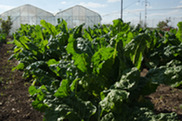
The USDA Farm Service Agency (FSA) is reopening the 2025 crop acreage reporting period required for specialty crop producers who want to apply for the Assistance for Specialty Crop Farmers (ASCF) program. The ASCF program is designed to help address market disruptions, elevated input costs, persistent inflation, and market losses from foreign competitors engaging in unfair trade practices that impede exports. Specialty crop producers now have until April 24, 2026, to report 2025 acres to FSA.
Eligible Specialty Crops
ASCF-eligible specialty crops include: (A) Almond, Apple, Apricot, Aronia berry, Artichoke, Asparagus, Avocado (B) Banana, Bean (Snap or green; Lima; Dry edible), Beet (Table), Blackberry, Blueberry, Breadfruit, Broccoli (including Broccoli Raab), Brussels Sprouts (C) Cabbage (including Chinese), Cacao, Carrot, Cashew, Cauliflower, Celeriac, Celery, Cherimoya, Cherry, Chestnut (for Nuts), Chive, Citrus, Coconut, Coffee, Collards (including Kale), Cranberry, Cucumber, Currant (D) Date, (E) Eggplant, Endive (F) Feijou, Fig, Filbert (Hazelnut) (G) Garlic, Gooseberry, Grape (including Raisin), Guava (H) Horseradish (K) Kiwi, Kohlrabi (L) Leek, Lettuce, Litchi (M) Macadamia, Mango, Melon (All Types), Mushroom (Cultivated), Mustard and Other Greens (N) Nectarine (O) Okra, Olive, Onion, (P) Papaya, Parsley, Parsnip, Passion Fruit, Pea (Garden; English or Edible Pod; Dry edible), Peach, Pear, Pecan, Pepper, Persimmon, Pineapple, Pistachio, Plum (including Prune), Pomegranate, Potato, Pumpkin (Q) Quince (R) Radish (All Types), Raspberry, Rhubarb, Rutabaga (S) Salsify, Spinach, Squash (Summer and Winter), Strawberry, Suriname Cherry, Sweet Corn, Sweet Potato, Swiss Chard (T) Taro, Tomato (including Tomatillo), Turnip (W) Walnut, Watermelon.
*Dry edible beans and peas covered by the Farmer Bridge Assistance program will not be eligible for ASCF. Commodities covered by FBA will not be eligible for ASCF.
Program Participation
ASCF payments are based on reported 2025 planted acres. Eligible farmers should ensure their 2025 acreage reporting is factual and accurate by Friday, April 24, 2026. USDA will release commodity-specific payment rates soon after the acreage reporting deadline.
Following completion of acreage reporting, producers are encouraged to prepare for the eventual announcement of the ASCF program application period by creating a Login.gov account. Doing so ensures that once FSA starts taking ASCF program applications, those producers who wish to apply online will experience an expedited application and payment process. Assistance will also be available through local FSA county offices.
Login.gov is the public’s one account for government engagement. Producers can use one account and password for secure, private access to participating government agencies, including FSA. Begin the Login.gov process by visiting fsa.usda.gov/fba to create a Login.gov account. Producers who have an existing Login.gov account can work with FSA using their existing account. For assistance creating a login.gov account, visit https://login.gov/help/.
Crop insurance linkage will not be required for the ASCF program. However, USDA strongly urges producers to take advantage of the new One Big Beautiful Bill Act (OBBBA) risk management tools to best protect against price risk and volatility in the future.
More information on ASCF is available online at www.fsa.usda.gov/fba. Producers can contact their local FSA county office to make an appointment to complete their 2025 crop acreage report.
|

During the last two years of your Conservation Reserve Program (CRP) contract, expiring CRP acreage may be offered through the Transition Incentives Program (TIP).
If you do not plan to re-enroll your CRP acres that expire in 2026 or 2027, TIP may provide up to two additional annual rental payments after the contract expires, if the landowner sells or rents the land to a beginning or veteran farmer or rancher. New landowners or renters must use sustainable grazing or farming methods as they return the land to production. TIP provides an opportunity to support beginning or veteran farmers and ranchers while maintaining conservation benefits.
The deadline to submit a TIP offer is Aug. 14, 2026.
For more information or to submit a TIP offer, please contact your local FSA office or visit the TIP webpage.
|
|
Deadline to apply is May 1, 2026
The first Continuous CRP batching period closed on March 20, 2026. Since acreage remains available, FSA is opening a second batching period and will consider Continuous CRP offers submitted by interested agricultural producers and landowners between March 23, 2026, and May 1, 2026. Offers to re-enroll expiring CRP continuous acreage will be accepted on a first-come, first-served basis. New acreage offered in continuous CRP practices will be considered for acceptance on a first-come, first-serve basis if they support USDA conservation priorities including but not limited to practices that address water quality, such as filter strips and grass waterways, and practices that restore native ecosystems or target specific resource concerns.
Continuous CRP participants voluntarily offer environmentally sensitive lands, typically smaller parcels than offered through General CRP including wetlands, riparian buffers, and varying wildlife habitats. In return, they receive annual rental payments and cost-share assistance to establish long-term, resource-conserving vegetative cover.
CRP is USDA’s flagship conservation program, providing financial and technical support to agricultural producers and landowners who place unproductive or marginal cropland under contract for 10-15 years and who agree to voluntarily convert the land to beneficial vegetative cover to improve water quality, prevent soil erosion and support wildlife habitat. The Continuing Appropriations, Agriculture, Legislative Branch, Military Construction and Veterans Affairs, and Extensions Act, 2026, extends FSA’s authority to administer CRP through Sept. 30, 2026.
|
The Farm Service Agency (FSA) has noticed a rise in fraudulent scams that target FSA farm loan customers by obtaining publicly available information about your FSA Farm Program participation or Farm Loan information. These unauthorized contacts are made through email, text messages, phone calls, or social media to gain your personal information so the scammer can access your bank account or gain additional personal information.
Signs of a Scam:
- Emails or messages urging immediate action or requesting personal details.
- Unexpected attachments or links in emails from unknown sources.
- Calls or texts claiming to be from FSA requesting passwords, PINs, Social Security numbers, or credit card information
- Offers that seem too good to be true, particularly investment or debt relief schemes.
- Messages from unfamiliar social media accounts or door-to-door solicitations related to banking.
How to Protect Yourself:
- Always verify communications are coming from official sources. If you have concerns about a contact being genuine, please reach out to your local FSA Service Center directly.
- Do not click on links or download attachments from suspicious emails or texts.
- Use strong, unique passwords and enable two-factor authentication when available.
- Report suspicious activity to FSA immediately and, if applicable, submit a report to the U.S. General Services Administration here.
If you have questions about your FSA accounts, including your farm loans, contact your local USDA Service Center or visit fsa.usda.gov.
USDA’s Farm Service Agency (FSA) is delivering more than $16 billion in total Congressionally approved disaster relief. FSA is accepting applications for assistance through the second stage of the Supplemental Disaster Relief Program (SDRP) from agricultural producers who suffered eligible non-indemnified, uncovered or quality crop losses due to qualifying natural disasters in 2023 and 2024.
Stage Two covers eligible crop, tree, bush and vine losses that were not covered under Stage One program provisions, including non-indemnified (shallow loss), uncovered and quality losses. Although the majority of payments from the first stage are already in the hands of producers helping them prepare for and invest in the next crop year, Stage One assistance, announced in July, remains available to producers who received an indemnity under crop insurance or the Noninsured Crop Disaster Assistance Program (NAP) for eligible crop losses due to qualifying 2023 and 2024 natural disaster events.
The deadline to apply for both Stage One and Stage Two assistance is April 30, 2026.
SDRP Stage Two Program Details
SDRP Stage Two provides assistance for eligible crop, tree, bush and vine losses not covered under Stage One, including:
-
Non-Indemnified Losses (Including Shallow Losses)
- Insured losses through federal crop insurance that did not trigger a crop insurance indemnity.
- Losses with NAP coverage that did not trigger a NAP payment.
-
Uncovered Losses (Uninsured Losses)
- Includes losses that were not insured through federal crop insurance or NAP.
-
Quality Losses
- Includes quality losses to commodities indicated by:
- A decrease in value based on discounts due to the physical condition of the crop supported by applicable grading factors
- A decline in the nutritional value of forage crops supported by documented forage tests.
- Producers will certify to an SDRP quality loss percentage.
FSA is establishing block grants with Connecticut, Hawaii, Maine, and Massachusetts that cover crop losses; therefore, producers with losses on land physically located in these states are not eligible for SDRP program payments.
For information on program eligibility and to download an application checklist, visit fsa.usda.gov/sdrp.
More information will be provided in early 2026 regarding a separate enrollment period for quality losses covered by SDRP Stage One as well as for insured producers in Puerto Rico who were not included in Stage One because data was not available when pre-filled applications were mailed.
To make an appointment to apply, call local Parish FSA Office.

The new customer kiosks from USDA’s Farm Service Agency are available at every county office nationwide. These kiosks help to streamline your visit to your local county office and easily access a variety of features such as signing FSA documents, utilizing the Loan Assistance Tool, browsing USDA programs, accessing the internet, accessing necessary personal information, and signing up for a Login.gov account, which provides access to farmers.gov level two features and other USDA and U.S. Government web resources. Future kiosk functionality enhancements include a customer check-in application, self-service option for FSA program applications and documents, financial inquiries and more. Learn more about how FSA is modernizing our customer experience here.
|
Agricultural producers of perishable commodities including fruits, vegetables and floriculture can now get funding for controlled atmosphere storage through Farm Storage Facility Loans (FSFL) offered by the U.S. Department of Agriculture’s (USDA) Farm Service Agency (FSA). Controlled atmosphere storage regulates the concentrations of oxygen, carbon dioxide and nitrogen in a storage room to increase the shelf life of crops.
In addition to now supporting controlled atmosphere storage, FSFLs also provide low-interest financing to help producers build or upgrade storage facilities and to purchase portable (new or used) structures, equipment and storage and handling trucks.
The low-interest funds can also be used for controlled atmosphere storage monitoring equipment, designed to notify facility owners immediately if potential atmospheric concerns are detected. Producers may renovate existing storage facilities to include controlled atmosphere storage monitoring equipment. Authorized loan terms for FSFL renovations are three and five years only.
To assist with monitoring gases and particle concentrations for controlled atmosphere storage, the following equipment, but not limited to, is eligible for an FSFL:
- Optical oxygen sensor.
- Low power CO2 sensor.
- Air quality sensor.
- Gas detection devices.
- Air temperature and relative humidity sensor.
- Water activity meter.
- Temperature stabilized water activity analyzer.
- Precision and performance humidity and temperature transmitter.
Loans of up to $50,000 can be secured by a promissory note/security agreement, loans between $50,000 and $100,000 may require additional security and loans exceeding $100,000 require additional security.
FSFL borrowers do not need to demonstrate lack of commercial credit availability to apply. The loans are designed to assist a diverse range of agricultural operations, including small and mid-sized businesses, new farmers and ranchers, operations supplying local food and farmers markets, non-traditional farm products and underserved producers.
For more information, see the FSFL fact sheet and contact FSA at your local USDA Service Center.
The Farm Service Agency (FSA) makes Recourse Marketing Assistance Loans when the commodity offered as collateral does not meet the quality eligibility requirements according to U.S. grading standards.
Recourse loans must be repaid at principal plus interest. The recourse loan commodity cannot be delivered or forfeited in satisfaction of the outstanding loan.
The following are considered recourse loans:
- high moisture corn and grain sorghum
- acquired grain for high moisture corn or grain sorghum loans
- distress loans on any commodity that is not stored in eligible storage (with a loan term of 90 days)
- any commodity otherwise eligible for nonrecourse loan, but the commodity does not meet the quality eligibility requirements according to U. S. grading standards.
Recourse loans are also available for contaminated commodities that remain merchantable at the full loan rate.
A producer may receive a nonrecourse loan for low quality commodities at a reduced loan rate. The reduced loan rate is 20 percent of the applicable base county loan rate.
For more information or to apply contact your local Parish FSA Office.
The U.S. Department of Agriculture’s (USDA) updates to the Farm Service Agency’s (FSA) Farm Loan Programs are officially in effect. These changes, part of the Enhancing Program Access and Delivery for Farm Loans rule, are designed to increase financial flexibility for agricultural producers, allowing them to grow their operations, boost profitability, and build long-term savings.
These program updates reflect USDA’s ongoing commitment to supporting the financial success and resilience of farmers and ranchers nationwide, offering critical tools to help borrowers manage their finances more effectively.
What the new rules mean for you:
- Low-interest installment set-aside program: Financially distressed borrowers can now defer up to one annual loan payment at a reduced interest rate. This simplified option helps ease financial pressure while keeping farming operations running smoothly.
- Flexible repayment terms: New repayment options give borrowers the ability to increase their cash flow and build working capital reserves, allowing for long-term financial planning that includes saving for retirement, education, and other future needs.
- Reduced collateral requirements: FSA has lowered the amount of additional loan security needed for direct farm loans, making it easier for borrowers to leverage their existing equity without putting their personal residence at risk.
These new rules provide more financial freedom to borrowers. By giving farmers and ranchers better tools to manage their operations, we’re helping them build long-term financial stability. It’s all about making sure they can keep their land, grow their business, and invest in the future.
If you’re an FSA borrower or considering applying for a loan, now is the time to take advantage of these new policies. We encourage you to reach out to your local FSA farm loan staff to ensure you fully understand the wide range of loan making and servicing options available to assist with starting, expanding, or maintaining your agricultural operation.
To conduct business with FSA, please contact your local USDA Service Center.
The U.S. Department of Agriculture (USDA) reminds agricultural producers that the final date to apply for or make changes to their existing crop insurance coverage is quickly approaching. Sales closing dates vary by crop and location, but the next major sales closing dates are May 1, May 15, July 15 and July 31.
Producers are encouraged to visit their crop insurance agent soon to learn specific details for the 2027 crop year. Crop insurance coverage decisions must be made on or before the applicable sales closing date.
The USDA’s Risk Management Agency lists sales closing dates in the Actuarial Information Browser, under the “Dates” tab.
Producers can also access the RMA Map Viewer tool to visualize the insurance program date choices for acreage reporting, cancellation, contract change, earliest planting, end of insurance, end of late planting period, final planting, premium billing, production reporting, sales closing, and termination dates, when applicable, per commodity, insurance plan, type and practice. Additionally, producers can access the RMA Information Reporting System tool to specifically identify applicable dates for their operation, using the “Insurance Offer Reports” application.
Federal crop insurance is critical to the farm safety net. It helps producers and owners manage revenue risks and strengthens the rural economy. Producers may select from several coverage options, including yield coverage, revenue protection and area risk plans of insurance.
RMA secures the future of agriculture by providing world class risk management tools to rural America through Federal crop insurance and risk management education programs. RMA provides policies for more than 130 crops and is constantly working to adjust and create new policies based on producer needs and feedback. Crop insurance is sold and delivered solely through private crop insurance agents. A list of crop insurance agents is available online at the RMA Agent Locator. Producers can learn more about crop insurance and the modern farm safety net at rma.usda.gov or by contacting their RMA Regional Office.
NRCS Chief Aubrey J.D. Bettencourt outlines how the agency is helping producers cut through red tape to plan and implement whole-farm regenerative practices through the new Regenerative Pilot Program. The new pilot program focuses on meeting producers where they are and integrating into farm operations to create a more sustainable, efficient, and profitable system that ultimately gives producers the credit they deserve for integrating voluntary conservation efforts. Watch the video here.
The U.S. Department of Agriculture (USDA) announced loan interest rates for April 2026, which are effective April 1, 2026. USDA Farm Service Agency (FSA) loans provide important access to capital to help agricultural producers start or expand their farming operation, purchase equipment and storage structures or meet cash flow needs.
Operating, Ownership and Emergency Loans
FSA offers farm operating, ownership and emergency loans with favorable interest rates and terms to help eligible agricultural producers obtain financing needed to start, expand or maintain a family agricultural operation.
Interest rates for Operating and Ownership loans for April 2026 are as follows:
FSA also offers guaranteed loans through commercial lenders at rates set by those lenders. To access an interactive online, step-by-step guide through the farm loan process, visit the Loan Assistance Tool on farmers.gov.
Commodity and Storage Facility Loans
Additionally, FSA provides low-interest financing to producers to build or upgrade on-farm storage facilities and purchase handling equipment and loans that provide interim financing to help producers meet cash flow needs without having to sell their commodities when market prices are low. Funds for these loans are provided through the Commodity Credit Corporation (CCC) and are administered by FSA.
To learn more about FSA programs, producers can contact their local USDA Service Center. Additionally, producers can use online tools, such as the Loan Assistance Tool and Debt Consolidation Tool to explore loan options.
Apr 24: Deadline for eligible farmers to ensure their 2025 acreage reporting is factual and accurate for ASCF Program.
Apr 30: The deadline to apply for Stage 1 and 2 of the Supplemental Disaster Relief Program (SDRP).
May 1: deadline to submit offers for Continuous CRP second batching period
Jul 15: Crop Acreage Reporting deadline for most other crops.
FSA now offers SMS texting; receive text message alerts on your cell phone regarding important deadlines, reporting requirements and updates. Call your local Service Center to schedule an appointment. You can find contact information at farmers.gov/service-locator.
Louisiana FSA State Office
3737 Government Street
Alexandria, LA 71302
Phone: 318-473-7721
Fax: 1-844-325-6942
|
|
Craig McCain
State Executive Director
Farm Service Agency
craig.mccain@usda.gov
Sarah Trichel
Acting State Conservationist
Natural Resource Conservation Service
sarah.trichel@usda.gov
FSA-State Committee:
Julie Baker Richard, Chair
Dale Cambre, Member
Charles Vincent Cannatella, Member
Kristy Jones, Member
Donna Winters, Member
|
Dewanna Pitman
Deputy State Executive Director
Farm Service Agency
dewanna.pitman@usda.gov
Roddric Bell
Regional Director
Risk Management Agency/ Insurance Services
roddric.bell@usda.gov
|
|








