New Jersey USDA Newsletter - April 2026
In this issue:
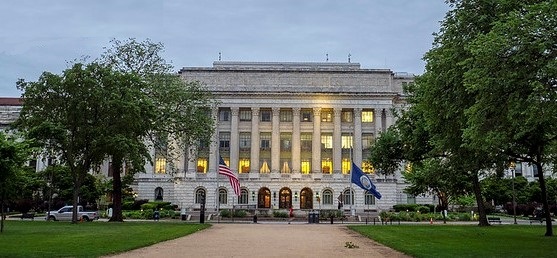 The USDA Farm Service Agency (FSA) announced the appointment of five leaders in agriculture to serve on the New Jersey USDA Farm Service Agency (FSA) state committee.
Members of the FSA state committee are appointed by Secretary of Agriculture Brooke L. Rollins and, in support of the Trump Administration’s Farmers First commitment, members of the FSA state committee are responsible for the oversight of farm programs and county committee operations, resolving program delivery appeals from the agriculture community, maintaining cooperative relations with industry stakeholders and keeping producers informed about current FSA programs.
Each FSA state committee is comprised of three to five members including a designated chairperson. The individuals appointed to serve on this committee for New Jersey are:
-
Paul Hlubik, Chair (Wrightstown) – Hlubik owns and operates a multi-county farm recognized for top yields in corn, soybeans, and sorghum. With decades of experience in production agriculture and farm management, he pairs practical agricultural expertise with leadership in state and federal agricultural policy, including previously serving as FSA State Executive Director in New Jersey and as a member of the New Jersey State Board of Agriculture.
-
James Abma Jr., Member (Hillsborough) – Abma is a fourth-generation diversified crop and livestock producer who raises vegetables, hay, pasture, and forage crops. He manages direct-to-consumer beef and hog operations, oversees large scale produce production for wholesale markets, and has led major farm expansion and disaster recovery efforts while remaining deeply involved in New Jersey’s agricultural leadership community.
-
Alfred Murray, Member (Audubon) – Murray has spent more than 40 years serving farmers through statewide marketing, policy, and program delivery roles. His career includes senior leadership positions within the New Jersey Department of Agriculture and FSA, where he advanced market development, agricultural program administration, and industry engagement across crop, livestock, and specialty crop sectors.
-
Raj Sinha, Member (Sandyston) – Sinha operates a multigenerational agricultural enterprise known for grain, vegetable, and specialty crop production, including one of the largest sunflower operations in the state. He was raised on his family’s farm and now farms with his own family. Sinha brings extensive experience in crop production, agritourism, and community focused agricultural initiatives, along with a long record of service on agricultural boards and committees across New Jersey.
-
James Wenger, Member (Bridgeton) – Wenger is a row crop producer who grows corn, soybeans, and wheat across multiple southern New Jersey counties. With more than four decades of experience in crop production, custom harvesting, grain storage, and soil health practices using food processing residuals, he brings operational knowledge and family-based agricultural management.
“These individuals, selected by Secretary Rollins in partnership with key stakeholders in each state, are held in high regard in the agriculture industry and are entrusted to ensure FSA programs are delivered in a manner consistent with federal farm policy and in the best interest of all agricultural producers in their state,” said FSA Administrator Bill Beam. “Their appointment to the FSA state committee is a testament to their standing in the industry and their dedication to the agriculture industry, rural America and President Trump’s America First, Farmers First policies.”
FSA helps America’s farmers, ranchers and forest landowners invest in, improve, protect and expand their agricultural operations through the delivery of agricultural programs for all Americans. FSA implements agricultural policy, administers credit and loan programs, and manages conservation, commodity, disaster recovery and marketing programs through a national network of state and county offices and locally elected county committees. For more information, visit fsa.usda.gov.
Top of page

In this Ask the Expert, Jack Carlile, Farm Loan Manager for the USDA Farm Service Agency (FSA), answers questions about farm operating loans and when producers should apply in order to secure funds for the current crop year.
As the Farm Loan Manager for the Cherokee County Service Center, Jack is responsible for managing the loan making and loan servicing activities for five counties in northeast Oklahoma. His office provides services for over 650 farm loan customers. Jack was raised on a cross bred cow/calf operation that his grandparents started. Over the years, each generation has added to the operation by purchasing additional pasture. The operation also grows and bales their own hay. Jack’s agriculture background and degree in agriculture economics from Oklahoma State University help him better understand the financing needs of his producers.
Who can apply for FSA Farm Loans?
Anyone can apply for FSA’s loan programs. Applications will be considered on basic eligibility requirements. To apply for a loan, you must meet the following general eligibility requirements including:
- Be a U.S. citizen or qualified alien.
- Operator of a family farm or ranch.
- Have a satisfactory credit history.
- Unable to obtain credit elsewhere at reasonable rates and terms to meet actual needs.
- Not be delinquent on any federal debts.
To read the full blog visit farmers.gov/blog/ask-the-expert-farm-operating-loan-qa-with-jack-carlile.
|
Top of page
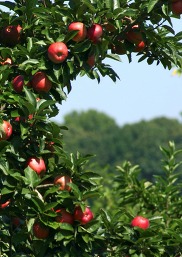
As a reminder, FSA has reopened the 2025 crop acreage reporting period required for specialty crop producers who want to apply for the Assistance for Specialty Crop Farmers (ASCF) program. Specialty crop producers now have until April 24, 2026, to report 2025 acres to FSA. Announced by U.S. Secretary of Agriculture Brooke L. Rollins on Feb. 13, the ASCF program is designed to help address market disruptions, elevated input costs, persistent inflation, and market losses from foreign competitors engaging in unfair trade practices that impede exports.
To meet upcoming program deadlines, producers should contact their local FSA county office to make an appointment for assistance.
|
Top of page
Deadline to apply is May 1, 2026
The first Continuous CRP batching period closed on March 20, 2026. Since acreage remains available, FSA is opening a second batching period and will consider Continuous CRP offers submitted by interested agricultural producers and landowners by May 1, 2026. Offers to re-enroll expiring CRP continuous acreage will be accepted on a first-come, first-served basis. New acreage offered in continuous CRP practices will be considered for acceptance on a first-come, first-serve basis if they support USDA conservation priorities including but not limited to practices that address water quality, such as filter strips and grass waterways, and practices that restore native ecosystems or target specific resource concerns.
Continuous CRP participants voluntarily offer environmentally sensitive lands, typically smaller parcels than offered through General CRP including wetlands, riparian buffers, and varying wildlife habitats. In return, they receive annual rental payments and cost-share assistance to establish long-term, resource-conserving vegetative cover.
CRP is USDA’s flagship conservation program, providing financial and technical support to agricultural producers and landowners who place unproductive or marginal cropland under contract for 10-15 years and who agree to voluntarily convert the land to beneficial vegetative cover to improve water quality, prevent soil erosion and support wildlife habitat. The Continuing Appropriations, Agriculture, Legislative Branch, Military Construction and Veterans Affairs, and Extensions Act, 2026, extends FSA’s authority to administer CRP through Sept. 30, 2026.
|
Top of page
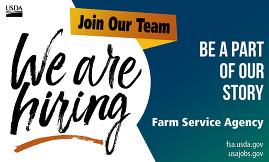
The Hunterdon/ Somerset County Farm Service Agency (FSA) office in Frenchtown is hiring a full-time or part-time, temporary Program Analyst (PA). The deadline to apply is May 8, 2026.
FSA is looking for temporary office assistance to help deliver “The American Relief Act of 2025,” which was signed into law on December 21, 2024, and provided the U.S. Department of Agriculture with more than $30 billion to deliver disaster recovery assistance for farmers and livestock producers. This position will help support the Supplemental Disaster Relief Program which will provide assistance to producers for necessary expenses due to losses due to weather related events in 2023 and 2024.
Duties include general office activities supporting FSA programs administered at the field level. Successful applicants must be reliable, have a professional attitude and enjoy working with the public.
How to Apply
Resumes can be submitted to the Hunterdon/ Somerset County FSA Office; 687 Pittstown Rd., Suite 2, Frenchtown, NJ 08825 or email Laura LaFevre, County Executive Director, at Laura.LaFevre@usda.gov. For more information or questions regarding this role, contact Laura LaFevre, at (908) 483-2349 or Laura.LaFevre@usda.gov.
About FSA
FSA helps America's farmers and ranchers invest in, improve, and expand their agricultural operations through disaster assistance, farm loans, price support, income support, and conservation programs.
USDA is an equal opportunity provider, employer, and lender.
|
Top of page
2026 Program Application Period: Electronic applications will be accepted via the VAPG application portal until 1:00 p.m. Eastern Time on April 22, 2026.
The Value Added Producer Grant (VAPG) is designed to assist agricultural producers in developing new products, expanding marketing opportunities, and increasing their income through value-added activities. Maximum grant awards for working capital are $200,000 and $50,000 for planning grants. Individuals can apply for the planning grant for feasibility studies or developing a business plan for example, and then the following year come back and apply for the working capital grant. The Notice of Funding Opportunity (NOFO) is attached and posted to Grants.gov. Applicants should pay special attention to Section 5.2 – Scoring, which outlines the Administrator Priorities.
Please note the following important updates:
- Updated Application Deadline: April 22, 2026, at 1:00 PM ET
- Submission Method: All applications must be submitted through the Grant Application Portal.
For Applicants Who Started Applications Before the Pause:
- Applicants have been notified that the application window is open. They now have full editing access to their existing applications in the Grant Application Portal and can continue working on them.
- If an applicant has already submitted an application, they may modify and resubmit it if they choose.
Additional Resources:
For more information, visit Value Added Producer Grants or email Rd.nj.rbcs@usda.gov .
Top of page
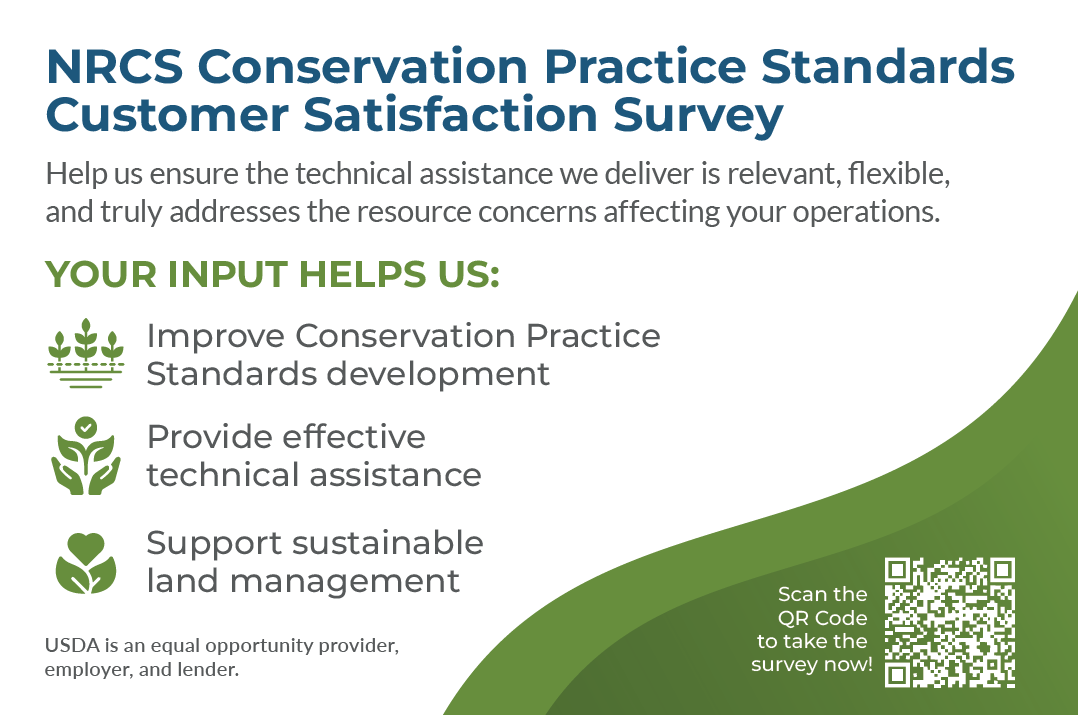
NRCS-New Jersey invites producers and landowners to complete the NRCS Conservation Practice Standards Customer Satisfaction Survey Your practical, on-the-ground experience is crucial to ensure Conservation Practice Standards (CPSs) are up-to-date, effective, practical, and economically viable for operations throughout the Garden State.
The survey should take approximately 10 minutes. This survey is voluntary and all responses are confidential and used only for statistical purposes. We appreciate your dedication to conservation and your partnership in managing natural resources sustainably.
Take the survey.
 Top of page
USDA announced major updates to federal crop insurance, reducing red tape for farmers, modernizing long-standing policies, and expanding access to critical risk protection beginning with the 2026 crop year. The Expanding Access to Risk Protection (EARP) Final Rule streamlines requirements across multiple crops, responds to producer feedback, and strengthens USDA’s commitment to putting America’s farmers first.
Learn more about the EARP Final Rule.
Top of page
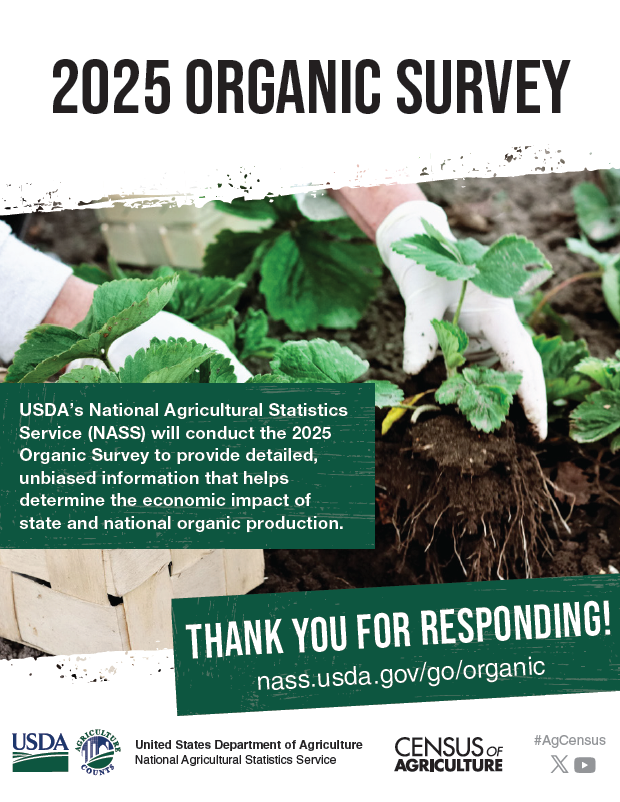
The U.S. Department of Agriculture’s (USDA) National Agricultural Statistics Service (NASS) will conduct the 2025 Organic Survey. Starting in Early December, NASS mailed survey codes to respondents with an invitation to reply online. NASS followed up by mailing the full questionnaire in early January. Last conducted in 2021, this Census of Agriculture special study will look to gather new data on organic production, marketing practice, income, and expenses in the United States. This effort is critical to help determine the economic impact of organic agriculture production on the nation. The results will be available on October 30, 2026.
“Organic agriculture is a growing industry, and it is our job as a federal statistical agency to help measure this part of the agriculture sector,” NASS Administrator Joseph Parsons. “We are excited to provide data on organic agriculture that will help inform organic producers and other industry professionals to make informed decisions for their operations.”
The 2025 Organic Survey is part of the Census of Agriculture Program and as such is required and protected by law (Title 7 USC 2204(g) Public Law 105-113). These federal laws require producers to respond and USDA to keep identities and answers confidential. Farmers and ranchers who receive the survey may complete it securely and conveniently online at agcounts.usda.gov or by mail.
NASS will mailed the survey to all known organic farms and ranches within the 50 states, as well as those producers transitioning to certified organic production. The questionnaire asks producers to provide information on acreage, production, and sales as well as production and marketing practices.
For more information about the 2025 Organic Survey, visit nass.usda.gov/go/organic.
|
 Top of page
USDA is an equal opportunity provider, employer and lender. To file a complaint of discrimination, write: USDA, Office of the Assistant Secretary for Civil Rights, Office of Adjudication, 1400 Independence Ave., SW, Washington, DC 20250-9410 or call (866) 632-9992 (Toll-free Customer Service), (800) 877-8339 (Local or Federal relay), (866) 377-8642 (Relay voice users).
|