Nevada April USDA Newsletter
In This Issue:
Severe weather events create significant challenges and often result in catastrophic loss for agricultural producers. Despite every attempt to mitigate risk, your operation may suffer losses. USDA offers several programs to help with recovery.
Risk Management
For producers with coverage through the Noninsured Crop Disaster Assistance Program (NAP), we want to remind you to report crop damage to your local Farm Service Agency (FSA) office. You will need to file a Notice of Loss (also called Form CCC-576) within 15 days of loss becoming apparent, except for hand-harvested crops, which should be reported within 72 hours.
If you have Federal Crop Insurance, contact your crop insurance agent within 72 hours of discovering damage and be sure to follow up in writing within 15 days.
Disaster Assistance
USDA also offers disaster assistance programs, which is especially important to livestock, fruit and vegetable, specialty and perennial crop producers who have fewer risk management options.
First, the Livestock Indemnity Program (LIP) and Emergency Assistance for Livestock, Honeybee and Farm-raised Fish Program (ELAP) reimburses producers for a portion of the value of livestock, poultry and other animals that died as a result of a qualifying natural disaster event or for loss of grazing acres, feed and forage. And, the Livestock Forage Disaster Program (LFP) provides assistance to producers of grazed forage crop acres that have suffered crop loss due to a qualifying drought. Livestock producers suffering the impacts of drought can also request Emergency Haying and Grazing on Conservation Reserve Program (CRP) acres.
Next, the Tree Assistance Program (TAP) provides cost share assistance to rehabilitate and replant tree, vines or shrubs loss experienced by orchards and nurseries. This complements NAP or crop insurance coverage, which cover the crop but not the plants or trees in all cases.
For LIP and ELAP, you will need to file a Notice of Loss for livestock and grazing or feed losses by the application deadline for each program. For TAP, you will need to file a program application within 90 days.
Documentation
It’s critical to keep accurate records to document all losses following this devastating cold weather event. Livestock producers are advised to document beginning livestock numbers by taking time and date-stamped video or pictures prior to after the loss.
Other common documentation options include:
- Purchase records
- Production records
- Vaccination records
- Bank or other loan documents
- Third-party certification
Other Programs
The Emergency Conservation Program and Emergency Forest Restoration Program can assist landowners and forest stewards with financial and technical assistance to restore damaged farmland or forests.
Additionally, FSA offers a variety of loans available including emergency loans that are triggered by disaster declarations and operating loans that can assist producers with credit needs. You can use these loans to replace essential property, purchase inputs like livestock, equipment, feed and seed, or refinance farm-related debts, and other needs.
Meanwhile, USDA’s Natural Resources Conservation Service (NRCS) provides financial resources through its Environmental Quality Incentives Program to help with immediate needs and long-term support to help recover from natural disasters and conserve water resources. Assistance may also be available for emergency animal mortality disposal from natural disasters and other causes.
Additional Resources
Additional details – including payment calculations – can be found on our NAP, ELAP, LIP, and TAP fact sheets. On farmers.gov, the Disaster Assistance Discovery Tool, Disaster-at-a-Glance fact sheet, and Farm Loan Discovery Tool can help you determine program or loan options.
USDA’s Natural Resources Conservation Service is looking for qualified individuals (QIs) to perform soil health testing for farmers, ranchers and forest landowners who are participating in the new Regenerative Pilot Program (RPP).
A QI is a trained reputable, competent professional who ensures proper soil sampling, packaging, lab submission, and data interpretation. QIs may be certified professionals, degree holders, or experienced technicians. NRCS provides funding as part of an RPP contract to help offset the cost of the soil health testing conducted by the QI.
Nevada NRCS is anticipating a significant need for QIs as producers have already begun signing up for RPP, which requires testing for biological, chemical, and physical characteristics of soil using approved laboratory methods in years one and five of the participant’s contract (called Conservation Evaluation and Monitoring Activity, or CEMA, 216). The goal is to provide producers with a snapshot of their soil health before and after conservation activities implemented under RPP.
If you, or anyone in your network are interested in becoming a QI, please email Acting State Soil Scientist Chris Savastio with questions and to specify the geographic area you would be able to cover: chris.savastio@usda.gov. Read more about CEMA 216 and the Regenerative Pilot Program.
Free basic coverage available for new and underserved loan applicants
Producers who apply for Farm Service Agency (FSA) farm loans will be offered the opportunity to enroll in the Noninsured Crop Disaster Assistance Program (NAP). NAP is available to producers who grow non-insurable crops and is especially important to fruit, vegetable, and other specialty crop growers. New, underserved and limited income specialty growers who apply for farm loans could qualify for basic loss coverage at no cost.
The basic disaster coverage protects at 55 percent of the market price for crop losses that exceed 50 percent of production. Covered “specialty” crops include vegetables, fruits, mushrooms, floriculture, ornamental nursery, aquaculture, turf grass, ginseng, honey, syrup, hay, forage, grazing and energy crops. FSA allows beginning, underserved or limited income producers to obtain NAP coverage up to 90 days after the normal application closing date when they also apply for FSA credit.
Producers can also protect value-added production, such as organic or direct market crops, at their fair market value in those markets. Targeted underserved groups eligible for free or discounted coverage include American Indians or Alaskan Natives, Asians, Blacks or African Americans, Native Hawaiians or other Pacific Islanders, Hispanics, and women.
FSA offers a variety of loan products, including farm ownership loans, operating loans and microloans that have a streamlined application process.
NAP coverage is not limited to FSA borrowers, beginning, limited resource, or underserved farmers. Any producer who grows eligible NAP crops can purchase coverage. To learn more, contact your County USDA Service Center or visit fsa.usda.gov/nap or fsa.usda.gov/farmloans.
The USDA Farm Service Agency (FSA) is reopening the 2025 crop acreage reporting period required for specialty crop producers who want to apply for the Assistance for Specialty Crop Farmers (ASCF) program. The ASCF program is designed to help address market disruptions, elevated input costs, persistent inflation, and market losses from foreign competitors engaging in unfair trade practices that impede exports. Specialty crop producers now have until April 24, 2026, to report 2025 acres to FSA.
Eligible Specialty Crops
ASCF-eligible specialty crops include: (A) Almond, Apple, Apricot, Aronia berry, Artichoke, Asparagus, Avocado (B) Banana, Bean (Snap or green; Lima; Dry edible), Beet (Table), Blackberry, Blueberry, Breadfruit, Broccoli (including Broccoli Raab), Brussels Sprouts (C) Cabbage (including Chinese), Cacao, Carrot, Cashew, Cauliflower, Celeriac, Celery, Cherimoya, Cherry, Chestnut (for Nuts), Chive, Citrus, Coconut, Coffee, Collards (including Kale), Cranberry, Cucumber, Currant (D) Date, (E) Eggplant, Endive (F) Feijou, Fig, Filbert (Hazelnut) (G) Garlic, Gooseberry, Grape (including Raisin), Guava (H) Horseradish (K) Kiwi, Kohlrabi (L) Leek, Lettuce, Litchi (M) Macadamia, Mango, Melon (All Types), Mushroom (Cultivated), Mustard and Other Greens (N) Nectarine (O) Okra, Olive, Onion, (P) Papaya, Parsley, Parsnip, Passion Fruit, Pea (Garden; English or Edible Pod; Dry edible), Peach, Pear, Pecan, Pepper, Persimmon, Pineapple, Pistachio, Plum (including Prune), Pomegranate, Potato, Pumpkin (Q) Quince (R) Radish (All Types), Raspberry, Rhubarb, Rutabaga (S) Salsify, Spinach, Squash (Summer and Winter), Strawberry, Suriname Cherry, Sweet Corn, Sweet Potato, Swiss Chard (T) Taro, Tomato (including Tomatillo), Turnip (W) Walnut, Watermelon.
*Dry edible beans and peas covered by the Farmer Bridge Assistance program will not be eligible for ASCF. Commodities covered by FBA will not be eligible for ASCF.
Program Participation
ASCF payments are based on reported 2025 planted acres. Eligible farmers should ensure their 2025 acreage reporting is factual and accurate by Friday, April 24, 2026. USDA will release commodity-specific payment rates soon after the acreage reporting deadline.
Following completion of acreage reporting, producers are encouraged to prepare for the eventual announcement of the ASCF program application period by creating a Login.gov account. Doing so ensures that once FSA starts taking ASCF program applications, those producers who wish to apply online will experience an expedited application and payment process. Assistance will also be available through local FSA county offices.
Login.gov is the public’s one account for government engagement. Producers can use one account and password for secure, private access to participating government agencies, including FSA. Begin the Login.gov process by visiting fsa.usda.gov/fba to create a Login.gov account. Producers who have an existing Login.gov account can work with FSA using their existing account. For assistance creating a login.gov account, visit https://login.gov/help/.
Crop insurance linkage will not be required for the ASCF program. However, USDA strongly urges producers to take advantage of the new One Big Beautiful Bill Act (OBBBA) risk management tools to best protect against price risk and volatility in the future.
More information on ASCF is available online at www.fsa.usda.gov/fba. Producers can contact their local FSA county office to make an appointment to complete their 2025 crop acreage report.
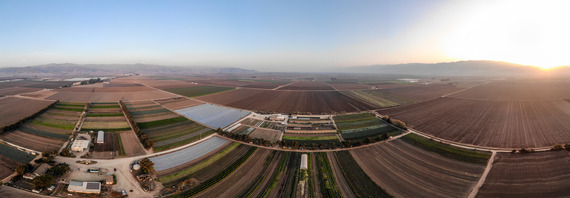 FSA guaranteed loans allow lenders to provide agricultural credit to farmers who do not meet the lender's normal underwriting criteria. Farmers and ranchers apply for a guaranteed loan through a lender, and the lender arranges for the guarantee. FSA can guarantee up to 95 percent of the loss of principal and interest on a loan. Guaranteed loans can be used for both farm ownership and operating purposes.
Guaranteed farm ownership loans can be used to purchase farmland, construct or repair buildings, develop farmland to promote soil and water conservation or to refinance debt.
Guaranteed operating loans can be used to purchase livestock, farm equipment, feed, seed, fuel, farm chemicals, insurance and other operating expenses.
FSA can guarantee farm ownership and operating loans up to $2,343,000. Repayment terms vary depending on the type of loan, collateral and the producer's ability to repay the loan. Operating loans are normally repaid within seven years and farm ownership loans are not to exceed 40 years.
For more information on guaranteed loans, contact your County USDA Service Center or visit fsa.usda.gov.
Producers are encouraged to call their local FSA office to schedule an appointment to ensure maximum use of their time and to make sure FSA staff is available to tend to their important business needs. Please call your local FSA office ahead to set an appointment and to discuss any records or documentation that might be needed during your appointment. To find your local FSA office, visit farmers.gov/working-with-us/service-center-locator
FSA/NRCS Contacts
Nevada State Office
300 Booth Street, Suite 2081 Reno, NV 89509
775-857-8500
|
State Executive Director
Philip Cowee
775.834.0895
|
NRCS State Conservationist
Heidi Ramsey
775.857.8500
|
|
Acting District Director District 1 FSA
Katie Nuffer
775.834.0882
|
District Director District 2 FSA
Claire Kehoe
775.738.6445 x 106
|
|
Elko
Tamara Thompson, Acting CED - FSA
775.738.6445 x 106
Allen Moody, Acting DC - NRCS
775.433.3921
|
Ely
Chris Ward, CED - FSA
775.738.6445 x 106
Joe Noyes, DC - NRCS
775.289.4065 x 105
|
|
Fallon
Krysta Roose, CED - FSA
775.423.5124 x 109
Albert Mulder, DC - NRCS
775.423.5124 x 114
|
Las Vegas
Dariya Zaporozhchenko,Urban Ag CED - FSA
702.407.1400
Jasmine Wilson, Urban Ag DC - NRCS
702.407.1400 x 6003
Jamie Gottilieb, DC-NRCS
775.623.5025 x 101
|
|
Lovelock
Ali Phillips, CED - FSA
775.273.2922 x 100
Cory Lytle, - Acting DC - NRCS
775.857.8500
|
Minden
Carson Hicks, DC - NRCS
775.782.3661
Caliente
Amanda Wheatley, Range Management Specialist - NRCS
775.726.3101
|
|
Winnemucca
Leah Mori, CED - FSA
775.623.5025 x 107
Angela Williams, DC - NRCS
775.623.5025
|
Yerington
Julie Thompson, CED - FSA
775.463.2265
Carson Hicks, Acting District Conservationist- NRCS
775.463.2265
|
###
USDA is an equal opportunity provider, employer and lender
|