
New York FSA Updates - April 28, 2026
In This Issue:
|
May 25
|
All Offices Closed for Memorial Day
|
|
June 1
|
Marketing Assistance Loans and Loan Deficiency Payments Deadline for prior year harvested corn, soybeans and other oilseeds and pulse crops
|
|
June 1
|
Acreage reporting deadline for subsequent year nursery crops
|
|
June 15
|
Acreage Reporting Deadline for onions
|
|
July 3
|
All Offices Closed for Independence Day
|
|
July 15
|
Acreage Reporting Deadline for Corn, Soybeans, Spring Planted Small Grains and most other crops including CRP and cover crops.
|
|
Aug 12
|
Supplemental Disaster Relief Program (SDRP) Deadline
|
|
Aug 17
|
Acreage Reporting deadline for cabbage, beans
|
The U.S. Department of Agriculture (USDA) is maximizing disaster assistance support for producers by issuing a second Supplemental Disaster Relief Program (SDRP) payment to eligible producers who have approved program applications for losses due to natural disasters in calendar years 2023 and 2024. USDA’s Farm Service Agency (FSA) has already provided $6.7 billion in SDRP payments to eligible producers. Additionally, USDA is extending the program deadline to give producers and FSA more time to address any program application changes that could impact payments. The original April 30 deadline has been extended to Aug. 12, 2026, for SDRP Stage 1 and Stage 2.
Initial SDRP payments were factored at 35%, but after further analysis, USDA is increasing the payment factor to 70%, meaning producers with approved applications will receive an additional 35% of their calculated SDRP payment. Future SDRP payments will also be made using a 70% payment factor.
Over the past year, the Trump administration and USDA, under the leadership of Secretary Rollins, have supported U.S. farmers and ranchers with over $17.9 billion in supplemental disaster assistance mandated by Congress in the American Relief Act, 2025. To date, USDA has provided over $6.7 billion in SDRP payments, $9.3 billion through the Emergency Commodity Assistance Program and nearly $1.9 billion through the Emergency Livestock Relief Program.
Additionally, through recent efforts to provide economic relief as the Trump administration works to open new markets, FSA has made over $10 billion in payments, to date, through the Farmers Bridge Assistance program with more assistance on the way for specialty crop producers. Since 2025, through permanent programs, FSA has provided over $2.0 billion in disaster assistance, $5.3 billion in commodity price support, $3.1 billion in safety net assistance, and $685 million through conservation programs.
All in all, this administration has put Farmers First with over $39.1 billion in economic support needed to recover from market and weather-related financial hardships beyond their control, protect our natural resources and keep their operations moving forward.
SDRP Stage 1
The first stage, announced in July 2025, remains available to producers who received an indemnity under crop insurance or the Noninsured Crop Disaster Assistance Program (NAP) for eligible crop losses due to qualifying 2023 and 2024 natural disaster events.
SDRP Stage 2
Stage 2 of SDRP covers eligible crop, tree, bush and vine losses that were not covered under Stage One program provisions, including non-indemnified (shallow loss), uncovered and quality losses.
Eligibility
Eligible losses must be the result of natural disasters occurring in calendar years 2023 and/or 2024. These disasters include wildfires, hurricanes, floods, derechos, excessive heat, tornadoes, winter storms, freeze (including a polar vortex), smoke exposure, excessive moisture, qualifying drought, and related conditions.
To qualify for drought related losses, the loss must have occurred in a county rated by the as having a D2 (severe drought) for eight consecutive weeks, D3 (extreme drought), or greater intensity level during the applicable calendar year.
FSA is establishing block grants with Connecticut, Hawaii, Maine, and Massachusetts that cover crop losses; therefore, producers with losses on land physically located in these states are not eligible for SDRP program payments.
More Information
For more information on SDRP, please visit .
|
The Farm Service Agency’s (FSA) Farm Storage Facility Loan (FSFL) program provides low-interest financing to help you build or upgrade storage facilities and to purchase portable (new or used) structures, equipment and storage and handling trucks.
Eligible commodities include corn, grain sorghum, rice, soybeans, oats, peanuts, wheat, barley, minor oilseeds harvested as whole grain, pulse crops (lentils, chickpeas and dry peas), hay, honey, renewable biomass, fruits, nuts and vegetables for cold storage facilities, controlled atmosphere storage, floriculture, hops, malted small grains, maple sap, maple syrup, rye, milk, cheese, butter, yogurt, meat and poultry (unprocessed), eggs, and aquaculture (excluding systems that maintain live animals through uptake and discharge of water). Qualified facilities include grain bins, hay barns and cold storage facilities for eligible commodities.
Loans up to $50,000 can be secured by a promissory note/security agreement, loans between $50,000 and $100,000 may require additional security, and loans exceeding $100,000 require additional security.
You do not need to demonstrate the lack of commercial credit availability to apply. The loans are designed to assist a diverse range of farming operations, including small and mid-sized businesses, new farmers, operations supplying local food and farmers markets, non-traditional farm products, and underserved producers.
For more information, contact your local USDA Service Center or visit fsa.usda.gov/pricesupport.
Sarah Campbell is the National Beginning Farmer and Rancher Coordinator for USDA. In this Ask the Expert, Sarah answers questions about common misconceptions about beginning farmer and rancher eligibility, available programs to help and how to chart your path as a beginning farmer.
Learn more about beginning farmers and ranchers.
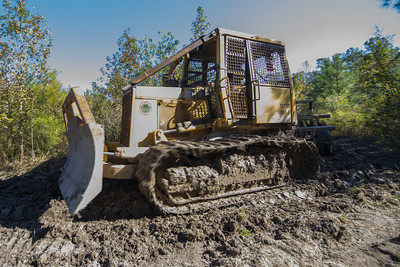
The USDA Farm Service Agency’s (FSA) Direct Farm Ownership loans are a resource to help farmers and ranchers become owner-operators of family farms, improve and expand current operations, increase agricultural productivity, and assist with land tenure to save farmland for future generations.
There are three types of Direct Farm Ownership Loans: regular, down payment and joint financing. FSA also offers a Direct Farm Ownership Microloan option for smaller financial needs up to $50,000.
Direct Farm Ownership Loans can be used to construct, purchase or improve farm dwellings, service buildings or other facilities, and to make improvements essential to an operation.
Applicants must provide FSA with an estimate of the total cost of all planned development that completely describe the work, prior to loan approval and must show proof of sufficient funds to pay for the total cost of all planned development at or before loan closing. In some instances, applicants may be asked to provide certified plans, specifications or contract documents. The applicant cannot incur any debts for materials or labor or make any expenditures for development purposes prior to loan closing with the expectation of being reimbursed from FSA funds.
Construction and development work may be performed either by the contract method or the borrower method. Under the contract method, construction and development contractors perform work according to a written contract with the applicant or borrower. If applying for a direct loan to finance a construction project, the applicant must obtain a surety bond that guarantees both payment and performance in the amount of the construction contract from a construction contractor.
A surety bond is required when a contract exceeds $100,000. An authorized agency official determines that a surety bond appears advisable to protect the borrower against default of the contractor or a contract provides for partial payments in excess of the amount of 60 percent of the value of the work in place.
Under the borrower method, the applicant or borrower will perform the construction and development work. The borrower method may only be used when the authorized agency official determines, based on information from the applicant, that the applicant possesses or arranges to obtain the necessary skill and managerial ability to complete the work satisfactorily and that such work will not interfere with the applicant’s farming operation or work schedule.
Potential applicants should visit with FSA early in the initial project planning process to ensure environmental compliance.
For more eligibility requirements and information about FSA Loan programs, contact your local USDA Service Center or visit fsa.usda.gov.
|

All producers are encouraged to contact their local FSA office for more information on the final planting date for specific crops. The final planting dates vary by crop, planting period and county so please contact your local FSA office for a list of county-specific planting deadlines. The timely planting of a crop, by the final planting date, may prevent loss of program benefits.
|

The Farm Service Agency (FSA) makes loans to youth to establish and operate agricultural income-producing projects in connection with 4-H clubs, FFA and other agricultural groups. Projects must be planned and operated with the help of the organization advisor, produce sufficient income to repay the loan and provide the youth with practical business and educational experience. The maximum loan amount is $10,000.
Youth Loan Eligibility Requirements:
- Be a citizen of the United States (which includes Puerto Rico, the Virgin Islands, Guam, American Samoa, the Commonwealth of the Northern Mariana Islands) or a legal resident alien
- Be 10 years to 20 years of age
- Comply with FSA’s general eligibility requirements
- Conduct a modest income-producing project in a supervised program of work as outlined above
- Demonstrate capability of planning, managing and operating the project under guidance and assistance from a project advisor. The project supervisor must recommend the youth loan applicant, along with providing adequate supervision.
For help preparing the application forms, contact your local USDA Service Center or visit fsa.usda.gov.
|
USDA’s Risk Management Agency (RMA) announced it approved changes to the Triticale crop insurance program for the 2026 and succeeding crop years. The program provides actual production history yield protection to producers who grow triticale for grain.
Beginning with the 2026 crop year, RMA will expand the program to 257 counties and will allow insureds in counties with both winter and spring sales closing dates to revise their coverage up until the spring sales closing date when there is no winter-planted acreage. Adding this flexibility ensures triticale coverage matches the existing coverage for wheat.
By allowing coverage revisions up to the spring sales closing date, we are giving producers the flexibility to secure appropriate coverage for their planted acres. Sales closing dates vary by region. Producers interested in obtaining coverage should check with a crop insurance agent to verify the sales closing date for their area.
Producers insured $13 million in covered liabilities on 69,000 acres of triticale during the 2025 crop year.
Contact a crop insurance agent to see how Federal Crop Insurance can meet the specific needs of your operation. Crop insurance is sold and delivered solely through private crop insurance agents. A list of crop insurance agents is available online at the RMA Agent Locator. Producers can learn more about crop insurance and the modern farm safety net at rma.usda.gov or by contacting their RMA Regional Office. RMA’s Basics for Beginners provides information for those new to crop insurance.
Flowing grain in a storage bin or gravity-flow wagon is like quicksand — it can kill quickly. It takes less than five seconds for a person caught in flowing grain to be trapped.
The mechanical operation of grain handling equipment also presents a real danger. Augers, power take offs, and other moving parts can grab people or clothing.
These hazards, along with pinch points and missing shields, are dangerous enough for adults; not to mention children. It is always advisable to keep children at a safe distance from operating farm equipment. Always use extra caution when backing or maneuvering farm machinery. Ensure everyone is visibly clear and accounted for before machinery is engaged.
FSA wants all farmers to have a productive crop year and that begins with putting safety first.
Top of page
Farm Service Agency
New York State Office
441 S. Salina St.
Syracuse, NY 13202
Ph: 315-477-6300
http://www.fsa.usda.gov/ny
Click to find your local USDA office.
|
|
State Executive Director
Clark Putman
clark.putman@usda.gov
|
|
New York FSA State Committee
Lawrence K. Eckhardt, Chair
Ryan Timothy Fessenden
Barbara J. Hanselman
Brenden L. Martin
Joseph P. Shultz
|
|
Farm Program Chief:
Jenifer Dean
jenifer.dean@usda.gov
|
Acting Farm Loan Chief:
Christen Koch
Christen.Koch@usda.gov
|
|
________________________________________________________
|
|
Current Interest Rates
|
|
Farm Storage Facility Loans:
3 yr - 3.625%
5 yr - 3.750%
7 yr - 3.875%
10 yr - 4.125%
12 yr - 4.375%
Commodity Loans: 4.625%
|
Farm Loan Programs:
Farm Operating: 4.750%
Farm Ownership: 5.750%
Conservation Loans: 5.750%
Direct Down Payment: 1.750%
Joint Financing: 3.750%
Emergency Loan: 3.750%
|
|








