Connecticut State Newsletter - March 17, 2026
In This Issue:

After the uncharacteristically long and snowy winter, it’s safe to say that we are all happy to welcome the promise of spring. Although the ground is still hard and the trees are still bare, for many of you the busy season has already begun. Seeds are being planted, oyster cages surfaced, crop plans are being finalized, and greenhouses are humming. We encourage all producers to consider how FSA can help support you whether that’s through our safety net, conservation, disaster, income support, and price support programs or farm loans.
Connecting with your local FSA office is an important step in planning for the year. Our dedicated staff is always willing and ready to assist with your farming needs. I encourage you to take the time to visit your local FSA office and get acquainted with our friendly staff and all that we have to offer.
I want to take a minute to highlight USDA’s recent modernization efforts. Last month, Secretary Rollins announced “One Farmer, One File.” This initiative creates a single, streamlined record that follows the farmer – no matter where they go in the USDA system.
To prepare for future modernization efforts, I encourage all producers to create a Login.gov account so you’re ready to conduct FSA business online.
The Trump Administration continues to put Farmers First by streamlining our programs to ensure producers like you spend more time in the field and less time on paperwork. The goal is to make life easier, more profitable and more rewarding for American farmers.
Looking forward to seeing you!
Robert Sullivan
State Executive Director, Connecticut and Rhode Island
|
-
March 20, 2026 - Second signup cutoff date for ACEP Agricultural Land Easements (ALE), ACEP Wetlands Reserve Easement Program (WRE), and Conservation Stewardship Program (CSP).
- April 15, 2026 - Connecticut State Technical Committee Meeting, 9:30 a.m. - 12:30 p.m., NRCS State Office Conference Room, 344 Merrow St., Tolland, CT with virtual Teams link.
- April 17, 2026 - Deadline to apply for the Farmer Bridge Assistance (FBA) Program.
-
April 30, 2026 - Deadline to apply for both the SRDP 1 and SDRP 2 programs.
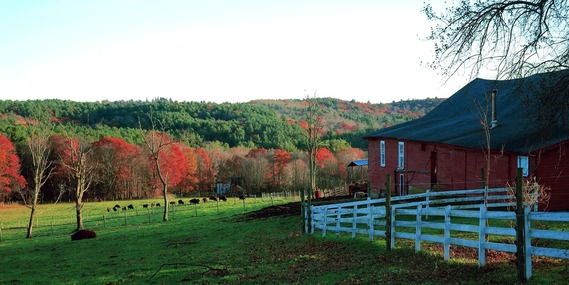 Natural Resources Conservation Service (NRCS) in Connecticut announces a second signup ranking date of March 20, 2026, for key conservation programs.
This second signup allows farmers who missed our previous signup to participate in the:
NRCS encourages Connecticut farmers and forestland owners to participate in the new Regenerative Pilot Program (CSP). Regenerative Agriculture is a conservation management approach that emphasizes natural resources through improved soil health, water management, and natural vitality for the productivity and prosperity of American agriculture and communities. This pilot program addresses whole-farm resource concerns through support for voluntary regenerative agriculture conservation plans.
“NRCS in Connecticut continues our commitment to our farmers, ranchers, and woodland owners to advance conservation, strengthen service delivery, and support the people who feed and fuel our nation,” said NRCS State Conservationist Thomas L. Morgart. Learn more...
^ back to top
The U.S. Department of Agriculture (USDA) has opened the enrollment period for the Farmer Bridge Assistance (FBA) program, providing $11 billion in one-time bridge payments to row crop producers in response to temporary trade market disruptions and increased production costs. The FBA enrollment period opened Feb. 23 and closes April 17, 2026.
These bridge payments are authorized under the Commodity Credit Corporation Charter Act and are administered by the Farm Service Agency (FSA). Bridge payments are intended in part to aid farmers until historic investments from the One Big Beautiful Bill Act (OBBBA), including reference prices which are set to increase between 10-21% for major covered commodities and will reach eligible farmers after Oct. 1, 2026.
How to Apply
Pre-filled applications will be available online to producers with a Login.gov account who timely filed their 2025 crop acreage report for eligible commodities. Producers who have a Login.gov account can access and submit their pre-filled application from fsa.usda.gov/fba. Additionally, producers can also request their pre-filled FBA application from their FSA county office.
April 17, 2026, is the deadline to submit completed FBA applications. Producers can complete FBA applications online or submit to their FSA county office.
Login.gov
Login.gov is the public’s one account for government. Producers can use one account and password for secure, private access to participating government agencies, including FSA.
To apply for FBA online, producers can start by visiting fsa.usda.gov/fba. to create their Login.gov account. Producers who have an existing Login.gov account, can work with FSA using their existing account.
With a secure Login.gov account, producers can be amongst the first to apply for FBA allowing them to view, certify, and submit their application as well as track their application and payment status.
For assistance creating a Login.gov account, visit https://login.gov/help/.
Eligibility
The following commodities are eligible for FBA: Barley, Chickpeas, Corn, Cotton, Lentils, Oats, Peanuts, Peas, Rice, Sorghum, Soybeans, Wheat, Canola, Crambe, Flax, Mustard, Rapeseed, Safflower, Sesame, and Sunflower.
All intended uses for FBA eligible commodities are eligible excluding grazing, experimental, green manure, left standing, or cover crops. Initial acres, double crop acres, and subsequently planted acres, are eligible. Prevent plant acres are not eligible.
Crop insurance linkage is not required; however, USDA strongly urges producers to take advantage of the new risk management tools provided for in OBBBA to best protect against future price risk and volatility.
Payment Calculation
In December, USDA released the payment rates by commodity. FBA payment rates are based on 2025 planted acres, Economic Research Service cost of production, and the World Agriculture Supply and Demand Estimate Report.
More information on FBA is available online at fsa.usda.gov/fba. Producers can also contact their local FSA county office
 The Connecticut State Technical Committee meeting will be held on Wednesday, April 15, 2026, from 9:30 a.m.– 12:30 p.m. at the USDA-NRCS State Office, 344 Merrow Street, Tolland, CT, with virtual option provided.
State Technical Committees serve in an advisory capacity to NRCS and other agencies of the U.S. Department of Agriculture (USDA) on the implementation of the natural resources conservation provisions of Farm Bill legislation. Committees are intended to include members from a wide variety of natural resources and agricultural interests. Learn more...
^ back to top
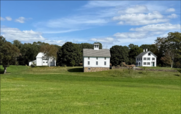
In 2025, The Connecticut Department of Agriculture (CTDoA) worked with the USDA Natural Resources Conservation Service and local partners to protect 10 farm parcels across the state.
NRCS in Connecticut provided funding through the Agriculture Conservation Easement Program (ACEP).
“NRCS is pleased to partner with Connecticut farmers, landowners, towns, and the CT Department of Agriculture to protect our cropland and pastureland in perpetuity,” said Thomas L. Morgart, NRCS Connecticut State Conservationist. “The Agricultural Conservation Easement Program keeps working agricultural lands in working hands by limiting non-agricultural uses of these properties. Keeping farms and ranches in agriculture supports local economies and rural communities while providing benefits like open space and wildlife habitat.” Learn more...
^ back to top
|
Landowners and operators are reminded that in order to receive payments from USDA, compliance with Highly Erodible Land (HEL) and Wetland Conservation (WC) provisions are required. Farmers with HEL determined soils are reminded of tillage, crop residue, and rotation requirements as specified per their conservation plan. Producers are to notify the USDA Farm Service Agency prior to breaking sod, clearing land (tree removal), and of any drainage projects (tiling, ditching, etc.) to ensure compliance. Failure to update certification of compliance, with form AD-1026, triggering applicable HEL and/or wetland determinations, for any of these situations, can result in the loss of FSA farm program payments, FSA farm loans, NRCS program payments, and premium subsidy to Federal Crop Insurance administered by RMA.
USDA announced the enrollment periods for agricultural producers and landowners to submit offers for the Continuous and General Conservation Reserve Program (CRP). USDA’s Farm Service Agency (FSA) is accepting offers for Continuous CRP from Feb. 12, 2026, through March 20, 2026. Enrollment for General CRP will run from March 9, 2026, through April 17, 2026. FSA will announce dates for Grassland CRP signup in the near future.
CRP is USDA’s flagship conservation program, providing financial and technical support to agricultural producers and landowners who place unproductive or marginal cropland under contract for 10-15 years and who agree to voluntarily convert the land to beneficial vegetative cover to improve water quality, prevent soil erosion and support wildlife habitat. The Continuing Appropriations, Agriculture, Legislative Branch, Military Construction and Veterans Affairs, and Extensions Act, 2026, extends FSA’s authority to administer CRP through Sept. 30, 2026.
Continuous CRP (Signup 65)
FSA will batch Continuous CRP offers submitted by interested agricultural producers and landowners. Offers to re-enroll expiring CRP continuous acreage will be accepted on a first-come, first-serve basis. New acreage offered in continuous CRP practices will be considered for acceptance on a first-come, first-serve basis if they support USDA conservation priorities including but not limited to practices that address water quality, such as filter strips and grass waterways, and practices that restore native ecosystems or target specific resource concerns.
The first Continuous CRP batching period ends on March 20, 2026. Offers submitted after this date will be considered for acceptance in subsequent batching periods if acreage remains available.
Continuous CRP participants voluntarily offer environmentally sensitive lands, typically smaller parcels than offered through General CRP including wetlands, riparian buffers, and varying wildlife habitats. In return, they receive annual rental payments and cost-share assistance to establish long-term, resource-conserving vegetative cover.
Continuous CRP enrollment options include:
-
Clean Lakes, Estuaries and Rivers (CLEAR) Initiative: Prioritizes water quality practices on the land that, if enrolled, will help reduce sediment loadings, nutrient loadings, and harmful algal blooms. The vegetative covers also contribute to increased wildlife populations.
-
CLEAR30 (a component of the CLEAR Initiative): Offers additional incentives for water quality practice adoption and can be accessed in 30-year contracts.
-
Highly Erodible Land Initiative (HELI): Producers and landowners can enroll in CRP to establish long-term cover on highly erodible cropland that has a weighted erodibility index greater than or equal to 20.
-
Conservation Reserve Enhancement Program (CREP): Addresses high priority conservation objectives of states and Tribal governments on agricultural lands in specific geographic areas.
-
State Acres for Wildlife Enhancement Initiative (SAFE): Restores vital habitat in order to meet high-priority state wildlife conservation goals.
General CRP (Signup 66)
General CRP offers are submitted through a competitive bid process. After the enrollment period closes, General CRP offers are ranked and scored by FSA, using nationally established environmental benefits criteria. USDA will announce accepted offers once ranking and scoring for all offers is completed. In addition to annual rental payments, approved General CRP participants may also be eligible for cost-share assistance to establish long-term, resource-conserving vegetative cover.
If you’re interested in participating in CRP, contact your local FSA county office.
FarmRaise, in partnership with USDA’s Farm Service Agency (FSA), launched their online, educational hub – the FarmRaise | FSA Educational Hub – comprised of videos, tools and interactive resources that enable USDA cooperators and agricultural producers to learn about and access major FSA programs.
ELAP Decision Tool
The Emergency Assistance for Livestock, Honeybees and Farm-Raised Fish (ELAP) Decision Tool helps eligible producers impacted by qualifying natural disasters and other eligible causes of loss better understand program eligibility and application requirements, learn about record-keeping and supporting loss documentation requirements and track the steps needed before applying for program benefits. The document generated by the ELAP Decision Tool can be used to support the ELAP application process, but it is not a program application. Producers will need to complete and submit the ELAP Application to their local FSA county office. Upon request, applicants may be asked to provide additional supporting documentation per the program requirements.
Through use of the ELAP Decision Tool, producers can segment by loss type (honey bee, farm-raised fish and livestock). This enables easier navigation, as guided by the tool, to assistance available to meet specific disaster recovery needs. After entering the type of loss, identifying the loss condition and entering their inventory and loss information, producers are guided through a worksheet that helps identify required loss documentation — documentation (i.e., pictures, receipts, truck logs, etc.) that can be uploaded through the ELAP tool and sent directly to the producer’s local FSA county office, or producers can provide a copy of the tool-generated worksheet summary document when they visit their local FSA county office to complete and submit the required ELAP application.
LIP Decision Tool
The Livestock Indemnity Program (LIP) Decision Tool, also available through the FarmRaise | FSA Educational Hub, assists livestock producers who suffered losses from eligible adverse weather events and other causes of loss as well as cooperators who are helping disaster-impacted livestock producers navigate available federal disaster assistance programs. The LIP Decision Tool gives producers guidance on what is needed to gather and submit required loss documentation, reducing the amount of time needed to complete applications and enabling FSA county office staff to deliver much-needed assistance faster. Using the LIP Decision Tool is not an application for benefits or a determination of eligibility.
Additional FarmRaise Resources
In addition to the new ELAP Decision Tool and the LIP Decision Tool, the FarmRaise | FSA Educational Hub offers several, easily navigated farm loan programs how-to videos designed to introduce producers to FSA’s many farm loan programs options and guide them through the application process.
More FSA program resources and tools will continue to be added to the FarmRaise | FSA Educational Hub. Cooperators and agricultural producers are encouraged to visit the FarmRaise | FSA Educational Hub often to access all available educational resources.
Program payments may be limited by direct attribution to individuals or entities. A legal entity is defined as an entity created under Federal or State law that owns land or an agricultural commodity, product or livestock.
Through direct attribution, payment limitation is based on the total payments received by a person or legal entity, both directly and indirectly.
Payments and benefits under certain FSA programs are subject to some or all of the following:
- payment limitation by direct attribution (including common attribution)
- payment limitation amounts for the applicable programs
- substantive change requirements when a farming operation adds persons, resulting in an increase in persons to which payment limitation applies
- actively engaged in farming requirements
- cash-rent tenant rule
- foreign person rule
- average AGI limitations
- programs subject to AGI limitation
No program benefits subject to payment eligibility and limitation will be provided until all required forms for the specific situation are provided and necessary payment eligibility and payment limitation determinations are made. Payment eligibility and payment limitation determinations may be initiated by the County Committee or requested by the producer.
Statutory and Regulatory rules require persons and legal entities, provide the names and Tax Identification Numbers (TINs) for all persons and legal entities with an ownership interest in the farming operation to be eligible for payment.
Payment eligibility and payment limitation forms submitted by persons and legal entities are subject to spot check through FSA’s end-of-year review process. Persons or legal entities selected for end-of-year review must provide the County Committee with operating loan documents, income and expense ledgers, canceled checks for all expenditures, lease and purchase agreements, sales contracts, property tax statements, equipment listings, lease agreements, purchase contracts, documentation of who provided actual labor and management, employee time sheets or books, crop sales documents, warehouse ledgers, gin ledgers, corporate or entity papers, etc.
A finding that a person or legal entity is not actively engaged in farming results in the person or legal entity being ineligible for any payment or benefit subject to the actively engaged in farming rules.
Noncompliance with AGI provisions, either by exceeding the applicable limitation or failure to submit a certification and consent for disclosure statement, will result in payment ineligibility for all program benefits subject to AGI provisions. Program payments are reduced in an amount that is commensurate with the direct and indirect interest held by an ineligible person or legal entity in any legal entity, general partnership, or joint operation that receives benefits subject to the average AGI limitations.
If any changes occur that could affect an actively engaged in farming, cash-rent tenant, foreign person, or average Adjusted Gross Income (AGI) determination, producers must timely notify the County FSA Office by filing revised farm operating plans and/or supporting documentation, as applicable. Failure to timely notify the County Office may adversely affect payment eligibility.
All producers are encouraged to contact their local FSA office for more information on the final planting date for specific crops. The final planting dates vary by crop, planting period and county so please contact your local FSA office for a list of county-specific planting deadlines. The timely planting of a crop, by the final planting date, may prevent loss of program benefits.
USDA announced major updates to federal crop insurance, reducing red tape for farmers, modernizing long-standing policies, and expanding access to critical risk protection beginning with the 2026 crop year. The Expanding Access to Risk Protection (EARP) Final Rule streamlines requirements across multiple crops, responds to producer feedback, and strengthens USDA’s commitment to putting America’s farmers first.
Learn more about the EARP Final Rule.
Connecticut State NRCS Office
344 Merrow Road, Suite A
Tolland, CT 06084-3917
Phone: 860-871-4011
Connecticut NRCS State Website
Connecticut State FSA Office
344 Merrow Road, Suite B
Tolland, CT 06084-3917
Phone: 860-871-4090
Fax: 855-934-2463
State Executive Director:
Robert Sullivan
|
|
Connecticut FSA State Website
|
|
State Office Staff:
Nathan Wilson, Deputy State Executive Director
Jule Dybdahl, Administrative Officer
Rebecca Palmer, Program Chief
A.J. Bellagamba, Program Specialist
Claire Vaterlaus-Staby, Outreach Coordinator
Keith Durao, Administrative Specialist
|
State Committee Chair:
Jeffery Lipton
State Committee Members:
Kelly Bloom
Shane Collett
Joseph Geremia
Kies Orr LaVack
|
Top of page
|