
Minnesota FSA Updates - March 18, 2026
In This Issue:

Greetings from the State FSA Office!
For most, March brings college basketball’s excitement to crown a champion commonly referred to as March Madness. In agriculture, we look forward to March and the signs of spring, a renewing of the outdoor world in the land, livestock and nature. I could call it March Happiness. It doesn’t seem to matter what market cycle we are in, the renewing spirit that spring brings is refreshing and exciting. Sometimes we need to pause, reflect and let simple pleasures such as this lift our spirits. My wish for all is to have a safe and enjoyable spring.
In reflection to the most recent March snowstorm, I'd remind producers that if you are able to evaluate the impact on your operation, be sure to contact your local FSA county office to timely report all crop, livestock and farm infrastructure damages and losses. To expedite FSA disaster assistance, you may need to provide documents, such as farm records, herd inventory, receipts and pictures of damages or losses.
Minnesota FSA offices have remained very busy with activity. Below, you’ll find a brief sign-up and deadline description for programs with upcoming deadlines.
Continuous signup for the Conservation Reserve Program (CRP) continues through March 20, 2026. We just kicked off General CRP signup which closes on April 17, 2026.
The Noninsured Crop Disaster Assistance Program deadline for spring seeded annual crops and sage is March 16, 2026. If you want to request a Marketing Assistance Loan (MAL) for prior year harvested wheat, barley, canola, crambe, flaxseed, honey, oats, rapeseed, and sesame, the deadline is March 31, 2026. Also, April 1 (no fooling) is the deadline for the annual certification of maple sap.
And finally, April 17, 2026, is the deadline to apply for the Farmer Bridge Assistance (FBA) program. The option to enroll in the FBA program online was very well received by producers and I’d like to thank everyone who took the time to create a Login.gov account. Producers can expect to see more modernization efforts in the future.
In case you missed it, review our March 9 bulletin with more details on the Conservation Reserve Program signups, Farmer Bridge Assistance, and Assistance for Specialty Crop Farmers. As always, please contact your local FSA office for more information on any of our programs.
Looking back at the past fiscal year, Minnesota led the nation in guaranteed loan participation, of which most were made to beginning farmers. Creating opportunities for beginning farmers is a priority. FSA offers direct and guaranteed loans to farmers and ranchers to promote, build, and sustain family farmers. For more information on farm loans, contact your local FSA office.
And finally, I’d like to thank and salute the efforts of the hard-working farmers and farm families that continue to produce every day to feed our nation and beyond. It is a privilege to serve you.
Kurt Blomgren
FSA State Executive Director, Minnesota
|
The Farm Loan teams in Minnesota are already working on operating loans for spring 2026 and asks potential borrowers to submit their requests early so they can be timely processed. The farm loan team can help determine which loan programs are best for applicants.
FSA offers a wide range of low-interest loans that can meet the financial needs of any farm operation for just about any purpose. The traditional farm operating and farm ownership loans can help large and small farm operations take advantage of early purchasing discounts for spring inputs as well expenses throughout the year.
Microloans are a simplified loan program that will provide up to $50,000 for both Farm Ownership and Operating Microloans to eligible applicants. These loans, targeted for smaller and non-traditional operations, can be used for operating expenses, starting a new operation, purchasing equipment, and other needs associated with a farming operation. Loans to beginning farmers and members of underserved groups are a priority.
Other types of loans available include:
Marketing Assistance Loans allow producers to use eligible commodities as loan collateral and obtain a 9-month loan while the crop is in storage. These loans provide cash flow to the producer and allow them to market the crop when prices may be more advantageous.
Farm Storage Facility Loans can be used to build permanent structures used to store eligible commodities, for storage and handling trucks, or portable or permanent handling equipment. A variety of structures are eligible under this loan, including bunker silos, grain bins, hay storage structures, and refrigerated structures for vegetables and fruit. A producer may borrow up to $500,000 per loan.
FSA offers direct farm ownership and direct farm operating loans to producers who want to establish, maintain, or strengthen their farm or ranch. Direct loans are processed, approved and serviced by FSA loan officers.
Direct farm operating loans can be used to purchase livestock and feed, farm equipment, fuel, farm chemicals, insurance, and other costs including family living expenses. Operating loans can also be used to finance minor improvements or repairs to buildings and to refinance some farm-related debts, excluding real estate.
Direct farm ownership loans can be used to purchase farmland, enlarge an existing farm, construct and repair buildings, and to make farm improvements.
The maximum loan amount for direct farm ownership loans is $600,000 and the maximum loan amount for direct operating loans is $400,000 and a down payment is not required. Repayment terms vary depending on the type of loan, collateral and the producer's ability to repay the loan. Operating loans are normally repaid within seven years and farm ownership loans are not to exceed 40 years.
Please contact your local FSA office for more information or to apply for a direct farm ownership or operating loan.
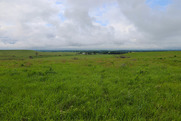
USDA worked with the Conservation Biology Institute (CBI) to design and build a free online easy-to-use Seed and Vendor finder tool to support the producers enrolling in the CRP program, along with other conservation efforts involving native plantings. CBI also partnered with the Institute for Applied Ecology (IAE) to address the needs of the Native Seed Network and significantly expanded the native seed customer and vendor base.
The seed and vendor finder can be found here: Seed and Vendor Finder
Customers looking for native or introduced species to plant for the conservation projects can easily find vendors across the country that carry that seed or plant using this tool. Currently, CBI has seeded the tool with 600+ wholesale seed and seedling vendors found through an online search from across the country with limited profiles, and 100+ have voluntarily completed full profiles which includes their plant catalogue. The tool is designed for easy uploading of their profile and inventory. It also provides an opportunity for vendors without a website to have an online presence and be found by customers looking for seeds.
Also check out the plant finder tool where you can find suitable plants, including pollinator friendly plants for your area and soil type. The plant finder prototype is only available for 6 states and there is potential to extend it to the entire country.
There were over 10,000 visitors to the site last year, with the current number of unique daily visitors to the tool at over 30 and growing!
All growers/vendors are encouraged to add their business profile and catalog to the tool. They can do this easily by filling out a simple form located here: https://crptool.org/contact/. Once their catalog is online, customers can match their seed/seedlings needs with what they might have available for sale and contact you. This USDA supported tool expands customer outreach to the entire U.S.
|
Malted small grains and maple syrup are eligible for Farm Storage Facility Loans (FSFL) through the USDA Farm Service Agency (FSA).
FSFLs provide low-interest financing to help you build or upgrade storage facilities and to purchase portable (new or used) structures, equipment and storage and handling trucks.
Eligible malted small grains include barley, oats, rice, rye and wheat. Maple sap is used to produce maple syrup.
The low-interest funds can be used for:
- bottler or filling systems for maple syrup, excluding containers
- equipment to improve, maintain, or monitor the quality of stored FSFL commodities, such as cleaners, moisture testers, heat detectors, along with a proposed storage facility
- handling and drying equipment determined by the County Committee to be needed and essential to the proper functioning of a storage system
- electrical equipment, such as pumps, lighting, motors, and wiring, integral to the proper operation of the storage and handling equipment, excluding installing electric service to the electrical meter.
FSFLs are not available for the actual processing of the small grain into the malted commodity or maple sap into maple syrup. Additionally, purchased commodities are not eligible for FSFLs.
The following storage and handling equipment is ineligible for FSFLs:
- boiling equipment
- feed handling and processing equipment
- production and feed facilities
- structures of a temporary nature not having a useful life of the term of the loan
- maple sap tubing and pumping systems.
Loans up to $50,000 can be secured by a promissory note/security agreement, loans between $50,000 and $100,000 may require additional security, and loans exceeding $100,000 require additional security.
You do not need to demonstrate the lack of commercial credit availability to apply. The loans are designed to assist a diverse range of farming operations, including small and mid-sized businesses, new farmers, operations supplying local food and farmers markets, non-traditional farm products, and underserved producers.
For more information, contact your local USDA Service Center or visit fsa.usda.gov/pricesupport.
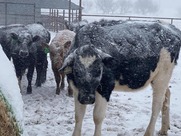
If you’ve suffered excessive livestock death losses and grazing or feed losses due to recent winter storms, you may be eligible for disaster assistance programs through the USDA Farm Service Agency (FSA).
The Livestock Indemnity Program (LIP) offers payments to you for livestock death losses in excess of normal mortality due to adverse weather and the Emergency Assistance for Livestock, Honeybees, and Farm-Raised Fish Program (ELAP) provides emergency relief for losses due to feed or water shortages, disease, adverse weather, or other conditions, which are not adequately addressed by other disaster programs.
To participate in LIP, you will be required to provide verifiable documentation of death losses resulting from an eligible adverse weather event, and you must complete and submit the notice of loss to FSA no later than the annual program payment application date, which is March 1, 2027, for calendar year 2026 losses. To participate in ELAP, you must submit a notice of loss to your local FSA office no later than March 1, 2027, for calendar year 2026 losses.
You should record all pertinent information regarding livestock losses due to the eligible adverse weather or loss condition, including:
- Documentation of the number, kind, type, and weight range of livestock that have died, supplemented if possible by photographs or video records of ownership and losses;
- Rendering truck receipts by kind, type and weight - important to document prior to disposal;
- Beginning inventory supported by birth recordings or purchase receipts;
- Documentation from Animal Plant Health Inspection Service, Department of Natural Resources, or other sources to substantiate eligible death losses due to an eligible loss condition;
- Documentation that livestock were removed from grazing pastures due to an eligible adverse weather or loss condition;
- Costs of transporting livestock feed to eligible livestock, such as receipts for equipment rental fees for hay lifts;
- Feed purchase receipts if feed supplies or grazing pastures are destroyed;
For more information on these programs and documentation requirements, contact your local USDA Service Center or visit fsa.usda.gov/disaster.
|
FarmRaise, in partnership with USDA’s Farm Service Agency (FSA), launched their online, educational hub – the FarmRaise | FSA Educational Hub – comprised of videos, tools and interactive resources that enable USDA cooperators and agricultural producers to learn about and access major FSA programs.
ELAP Decision Tool
The Emergency Assistance for Livestock, Honeybees and Farm-Raised Fish (ELAP) Decision Tool helps eligible producers impacted by qualifying natural disasters and other eligible causes of loss better understand program eligibility and application requirements, learn about record-keeping and supporting loss documentation requirements and track the steps needed before applying for program benefits. The document generated by the ELAP Decision Tool can be used to support the ELAP application process, but it is not a program application. Producers will need to complete and submit the ELAP Application to their local FSA county office. Upon request, applicants may be asked to provide additional supporting documentation per the program requirements.
Through use of the ELAP Decision Tool, producers can segment by loss type (honey bee, farm-raised fish and livestock). This enables easier navigation, as guided by the tool, to assistance available to meet specific disaster recovery needs. After entering the type of loss, identifying the loss condition and entering their inventory and loss information, producers are guided through a worksheet that helps identify required loss documentation (i.e., pictures, receipts, truck logs, etc.) that can be uploaded through the ELAP tool and sent directly to the producer’s local FSA county office, or producers can provide a copy of the tool-generated worksheet summary document when they visit their local FSA county office to complete and submit the required ELAP application.
LIP Decision Tool
The Livestock Indemnity Program (LIP) Decision Tool, also available through the FarmRaise | FSA Educational Hub, assists livestock producers who suffered losses from eligible adverse weather events and other causes of loss as well as cooperators who are helping disaster-impacted livestock producers navigate available federal disaster assistance programs. The LIP Decision Tool gives producers guidance on what is needed to gather and submit required loss documentation, reducing the amount of time needed to complete applications and enabling FSA county office staff to deliver much-needed assistance faster. Using the LIP Decision Tool is not an application for benefits or a determination of eligibility.
Additional FarmRaise Resources
In addition to the new ELAP Decision Tool and the LIP Decision Tool, the FarmRaise | FSA Educational Hub offers several, easily navigated farm loan programs how-to videos designed to introduce producers to FSA’s many farm loan programs options and guide them through the application process.
More FSA program resources and tools will continue to be added to the FarmRaise | FSA Educational Hub. Cooperators and agricultural producers are encouraged to visit the FarmRaise | FSA Educational Hub often to access all available educational resources.
Landowners and operators are reminded that in order to receive payments from USDA, compliance with Highly Erodible Land (HEL) and Wetland Conservation (WC) provisions are required. Farmers with HEL determined soils are reminded of tillage, crop residue, and rotation requirements as specified per their conservation plan. Producers are to notify the USDA Farm Service Agency prior to breaking sod, clearing land (tree removal), and of any drainage projects (tiling, ditching, etc.) to ensure compliance. Failure to update certification of compliance, with form AD-1026, triggering applicable HEL and/or wetland determinations, for any of these situations, can result in the loss of FSA farm program payments, FSA farm loans, NRCS program payments, and premium subsidy to Federal Crop Insurance administered by RMA.
If you have experienced delays in receiving Agriculture Risk Coverage (ARC) and Price Loss Coverage (PLC) payments, Loan Deficiency Payments (LDPs) and Market Gains on Marketing Assistance Loans (MALs), it may be because you have not filed form CCC-941, Adjusted Gross Income Certification.
If you don’t have a valid CCC-941 on file for the applicable crop year you will not receive payments. All farm operator/tenants/owners who have not filed a CCC-941 and have pending payments should IMMEDIATELY file the form with their recording county FSA office. Farm operators and tenants are encouraged to ensure that their landowners have filed the form.
FSA can accept the CCC-941 for 2018, 2019, 2020, 2021, 2022, 2023, 2024, 2025, and 2026. Unlike the past, you must have the CCC-941 certifying your AGI compliance before any payments can be issued.
Top of page
Minnesota USDA Farm Service Agency
375 Jackson Street
Suite 400
Saint Paul, MN 55101
Phone: 651-602-7700
Fax: 855-719-9917
www.fsa.usda.gov/state-offices/minnesota
|
|
Minnesota FSA State Executive Director:
Kurt Blomgren
|
|
Deputy State Executive Director:
Daniel Mahoney
Division Leaders:
Cassie Buck
Lee Crawford
Calvin Gellatly
|
Minnesota State Committee:
Charlie Radman, Chairperson
Jim Kukowski, Member
Jason May, Member
Pamela Uhlenkamp, Member
Scott Winslow, Member
|
|
To find contact information for your local USDA Farm Service Agency office, go to: www.farmers.gov/working-with-us/service-center-locator
|
|








