
Rhode Island Service Center Newsletter - March 17, 2026
In This Issue:
-
March 18, 2026, NRICD Local Working Group Meeting - Cranston, 6:00-7:00 p.m., William Hall Library, 1825 Broad St., Cranston, RI 02905
-
March 20, 2026 - Second signup cutoff date for AMA, CSP, and EQIP
-
March 25, 2026 - NRICD Local Working Group Meeting - Cumberland, 6:00-7:00 p.m., Cumberland Library, 1464 Diamond Hill Rd, Cumberland, RI.
-
March 28, 2026 - Southern RI Local Working Group Meeting - Matunuck, 10:00 a.m. - 12:00 p.m., South Kingstown Land Trust Barn, 17 Matunuck Beach Road, SK, RI.
- April 17, 2026 - Deadline to apply for the Farmer Bridge Assistance (FBA) Program.
-
April 30, 2026 - Deadline to apply for both the SRDP 1 and SDRP 2 programs

After the uncharacteristically long and snowy winter, it’s safe to say that we are all happy to welcome the promise of spring. Although the ground is still hard and the trees are still bare, for many of you the busy season has already begun. Seeds are being planted, oyster cages surfaced, crop plans are being finalized, and greenhouses are humming. We encourage all producers to consider how FSA can help support you whether that’s through our safety net, conservation, disaster, income support, and price support programs or farm loans.
Connecting with your local FSA office is an important step in planning for the year. Our dedicated staff is always willing and ready to assist with your farming needs. I encourage you to take the time to visit your local FSA office and get acquainted with our friendly staff and all that we have to offer.
I want to take a minute to highlight USDA’s recent modernization efforts. Last month, Secretary Rollins announced “One Farmer, One File.” This initiative creates a single, streamlined record that follows the farmer – no matter where they go in the USDA system.
To prepare for future modernization efforts, I encourage all producers to create a Login.gov account so you’re ready to conduct FSA business online.
The Trump Administration continues to put Farmers First by streamlining our programs to ensure producers like you spend more time in the field and less time on paperwork. The goal is to make life easier, more profitable and more rewarding for American farmers.
Looking forward to seeing you!
Robert Sullivan
State Executive Director, Connecticut and Rhode Island
|
USDA’s Farm Service Agency (FSA) is delivering more than $16 billion in total Congressionally approved disaster relief. FSA is accepting applications for assistance through the second stage of the Supplemental Disaster Relief Program (SDRP) from agricultural producers who suffered eligible non-indemnified, uncovered or quality crop losses due to qualifying natural disasters in 2023 and 2024.
Stage Two covers eligible crop, tree, bush and vine losses that were not covered under Stage One program provisions, including non-indemnified (shallow loss), uncovered and quality losses. Although the majority of payments from the first stage are already in the hands of producers helping them prepare for and invest in the next crop year, Stage One assistance, announced in July, remains available to producers who received an indemnity under crop insurance or the Noninsured Crop Disaster Assistance Program (NAP) for eligible crop losses due to qualifying 2023 and 2024 natural disaster events.
The deadline to apply for both Stage One and Stage Two assistance is April 30, 2026. Producers in Rhode Island are encouraged to apply for SDRP assistance as the Rhode Island Block Grant will not cover the same losses that SDRP covers, therefore producers may be eligible for assistance through both programs. More details about the Rhode Island Block Grant will be announced later.
SDRP Stage Two Program Details
SDRP Stage Two provides assistance for eligible crop, tree, bush and vine losses not covered under Stage One, including:
-
Non-Indemnified Losses (Including Shallow Losses)
- Insured losses through federal crop insurance that did not trigger a crop insurance indemnity.
- Losses with NAP coverage that did not trigger a NAP payment.
-
Uncovered Losses (Uninsured Losses)
- Includes losses that were not insured through federal crop insurance or NAP.
-
Quality Losses
- Includes quality losses to commodities indicated by:
- A decrease in value based on discounts due to the physical condition of the crop supported by applicable grading factors
- A decline in the nutritional value of forage crops supported by documented forage tests.
- Producers will certify to an SDRP quality loss percentage.
FSA is establishing block grants with Connecticut, Hawaii, Maine, and Massachusetts that cover crop losses; therefore, producers with losses on land physically located in these states are not eligible for SDRP program payments.
For information on program eligibility and to download an application checklist, visit fsa.usda.gov/sdrp.
More information will be provided in early 2026 regarding a separate enrollment period for quality losses covered by SDRP Stage One as well as for insured producers in Puerto Rico who were not included in Stage One because data was not available when pre-filled applications were mailed.
To make an appointment to apply, call the Rhode Island County FSA Office at 401-828-3120
^ back to top
The U.S. Department of Agriculture (USDA) has opened the enrollment period for the Farmer Bridge Assistance (FBA) program, providing $11 billion in one-time bridge payments to row crop producers in response to temporary trade market disruptions and increased production costs. The FBA enrollment period opened Feb. 23 and closes April 17, 2026.
These bridge payments are authorized under the Commodity Credit Corporation Charter Act and are administered by the Farm Service Agency (FSA). Bridge payments are intended in part to aid farmers until historic investments from the One Big Beautiful Bill Act (OBBBA), including reference prices which are set to increase between 10-21% for major covered commodities and will reach eligible farmers after Oct. 1, 2026.
How to Apply
Pre-filled applications will be available online to producers with a Login.gov account who timely filed their 2025 crop acreage report for eligible commodities. Producers who have a Login.gov account can access and submit their pre-filled application from fsa.usda.gov/fba. Additionally, producers can also request their pre-filled FBA application from their FSA county office.
April 17, 2026, is the deadline to submit completed FBA applications. Producers can complete FBA applications online or submit to their FSA county office.
Login.gov
Login.gov is the public’s one account for government. Producers can use one account and password for secure, private access to participating government agencies, including FSA.
To apply for FBA online, producers can start by visiting fsa.usda.gov/fba. to create their Login.gov account. Producers who have an existing Login.gov account, can work with FSA using their existing account.
With a secure Login.gov account, producers can be amongst the first to apply for FBA allowing them to view, certify, and submit their application as well as track their application and payment status.
For assistance creating a Login.gov account, visit https://login.gov/help/.
Eligibility
The following commodities are eligible for FBA: Barley, Chickpeas, Corn, Cotton, Lentils, Oats, Peanuts, Peas, Rice, Sorghum, Soybeans, Wheat, Canola, Crambe, Flax, Mustard, Rapeseed, Safflower, Sesame, and Sunflower.
All intended uses for FBA eligible commodities are eligible excluding grazing, experimental, green manure, left standing, or cover crops. Initial acres, double crop acres, and subsequently planted acres, are eligible. Prevent plant acres are not eligible.
Crop insurance linkage is not required; however, USDA strongly urges producers to take advantage of the new risk management tools provided for in OBBBA to best protect against future price risk and volatility.
Payment Calculation
In December, USDA released the payment rates by commodity. FBA payment rates are based on 2025 planted acres, Economic Research Service cost of production, and the World Agriculture Supply and Demand Estimate Report.
More information on FBA is available online at fsa.usda.gov/fba. Producers can also contact their local FSA county office
^ back to top
U.S. Department of Agriculture (USDA) is providing $1 billion in Assistance for Specialty Crop Farmers (ASCF) Program assistance for specialty crops and sugar, commodities not covered through the previously announced Farmer Bridge Assistance (FBA) program. These one-time bridge payments will help address market disruptions, elevated input costs, persistent inflation, and market losses from foreign competitors engaging in unfair trade practices that impede exports. Specialty crop producers have until March 13, 2026, to report 2025 acres to USDA’s Farm Service Agency (FSA).
The Assistance for Specialty Crop Farmers Program is authorized under the Commodity Credit Corporation Charter Act and will be administered by FSA.
Eligible Specialty Crops
ASCF-eligible specialty crops include: (A) Almond, Apple, Apricot, Aronia berry, Artichoke, Asparagus, Avocado (B) Banana, Bean (Snap or green; Lima; Dry edible), Beet (Table), Blackberry, Blueberry, Breadfruit, Broccoli (including Broccoli Raab), Brussels Sprouts (C) Cabbage (including Chinese), Cacao, Carrot, Cashew, Cauliflower, Celeriac, Celery, Cherimoya, Cherry, Chestnut (for Nuts), Chive, Citrus, Coconut, Coffee, Collards (including Kale), Cranberry, Cucumber, Currant (D) Date, Dry Edible Beans and Peas* (E) Edamame, Eggplant, Endive (F) Feijou, Fig, Filbert (Hazelnut) (G) Garlic, Gooseberry, Grape (including Raisin), Guava (H) Horseradish (K) Kiwi, Kohlrabi (L) Leek, Lettuce, Litchi (M) Macadamia, Mango, Melon (All Types), Mushroom (Cultivated), Mustard and Other Greens (N) Nectarine (O) Okra, Olive, Onion, Opuntia (P) Papaya, Parsley, Parsnip, Passion Fruit, Pea (Garden; English or Edible Pod; Dry edible), Peach, Pear, Pecan, Pepper, Persimmon, Pineapple, Pistachio, Plum (including Prune), Pomegranate, Potato, Pumpkin (Q) Quince (R) Radish (All Types), Raspberry, Rhubarb, Rutabaga (S) Salsify, Spinach, Squash (Summer and Winter), Strawberry, Suriname Cherry, Sweet Corn, Sweet Potato, Swiss Chard (T) Taro, Tomato (including Tomatillo), Turnip (W) Walnut, Watermelon
*Dry edible beans and peas covered by FBA will not be eligible for ASCF.
ASCF payments are based on reported 2025 planted acres.
Eligible farmers should ensure their 2025 acreage reporting is factual and accurate by 5 p.m. ET on March 13, 2026. Commodity-specific payment rates will be released by the end of March. Crop insurance linkage will not be required for the ASCF Program. However, USDA strongly urges producers to take advantage of the new One Big Beautiful Bill Act (OBBBA) risk management tools to best protect against price risk and volatility in the future.
More information on ASCF is available online at www.fsa.usda.gov/fba or producers can contact their local FSA county office.
^ back to top
Landowners and operators are reminded that in order to receive payments from USDA, compliance with Highly Erodible Land (HEL) and Wetland Conservation (WC) provisions are required. Farmers with HEL determined soils are reminded of tillage, crop residue, and rotation requirements as specified per their conservation plan. Producers are to notify the USDA Farm Service Agency prior to breaking sod, clearing land (tree removal), and of any drainage projects (tiling, ditching, etc.) to ensure compliance. Failure to update certification of compliance, with form AD-1026, triggering applicable HEL and/or wetland determinations, for any of these situations, can result in the loss of FSA farm program payments, FSA farm loans, NRCS program payments, and premium subsidy to Federal Crop Insurance administered by RMA.
^ back to top
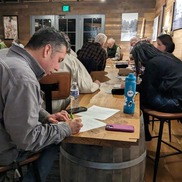
BE THE VOICE OF YOUR AGRICULTURAL COMMUNITY – Help shape conservation priorities and NRCS program delivery in Rhode Island.
The Northern & Southern Rhode Island Conservation Districts, in partnership with USDA’s Natural Resources Conservation Service (NRCS), are holding Local Working Group meetings in Providence County & Washington County this month. These meetings are open to the public.
Local Working Group meetings are a valuable part of the NRCS planning process, enabling farmers, woodland owners, and local land managers to be part of a collaborative effort to improve natural resources in their community. Learn more...
2026 Northern RI LWG Meeting Schedule
- March 18, 2026, 6:00-7:00 p.m., William Hall Library, 1825 Broad St., Cranston, RI 02905
- March 25, 2026, 6:00-7:00 p.m., Cumberland Library, 1464 Diamond Hill Rd #1, Cumberland, RI 02864
- March 28, 2026, 10:00 a.m.-12:00 p.m., South Kingstown Land Trust Barn, 17 Matunuck Beach Road, South Kingstown, RI 02879.
^ back to top
|
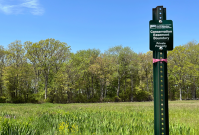
The USDA Natural Resources Conservation Service (NRCS) in Rhode Island announces a second signup ranking date of March 20, 2026, for key conservation programs.
This second signup date allows farmers who missed our previous signup to participate in:
Rhode Island encourages RI farmers to participate in the new Regenerative Pilot Program (EQIP & CSP). Regenerative Agriculture is a conservation management approach that emphasizes natural resources through improved soil health, water management, and natural vitality for the productivity and prosperity of American agriculture and communities. This pilot program addresses whole-farm resource concerns through support for voluntary regenerative agriculture conservation plans. Learn more...
^ back to top
|
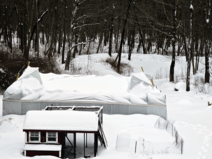
RI Farmers – Please let us know if you have storm damage to your conservation practices from the Blizzard of ‘26, like this high tunnel collapse under the weight of ice and snow at a Northern RI farm. If you had damages to your operation, please apply for emergency EQIP assistance by March 20. We’ve also consolidated disaster resources from USDA-FSA and USDA-NRCS here: https://farmers.gov/protection-recovery/winter-storm.
^ back to top
|
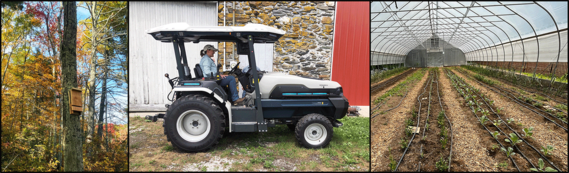
In 2025, USDA’s Natural Resources Conservation Service (NRCS) continued our proud tradition of working closely with Rhode Island farmers, woodland owners, Conservation Districts, and local communities to protect and improve natural resources.
^ back to top
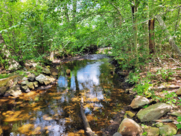
The Rhode Island Resource Conservation & Development Council (RI RC&D) is hosting a series of 90-minute Saturday Forestry Talks presented by RI Forester and NRCS partner, Christopher Modisette, at Hope Library. Join us for a journey through time, discovering the past, reflecting on the present, and imagining the role our forests can play in a healthy, thriving Rhode Island for generations to come.
-
March 21, noon-1:30 p.m., Challenges and Opportunities for our Forests
-
April 11, noon-1:30 p.m., Forest Walk at Trott-Perry Land Preserve (adjacent to Library)
Pre-registration for the talks is required. For more information or to register, please contact Paul Dolan, RI RC&D Director, at 401-500-0399 or rircd2283@gmail.com.
^ back to top
|
Application Window: Opened January 15, 2026
Program Application Period: Electronic applications will be accepted via the VAPG application portal until 1:00 p.m. Eastern Time on April 15, 2026.
Value-Added Producer Grants (VAPGs) help agricultural producers generate new products, create or expand marketing opportunities, and increase producer income.
Program Overview
The objective of this grant program is to assist viable Agricultural Producers, Agricultural Producer Groups, Farmer and Rancher Cooperatives, and Majority-Controlled Producer-Based Businesses in starting or expanding value-added activities related to the processing and/or marketing of Value-Added Agricultural Products. Grants will be awarded competitively for either planning or working capital projects directly related to the processing and/or marketing of value-added products. Generating new products, creating and expanding marketing opportunities, and increasing producer income are the end goals of the program. All proposals must demonstrate economic viability and sustainability to compete for funding.
How to get started
Contact your Southern New England USDA Rural Development office for details and help.
^ back to top
USDA announced major updates to federal crop insurance, reducing red tape for farmers, modernizing long-standing policies, and expanding access to critical risk protection beginning with the 2026 crop year. The Expanding Access to Risk Protection (EARP) Final Rule streamlines requirements across multiple crops, responds to producer feedback, and strengthens USDA’s commitment to putting America’s farmers first.
Learn more about the EARP Final Rule.
USDA – Rhode Island
60 Quaker Lane
Warwick, RI 02886
|
Natural Resources Conservation Service (NRCS)
401-828-1300 | www.RI.nrcs.usda.gov
|
|
Eastern RI – Serving Newport and Bristol counties
|
|
NRCS Field Office
Kat Zuromski, Acting District Conservationist
401-786-1389 Kathryn.Zuromski@usda.gov
|
Conservation District Office
401-934-0842 info@easternriconservation.org
|
|
Northern RI – Serving Providence County
|
|
NRCS Field Office
Ghyllian Alger, Acting District Conservationist
401-822-8835/ Ghyllian.Alger@usda.gov
|
Conservation District Office
401-934-0840/ mallard.nricd@gmail.com
|
|
Southern RI – Serving Kent and Washington counties
|
|
NRCS Field Office
Jameson Long, District Conservationist
401-822-8837/ Jameson.Long@usda.gov
|
Conservation District Office
401-661-5761/ gfuller@sricd.org
|
|
|
|
RI FSA County Office, Suite 49
RI FSA Farm Loan Team, Suite 62
RI FSA State Office, Suite 62
|
401-828-3120 Option 1
401-828-3120 Option 2
401-828-3120 Option 3
|
| |
| |
|
|
|
|







