
New Jersey USDA Newsletter - March 2026
In this issue:

March 9 - Deadline for General Conservation Reserve Program Enrollment.
March 13 - Final date to report 2025 acreage for the Assistance for Specialty Crop Farmers (ASCF) Program. Please note that applicants must provide proof of crop existence and disposition. (See article below for further details.)
March 16 - Non-Insured Crop Disaster Assistance Program (NAP) Coverage Deadline for Current Calendar for: Fresh Beans, Brussel Sprouts, Cantaloupe, Celery, Cucumbers, Eggplant, Honeydews, Oats, Okra, Peppers, Pumpkins, Sorghum Forage, Squash, Sweet Corn (processing), Sweet Potatoes, Sunflowers, Tomatillos, Tomatoes(Fresh) and Watermelons.
March 20 - Deadline for Continuous Conservation Reserve Program Enrollment.
March 31 - Marketing Assistance Loan (MAL) and Loan Deficiency Payments (LDP) Deadline for prior year harvested Wheat, Barley, Canola, Crambe, Flaxseed, Honey, Oats, Rapeseed, and Sesame Seed
|
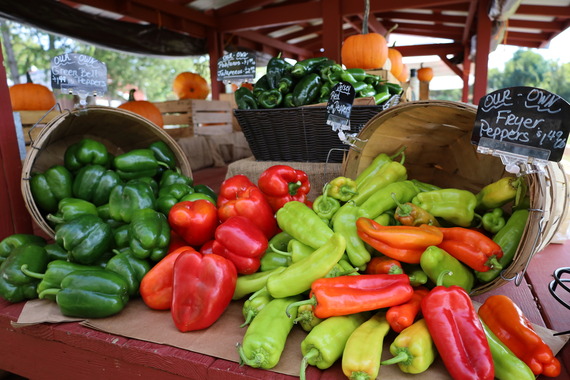 U.S. Department of Agriculture (USDA) is providing $1 billion in Assistance for Specialty Crop Farmers (ASCF) Program assistance for specialty crops and sugar, commodities not covered through the previously announced Farmer Bridge Assistance (FBA) program. These one-time bridge payments will help address market disruptions, elevated input costs, persistent inflation, and market losses from foreign competitors engaging in unfair trade practices that impede exports. Specialty crop producers have until March 13, 2026, to report 2025 acres to USDA’s Farm Service Agency (FSA).
To late file acreage, applicants must provide proof of existence and disposition of the crop as follows:
- Provide seed receipts, spray records, or other acceptable documentation of crop existence PLUS proof of physical existence of the crop on the field claimed, such as:
- The crop or identifiable crop residue is available to be measured by an FSA representative during a field visit -or-
- Precision mapping data, dated drone, aerial, or ground photography that ties the specific crop to the field acreage.
- Applicant must also provide proof of the crops disposition (for example harvest or sales records)
The Assistance for Specialty Crop Farmers Program is authorized under the Commodity Credit Corporation Charter Act and will be administered by FSA.
Eligible Specialty Crops
ASCF-eligible specialty crops include: (A) Almond, Apple, Apricot, Aronia berry, Artichoke, Asparagus, Avocado (B) Banana, Bean (Snap or green; Lima; Dry edible), Beet (Table), Blackberry, Blueberry, Breadfruit, Broccoli (including Broccoli Raab), Brussels Sprouts (C) Cabbage (including Chinese), Cacao, Carrot, Cashew, Cauliflower, Celeriac, Celery, Cherimoya, Cherry, Chestnut (for Nuts), Chive, Citrus, Coconut, Coffee, Collards (including Kale), Cranberry, Cucumber, Currant (D) Date, Dry Edible Beans and Peas* (E) Eggplant, Endive (F) Feijou, Fig, Filbert (Hazelnut) (G) Garlic, Gooseberry, Grape (including Raisin), Guava (H) Horseradish (K) Kiwi, Kohlrabi (L) Leek, Lettuce, Litchi (M) Macadamia, Mango, Melon (All Types), Mushroom (Cultivated), Mustard and Other Greens (N) Nectarine (O) Okra, Olive, Onion, Opuntia (P) Papaya, Parsley, Parsnip, Passion Fruit, Pea (Garden; English or Edible Pod; Dry edible), Peach, Pear, Pecan, Pepper, Persimmon, Pineapple, Pistachio, Plum (including Prune), Pomegranate, Potato, Pumpkin (Q) Quince (R) Radish (All Types), Raspberry, Rhubarb, Rutabaga (S) Salsify, Spinach, Squash (Summer and Winter), Strawberry, Suriname Cherry, Sweet Corn, Sweet Potato, Swiss Chard (T) Taro, Tomato (including Tomatillo), Turnip (W) Walnut, Watermelon
*Dry edible beans and peas covered by FBA will not be eligible for ASCF.
ASCF payments are based on reported 2025 planted acres.
Eligible farmers should ensure their 2025 acreage reporting is factual and accurate by 5 p.m. ET on March 13, 2026. Commodity-specific payment rates will be released by the end of March. Crop insurance linkage will not be required for the ASCF Program. However, USDA strongly urges producers to take advantage of the new One Big Beautiful Bill Act (OBBBA) risk management tools to best protect against price risk and volatility in the future.
More information on ASCF is available online at www.fsa.usda.gov/fba or producers can contact their local FSA county office.
Top of page

Are you interested in working with USDA to start or grow your farm, ranch, or private forest operation, but don’t know where to start?
Whether you’re looking to access capital or disaster assistance through USDA’s Farm Service Agency (FSA) or address natural resource concerns on your land with assistance from USDA’s Natural Resources Conservation Service (NRCS), a great place to start is farmers.gov.
Farmers.gov is a one-stop shop for information about the assistance available from FSA and NRCS. The site also offers many easy-to-use tools for farmers, ranchers, and private forestland owners, whether you are reaching out for the first time or are a long-term customer with a years-long relationship with USDA.
With a farmers.gov account you can:
- Complete an AD-2047, Customer Data Worksheet, prior to your first meeting with FSA and NRCS.
- View farm loan payments history from FSA.
- View cost share assistance received and anticipated from NRCS conservation programs.
- Request conservation assistance from NRCS as well as view and track your conservation plans, practices, and contracts.
- View, print, and export detailed farm records and farm/tract maps for the current year, which are particularly useful when fulfilling acreage reporting requirements.
- Print FSA-156 EZ, Abbreviated Farm Record and your Producer Farm Data Report for the current year.
- Pay FSA debt using the “Make an FSA Payment” feature
- Apply for a farm loan online, view information on your existing loans, and make USDA direct farm loan payments using the Pay My Loan feature.
Learn how to create a farmers.gov account today!
|
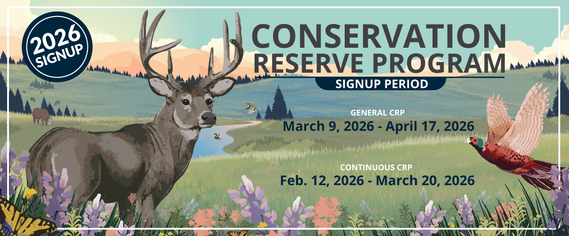 USDA announced the enrollment periods for agricultural producers and landowners to submit offers for the Continuous and General Conservation Reserve Program (CRP). USDA’s Farm Service Agency (FSA) is accepting offers for Continuous CRP from Feb. 12, 2026, through March 20, 2026. Enrollment for General CRP will run from March 9, 2026, through April 17, 2026. FSA will announce dates for Grassland CRP signup in the near future.
Top of page

The USDA is launching a new online portal to streamline reporting of transactions involving U.S. agricultural land by foreign persons, which can include businesses and governments, under the Agricultural Foreign Investment Disclosure Act of 1978 (AFIDA). The new online portal is part of a broader effort to strengthen enforcement and protect American farmland as USDA continues its implementation of the National Farm Security Action Plan.
The new online portal is available at afida.landmark.usda.gov. Users can access the portal with Login.gov, a sign in service that provides secure online access to participate in certain government programs and reporting requirements.
|
Top of page
USDA worked with the Conservation Biology Institute (CBI) to design and build a free online easy-to-use Seed and Vendor finder tool to support the producers enrolling in the CRP program, along with other conservation efforts involving native plantings. CBI also partnered with the Institute for Applied Ecology (IAE) to address the needs of the Native Seed Network and significantly expanded the native seed customer and vendor base.
The seed and vendor finder can be found here: Seed and Vendor Finder
Customers looking for native or introduced species to plant for the conservation projects can easily find vendors across the country that carry that seed or plant using this tool. Currently, CBI has seeded the tool with 600+ wholesale seed and seedling vendors found through an online search from across the country with limited profiles, and 100+ have voluntarily completed full profiles which includes their plant catalogue. The tool is designed for easy uploading of their profile and inventory. It also provides an opportunity for vendors without a website to have an online presence and be found by customers looking for seeds.
Also check out the plant finder tool where you can find suitable plants, including pollinator friendly plants for your area and soil type. The plant finder prototype is only available for 6 states and there is potential to extend it to the entire country.
There were over 10,000 visitors to the site last year, with the current number of unique daily visitors to the tool at over 30 and growing!
All growers/vendors are encouraged to add their business profile and catalog to the tool. They can do this easily by filling out a simple form located here: https://crptool.org/contact/. Once their catalog is online, customers can match their seed/seedlings needs with what they might have available for sale and contact you. This USDA supported tool expands customer outreach to the entire U.S.
Top of page
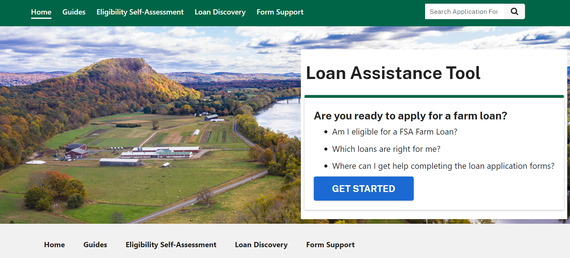 In this Ask the Expert, Jack Carlile, Farm Loan Manager for the USDA Farm Service Agency (FSA), answers questions about farm operating loans and when producers should apply in order to secure funds for the current crop year.
As the Farm Loan Manager for the Cherokee County Service Center, Jack is responsible for managing the loan making and loan servicing activities for five counties in northeast Oklahoma. His office provides services for over 650 farm loan customers. Jack was raised on a cross bred cow/calf operation that his grandparents started. Over the years, each generation has added to the operation by purchasing additional pasture. The operation also grows and bales their own hay. Jack’s agriculture background and degree in agriculture economics from Oklahoma State University help him better understand the financing needs of his producers.
Who can apply for FSA Farm Loans?
Anyone can apply for FSA’s loan programs. Applications will be considered on basic eligibility requirements. To apply for a loan, you must meet the following general eligibility requirements including:
- Be a U.S. citizen or qualified alien.
- Operator of a family farm or ranch.
- Have a satisfactory credit history.
- Unable to obtain credit elsewhere at reasonable rates and terms to meet actual needs.
- Not be delinquent on any federal debts.
To read the full blog visit farmers.gov/blog/ask-the-expert-farm-operating-loan-qa-with-jack-carlile
Top of page
The Value Added Producer Grant (VAPG) is designed to assist agricultural producers in developing new products, expanding marketing opportunities, and increasing their income through value-added activities. Maximum grant awards for working capital are $200,000 and $50,000 for planning grants. Individuals can apply for the planning grant for feasibility studies, developing business plan, etc and then the following year come back and apply for the working capital grant.
2026 Program Application Period: Electronic applications will be accepted via the VAPG application portal until 1:00 p.m. Eastern Time on April 15, 2026.
Additional Resources:
For more information, visit Value Added Producer Grants or email Rd.nj.rbcs@usda.gov .
Top of page
The U.S. Department of Agriculture (USDA) announced expansion of the Controlled Environment pilot crop insurance program for the 2027 and succeeding crop years. The Controlled Environment program from USDA’s Risk Management Agency (RMA) is specifically for plants grown in fully enclosed controlled environments and provides coverage against plant diseases subject to destruction orders or quarantine.
RMA is expanding the program to 2 additional counties in New Jersey, Hudson and Warren.
In addition to geographic expansion, RMA is implementing significant program improvements approved by the Federal Crop Insurance Corporation Board of Directors:
-
Expanding Disease Coverage: RMA has removed the term “regulated” from plant disease requirements, broadening coverage to include both regulated diseases and those monitored by USDA’s Animal and Plant Health Inspection Service (APHIS) or State governments. This change ensures producers have protection against a wider range of plant disease threats;
-
Buffer Zone Protection: The program now clarifies that plants in buffer zones may be eligible for indemnity when they must be destroyed as part of a destruction order or alternate quarantine release strategy, even if the plants themselves show no damage from disease or contamination; and
-
Clarified Contamination Definition: RMA has defined “contamination” to include the presence of, detection of, or exposure to contaminants, providing clearer guidance for producers on coverage eligibility.
The Controlled Environment program is available in select counties in the following states with a May 1 sales closing date: Atlantic, Cape May, Cumberland, Gloucester, Hudson, Monmouth, Warren
To learn more about the Controlled Environment crop insurance program, visit the Controlled Environment webpage or read through our frequently asked questions.
|
Top of page
Marketing Assistance Loans (MALs) and Loan Deficiency Payments (LDPs) provide financing and marketing assistance for wheat, feed grains, soybeans, and other oilseeds, pulse crops, rice, peanuts, cotton, wool and honey. MALs provide you with interim financing after harvest to help you meet cash flow needs without having to sell your commodities when market prices are typically at harvest-time lows. A producer who is eligible to obtain a loan, but agrees to forgo the loan, may obtain an LDP if such a payment is available. Marketing loan provisions and LDPs are not available for sugar and extra-long staple cotton.
FSA is now accepting requests for 2025 MALs and LDPs for all eligible commodities after harvest. Requests for loans and LDPs shall be made on or before the final availability date for the respective commodities.
Commodity certificates are available to loan holders who have outstanding nonrecourse loans for wheat, upland cotton, rice, feed grains, pulse crops (dry peas, lentils, large and small chickpeas), peanuts, wool, soybeans and designated minor oilseeds. These certificates can be purchased at the posted county price (or adjusted world price or national posted price) for the quantity of commodity under loan, and must be immediately exchanged for the collateral, satisfying the loan. MALs redeemed with commodity certificates are not subject to Adjusted Gross Income provisions.
To be considered eligible for an LDP, you must have form CCC-633EZ, Page 1 on file at your local FSA Office before losing beneficial interest in the crop. Pages 2, 3 or 4 of the form must be submitted when payment is requested.
Marketing loan gains (MLGs) and loan deficiency payments (LDPs) are no longer subject to payment limitations, actively engaged in farming and cash-rent tenant rules.
Adjusted Gross Income (AGI) provisions state that if your total applicable three-year average AGI exceeds $900,000, then you’re not eligible to receive an MLG or LDP. You must have a valid CCC-941 on file to earn a market gain of LDP. The AGI does not apply to MALs redeemed with commodity certificate exchange.
More information is available online at https://www.fsa.usda.gov/resources/programs/marketing-assistance-loans-mal or producers can contact their local FSA county office.
Top of page
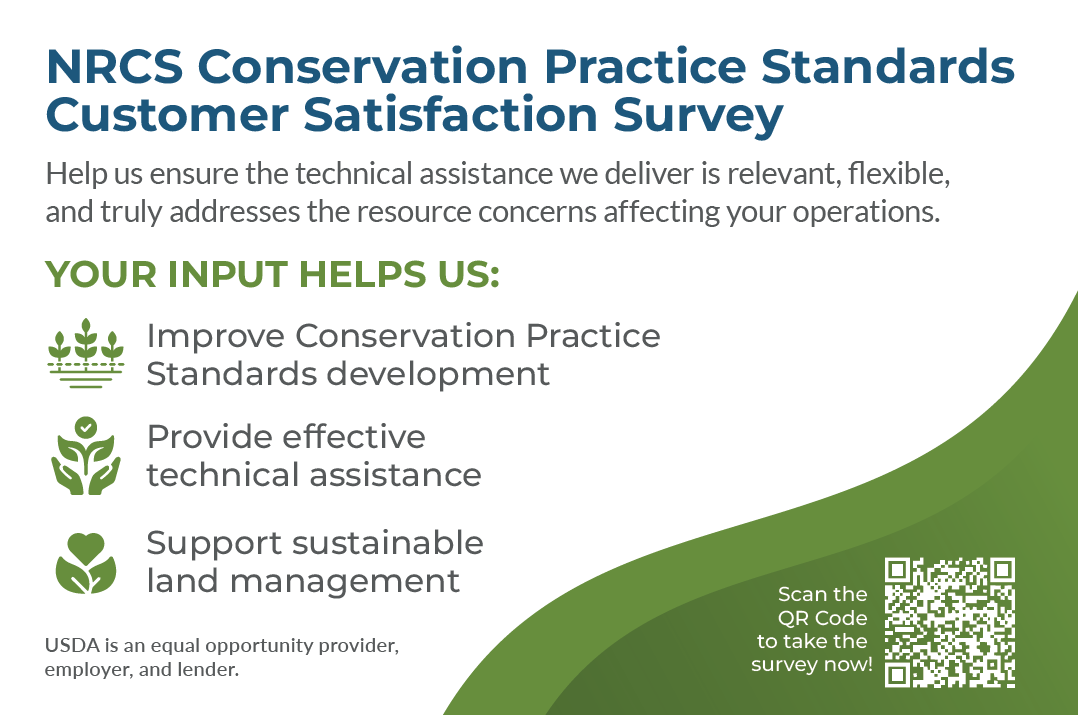
NRCS Conservation Practice Standards Customer Satisfaction SurveyTake the survey.
 Top of page
The USDA's Natural Resources Conservation Service (NRCS) in New Jersey is accepting applications for the Agricultural Conservation Easement Program – Agricultural Land Easement (ACEP-ALE). Application packages are now due by March 31, 2026.
The ACEP-ALE program aims to help private and tribal landowners, land trusts, and other entities such as state and local governments protect croplands and grasslands on working farms and ranches by limiting non-agricultural uses of the land through conservation easements.
To be eligible to receive ALE funding, eligible applicants must demonstrate a commitment to long-term conservation of agricultural lands; a capability to acquire, manage, and enforce easements; adequate staff capacity for monitoring and easement stewardship; and the availability of funds. All landowners of record and the land being offered for enrollment must also meet specific eligibility criteria as outlined in the application materials posted to the State ACEP website.
Fully completed application packets may be sent to the attention of Easements Program Manager, by email (preferred) to katelyn.colon@usda.gov or by mail to USDA-NRCS, 200 Clocktower Dr, Suite 101, Hamilton Square, NJ 08690.
All qualified applications will be reviewed, ranked, and considered for funding according to the Final ACEP rule, policy, and guidance. Complete applications received after the cutoff date may be considered if another sign-up date is announced. Incomplete applications will not be considered.
For more information about ACEP-ALE in New Jersey, please contact Katelyn Colon at (732) 537-6099 or katelyn.colon@usda.gov. You can also visit your nearest USDA Service Center or visit the New Jersey NRCS ACEP website.
Top of page
Top of page
USDA is an equal opportunity provider, employer and lender. To file a complaint of discrimination, write: USDA, Office of the Assistant Secretary for Civil Rights, Office of Adjudication, 1400 Independence Ave., SW, Washington, DC 20250-9410 or call (866) 632-9992 (Toll-free Customer Service), (800) 877-8339 (Local or Federal relay), (866) 377-8642 (Relay voice users).
|






