
Connecticut State Newsletter - February 26, 2026
In This Issue:
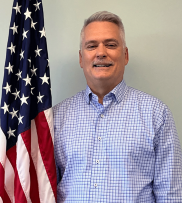
Greetings Conservation Clients & Partners!
These short winter days are the perfect time to plan for spring planting and summer crops. As you look ahead, consider joining NRCS's new Regenerative Pilot Program (RPP), a farmer-first approach that helps you apply practices to improve natural resources and build resilience on your land.
The Regenerative Pilot Program (RPP) streamlines conservation by combining practices into one simple application. It focuses on whole-farm planning to improve soil health, water quality, and long-term productivity, while giving you flexibility to choose what works best for your operation. Whether you’re just starting with cover crops or managing a well-established farm or woodland, there's a pathway for you in this program.
Examples of primary practices include crop rotation, cover crops, contour farming, forest stand improvement, irrigation water management, mulching, forage and grazing management, nutrient and pest management, and residue management, and more regenerative options tailored to your goals.
Sign up today! Our second signup period is now open, with a deadline of March 20, 2026. Contact your local NRCS Field Office or Conservation District Office to apply and start building a healthier, more productive farm for the future.
Tom Morgart
State Conservationist, Connecticut and Rhode Island
|
-
February 26, 2026 - Deadline to submit application for coverage for the 2026 Dairy Margin Coverage Program (DMC).
- March 1, 2026 - Deadline to file a notice of loss and application for payment for 2025 .
- March 1, 2026 - Deadline to file a notice of loss and application for payment for 2025 the Livestock Indemnity Program (LIP).
-
March 13, 2026 - Deadline to complete/correct acreage report in order to apply for Assistance for Specialty Crop Farmers (ASCF) program.
-
March 16, 2026 - Deadline to file a 2026 Noninsured Disaster Assistance Program (NAP) application for coverage for spring-seeded crops.
- March 18, 2026 - Connecticut State Technical Committee Meeting, 9:30 a.m. - 12:30 p.m., NRCS State Office Conference Room, 344 Merrow St., Tolland, CT with virtual Teams link.
-
March 20, 2026 - Second signup cutoff date for ACEP Agricultural Land Easements (ALE), ACEP Wetlands Reserve Easement Program (WRE), and Conservation Stewardship Program (CSP)
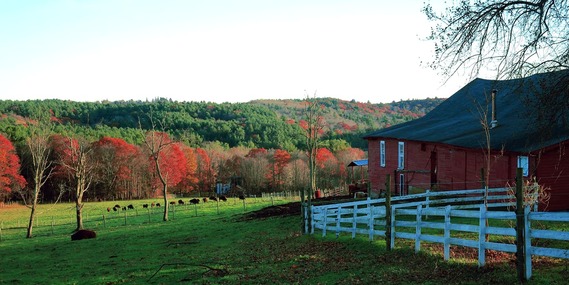 Natural Resources Conservation Service (NRCS) in Connecticut announces a second signup ranking date of March 20, 2026, for key conservation programs.
This second signup allows farmers who missed our previous signup to participate in the:
NRCS encourages Connecticut farmers and forestland owners to participate in the new Regenerative Pilot Program (CSP). Regenerative Agriculture is a conservation management approach that emphasizes natural resources through improved soil health, water management, and natural vitality for the productivity and prosperity of American agriculture and communities. This pilot program addresses whole-farm resource concerns through support for voluntary regenerative agriculture conservation plans.
“NRCS in Connecticut continues our commitment to our farmers, ranchers, and woodland owners to advance conservation, strengthen service delivery, and support the people who feed and fuel our nation,” said NRCS State Conservationist Thomas L. Morgart. Learn more...
The U.S. Department of Agriculture (USDA) is encouraging dairy producers to enroll in Dairy Margin Coverage (DMC), an important safety net program that helps offset milk and feed price differences. This year’s DMC signup began Jan. 12 and the deadline to enroll is Feb. 26, 2026.
“We encourage producers to join the many dairy operations in Connecticut that have already signed up for this important safety net program in advance of the deadline,” said USDA Farm Service Agency (FSA) State Executive Director Robert Sullivan in Connecticut. “At $0.15 per hundredweight for $9.50 coverage, risk protection through Dairy Margin Coverage is a cost-effective tool to manage risk and provide added financial security for your operations.”
The One Big Beautiful Bill Act (OBBBA), signed by President Donald J. Trump on July 4, 2025, reauthorized DMC for calendar years 2026 through 2031 and provided substantial program improvements, including establishing new production history and increasing Tier 1 coverage.
The OBBBA increased DMC’s Tier 1 coverage level from five million pounds to six million pounds. All dairy operations that elect to enroll in DMC for 2026 will establish a new production history.
- Existing dairy operations that started marketing milk on or before Jan. 1, 2023, will use the higher of milk marketings for the years of 2021, 2022, or 2023.
- New dairy operations starting after Jan. 1, 2023, will use their first year of monthly milk marketings, even for a partial year.
- Milk marketing statements or production evidence are required to establish a production history.
Dairy operations also have the option to lock-in coverage levels for six years (2026-2031) with premium fees discounted by 25%.
DMC offers different levels of coverage, including an option that is free to producers, minus a $100 annual administrative fee. To determine the appropriate level of DMC coverage for a specific dairy operation, producers can use the online dairy decision tool.
For more information on DMC, visit the DMC webpage or contact your local USDA Service Center.
In 2025, The Connecticut Department of Agriculture (CTDoA) worked with the USDA Natural Resources Conservation Service and local partners to protect 10 farm parcels across the state.
NRCS in Connecticut provided funding through the Agriculture Conservation Easement Program (ACEP).
“NRCS is pleased to partner with Connecticut farmers, landowners, towns, and the CT Department of Agriculture to protect our cropland and pastureland in perpetuity,” said Thomas L. Morgart, NRCS Connecticut State Conservationist. “The Agricultural Conservation Easement Program keeps working agricultural lands in working hands by limiting non-agricultural uses of these properties. Keeping farms and ranches in agriculture supports local economies and rural communities while providing benefits like open space and wildlife habitat.” Learn more...
|
Are you interested in working with USDA to start or grow your farm, ranch, or private forest operation, but don’t know where to start?
Whether you’re looking to access capital or disaster assistance through USDA’s Farm Service Agency (FSA) or address natural resource concerns on your land with assistance from USDA’s Natural Resources Conservation Service (NRCS), a great place to start is farmers.gov.
Farmers.gov is a one-stop shop for information about the assistance available from FSA and NRCS. The site also offers many easy-to-use tools for farmers, ranchers, and private forestland owners, whether you are reaching out for the first time or are a long-term customer with a years-long relationship with USDA.
With a farmers.gov account you can:
- Complete an AD-2047, Customer Data Worksheet, prior to your first meeting with FSA and NRCS.
- View farm loan payments history from FSA.
- View cost share assistance received and anticipated from NRCS conservation programs.
- Request conservation assistance from NRCS as well as view and track your conservation plans, practices, and contracts.
- View, print, and export detailed farm records and farm/tract maps for the current year, which are particularly useful when fulfilling acreage reporting requirements.
- Print FSA-156 EZ, Abbreviated Farm Record and your Producer Farm Data Report for the current year.
- Pay FSA debt using the “Make an FSA Payment” feature
- Apply for a farm loan online, view information on your existing loans, and make USDA direct farm loan payments using the Pay My Loan feature.
Learn how to create a farmers.gov account today!
The USDA is launching a new online portal to streamline reporting of transactions involving U.S. agricultural land by foreign persons, which can include businesses and governments, under the Agricultural Foreign Investment Disclosure Act of 1978 (AFIDA). The new online portal is part of a broader effort to strengthen enforcement and protect American farmland as USDA continues its implementation of the National Farm Security Action Plan.
The new online portal is available at afida.landmark.usda.gov. Users can access the portal with Login.gov, a sign in service that provides secure online access to participate in certain government programs and reporting requirements.
The new digital portal will gather the same information found on the current form FSA-153 and those subject to filing may still file using the current FSA-153 hard copy form if desired. However, filers should not duplicate filings by using both submission options.
About the National Farm Security Action Plan
One of the key tenets of USDA’s National Farm Security Action Plan (PDF, 1.2 MB) is strengthening processes around disclosure of foreign persons who have an interest in U.S. farmland. This historic plan, announced in July 2025, calls for aggressive implementation of reforms to the AFIDA process including improved verification and monitoring of collected AFIDA data. In addition to the new portal, USDA published an Advanced Notice of Proposed Rulemaking for AFIDA in December 2025.
About AFIDA
The new portal is part of USDA’s efforts to streamline its process for electronic submission and retention of AFIDA disclosures, as initially required by the Consolidated Appropriations Act, 2023. Today USDA also shared its annual AFIDA report for 2024 with Congress, which is available online. The report lists foreign holdings of U.S. agricultural land as 46 million acres, as of December 31, 2024 and includes a section on land held and acquired by China, Russia, Iran, and North Korea in recent years. The data obtained from AFIDA disclosures are used in the preparation of an annual report to Congress, which is published online.
The AFIDA regulations define the term “foreign person” and specifies the information that must be included in the report. AFIDA focuses on foreign persons who hold direct or indirect interest in the agricultural land, provided those foreign persons with an indirect interest have “significant interest or substantial control” in the direct interest holder.
In this Ask the Expert, Jack Carlile, Farm Loan Manager for the USDA Farm Service Agency (FSA), answers questions about farm operating loans and when producers should apply in order to secure funds for the current crop year.
As the Farm Loan Manager for the Cherokee County Service Center, Jack is responsible for managing the loan making and loan servicing activities for five counties in northeast Oklahoma. His office provides services for over 650 farm loan customers. Jack was raised on a cross bred cow/calf operation that his grandparents started. Over the years, each generation has added to the operation by purchasing additional pasture. The operation also grows and bales their own hay. Jack’s agriculture background and degree in agriculture economics from Oklahoma State University help him better understand the financing needs of his producers.
Who can apply for FSA Farm Loans?
Anyone can apply for FSA’s loan programs. Applications will be considered on basic eligibility requirements. To apply for a loan, you must meet the following general eligibility requirements including:
- Be a U.S. citizen or qualified alien.
- Operator of a family farm or ranch.
- Have a satisfactory credit history.
- Unable to obtain credit elsewhere at reasonable rates and terms to meet actual needs.
- Not be delinquent on any federal debts.
To read the full blog visit farmers.gov/blog/ask-the-expert-farm-operating-loan-qa-with-jack-carlile.
USDA announced the enrollment periods for agricultural producers and landowners to submit offers for the Continuous and General Conservation Reserve Program (CRP). USDA’s Farm Service Agency (FSA) is accepting offers for Continuous CRP starting Feb. 12, 2026, through March 20, 2026. Enrollment for General CRP will run from March 9, 2026, through April 17, 2026. FSA will announce dates for Grassland CRP signup in the near future.
CRP is USDA’s flagship conservation program, providing financial and technical support to agricultural producers and landowners who place unproductive or marginal cropland under contract for 10-15 years and who agree to voluntarily convert the land to beneficial vegetative cover to improve water quality, prevent soil erosion and support wildlife habitat. The Continuing Appropriations, Agriculture, Legislative Branch, Military Construction and Veterans Affairs, and Extensions Act, 2026, extends FSA’s authority to administer CRP through Sept. 30, 2026.
Continuous CRP (Signup 65)
FSA will batch Continuous CRP offers submitted by interested agricultural producers and landowners. Offers to re-enroll expiring CRP continuous acreage will be accepted on a first-come, first-serve basis. New acreage offered in continuous CRP practices will be considered for acceptance on a first-come, first-serve basis if they support USDA conservation priorities including but not limited to practices that address water quality, such as filter strips and grass waterways, and practices that restore native ecosystems or target specific resource concerns.
The first Continuous CRP batching period ends on March 20, 2026. Offers submitted after this date will be considered for acceptance in subsequent batching periods if acreage remains available.
Continuous CRP participants voluntarily offer environmentally sensitive lands, typically smaller parcels than offered through General CRP including wetlands, riparian buffers, and varying wildlife habitats. In return, they receive annual rental payments and cost-share assistance to establish long-term, resource-conserving vegetative cover.
Continuous CRP enrollment options include:
-
Clean Lakes, Estuaries and Rivers (CLEAR) Initiative: Prioritizes water quality practices on the land that, if enrolled, will help reduce sediment loadings, nutrient loadings, and harmful algal blooms. The vegetative covers also contribute to increased wildlife populations.
-
CLEAR30 (a component of the CLEAR Initiative): Offers additional incentives for water quality practice adoption and can be accessed in 30-year contracts.
-
Highly Erodible Land Initiative (HELI): Producers and landowners can enroll in CRP to establish long-term cover on highly erodible cropland that has a weighted erodibility index greater than or equal to 20.
-
Conservation Reserve Enhancement Program (CREP): Addresses high priority conservation objectives of states and Tribal governments on agricultural lands in specific geographic areas.
-
State Acres for Wildlife Enhancement Initiative (SAFE): Restores vital habitat in order to meet high-priority state wildlife conservation goals.
General CRP (Signup 66)
General CRP offers are submitted through a competitive bid process. After the enrollment period closes, General CRP offers are ranked and scored by FSA, using nationally established environmental benefits criteria. USDA will announce accepted offers once ranking and scoring for all offers is completed. In addition to annual rental payments, approved General CRP participants may also be eligible for cost-share assistance to establish long-term, resource-conserving vegetative cover.
If you’re interested in participating in CRP, contact your local FSA county office.
The U.S. Department of Agriculture (USDA) reminds agricultural producers that the final date to apply for or make changes to their existing crop insurance coverage is quickly approaching for spring planted crops, Whole-Farm Revenue Protection, Micro Farm and some specialty crops. Sales closing dates vary by crop and location, but the next major sales closing dates are Feb. 28, March 15 and April 15.
Producers are encouraged to visit their crop insurance agent soon to learn specific details for the upcoming crop year. Crop insurance coverage decisions must be made on or before the applicable sales closing date.
The USDA’s Risk Management Agency lists sales closing dates in the Actuarial Information Browser, under the “Dates” tab.
Producers can also access the RMA Map Viewer tool to visualize the insurance program date choices for acreage reporting, cancellation, contract change, earliest planting, end of insurance, end of late planting period, final planting, premium billing, production reporting, sales closing, and termination dates, when applicable, per commodity, insurance plan, type and practice. Additionally, producers can access the RMA Information Reporting System tool to specifically identify applicable dates for their operation, using the “Insurance Offer Reports” application.
Federal crop insurance is critical to the farm safety net. It helps producers and owners manage risk and strengthen the rural economy. Producers may select from several coverage options, including yield coverage, revenue protection and area risk plans of insurance.
Crop insurance options to manage revenue risks include Whole-Farm Revenue Protection and Micro Farm. Whole-Farm Revenue Protection provides a risk management safety net for all commodities on the farm under one insurance policy and is available in all counties nationwide. Micro Farm aims to help direct market and small-scale producers that may sell locally, and this policy simplifies record keeping and covers post-production costs like washing and value-added products.
Crop insurance is sold and delivered solely through private crop insurance agents. A list of crop insurance agents is available online at the RMA Agent Locator. Producers can learn more about crop insurance and the modern farm safety net at rma.usda.gov or by contacting their RMA Regional Office.
There are options for Farm Service Agency (FSA) loan customers during financial stress. If you are a borrower who is unable to make payments on a loan, contact your local FSA Farm Loan Manager to learn about your options.
Using the correct signature when doing business with FSA can save time and prevent a delay in program benefits.
The following are FSA signature guidelines:
- Married individuals must sign their given name.
- Example—Mary Doe and John Doe are married. When signing FSA forms, each must use their given name, and may not sign with the name of their spouse. Mrs. Mary Doe may not sign documents as Mrs. John Doe. For Farm Loan Purposes, spouses may not sign on behalf of the other as an authorized signatory, a signature will be needed for each. For a minor, FSA requires the minor's signature and one from the minor’s parent. There are certain exceptions where a minor’s signature may be accepted without obtaining the signature of one of the parents. Despite minority status, a youth executing a promissory note for a Youth Loan will incur full personal liability for the debt and will sign individually.
Note: By signing a document with a minor, the parent is liable for actions of the minor and may be liable for refunds, liquidated damages, or other penalties, etc.
When signing on one’s behalf the signature must agree with the name typed or printed on the form or be a variation that does not cause the name and signature to be in disagreement. Example - John W. Smith is on the form. The signature may be John W. Smith or J.W. Smith or J. Smith. Or Mary J. Smith may be signed as Mrs. Mary Joe Smith, M.J. Smith, Mary Smith, etc.
FAXED signatures will be accepted for certain forms and other documents provided the acceptable program forms are approved for FAXED signatures. Producers are responsible for the successful transmission and receipt of FAXED information.
Examples of documents not approved for FAXED signatures include:
- Promissory note
- Assignment of payment
- Joint payment authorization
- Acknowledgement of commodity certificate purchase
Spouses may sign documents on behalf of each other for FSA and CCC programs in which either spouse has an interest, unless written notification denying a spouse this authority has been provided to the county office.
Spouses cannot sign on behalf of each other as an authorized signatory for partnerships, joint ventures, corporations or other similar entities. Likewise, a spouse cannot sign a document on behalf of the other in order to affirm the eligibility of oneself.
Any member of a general partnership can sign on behalf of the general partnership and bind all members unless the Articles of Partnership are more restrictive. Spouses may sign on behalf of each other’s individual interest in a partnership, unless notification denying a spouse that authority is provided to the county office. Acceptable signatures for general partnerships, joint ventures, corporations, estates, and trusts must consist of an indicator “by” or “for” the individual’s name, individual’s name and capacity, or individual’s name, capacity, and name of entity.
Connecticut State NRCS Office
344 Merrow Road, Suite A
Tolland, CT 06084-3917
Phone: 860-871-4011
Connecticut NRCS State Website
Connecticut State FSA Office
344 Merrow Road, Suite B
Tolland, CT 06084-3917
Phone: 860-871-4090
Fax: 855-934-2463
State Executive Director:
Robert Sullivan
|
|
Connecticut FSA State Website
|
|
State Office Staff:
Nathan Wilson, Deputy State Executive Director
Jule Dybdahl, Administrative Officer
Rebecca Palmer, Program Chief
A.J. Bellagamba, Program Specialist
Claire Vaterlaus-Staby, Outreach Coordinator
Keith Durao, Administrative Specialist
|
State Committee Chair:
Jeffery Lipton
State Committee Members:
Kelly Bloom
Shane Collett
Joseph Geremia
Kies Orr LaVack
|
Top of page
|






