
South Dakota USDA Newsletter - February 18, 2026
In This Issue:
Greetings from the South Dakota FSA State Office,
I have been fortunate over the past several weeks to get out of the office and travel around the great state of South Dakota. This is the season of farm shows, stock shows and educational events that allow farmers to learn and prepare for the upcoming year.
In my travels, I have stopped and visited nearly 20 FSA county offices. I also have visited with countless producers at these events. I believe it is important to get out and see what is happening within the state, stay in contact to find out what concerns are out there, and let producers know that we are here to offer assistance.
One event that really impressed me was at Lake Area Technical College (LATC) on Jan. 30. The event was promoting farm transition from generation to generation. Second year students at LATC attended and their parents were also invited to attend. Transition and future planning are important things that need to happen for a farm transition to be successful. While this discussion is easy to avoid, it is essential for farms to succeed and grow into the future.
The most important goal that I have as State Executive Director is to see the number of young producers increase in South Dakota in the next few years. FSA offers Youth Loans to young individuals pursuing ag projects that generate income and promote hands-on learning. FSA’s Beginning Farmer and Rancher Loans support the next generation of farmers and ranchers through our direct and guaranteed loan programs. Beginning farmers also will see additional subsidies for crop insurance going out over 10 years rather than just five years. For producers nearing or considering retirement who may not have the next generation to keep the farm or ranch in the family, begin the process of searching for someone that would welcome the opportunity. We are now searching for the next generation of producers and at FSA we welcome the opportunity to assist them!
Sincerely,
Roger Chase
State Executive Director, South Dakota FSA
Top of page
Greetings,
Many educational opportunities occur each winter for networking and gaining new insights. Whether you are a partner organization, tribal entity, large-scale rancher or farmer, or specialty small-acreage grower, these statewide and locally organized events provide a great venue to learn of opportunities and discuss your conservation efforts such as the SD Specialty Producers’ SD Producer Summits are set to be held in Rapid City, SD on February 13, and in Huron, SD on February 20. Another upcoming learning opportunity is the SD Grassland Initiative’s 2026 SD Grassland Summit set to be held in Mitchell, SD, March 3-4.
With our eyes set on helping people help the land, our specialists and partners can offer science-based assistance that helps producers create a plan that best suits their operation, whether that involves livestock grazing, fertilizer application, crop rotation, or windbreak needs. Working with NRCS is voluntary, and I encourage producers considering management changes to visit their local NRCS office and speak with specialists dedicated to grassland management, agronomic needs, windbreak designs, engineering, and other areas.
Thank you to all South Dakota farmers, ranchers, land managers, landowners, and NRCS partners who show their dedication every day in conserving our state’s wonderful natural resources.
Sincerely,
Jessica Michalski
Acting State Conservationist, South Dakota NRCS
Top of page
February 20, 2026 - South Dakota Producers Summit in Huron - Education for Specialty Crops, Niche Markets, and Regenerative Integrity
February 26, 2026 - Deadline to enroll in Dairy Margin Coverage (DMC) for the 2026 coverage year
March 2, 2026 - Deadline to submit Livestock Indemnity Program (LIP) notice of loss and payment application for 2025 program year
March 2, 2026 - Deadline to submit Emergency Assistance for Livestock, Honeybee, and Farm-Raised Fish Program (ELAP) notice of loss and payment application for 2025 eligible losses
March 2, 2026 - Deadline to submit application for 2025 Livestock Forage Program (LFP)
March 3-4, 2026 - South Dakota Grasslands Summit in Mitchell
March 13, 2026 - To be eligible for the Assistance for Specialty Crop Farmers (ASCF) Program, specialty crop producers have until March 13, 2026, to complete a late-filed acreage report for crop year 2025
March 16, 2026 - Deadline to apply for 2026 Non-insured Disaster Assistance (NAP) Coverage for Spring Crops
March 20, 2026 - Deadline to submit offers for Continuous Conservation Reserve Program (CRP) to be considered for the 1st batching
April 17, 2026 - Deadline to submit offers for General Conservation Reserve Program (CRP)
April 30, 2026 - Deadline to apply for Supplemental Disaster Relief Program Stage 1 and Stage 2
February 2026
|
Farm Operating Loans — Direct
|
4.625% |
|
Farm Ownership Loans — Direct
|
5.75% |
|
Farm Ownership Loans — Direct Down Payment, Beginning Farmer or Rancher
|
1.75% |
|
Emergency Loans
|
3.750% |
|
Farm Storage Facility Loans (7 years)
|
4.00% |
Top of page
USDA announced the enrollment periods for agricultural producers and landowners to submit offers for the Continuous and General Conservation Reserve Program (CRP). USDA’s Farm Service Agency (FSA) is accepting offers for Continuous CRP starting Feb. 12, 2026, through March 20, 2026. Enrollment for General CRP will run from March 9, 2026, through April 17, 2026. FSA will announce dates for Grassland CRP signup in the near future.
CRP is USDA’s flagship conservation program, providing financial and technical support to agricultural producers and landowners who place unproductive or marginal cropland under contract for 10-15 years and who agree to voluntarily convert the land to beneficial vegetative cover to improve water quality, prevent soil erosion and support wildlife habitat. The Continuing Appropriations, Agriculture, Legislative Branch, Military Construction and Veterans Affairs, and Extensions Act, 2026, extends FSA’s authority to administer CRP through Sept. 30, 2026.
Continuous CRP (Signup 65)
FSA will batch Continuous CRP offers submitted by interested agricultural producers and landowners. Offers to re-enroll expiring CRP continuous acreage will be accepted on a first-come, first-serve basis. New acreage offered in continuous CRP practices will be considered for acceptance on a first-come, first-serve basis if they support USDA conservation priorities including but not limited to practices that address water quality, such as filter strips and grass waterways, and practices that restore native ecosystems or target specific resource concerns.
The first Continuous CRP batching period ends on March 20, 2026. Offers submitted after this date will be considered for acceptance in subsequent batching periods if acreage remains available.
Continuous CRP participants voluntarily offer environmentally sensitive lands, typically smaller parcels than offered through General CRP including wetlands, riparian buffers, and varying wildlife habitats. In return, they receive annual rental payments and cost-share assistance to establish long-term, resource-conserving vegetative cover.
Continuous CRP enrollment options include:
-
Clean Lakes, Estuaries and Rivers (CLEAR) Initiative: Prioritizes water quality practices on the land that, if enrolled, will help reduce sediment loadings, nutrient loadings, and harmful algal blooms. The vegetative covers also contribute to increased wildlife populations.
-
CLEAR30 (a component of the CLEAR Initiative): Offers additional incentives for water quality practice adoption and can be accessed in 30-year contracts.
-
Highly Erodible Land Initiative (HELI): Producers and landowners can enroll in CRP to establish long-term cover on highly erodible cropland that has a weighted erodibility index greater than or equal to 20.
-
Conservation Reserve Enhancement Program (CREP): Addresses high priority conservation objectives of states and Tribal governments on agricultural lands in specific geographic areas.
-
State Acres for Wildlife Enhancement Initiative (SAFE): Restores vital habitat in order to meet high-priority state wildlife conservation goals.
General CRP (Signup 66)
General CRP offers are submitted through a competitive bid process. After the enrollment period closes, General CRP offers are ranked and scored by FSA, using nationally established environmental benefits criteria. USDA will announce accepted offers once ranking and scoring for all offers is completed. In addition to annual rental payments, approved General CRP participants may also be eligible for cost-share assistance to establish long-term, resource-conserving vegetative cover.
If you’re interested in participating in CRP, contact your local FSA county office.
Top of page
The Livestock Indemnity Program (LIP) provides assistance to you for livestock deaths in excess of normal mortality caused by adverse weather, disease and attacks by animals reintroduced into the wild by the federal government or protected by federal law.
For disease losses, FSA county committees can accept veterinarian certifications that livestock deaths were directly related to adverse weather and unpreventable through good animal husbandry and management.
For 2025 livestock losses, you must file a notice of loss, provide the following supporting documentation, and application for payment to your local FSA office by March 2, 2026.
- Proof of death documentation
- Copy of grower’s contracts
- Proof of normal mortality documentation
- Livestock beginning inventory documentation
USDA has established normal mortality rates for each type and weight range of eligible livestock, i.e. Adult Beef Cow = 1.5% and Non-Adult Beef Cattle = 5%. These established percentages reflect losses that are considered expected or typical under “normal” conditions.
For more information, contact your local USDA Service Center or visit fsa.usda.gov.
Top of page
ELAP provides emergency assistance to eligible livestock, honeybee, and farm-raised fish producers who have losses due to disease, adverse weather or other conditions, such as blizzards and wildfires, not covered by other agricultural disaster assistance programs.
Eligible losses include:
-
Livestock - grazing losses not covered under the Livestock Forage Disaster Program (LFP), loss of purchased feed and/or mechanically harvested feed due to an eligible adverse weather event, additional cost of transporting water and feed because of an eligible drought and additional cost associated with gathering livestock to treat for cattle tick fever.
-
Honeybee - loss of purchased feed due to an eligible adverse weather event, cost of additional feed purchased above normal quantities due to an eligible adverse weather condition, colony losses in excess of normal mortality due to an eligible weather event or loss condition, including CCD, and hive losses due to eligible adverse weather.
-
Farm-Raised Fish - death losses in excess of normal mortality and/or loss of purchased feed due to an eligible adverse weather event.
If you’ve suffered eligible livestock, honeybee, or farm-raised fish losses during calendar year 2025, you must file a notice of loss and an application for payment by March 2, 2026.
Top of page
Farmers and ranchers rely on crop insurance to protect themselves from disasters and unforeseen events, but not all crops are insurable through the USDA’s Risk Management Agency. The Farm Service Agency’s (FSA) Noninsured Crop Disaster Assistance Program (NAP) provides producers another option to obtain coverage against disaster for these crops. NAP provides financial assistance to producers of non-insurable crops impacted by natural disasters that result in lower yields, crop losses, or prevents crop planting.
Commercially produced crops and agricultural commodities for which crop insurance is not available are generally eligible for NAP. Eligible crops include those grown specifically for food, fiber, livestock consumption, biofuel or biobased products, or value loss crops such as aquaculture, Christmas trees, ornamental nursery, and others. Contact your local FSA office to see which crops are eligible in your state and county.
Eligible causes of loss include drought, freeze, hail, excessive moisture, excessive wind or hurricanes, earthquake and flood. These events must occur during the NAP policy coverage period, before or during harvest, and the disaster must directly affect the eligible crop. For guidance on causes of loss not listed, contact your local FSA county office.
Interested producers apply for NAP coverage and pay the applicable service fee at the FSA office where their farm records are maintained. These must be filed by the application closing date, which varies by crop. Contact your local FSA office to verify application closing dates and ensure coverage for eligible NAP crops.
At the time of application, each producer acknowledges they have received the NAP Basic Provisions, which describes NAP requirements for coverage. NAP participants must report crop acreage shortly after planting and provide verifiable or reliable crop production records when required by FSA.
Producers are required to pay service fees which vary depending on the number of crops and number of counties your operation is located in. The NAP service fee is the lesser of $325 per crop or $825 per producer per administrative county, not to exceed a total of $1,950 for a producer with farming interests in multiple counties. Premiums also apply when producers elect higher levels of coverage with a maximum premium of $15,750 per person or legal entity.
A producer’s certification on Form CCC-860 Socially Disadvantaged, Limited Resource, Beginning and Veteran Farmer or Rancher Certification may serve as an application for basic NAP coverage for all eligible crops beginning with crop year 2022. These producers will have all NAP-related service fees for basic coverage waived, in addition to a 50 percent premium reduction if higher levels of coverage are elected.
For more detailed information on NAP, download the NAP Fact Sheet. To get started with NAP, we recommend you contact your local USDA service center.
Top of page
The USDA is launching a new online portal to streamline reporting of transactions involving U.S. agricultural land by foreign persons, which can include businesses and governments, under the Agricultural Foreign Investment Disclosure Act of 1978 (AFIDA). The new online portal is part of a broader effort to strengthen enforcement and protect American farmland as USDA continues its implementation of the National Farm Security Action Plan.
The new online portal is available at afida.landmark.usda.gov. Users can access the portal with Login.gov, a sign in service that provides secure online access to participate in certain government programs and reporting requirements.
The new digital portal will gather the same information found on the current form FSA-153 and those subject to filing may still file using the current FSA-153 hard copy form if desired. However, filers should not duplicate filings by using both submission options.
About the National Farm Security Action Plan
One of the key tenets of USDA’s National Farm Security Action Plan (PDF, 1.2 MB) is strengthening processes around disclosure of foreign persons who have an interest in U.S. farmland. This historic plan, announced in July 2025, calls for aggressive implementation of reforms to the AFIDA process including improved verification and monitoring of collected AFIDA data. In addition to the new portal, USDA published an Advanced Notice of Proposed Rulemaking for AFIDA in December 2025.
About AFIDA
The new portal is part of USDA’s efforts to streamline its process for electronic submission and retention of AFIDA disclosures, as initially required by the Consolidated Appropriations Act, 2023. Today USDA also shared its annual AFIDA report for 2024 with Congress, which is available online. The report lists foreign holdings of U.S. agricultural land as 46 million acres, as of December 31, 2024 and includes a section on land held and acquired by China, Russia, Iran, and North Korea in recent years. The data obtained from AFIDA disclosures are used in the preparation of an annual report to Congress, which is published online.
The AFIDA regulations define the term “foreign person” and specifies the information that must be included in the report. AFIDA focuses on foreign persons who hold direct or indirect interest in the agricultural land, provided those foreign persons with an indirect interest have “significant interest or substantial control” in the direct interest holder.
Top of page
In order to claim a Farm Service Agency (FSA) payment on behalf of a deceased producer, all program conditions for the payment must have been met before the applicable producer’s date of death.
If a producer earned an FSA payment prior to his or her death, the following is the order of precedence for the representatives of the producer:
- administrator or executor of the estate
- the surviving spouse
- surviving sons and daughters, including adopted children
- surviving father and mother
- surviving brothers and sisters
- heirs of the deceased person who would be entitled to payment according to the State law
For FSA to release the payment, the legal representative of the deceased producer must file a form FSA-325 to claim the payment for themselves or an estate. The county office will verify that the application, contract, loan agreement, or other similar form requesting payment issuance, was signed by the applicable deadline by the deceased or a person legally authorized to act on their behalf at that time of application.
If the application, contract or loan agreement form was signed by someone other than the deceased participant, FSA will determine whether the person submitting the form has the legal authority to submit the form.
Payments will be issued to the respective representative’s name using the deceased program participant’s tax identification number. Payments made to representatives are subject to offset regulations for debts owed by the deceased.
FSA is not responsible for advising persons in obtaining legal advice on how to obtain program benefits that may be due to a participant who has died, disappeared or who has been declared incompetent.
Top of page
FSA offers direct farm ownership and direct farm operating loans to producers who want to establish, maintain, or strengthen their farm or ranch. Direct loans are processed, approved and serviced by FSA loan officers.
Direct farm operating loans can be used to purchase livestock and feed, farm equipment, fuel, farm chemicals, insurance, and other costs including family living expenses. Operating loans can also be used to finance minor improvements or repairs to buildings and to refinance some farm-related debts, excluding real estate.
Direct farm ownership loans can be used to purchase farmland, enlarge an existing farm, construct and repair buildings, and to make farm improvements.
The maximum loan amount for direct farm ownership loans is $600,000 and the maximum loan amount for direct operating loans is $400,000 and a down payment is not required. Repayment terms vary depending on the type of loan, collateral and the producer's ability to repay the loan. Operating loans are normally repaid within seven years and farm ownership loans are not to exceed 40 years.
Please contact your local FSA office for more information or to apply for a direct farm ownership or operating loan.
Top of page
Farm Service Agency (FSA) loans require applicants to have a satisfactory credit history. A credit report is requested for all FSA direct farm loan applicants. These reports are reviewed to verify outstanding debts, see if bills are paid timely and to determine the impact on cash flow.
Information on your credit report is strictly confidential and is used only as an aid in conducting FSA business.
Our farm loan staff will discuss options with you if you have an unfavorable credit report and will provide a copy of your report. If you dispute the accuracy of the information on the credit report, it is up to you to contact the issuing credit report company to resolve any errors or inaccuracies.
There are multiple ways to remedy an unfavorable credit score:
- Make sure to pay bills on time
- Setting up automatic payments or automated reminders can be an effective way to remember payment due dates.
- Pay down existing debt
- Keep your credit card balances low
- Avoid suddenly opening or closing existing credit accounts
FSA’s farm loan staff will guide you through the process, which may require you to reapply for a loan after improving or correcting your credit report.
For more information on FSA farm loan programs, contact your local County USDA Service Center or visit fsa.usda.gov.
Top of page
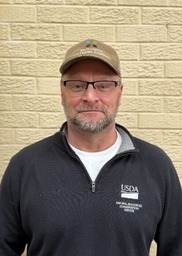
Shane Jordan, Resource Conservationist for the USDA Natural Resources Conservation Service in Clark, South Dakota, has been named the national winner of the Conservation Planner 2025 Hugh Hammond Bennett Award for Conservation Excellence for his outstanding conservation efforts.
Shane's passion for natural resources began on his family's 2,500-acre corn and soybean farm in the Loess Hills of West-Central Iowa. Growing up, he managed a 25-head flock of sheep, worked with a 50-head cow herd, and helped operate a 20-acre tree farm selling Christmas trees and live spaded conifer trees. Shane’s grandparents cultivated a five-acre garden where they grew potatoes for the family and raised approximately 50 dual-purpose breeds of chickens. Hours spent hiking, camping, and harvesting native berries in the Loess Hills shaped his deep commitment to conservation.
After earning a Bachelor of Science degree in Range Management from South Dakota State University, Shane gained diverse experience as a Riparian Coordinator with USDA/AmeriCorps and worked for the McKenzie County Grazing Association /U.S. Forest Service in Watford City, ND conducting woody draw assessments on the Little Missouri National Grasslands. Shane also served as the Lake Byron/Ravine Lake Watershed Coordinator where he implemented CMP with private landowners throughout the watershed area. In 1996, he joined NRCS as a Range Conservationist in Faulkton, South Dakota.
Shane served as District Conservationist in the Redfield NRCS Field Office for 23 years, with the last eight years covering both Spink and Clark Counties. When he arrived in Redfield, participation in USDA/NRCS programs was minimal. By building strong relationships with growers and the Spink County Conservation District, Shane transformed conservation engagement in the county. His focus on technically sound conservation planning led to explosive growth in program participation in CRP, WHIP, EQIP, WRP, and CSP eventually leading to the management of over 250 Conservation Stewardship Program (CSP) contracts, their cornerstone program.
In 2015, after meeting soil health pioneer Gabe Brown, Shane launched the Soil Health Summer Bus Tour in partnership with the Spink County Conservation District. The tour connected area producers with experienced farmers implementing the five core soil health principles. The initiative evolved into winter sessions featuring nationally known soil health experts, including Gabe Brown, Jason Mauch, Dr. Jon Lundgren, Ray Archuleta, and others.
In 2020, Shane accepted a position as Resource Unit Conservationist on the Brookings Area Ecology Team, specializing in soil health, saline/sodic soils, conservation planning, and urban agriculture. He created a monthly newsletter called "The Journey to a Soil Health System," providing technical information on ecological processes, soils health principals, and regenerative agriculture across cropland, grasslands, and urban spaces.
Shane's greatest achievement has been changing producer mindsets through education and relationship-building. His work exemplifies NRCS's foundation of offering technically sound conservation planning that identifies resource concerns and creates lasting change on the land.
The Hugh Hammond Bennett Award is named in memory of soil conservation pioneer Hugh Hammond Bennett, the first Chief of the Soil Conservation Service (now NRCS), who led nationwide efforts to raise awareness about the critical importance of soil conservation and to help farmers recover after the Dust Bowl. Bennett believed that real and lasting change on the land comes from developing and following a conservation plan designed to meet the unique needs of that land based on available resources, natural resource concerns, and producer goals.
NCPP was formed in 2015 to emphasize the critical role that conservation planning plays in advancing voluntary conservation efforts on private lands. NCPP consists of USDA's Natural Resources Conservation Service, National Association of Conservation Districts, National Association of State Conservation Agencies, National Conservation District Employees Association, and National Association of Resource Conservation and Development Councils. For more information about the NCPP, visit www.ncpp.info.
Top of page
|
USDA in South Dakota
200 4th Street SW
Huron, SD 57350
FSA Phone: (605) 352-1160
NRCS Phone: (605) 352-1200
RMA Phone: (406) 651-8450
|
|
Get Started at Your USDA Service Center
|
|
Farm Service Agency
State Executive Director:
Roger Chase
Deputy State Executive Director:
Ryan Vanden Berge
Administrative Officer:
Theresa Hoadley
Program Managers:
Owen Fagerhaug - Conservation
Logan Kopfmann - Disaster Relief
Donita Garry - Program Delivery
Bridget Weber - Farm Loan Program,
Acting
|
Natural Resources Conservation
Service
Acting State Conservationist:
Jessica Michalski
Assistant State Conservationists:
Jessica Michalski - Ecological Sciences
James Reedy - Engineering
Nathan Jones - Soils
Val Dupraz - Programs
Colette Kessler - Partnerships
Deke Hobbick - Compliance
Denise Gauer - Management & Strategy
|
|
South Dakota Farm Service Agency
South Dakota Natural Resources Conservation Service
|
|






