
New Jersey USDA Newsletter - February 2026
In this issue:
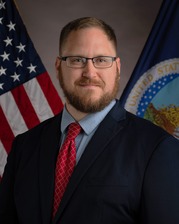
Winter has shown up in full force across New Jersey, and the cold, snow, and ice have created real challenges for many farmers. From fields and fencing to equipment, greenhouses, and livestock, we know winter weather can take a toll in a lot of different ways.
If you’ve experienced any weather-related damage or loss, please take the time to document what you’re seeing and stay in touch with your local FSA County Office. Photos, notes, and early communication are always helpful and can make a difference when we’re looking at how we can assist. Visit https://www.farmers.gov/protection-recovery/winter-storm to learn more about USDA programs to help you recover from winter storms.
|
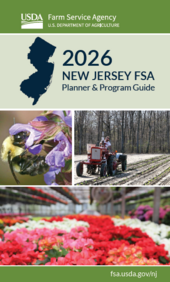
These colder days can also be a good time to plan. When you’re stuck inside, I encourage you to visit farmers.gov to browse available programs and loan options, and to think about how FSA can be part of your operation’s 2026 management plan.
Our FSA staff are ready and willing to help however we can. Whether it’s answering questions, talking through options, or helping you prepare for the year ahead, your local County Service Center is a great place to start.
Make sure to pick up your 2026 planner, available at your local USDA Service Center
|

Mar 2 - Final date to submit Notice of Loss (NOL) and Application for Payment for the Emergency Livestock Assistance Program (ELAP) for 2025 losses.
Mar 16 - Non-Insured Crop Disaster Assistance Program (NAP) Coverage Deadline for Current Calendar for: Fresh Beans, Brussel Sprouts, Cantaloupe, Celery, Cucumbers, Eggplant, Honeydews, Oats, Okra, Peppers, Pumpkins, Sorghum Forage, Squash, Sweet Corn (processing), Sweet Potatoes, Sunflowers, Tomatillos, Tomatoes(Fresh) and Watermelons.
|
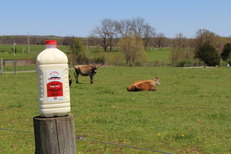
The U.S. Department of Agriculture (USDA) announced the enrollment period for the Dairy Margin Coverage (DMC) program for the 2026 coverage year, an important safety net program that provides producers with price support to help offset milk and feed price differences. Dairy producers can enroll in DMC from January 12, 2026, to February 26, 2026.
The One Big Beautiful Bill Act (OBBBA) reauthorized DMC for calendar years 2026 through 2031 and provided substantial program improvements, including establishing new production history and increasing Tier 1 coverage.
The OBBBA increased DMC’s Tier 1 coverage level increased from five million pounds to six million pounds. All dairy operations that elect to enroll in DMC for 2026 will establish a new production history.
- Existing dairy operations that started marketing milk on or before January 1, 2023, will use the higher of milk marketings for the years of 2021, 2022, or 2023.
- New dairy operations starting after January 1, 2023, will use their first year of monthly milk marketings, even for a partial year.
- Milk marketing statements or production evidence are required to establish a production history.
Dairy operations also have the option to lock-in coverage levels for six years (2026-2031) with premium fees discounted by 25%.
DMC offers different levels of coverage, including an option that is free to producers, minus a $100 administrative fee. To determine the appropriate level of DMC coverage for a specific dairy operation, producers can use the online dairy decision tool.
For more information visit the DMC webpage or contact your local USDA Service Center.
Top of page
|
FarmRaise, in partnership with USDA’s Farm Service Agency (FSA), launched their online, educational hub – the FarmRaise | FSA Educational Hub – comprised of videos, tools and interactive resources that enable USDA cooperators and agricultural producers to learn about and access major FSA programs.
March 2, 2026 is the final date to submit Notice of Loss (NOL) and Application for Payment for the Emergency Livestock Assistance Program (ELAP) for 2025 losses.
ELAP Decision Tool
The Emergency Assistance for Livestock, Honeybees and Farm-Raised Fish (ELAP) Decision Tool helps eligible producers impacted by qualifying natural disasters and other eligible causes of loss better understand program eligibility and application requirements, learn about record-keeping and supporting loss documentation requirements and track the steps needed before applying for program benefits. The document generated by the ELAP Decision Tool can be used to support the ELAP application process, but it is not a program application. Producers will need to complete and submit the ELAP Application to their local FSA county office. Upon request, applicants may be asked to provide additional supporting documentation per the program requirements.
Through use of the ELAP Decision Tool, producers can segment by loss type (honey bee, farm-raised fish and livestock). This enables easier navigation, as guided by the tool, to assistance available to meet specific disaster recovery needs. After entering the type of loss, identifying the loss condition and entering their inventory and loss information, producers are guided through a worksheet that helps identify required loss documentation — documentation (i.e., pictures, receipts, truck logs, etc.) that can be uploaded through the ELAP tool and sent directly to the producer’s local FSA county office, or producers can provide a copy of the tool-generated worksheet summary document when they visit their local FSA county office to complete and submit the required ELAP application.
LIP Decision Tool
The Livestock Indemnity Program (LIP) Decision Tool, also available through the FarmRaise | FSA Educational Hub, assists livestock producers who suffered losses from eligible adverse weather events and other causes of loss as well as cooperators who are helping disaster-impacted livestock producers navigate available federal disaster assistance programs. The LIP Decision Tool gives producers guidance on what is needed to gather and submit required loss documentation, reducing the amount of time needed to complete applications and enabling FSA county office staff to deliver much-needed assistance faster. Using the LIP Decision Tool is not an application for benefits or a determination of eligibility.
Additional FarmRaise Resources
In addition to the new ELAP Decision Tool and the LIP Decision Tool, the FarmRaise | FSA Educational Hub offers several, easily navigated farm loan programs how-to videos designed to introduce producers to FSA’s many farm loan programs options and guide them through the application process.
More FSA program resources and tools will continue to be added to the FarmRaise | FSA Educational Hub. Cooperators and agricultural producers are encouraged to visit the FarmRaise | FSA Educational Hub often to access all available educational resources.
Top of page
|
 USDA’s Farm Service Agency (FSA) is delivering more than $16 billion in total Congressionally approved disaster relief. FSA is now accepting applications for assistance through the second stage of the Supplemental Disaster Relief Program (SDRP) from agricultural producers who suffered eligible non-indemnified, uncovered or quality crop losses due to qualifying natural disasters in 2023 and 2024.
Stage Two covers eligible crop, tree, bush and vine losses that were not covered under Stage One program provisions, including non-indemnified (shallow loss), uncovered and quality losses. Although the majority of payments from the first stage are already in the hands of producers helping them prepare for and invest in the next crop year, Stage One assistance, announced in July, remains available to producers who received an indemnity under crop insurance or the Noninsured Crop Disaster Assistance Program (NAP) for eligible crop losses due to qualifying 2023 and 2024natural disaster events.
The deadline to apply for both Stage One and Stage Two assistance is April 30, 2026.
SDRP Stage Two Program Details
SDRP Stage Two provides assistance for eligible crop, tree, bush and vine losses not covered under Stage One, including:
- Non-Indemnified Losses (Including Shallow Losses)
- Insured losses through federal crop insurance that did not trigger a crop insurance indemnity.
- Losses with NAP coverage that did not trigger a NAP payment.
-
Uncovered Losses (Uninsured Losses)
- Includes losses that were not insured through federal crop insurance or NAP.
- Quality Losses
- Includes quality losses to commodities indicated by:
- A decrease in value based on discounts due to the physical condition of the crop supported by applicable grading factors
- A decline in the nutritional value of forage crops supported by documented forage tests.
- Producers will certify to an SDRP quality loss percentage.
For information on program eligibility and to download an application checklist, visit fsa.usda.gov/sdrp.
More information will be provided in early 2026 regarding a separate enrollment period for quality losses covered by SDRP Stage One.
To make an appointment to apply, call your local USDA Service Center.
Top of page
Join the Farm Service Agency at the Landscape New Jersey 2026 Trade Show and Conference at the Meadowlands Exposition Center in Secaucus, NJ on February 25, 2026, 8:00 AM to 3:30 PM.
Landscape New Jersey 2026 offers opportunities to meet with industry leaders, network with other processionals and educational classes. While you are there make sure to stop by the FSA booth for information about USDA programs and loans that may benefit your operation.
For more information visit https://njlandscapeshow.com
Top of page
|
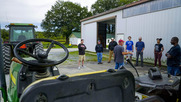
Sarah Campbell is the National Beginning Farmer and Rancher Coordinator for USDA. In this Ask the Expert, Sarah answers questions about common misconceptions about beginning farmer and rancher eligibility, available programs to help and how to chart your path as a beginning farmer.
Learn more about beginning farmers and ranchers.
Top of page
|

The USDA is launching a new online portal to streamline reporting of transactions involving U.S. agricultural land by foreign persons, which can include businesses and governments, under the Agricultural Foreign Investment Disclosure Act of 1978 (AFIDA). The new online portal is part of a broader effort to strengthen enforcement and protect American farmland as USDA continues its implementation of the National Farm Security Action Plan.
The new online portal is available at afida.landmark.usda.gov. Users can access the portal with Login.gov, a sign in service that provides secure online access to participate in certain government programs and reporting requirements.
The new digital portal will gather the same information found on the current form FSA-153 and those subject to filing may still file using the current FSA-153 hard copy form if desired. However, filers should not duplicate filings by using both submission options.
About the National Farm Security Action Plan
One of the key tenets of USDA’s National Farm Security Action Plan (PDF, 1.2 MB) is strengthening processes around disclosure of foreign persons who have an interest in U.S. farmland. This historic plan, announced in July 2025, calls for aggressive implementation of reforms to the AFIDA process including improved verification and monitoring of collected AFIDA data. In addition to the new portal, USDA published an Advanced Notice of Proposed Rulemaking for AFIDA in December 2025.
About AFIDA
The new portal is part of USDA’s efforts to streamline its process for electronic submission and retention of AFIDA disclosures, as initially required by the Consolidated Appropriations Act, 2023. Today USDA also shared its annual AFIDA report for 2024 with Congress, which is available online. The report lists foreign holdings of U.S. agricultural land as 46 million acres, as of December 31, 2024 and includes a section on land held and acquired by China, Russia, Iran, and North Korea in recent years. The data obtained from AFIDA disclosures are used in the preparation of an annual report to Congress, which is published online.
The AFIDA regulations define the term “foreign person” and specifies the information that must be included in the report. AFIDA focuses on foreign persons who hold direct or indirect interest in the agricultural land, provided those foreign persons with an indirect interest have “significant interest or substantial control” in the direct interest holder.
Top of page
|
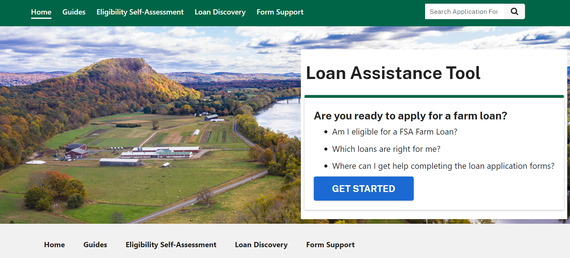 In this Ask the Expert, Jack Carlile, Farm Loan Manager for the USDA Farm Service Agency (FSA), answers questions about farm operating loans and when producers should apply in order to secure funds for the current crop year.
As the Farm Loan Manager for the Cherokee County Service Center, Jack is responsible for managing the loan making and loan servicing activities for five counties in northeast Oklahoma. His office provides services for over 650 farm loan customers. Jack was raised on a cross bred cow/calf operation that his grandparents started. Over the years, each generation has added to the operation by purchasing additional pasture. The operation also grows and bales their own hay. Jack’s agriculture background and degree in agriculture economics from Oklahoma State University help him better understand the financing needs of his producers.
Who can apply for FSA Farm Loans?
Anyone can apply for FSA’s loan programs. Applications will be considered on basic eligibility requirements. To apply for a loan, you must meet the following general eligibility requirements including:
- Be a U.S. citizen or qualified alien.
- Operator of a family farm or ranch.
- Have a satisfactory credit history.
- Unable to obtain credit elsewhere at reasonable rates and terms to meet actual needs.
- Not be delinquent on any federal debts.
To read the full blog visit farmers.gov/blog/ask-the-expert-farm-operating-loan-qa-with-jack-carlile
Top of page
The Value Added Producer Grant (VAPG) is designed to assist agricultural producers in developing new products, expanding marketing opportunities, and increasing their income through value-added activities. Maximum grant awards for working capital are $200,000 and $50,000 for planning grants. Individuals can apply for the planning grant for feasibility studies, developing business plan, etc and then the following year come back and apply for the working capital grant.
2026 Program Application Period: Electronic applications will be accepted via the VAPG application portal until 1:00 p.m. Eastern Time on April 15, 2026.
Additional Resources:
For more information, visit Value Added Producer Grants or email Rd.nj.rbcs@usda.gov .
Top of page
Join Bob Rhea, University of Illinois Tax School, for a presentation on Depreciation Tax Law Changes for 2025 and 2026. He will discuss the new law that permanently restores 100% first-year depreciation for eligible assets acquired and placed in service after January 19, 2025.
Event - Depreciation Tax Law Changes for 2025 and 2026
Date – February 11, 2026
Time - 2:00 – 3:30pm Eastern
Presenter – Bob Rhea, University of Illinois Tax School
Top of page

HAMILTON SQUARE, N.J. – The USDA's Natural Resources Conservation Service (NRCS) in New Jersey is accepting applications for the Agricultural Conservation Easement Program – Agricultural Land Easement (ACEP-ALE). Application packages are due by Feb. 28, 2026.
The ACEP-ALE program aims to help private and tribal landowners, land trusts, and other entities such as state and local governments protect croplands and grasslands on working farms and ranches by limiting non-agricultural uses of the land through conservation easements.
To be eligible to receive ALE funding, eligible applicants must demonstrate a commitment to long-term conservation of agricultural lands; a capability to acquire, manage, and enforce easements; adequate staff capacity for monitoring and easement stewardship; and the availability of funds. All landowners of record and the land being offered for enrollment must also meet specific eligibility criteria as outlined in the application materials posted to the State ACEP website.
Fully completed application packets may be sent to the attention of Easements Program Manager, by email (preferred)to katelyn.colon@usda.gov or by mail to USDA-NRCS, 200 Clocktower Dr, Suite 101, Hamilton Square, NJ 08690.
All qualified applications will be reviewed, ranked, and considered for funding according to the Final ACEP rule, policy, and guidance. Complete applications received after the cutoff date may be considered if another sign-up date is announced. Incomplete applications will not be considered.
For more information about ACEP-ALE in New Jersey, please contact Katelyn Colon at (732) 537-6099 or katelyn.colon@usda.gov. You can also visit your nearest USDA Service Center or visit the New Jersey NRCS ACEP website.
Top of page
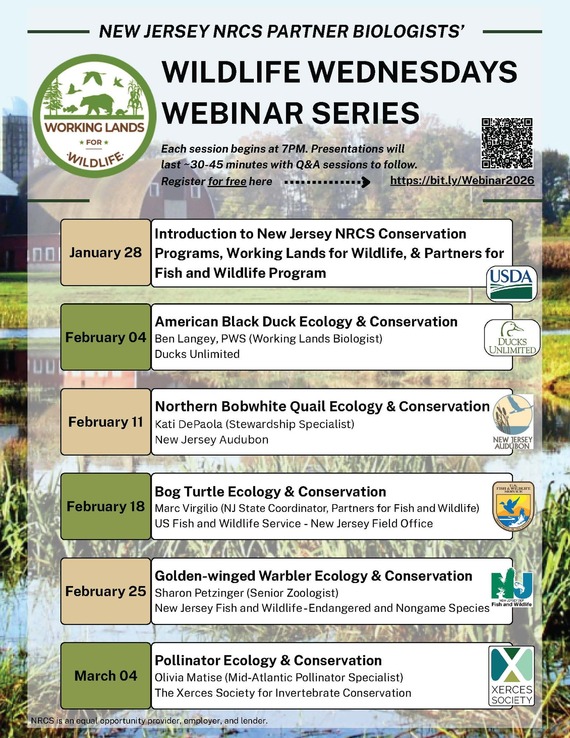
Join us each Wednesday for the New Jersey NRCS Partner Biologists' Wildlife Wednesdays Webinar Series. Each session will be held on Microsoft Teams beginning at 7 pm. Presentations will last ~30-45 minutes with Q&A sessions to follow.
Register for FREE here: https://bit.ly/Webinar2026
Jan. 28, 7 pm: Introduction to New Jersey NRCS Conservation Programs, Working Lands for Wildlife, & Partners for Fish and Wildlife Program: VIEW RECORDING ON NRCS-NJ's YOUTUBE
Feb. 4, 7 pm: American Black Duck Ecology & Conservation presented by Ben Langey, PWS (Working Lands Biologist) Ducks Unlimited: VIEW RECORDING ON NRCS-NJ's YOUTUBE
Feb. 11, 7 pm: Northern Bobwhite Quail Ecology & Conservation presented by Kati DePaola (Stewardship Specialist) New Jersey Audubon
Feb. 18, 7 pm: Bog Turtle Ecology & Conservation presented by Marc Virgilio (NJ State Coordinator, Partners for Fish and Wildlife) US Fish and Wildlife Service - New Jersey Field Office
Feb. 25, 7 pm: Golden-winged Warbler Ecology & Conservation presented by Sharon Petzinger (Senior Zoologist) New Jersey Fish and Wildlife - Endangered and Nongame Species
March 4, 7 pm: Pollinator Ecology & Conservation, presented by Olivia Matise (Mid-Atlantic Pollinator Specialist) The Xerces Society for Invertebrate Conservation
 Top of page
USDA is an equal opportunity provider, employer and lender. To file a complaint of discrimination, write: USDA, Office of the Assistant Secretary for Civil Rights, Office of Adjudication, 1400 Independence Ave., SW, Washington, DC 20250-9410 or call (866) 632-9992 (Toll-free Customer Service), (800) 877-8339 (Local or Federal relay), (866) 377-8642 (Relay voice users).
|






