
TN State Newsletter - September 22, 2025

Harvest is in full swing, and the early reports are that crop yields look good on early planted acres. Good weather has made for steady progress. Fall calving season has started across Tennessee and the livestock sector is looking forward to another promising year.
For livestock producers who experienced forage losses due to flooding in 2023 and 2024, the Secretary recently announced disaster recovery assistance through the Emergency Livestock Relief Program for 2023 and 2024 Flood and Wildfire (ELRP 2023 and 2024 FW) to help offset increased supplemental feed costs due to a qualifying flood or qualifying wildfire in calendar years 2023 and 2024. Many Tennessee counties are listed as “approved” counties due to flooding. Impacted producers in counties not listed as approved can still apply for assistance but must provide supporting documentation to demonstrate that a qualifying flood or wildfire occurred in the county where the livestock were located or would have been physically located if not for the disaster event. Contact your local FSA county office for details. A reminder to all specialty crop producers to keep up with the Non-Insured Assistance Program enrollment deadlines to allow timely enrollment for crop coverage protection. Supplemental Disaster Relief Program Stage 2, for uncovered, quality and shallow losses in 2023 and 2024 is coming soon so please keep a lookout for that announcement. FSA staff across the state have been busy implementing supplemental disaster assistance programs. To date, we have issued more than $195 million in much needed disaster recovery support to Tennessee agricultural producers. The Tennessee FSA team is striving to put Farmers First in any and every way we can! BE SAFE!
|
In This Issue:

U.S. Secretary of Agriculture Brooke L. Rollins announced eligible livestock producers will receive disaster recovery assistance through the Emergency Livestock Relief Program for 2023 and 2024 Flood and Wildfire (ELRP 2023 and 2024 FW) to help offset increased supplemental feed costs due to a qualifying flood or qualifying wildfire in calendar years 2023 and 2024. The program is expected to provide approximately $1 billion in recovery benefits. Sign-up begins on Monday, September 15. Livestock producers have until October 31, 2025, to apply for assistance.
Qualifying Disaster Events
To streamline program delivery, FSA has determined eligible counties with qualifying floods and qualifying wildfires in 2023 and 2024. For losses in these counties, livestock producers are not required to submit supporting documentation for floods or wildfires. A list of approved counties is available at fsa.usda.gov/elrp.
For losses in counties not listed as eligible, livestock producers can apply for ELRP 2023 and 2024 FW but must provide supporting documentation to demonstrate that a qualifying flood or qualifying wildfire occurred in the county where the livestock were physically located or would have been physically located if not for the disaster event. FSA county committees will determine if the disaster event meets program requirements.
Acceptable documentation includes:
- Photographs documenting impact to livestock, land, or property
- Insurance documentation
- Emergency declaration reports
- News articles
- National Oceanic and Atmospheric Administration storm event database records
- Other FSA disaster program participation records
- Other documentation determined acceptable by the FSA county committee
Livestock and Producer Eligibility
For ELRP 2023 and 2024 FW, FSA is using covered livestock criteria similar to the Livestock Forage Disaster Program (LFP) which includes weaned beef cattle, dairy cattle, beefalo, buffalo, bison, alpacas, deer, elk, emus, equine, goats, llamas, ostriches, reindeer, and sheep.
Wildfire assistance is available on non-federally managed land to participants who did not receive assistance through LFP or the ELRP 2023 and 2024 for drought and wildfire program delivered to producers in July of this year.
When producers submit their application, they must provide documentation to support eligible livestock inventories as of the beginning date of the qualifying disaster event.
Livestock producers can receive assistance for one or both years, 2023 and 2024, and for multiple qualifying disaster events, if applicable. However, producers cannot exceed three months of assistance per producer, physical location county, and program year.
Payment Calculation
Eligible producers can receive up to 60% of one month of calculated feed costs for a qualifying wildfire or three months for a qualifying flood using the same monthly feed cost calculation that is used for LFP.
ELRP 2023 and 2024 for drought and wildfire and ELRP 2023 and 2024 FW have a combined payment limit of $125,000 for each program year. Producers who already received the maximum payment amount from ELRP 2023 and 2024 for drought and wildfire will not be eligible to receive an additional payment under ELRP 2023 and 2024 FW. Eligible producers may submit form FSA-510, Request for an Exception to the $125,000 Payment Limitation for Certain Programs, to be considered for an increased payment limit of $250,000.
Supplemental Disaster Assistance Timeline
USDA is fully committed to expediting remaining disaster assistance provided by the American Relief Act, 2025. On May 7, we launched our 2023/2024 Supplemental Disaster Assistance public landing page where the status of USDA disaster assistance and block grant rollout timeline can be tracked. The page is updated regularly and accessible through fsa.usda.gov. Contact your local FSA county office for more information.
|

The U.S. Department of Agriculture (USDA) today announced acceptance of 1.78 million acres into the Conservation Reserve Program (CRP) through 2025 General, Continuous, Grassland, and Conservation Reserve Enhancement Program enrollments.
According to USDA’s Farm Service Agency (FSA), about 25.8 million acres are currently enrolled in CRP, the agency’s flagship conservation program through which landowners, farmers and ranchers voluntarily convert marginal or unproductive cropland into vegetative cover that improves water quality, prevents erosion, restores wildlife habitat and in the case of Grassland CRP, enables participants to conserve grasslands while also continuing most grazing and haying practices.
FSA received offers on more than 2.6 million acres. The program’s total acreage is capped at 27 million acres for fiscal year 2025 of which 1.8 million was available for enrollment, after offsetting for expiring acres and an administrative reserve, making for a highly competitive process for those who submitted offers for CRP.
About 955,795 acres are expiring Sept. 30 this year. Producers submitted re-enrollment offers for just over 624,000 acres and offers for enrollment of new land totaled 2 million acres.
Kansas, South Dakota and Colorado hold the top three slots for accepted acres for all 2025 CRP enrollment opportunities.
The American Relief Act, 2025, extended provisions for CRP through Sept. 30, 2025.
|

If you’re an orchardist or nursery tree grower whose experienced losses from natural disasters during calendar year 2025, you must submit a TAP application either 90 calendar days after the disaster event or the date when the loss is apparent.
TAP provides financial assistance to help you replant or rehabilitate eligible trees, bushes and vines damaged by natural disasters.
Eligible tree types include trees, bushes or vines that produce an annual crop for commercial purposes. Nursery trees include ornamental, fruit, nut and Christmas trees that are produced for commercial sale. Trees used for pulp or timber are ineligible.
To qualify for TAP, orchardists must suffer a qualifying tree, bush or vine loss in excess of 15 percent mortality from an eligible natural disaster, plus an adjustment for normal mortality. The eligible trees, bushes or vines must have been owned when the natural disaster occurred; however, eligible growers are not required to own the land on which the eligible trees, bushes and vines were planted.
If the TAP application is approved, the eligible trees, bushes and vines must be replaced within 12 months from the date the application is approved. The cumulative total quantity of acres planted to trees, bushes or vines, for which you can receive TAP payments, cannot exceed 1,000 acres annually.
|
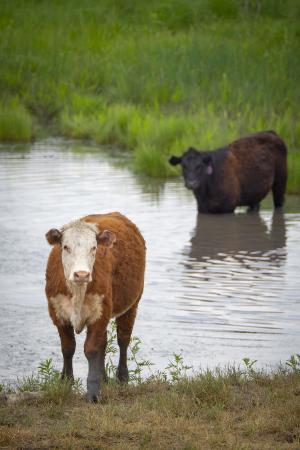
Livestock inventory records are necessary in the event of a natural disaster, so remember to keep them updated.
When disasters strike, the USDA Farm Service Agency (FSA) can help you if you’ve suffered excessive livestock death losses and grazing or feed losses due to eligible natural disasters.
For 2025 losses through the Livestock Indemnity Program (LIP) and Emergency Assistance for Livestock, Honeybees, and Farm-raised Fish Program (ELAP), you must file a notice of loss, provide the following supporting documentation, and application for payment to your local FSA office by March 2, 2026.
You should record all pertinent information regarding livestock inventory records including:
- Documentation of the number, kind, type, and weight range of livestock
- Beginning inventory supported by birth recordings or purchase receipts.
|
USDA Enhances Crop Insurance Benefits
The U.S. Department of Agriculture’s Risk Management Agency (RMA) made significant enhancements to federal crop insurance programs by expanding benefits for beginning farmers and ranchers, increasing coverage options, and making crop insurance more affordable and accessible across multiple insurance programs.
Putting American Farmers First with Enhanced Support for Beginning Farmers and Ranchers
Beginning farmers and ranchers will receive substantially increased premium support during their first decade of farming operations, making crop insurance more affordable for the next generation of American agricultural producers. The enhanced benefits mean beginning farmers and ranchers will now receive:
- 15 percentage points additional subsidy for the first two crop years
- 13 percentage points for the third crop year
- 11 percentage points for the fourth crop year
- 10 percentage points for years five through ten
These benefits build upon existing support that waives administrative fees and provides base premium subsidies. A beginning farmer or rancher is now defined as an individual who has not actively operated and managed a farm or ranch for more than 10 crop years.
Making Crop Insurance More Accessible with Expanded Coverage Options
Improvements to area-based crop insurance programs include:
- Whole Farm Revenue Protection (WFRP) maximum coverage level increase from 85% to 90%, providing producers with enhanced protection for diversified operations.
- Supplemental Coverage Option (SCO) premium support increase from 65% to 80%, making this valuable gap coverage more affordable. Additionally, producers can now purchase SCO regardless of their Area Risk Coverage (ARC) elections with the Farm Service Agency, dramatically increasing accessibility.
- Enhanced Coverage Option (ECO) and similar programs including Margin Coverage Option (MCO), Hurricane Insurance Protection Wind Index (HIP-WI), and Fire Insurance Protection Smoke Index (FIP-SI) will also receive the increased 80% in premium support, making comprehensive coverage more affordable than ever.
- SCO coverage will also expand to a coverage level of 90% (from 86%). Producers will have access to this option in 2026 via the ECO product, which has identical coverage at the same cost and premium support levels. USDA will then change the SCO policy for the 2027 crop year.
These changes will be effective for all crops with sales closing dates on or after July 1, 2025.
RMA will provide additional guidance on other provisions within the One Big Beautiful Bill Act as implementation details are finalized. Producers should contact their local crop insurance agent or visit the RMA website for more information about how these changes may affect their coverage options.
|
Top of page

|






