
Minnesota FSA Updates - September 16, 2025
In This Issue:
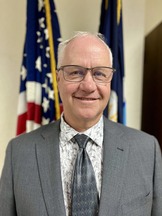
A warm September greeting to you all from the St. Paul office! This is the month most of us experience transformation. We transform our wardrobe from summer to autumn. We see the school buses regularly and send our kids to begin a new school year. We begin to see the beautiful autumn colors exhibit themselves and it seems for most of us the proper balance of sunlight and darkness. We see our crops transform from growth to maturation. I have had the pleasure of enjoying a fair amount of travel throughout the state in the last month and can report viewing some very good-looking crops, overall.
Safety is always a concern, but I’d like to share an extra word of caution with the harvest beginning soon. September 22 is the Autumnal equinox, or the first day of Autumn. Wherever the sun rises and sets on that day, it is due east and west. Many of our roads are in the same direction, so it makes it a challenge when we travel at this time of year.
Our county and state office personnel are working diligently in many areas and one item I’d like to highlight is the fact that Minnesota leads the nation in payment volume of the Supplemental Disaster Relief Program (SDRP) Stage 1 as of this writing. We know as producers what value that is to us during challenging times. Many thanks both to producers and employees for being both patient and diligent. Stage 2 of the SDRP will be announced soon, which will address quality and shallow losses.
If producers choose to utilize Marketing Assistance Loans (MALs) this season, I’d like to give a reminder to allow for extra time in processing before payment needs, and to plan accordingly.
I’d like to close with a little message about perseverance and positivity during challenging times. I farm also and have for some time. I think what makes the occupation of producing food rewarding is the times following uncertainty. Life is full of challenges as we know, and when we can rely on one another and persevere, good judgement and character are the result. Many thanks to all of you for your commitment to producing food safely and in abundance.
Kurt Blomgren
State Executive Director, Minnesota FSA
|
U.S. Secretary of Agriculture Brooke L. Rollins announced eligible livestock producers will receive disaster recovery assistance through the Emergency Livestock Relief Program for 2023 and 2024 Flood and Wildfire (ELRP 2023 and 2024 FW) to help offset increased supplemental feed costs due to a qualifying flood or qualifying wildfire in calendar years 2023 and 2024. The program is expected to provide approximately $1 billion in recovery benefits. Sign-up begins on Monday, September 15. Livestock producers have until October 31, 2025, to apply for assistance.
Qualifying Disaster Events
To streamline program delivery, FSA has determined eligible counties with qualifying floods and qualifying wildfires in 2023 and 2024. For losses in these counties, livestock producers are not required to submit supporting documentation for floods or wildfires. A list of approved counties is available at fsa.usda.gov/elrp.
For losses in counties not listed as eligible, livestock producers can apply for ELRP 2023 and 2024 FW but must provide supporting documentation to demonstrate that a qualifying flood or qualifying wildfire occurred in the county where the livestock were physically located or would have been physically located if not for the disaster event. FSA county committees will determine if the disaster event meets program requirements.
Acceptable documentation includes:
- Photographs documenting impact to livestock, land, or property
- Insurance documentation
- Emergency declaration reports
- News articles
- National Oceanic and Atmospheric Administration storm event database records
- Other FSA disaster program participation records
- Other documentation determined acceptable by the FSA county committee
Livestock and Producer Eligibility
For ELRP 2023 and 2024 FW, FSA is using covered livestock criteria similar to the Livestock Forage Disaster Program (LFP) which includes weaned beef cattle, dairy cattle, beefalo, buffalo, bison, alpacas, deer, elk, emus, equine, goats, llamas, ostriches, reindeer, and sheep.
Wildfire assistance is available on non-federally managed land to participants who did not receive assistance through LFP or the ELRP 2023 and 2024 for drought and wildfire program delivered to producers in July of this year.
When producers submit their application, they must provide documentation to support eligible livestock inventories as of the beginning date of the qualifying disaster event.
Livestock producers can receive assistance for one or both years, 2023 and 2024, and for multiple qualifying disaster events, if applicable. However, producers cannot exceed three months of assistance per producer, physical location county, and program year.
Payment Calculation
Eligible producers can receive up to 60% of one month of calculated feed costs for a qualifying wildfire or three months for a qualifying flood using the same monthly feed cost calculation that is used for LFP.
ELRP 2023 and 2024 for drought and wildfire and ELRP 2023 and 2024 FW have a combined payment limit of $125,000 for each program year. Producers who already received the maximum payment amount from ELRP 2023 and 2024 for drought and wildfire will not be eligible to receive an additional payment under ELRP 2023 and 2024 FW. Eligible producers may submit form FSA-510, Request for an Exception to the $125,000 Payment Limitation for Certain Programs, to be considered for an increased payment limit of $250,000.
Supplemental Disaster Assistance Timeline
USDA is fully committed to expediting remaining disaster assistance provided by the American Relief Act, 2025. On May 7, we launched our 2023/2024 Supplemental Disaster Assistance public landing page where the status of USDA disaster assistance and block grant rollout timeline can be tracked. The page is updated regularly and accessible through fsa.usda.gov. Contact your local FSA county office for more information.
Farm Service Agency (FSA) program payments are issued electronically into your bank account. In order to receive timely payments, you need to notify your FSA servicing office if you close your account or if your bank information is changed for any reason (such as your financial institution merging or being purchased). Payments can be delayed if FSA is not notified of changes to account and bank routing numbers.
For some programs, payments are not made until the following year. For example, payments for crop year 2019 through the Agriculture Risk Coverage and Price Loss Coverage program aren’t paid until 2020. If the bank account was closed due to the death of an individual or dissolution of an entity or partnership before the payment was issued, please notify your local FSA office as soon as possible to claim your payment.
In this Ask the Expert, Tina Mellinger answers questions about Farm Service Agency (FSA) Youth Loans. Tina is a Farm Loan Manager in Ohio and has worked for FSA for 37 years. Her FSA farm loan team makes an average of around 50 loans each year, with around five of those being Youth Loans. Her entire career has been centered around loan-making. At the beginning of her career, she worked for Rural Development making home loans.
Tina grew up on a 50-cow dairy farm in southeastern Ohio. She earned an animal science and ag education degree from the Ohio State University.
To read the full blog, visit farmers.gov/blog/ask-expert-qa-on-youth-loans-with-tina-mellinger.
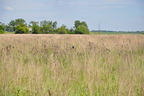
The Conservation Reserve Program (CRP) is a program administered by the Farm Service Agency (FSA) to conserve farmland for future generations while providing habitat for wildlife, reducing soil erosion, and improving water quality. Regular maintenance on CRP acres is needed to ensure the acreage continues to provide conservation benefits and remains in compliance with the CRP contract.
Regular Maintenance
Producers with CRP contracts are required to control all weeds, insects, pests, and other undesirable species to the extent necessary to ensure that the approved conservation cover is adequately protected and to ensure there is no adverse impact on surrounding land. Mowing is one of the allowable practices for weed control, but mowing for aesthetic purposes is never permitted. The Conservation Plan states the required weed control methods for each site.
Once a stand has been certified as fully established, participants are required to maintain plant diversity and stand density according to the Conservation Plan and offer (CRP-2) for the life of the contract. Stands that do not meet practice specific plant diversity or density requirements may be considered non-compliant. Refer to your conservation plan or contact FSA if you have any questions or concerns about the vegetative cover requirements.
Maintenance activities cannot occur during the primary nesting season for birds without written prior approval from the local county office.
Mid-Contract Management
Regular maintenance for weed and pest control is separate from the Mid-Contract Management (MCM) requirement. MCM ensures plant diversity and wildlife benefits while ensuring protection of the soil and water resources. Such activities are site-specific and are for the purpose of enhancing the approved cover.
MCM must be completed between years four and six of a 10-year contract and between years seven and nine of a 15-year contract. The Conservation Plan will state what year MCM must take place.
Noncompliance with Maintenance Requirements
Failure to adequately maintain the stand may result in noncompliance with the terms and conditions of the CRP contract. Noncompliance can result in adverse actions up to and including termination of the CRP contract. Contracts that are out of compliance are ineligible to re-enroll, unless the stand is brought back into compliance prior to the enrollment deadline.
For general information about CRP, visit the Conservation Reserve Program webpage. For information about specific contracts, reach out to the local FSA office.
|
If you’re an orchardist or nursery tree grower who experienced losses from natural disasters during calendar year 2025, you must submit a TAP application either 90 calendar days after the disaster event or the date when the loss is apparent.
TAP provides financial assistance to help you replant or rehabilitate eligible trees, bushes and vines damaged by natural disasters.
Eligible tree types include trees, bushes or vines that produce an annual crop for commercial purposes. Nursery trees include ornamental, fruit, nut and Christmas trees that are produced for commercial sale. Trees used for pulp or timber are ineligible.
To qualify for TAP, orchardists must suffer a qualifying tree, bush or vine loss in excess of 15 percent mortality from an eligible natural disaster, plus an adjustment for normal mortality. The eligible trees, bushes or vines must have been owned when the natural disaster occurred; however, eligible growers are not required to own the land on which the eligible trees, bushes and vines were planted.
If the TAP application is approved, the eligible trees, bushes and vines must be replaced within 12 months from the date the application is approved. The cumulative total quantity of acres planted to trees, bushes or vines, for which you can receive TAP payments, cannot exceed 1,000 acres annually.
FarmRaise, in partnership with USDA’s Farm Service Agency (FSA), launched their online, educational hub – the FarmRaise | FSA Educational Hub – comprised of videos, tools and interactive resources that enable USDA cooperators and agricultural producers to learn about and access major FSA programs.
ELAP Decision Tool
The Emergency Assistance for Livestock, Honeybees and Farm-Raised Fish (ELAP) Decision Tool helps eligible producers impacted by qualifying natural disasters and other eligible causes of loss better understand program eligibility and application requirements, learn about record-keeping and supporting loss documentation requirements and track the steps needed before applying for program benefits. The document generated by the ELAP Decision Tool can be used to support the ELAP application process, but it is not a program application. Producers will need to complete and submit the ELAP Application to their local FSA county office. Upon request, applicants may be asked to provide additional supporting documentation per the program requirements.
Through use of the ELAP Decision Tool, producers can segment by loss type (honey bee, farm-raised fish and livestock). This enables easier navigation, as guided by the tool, to assistance available to meet specific disaster recovery needs. After entering the type of loss, identifying the loss condition and entering their inventory and loss information, producers are guided through a worksheet that helps identify required loss documentation — documentation (i.e., pictures, receipts, truck logs, etc.) that can be uploaded through the ELAP tool and sent directly to the producer’s local FSA county office, or producers can provide a copy of the tool-generated worksheet summary document when they visit their local FSA county office to complete and submit the required ELAP application.
LIP Decision Tool
The Livestock Indemnity Program (LIP) Decision Tool, also available through the FarmRaise | FSA Educational Hub, assists livestock producers who suffered losses from eligible adverse weather events and other causes of loss as well as cooperators who are helping disaster-impacted livestock producers navigate available federal disaster assistance programs. The LIP Decision Tool gives producers guidance on what is needed to gather and submit required loss documentation, reducing the amount of time needed to complete applications and enabling FSA county office staff to deliver much-needed assistance faster. Using the LIP Decision Tool is not an application for benefits or a determination of eligibility.
Additional FarmRaise Resources
In addition to the new ELAP Decision Tool and the LIP Decision Tool, the FarmRaise | FSA Educational Hub offers several, easily navigated farm loan programs how-to videos designed to introduce producers to FSA’s many farm loan programs options and guide them through the application process.
More FSA program resources and tools will continue to be added to the FarmRaise | FSA Educational Hub. Cooperators and agricultural producers are encouraged to visit the FarmRaise | FSA Educational Hub often to access all available educational resources.
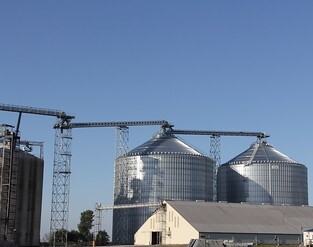
In this Ask the Expert, Toni Williams answers questions about how Farm Storage Facility Loans (FSFLs) provide low-interest financing to help producers build or upgrade commodity storage facilities. Toni is the Agricultural Program Manager for FSFLs at the Farm Service Agency (FSA).
Toni has worked for FSA for more than 32 years and is responsible for providing national policy and guidance for Farm Storage Facility Loans.
What are Farm Storage Facility Loans?
Farm Storage Facility Loans provide low-interest financing for eligible producers to build or upgrade facilities to store commodities.
The FSFL program was created in May 2000 to address an existing grain shortage. Historically, FSFLs benefitted grain farmers, but a change in the 2008 Farm Bill extended the program to fruit and vegetable producers for cold storage. An additional change extended the program to washing and packing sheds, where fresh produce is washed, sorted, graded, labeled, boxed up, and stored before it heads to market. Since May 2000, FSA has made more than 40,000 loans for on-farm storage.
Eligible facility types include grain bins, hay barns, bulk tanks, and facilities for cold storage. Drying and handling and storage equipment including storage and handling trucks are also eligible. Eligible facilities and equipment may be new or used, permanently affixed or portable.
To read the full blog visit farmers.gov/blog/ask-the-expert-qa-on-farm-storage-facility-loans-with-toni-williams.
|
Program payments may be limited by direct attribution to individuals or entities. A legal entity is defined as an entity created under Federal or State law that owns land or an agricultural commodity, product or livestock.
Through direct attribution, payment limitation is based on the total payments received by a person or legal entity, both directly and indirectly.
Payments and benefits under certain FSA programs are subject to some or all of the following:
- payment limitation by direct attribution (including common attribution)
- payment limitation amounts for the applicable programs
- substantive change requirements when a farming operation adds persons, resulting in an increase in persons to which payment limitation applies
- actively engaged in farming requirements
- cash-rent tenant rule
- foreign person rule
- average AGI limitations
- programs subject to AGI limitation
No program benefits subject to payment eligibility and limitation will be provided until all required forms for the specific situation are provided and necessary payment eligibility and payment limitation determinations are made. Payment eligibility and payment limitation determinations may be initiated by the County Committee or requested by the producer.
Statutory and Regulatory rules require persons and legal entities, provide the names and Tax Identification Numbers (TINs) for all persons and legal entities with an ownership interest in the farming operation to be eligible for payment.
Payment eligibility and payment limitation forms submitted by persons and legal entities are subject to spot check through FSA’s end-of-year review process. Persons or legal entities selected for end-of-year review must provide the County Committee with operating loan documents, income and expense ledgers, canceled checks for all expenditures, lease and purchase agreements, sales contracts, property tax statements, equipment listings, lease agreements, purchase contracts, documentation of who provided actual labor and management, employee time sheets or books, crop sales documents, warehouse ledgers, gin ledgers, corporate or entity papers, etc.
A finding that a person or legal entity is not actively engaged in farming results in the person or legal entity being ineligible for any payment or benefit subject to the actively engaged in farming rules.
Noncompliance with AGI provisions, either by exceeding the applicable limitation or failure to submit a certification and consent for disclosure statement, will result in payment ineligibility for all program benefits subject to AGI provisions. Program payments are reduced in an amount that is commensurate with the direct and indirect interest held by an ineligible person or legal entity in any legal entity, general partnership, or joint operation that receives benefits subject to the average AGI limitations.
If any changes occur that could affect an actively engaged in farming, cash-rent tenant, foreign person, or average Adjusted Gross Income (AGI) determination, producers must timely notify the County FSA Office by filing revised farm operating plans and/or supporting documentation, as applicable. Failure to timely notify the County Office may adversely affect payment eligibility.
Farm Service Agency (FSA) is committed to providing our farm loan borrowers the tools necessary to be successful. FSA staff will provide guidance and counsel from the loan application process through the borrower’s graduation to commercial credit. While it is FSA’s commitment to advise borrowers as they identify goals and evaluate progress, it is crucial for borrowers to communicate with their farm loan staff when changes occur. It is the borrower’s responsibility to alert FSA to any of the following:
- Any proposed or significant changes in the farming operation
- Any significant changes to family income or expenses
- The development of problem situations
- Any losses or proposed significant changes in security
If a farm loan borrower can’t make payments to suppliers, other creditors, or FSA on time, contact your farm loan staff immediately to discuss loan servicing options.
For more information on FSA farm loan programs, contact your local FSA office or visit fsa.usda.gov.
Top of page
Minnesota USDA Farm Service Agency
375 Jackson Street
Suite 400
Saint Paul, MN 55101
Phone: 651-602-7700
Fax: 855-719-9917
|
|
Minnesota FSA State Executive Director:
Kurt Blomgren
|
|
Deputy State Executive Director:
Daniel Mahoney
Division Leaders:
Cassie Buck
Lee Crawford
Calvin Gellatly
|
|
|
To find contact information for your local USDA Farm Service Agency office, go to: www.fsa.usda.gov/mn
|
|








