
NH State Newsletter - August 29, 2025
In This Issue:
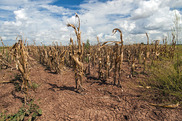
U.S. Secretary of Agriculture Brooke L. Rollins announced that agricultural producers who suffered eligible crop losses due to natural disasters in 2023 and 2024 can now apply for $16 billion in assistance through the Supplemental Disaster Relief Program (SDRP).
To expedite the implementation of SDRP, USDA’s Farm Service Agency (FSA) is delivering assistance in two stages. This first stage is open to producers with eligible crop losses that received assistance under crop insurance or the Noninsured Crop Disaster Assistance Program during 2023 and 2024. Stage One sign up started in-person at FSA county offices on July 10 and prefilled applications were mailed to producers starting July 9. SDRP Stage Two signups for eligible shallow or uncovered losses will begin in early fall.
SDRP Stage One
FSA is launching a streamlined, pre-filled application process for eligible crop, tree, and vine losses by leveraging existing Noninsured Crop Disaster Assistance Program (NAP) and Risk Management Agency (RMA) indemnified loss data. The pre-filled applications were mailed on July 9, 2025.
Eligibility
Eligible losses must be the result of natural disasters occurring in calendar years 2023 and/or 2024. These disasters include wildfires, hurricanes, floods, derechos, excessive heat, tornadoes, winter storms, freeze (including a polar vortex), smoke exposure, excessive moisture, qualifying drought, and related conditions.
To qualify for drought related losses, the loss must have occurred in a county rated by the U.S. Drought Monitor as having a D2 (severe drought) for eight consecutive weeks, D3 (extreme drought), or greater intensity level during the applicable calendar year.
Producers in Connecticut, Hawaii, Maine, and Massachusetts will not be eligible for SDRP program payments. Instead, these states chose to cover eligible crop, tree, bush, and vine losses through separate block grants. These block grants are funded through the $220M provided for this purpose to eligible states in the American Relief Act.
How to Apply
To apply for SDRP, producers must submit the FSA-526, Supplemental Disaster Relief Program (SDRP) Stage One Application, in addition to having other forms on file with FSA.
SDRP Stage One Payment Calculation
Stage One payments are based on the SDRP adjusted NAP or Federal crop insurance coverage level the producer purchased for the crop. The net NAP or net federal crop insurance payments (NAP or crop insurance indemnities minus administrative fees and premiums) will be subtracted from the SDRP calculated payment amount.
For Stage One, the total SDRP payment to indemnified producers will not exceed 90% of the loss and an SDRP payment factor of 35% will be applied to all Stage One payments. If additional SDRP funds remain, FSA may issue a second payment.
Future Insurance Coverage Requirements
All producers who receive SDRP payments are required to purchase federal crop insurance or NAP coverage for the next two available crop years at the 60% coverage level or higher. Producers who fail to purchase crop insurance for the next two available crop years will be required to refund the SDRP payment, plus interest, to USDA.
SDRP Stage 2
FSA will announce additional SDRP assistance for uncovered losses, including non-indemnified shallow losses and quality losses and how to apply later this fall.
Learn more by visiting fsa.usda.gov/sdrp.
|

The USDA Farm Service Agency (FSA) opened enrollment on July 10 for the Supplemental Disaster Relief Program (SDRP), which provides assistance for eligible crop losses due to natural disasters in 2023 and 2024.
Eligible U.S. Drought Monitor Losses
To qualify for drought related losses, the loss must have occurred in a county rated by the U.S. Drought Monitor as having a D2 (severe drought) for eight consecutive weeks, D3 (extreme drought), or greater intensity level during the applicable calendar year. View the list of counties eligible for SDRP due to qualifying drought for 2023 and 2024.
Other Eligible Disaster Events and Related Conditions
Producers who received an indemnity in 2023 or 2024 but did not qualify based on the U.S. Drought monitor may still be eligible for assistance. If your county did not trigger based on the U.S. Drought Monitor, do not certify “drought” as the cause of loss on your application as it will not be approved. Instead, producers should review all qualifying disaster events and related conditions such as excessive heat or excessive wind and select all applicable causes of loss.
Below is a list of all qualifying disaster events with the eligible related conditions in parentheses:
- Hurricanes (including related excessive wind, storm surges, tornadoes, tropical storms, and tropical depression)
- Floods (including related silt and debris)
- Derechos (including related excessive wind)
- Winter storms (including related blizzard and excessive wind)
- Freeze (including a polar vortex)
- Excessive moisture
- Qualifying drought
Related conditions must have occurred as a direct result of the indicated disaster event.
Losses due to Hail
Hail is not a qualifying disaster event, but you may be eligible if it was directly related to a qualifying disaster event.
For example, if a producer’s crop suffered damage from hail, but the hail damage was directly related to a tornado, then this would qualify for an SDRP payment since tornado is a qualifying disaster event.
Documentation for Spot Checks
Producers who certify that a qualifying disaster event caused the loss should be prepared to provide documentation to support their self-certification if they are selected for a spot check. Documentation is not required to be submitted with your application. Additionally, producers are not required to verify the cause of loss with their crop insurance agent.
Producers should complete the pre-filled application that was mailed on July 9. If you received a crop insurance indemnity in 2023 or 2024 and did not receive an application, please visit your local FSA office and they can print your pre-filled application.
For additional help with your application, please review the FSA-526 Instructions for Stage 1. Learn more about SDRP, eligibility and future insurance requirements by visiting fsa.usda.gov/sdrp.
|
The U.S. Department of Agriculture’s (USDA) updates to the Farm Service Agency’s (FSA) Farm Loan Programs are officially in effect. These changes, part of the Enhancing Program Access and Delivery for Farm Loans rule, are designed to increase financial flexibility for agricultural producers, allowing them to grow their operations, boost profitability, and build long-term savings.
These program updates reflect USDA’s ongoing commitment to supporting the financial success and resilience of farmers and ranchers nationwide, offering critical tools to help borrowers manage their finances more effectively.
What the new rules mean for you:
- Low-interest installment set-aside program: Financially distressed borrowers can now defer up to one annual loan payment at a reduced interest rate. This simplified option helps ease financial pressure while keeping farming operations running smoothly.
- Flexible repayment terms: New repayment options give borrowers the ability to increase their cash flow and build working capital reserves, allowing for long-term financial planning that includes saving for retirement, education, and other future needs.
- Reduced collateral requirements: FSA has lowered the amount of additional loan security needed for direct farm loans, making it easier for borrowers to leverage their existing equity without putting their personal residence at risk.
These new rules provide more financial freedom to borrowers. By giving farmers and ranchers better tools to manage their operations, we’re helping them build long-term financial stability. It’s all about making sure they can keep their land, grow their business, and invest in the future.
If you’re an FSA borrower or considering applying for a loan, now is the time to take advantage of these new policies. We encourage you to reach out to your local FSA farm loan staff to ensure you fully understand the wide range of loan making and servicing options available to assist with starting, expanding, or maintaining your agricultural operation.
To conduct business with FSA, please contact your local USDA Service Center.

Are you interested in working with USDA to start or grow your farm, ranch, or private forest operation, but don’t know where to start?
Whether you’re looking to access capital or disaster assistance through USDA’s Farm Service Agency (FSA) or address natural resource concerns on your land with assistance from USDA’s Natural Resources Conservation Service (NRCS), a great place to start is farmers.gov.
Farmers.gov is a one-stop shop for information about the assistance available from FSA and NRCS. The site also offers many easy-to-use tools for farmers, ranchers, and private forestland owners, whether you are reaching out for the first time or are a long-term customer with a years-long relationship with USDA.
With a farmers.gov account you can:
- Complete an AD-2047, Customer Data Worksheet, prior to your first meeting with FSA and NRCS.
- View farm loan payments history from FSA.
- View cost share assistance received and anticipated from NRCS conservation programs.
- Request conservation assistance from NRCS as well as view and track your conservation plans, practices, and contracts.
- View, print, and export detailed farm records and farm/tract maps for the current year, which are particularly useful when fulfilling acreage reporting requirements.
- Print FSA-156 EZ, Abbreviated Farm Record and your Producer Farm Data Report for the current year.
- Pay FSA debt using the “Make an FSA Payment” feature
- Apply for a farm loan online, view information on your existing loans, and make USDA direct farm loan payments using the Pay My Loan feature.
Learn how to create a farmers.gov account today!
|
Top of page
FSA in New Hampshire
James C. Cleveland Federal Building
53 Pleasant St
Concord, NH 03301
Phone: 603-224-7941
Service Center Locator
Farm Service Agency
State Executive Director - Jeffrey Holmes
Deputy State Executive Director - Marilyn Milne
|
|








