
Idaho State Office FSA Newsletter - September 9, 2025
In This Issue:
-
September 30: Emergency Commodity Assistance Program (ECAP) - Subsequent Acres Deadline
-
October 13: Columbus Day (Office Closed)
Click here to learn more about local deadlines and ongoing programs.
Top of page
FSA is expanding payments through ECAP to now include subsequent acres of eligible commodities.
To date, FSA has issued nearly $8 billion in direct payments to agricultural producers through the Emergency Commodity Assistance Program (ECAP) for the 2024 crop year. These economic assistance payments help agricultural producers mitigate the impacts of increased input costs and falling commodity prices.
This emergency assistance is intended to pay down debt associated with the 2024 crop to allow producers to more easily obtain financing for the 2025 crop year. In support of the Trump Administration’s mission, we’re committed to deploying this much-needed assistance through a streamlined and transparent process that reduces producer burden required to access these program benefits.
Subsequent Acres
- ECAP payments are being made to producers with 2024 planted and prevented planted acres of eligible commodities that were not approved double cropping combinations.
- Producers with approved double cropping combinations should have already received payment on those acres.
- Producers who already hit their respective payment limit will not receive a payment for subsequent acres.
- FSA has notified producers with eligible subsequent acres via postcard or email, depending on what contact information we have on file for that producer.
- Producers with eligible subsequent acres must modify or submit their application by Sept. 30, 2025.
Producer Eligibility
- Eligible producers must have reported 2024 crop year acreage to FSA on an FSA-578, Report of Acreage form.
- Eligible producers can visit fsa.usda.gov/ecap for eligibility and payment details.
Applying for ECAP
- Only one application is required for all ECAP eligible commodities nationwide.
- ECAP applications can be submitted to FSA in-person or by fax.
ECAP Payments and Calculator
- ECAP payments will be issued as applications are approved. Initial ECAP payments will be factored by 85% to ensure that total program payments do not exceed available funding. If additional funds remain, FSA may issue a second payment.
- ECAP assistance will be calculated using a flat payment rate for the eligible commodity multiplied by the eligible reported acres. Payments are based on acreage and not production. For acres reported as prevented planted, ECAP assistance will be calculated at 50%.
- For ECAP payment estimates, producers are encouraged to visit fsa.usda.gov/ecap to use the ECAP online calculator.
|
The Noninsured Crop Disaster Assistance Program (NAP) provides financial assistance to you for crops that aren’t eligible for crop insurance to protect against lower yields or crops unable to be planted due to natural disasters including freeze, hail, excessive moisture, excessive wind or hurricanes, flood, excessive heat and qualifying drought (includes native grass for grazing), among others.
In order to participate, you must obtain NAP coverage for the crop year by the applicable deadline using form CCC-471 “Application for Coverage” and pay the service fee. Application closing dates vary by crop. Producers are also required to submit an acceptable crop acreage report. Additionally, NAP participants must provide:
- The quantity of all harvested production of the crop in which the producer held an interest during the crop year
- The disposition of the harvested crop, such as whether it is marketable, unmarketable, salvaged or used differently than intended
- Acceptable crop production records (when requested by FSA)
Producers who fail to report acreage and production information for NAP-covered crops could see reduced or zero NAP assistance. These reports are used to calculate the approved yield.
If your NAP-covered crops are affected by a natural disaster, notify your FSA office by completing Part B of form CCC-576 “Notice of Loss and Application for Payment.” This must be completed within 15 calendar days of the occurrence of the disaster or when losses become apparent or 15 days of the final harvest date. For hand-harvested crops and certain perishable crops, you must notify FSA within 72 hours of when a loss becomes apparent.
To receive benefits, you must also complete Parts D, E, F, G and H of the CCC-576 “Notice of Loss and Application for Payment” within 60 days of the last day of coverage for the crop year for any NAP covered crops. The CCC-576 requires acceptable appraisal information. Producers must provide evidence of production and note whether the crop was marketable, unmarketable, salvaged or used differently than intended.
Eligible crops must be commercially produced agricultural commodities for which crop insurance is not available, including perennial grass forage and grazing crops, fruits, vegetables, mushrooms, floriculture, ornamental nursery, aquaculture, turf grass, ginseng, honey, syrup, bioenergy, and industrial crops.
For more information on NAP, contact your Local County USDA Service Center or visit fsa.usda.gov/nap.
Producers who received an Emergency Relief Program (ERP) payment need to meet ERP insurance linkage requirements by purchasing crop insurance, or Noninsured Crop Disaster Assistance Program (NAP) coverage where crop insurance is not available.
Purchase coverage must be at the 60/100 coverage level or higher for insured crops or at the catastrophic coverage level or higher for NAP crops for the next two available crop years, which will be determined from the date you received an ERP payment and may vary depending on the timing and availability of coverage. The insurance coverage requirement applies to the physical location of the county where the crop was located and for which an ERP payment was issued.
Contact your crop insurance agent or local FSA county office as soon as possible to ask about coverage options. Producers who do not obtain the applicable coverage by the sales/application closing date will be required to refund the ERP benefits received on the applicable crop, plus interest. To determine which crops are eligible for federal crop insurance or NAP, visit the RMA website.
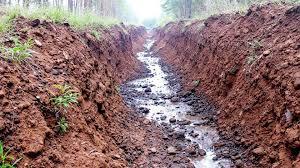
Landowners and operators are reminded that in order to receive payments from USDA, compliance with Highly Erodible Land (HEL) and Wetland Conservation (WC) provisions are required. Farmers with HEL determined soils are reminded of tillage, crop residue, and rotation requirements as specified per their conservation plan. Producers are to notify the USDA Farm Service Agency prior to breaking sod, clearing land (tree removal), and of any drainage projects (tiling, ditching, etc.) to ensure compliance. Failure to update certification of compliance, with form AD-1026, triggering applicable HEL and/or wetland determinations, for any of these situations, can result in the loss of FSA farm program payments, FSA farm loans, NRCS program payments, and premium subsidy to Federal Crop Insurance administered by RMA.
|
ELAP provides emergency assistance to eligible livestock, honeybee, and farm-raised fish producers who have losses due to disease, adverse weather or other conditions, such as blizzards and wildfires, not covered by other agricultural disaster assistance programs.
Eligible losses include:
-
Livestock - grazing losses not covered under the Livestock Forage Disaster Program (LFP), loss of purchased feed and/or mechanically harvested feed due to an eligible adverse weather event, additional cost of transporting water and feed because of an eligible drought and additional cost associated with gathering livestock to treat for cattle tick fever.
-
Honeybee - loss of purchased feed due to an eligible adverse weather event, cost of additional feed purchased above normal quantities due to an eligible adverse weather condition, colony losses in excess of normal mortality due to an eligible weather event or loss condition, including CCD, and hive losses due to eligible adverse weather.
-
Farm-Raised Fish - death losses in excess of normal mortality and/or loss of purchased feed due to an eligible adverse weather event.
If you’ve suffered eligible livestock, honeybee, or farm-raised fish losses during calendar year 2025, you must file a notice of loss and an application for payment by March 2, 2026.
The USDA Farm Service Agency (FSA) opened enrollment on July 10 for the Supplemental Disaster Relief Program (SDRP), which provides assistance for eligible crop losses due to natural disasters in 2023 and 2024.
Eligible U.S. Drought Monitor Losses
To qualify for drought related losses, the loss must have occurred in a county rated by the U.S. Drought Monitor as having a D2 (severe drought) for eight consecutive weeks, D3 (extreme drought), or greater intensity level during the applicable calendar year. View the list of counties eligible for SDRP due to qualifying drought for 2023 and 2024.
Other Eligible Disaster Events and Related Conditions
Producers who received an indemnity in 2023 or 2024 but did not qualify based on the U.S. Drought monitor may still be eligible for assistance. If your county did not trigger based on the U.S. Drought Monitor, do not certify “drought” as the cause of loss on your application as it will not be approved. Instead, producers should review all qualifying disaster events and related conditions such as excessive heat or excessive wind and select all applicable causes of loss.
Below is a list of all qualifying disaster events with the eligible related conditions in parentheses:
- Wildfires
- Hurricanes (including related excessive wind, storm surges, tornadoes, tropical storms, and tropical depression)
- Floods (including related silt and debris)
- Derechos (including related excessive wind)
- Excessive heat
- Tornadoes
- Winter storms (including related blizzard and excessive wind)
- Freeze (including a polar vortex)
- Smoke exposure
- Excessive moisture
- Qualifying drought
Related conditions must have occurred as a direct result of the indicated disaster event.
Losses due to Hail
Hail is not a qualifying disaster event, but you may be eligible if it was directly related to a qualifying disaster event.
For example, if a producer’s crop suffered damage from hail, but the hail damage was directly related to a tornado, then this would qualify for an SDRP payment since tornado is a qualifying disaster event.
Documentation for Spot Checks
Producers who certify that a qualifying disaster event caused the loss should be prepared to provide documentation to support their self-certification if they are selected for a spot check. Documentation is not required to be submitted with your application. Additionally, producers are not required to verify the cause of loss with their crop insurance agent.
Producers should complete the pre-filled application that was mailed on July 9. If you received a crop insurance indemnity in 2023 or 2024 and did not receive an application, please visit your local FSA office and they can print your pre-filled application.
For additional help with your application, please review the FSA-526 Instructions for Stage 1. Learn more about SDRP, eligibility and future insurance requirements by visiting fsa.usda.gov/sdrp.
Disaster Set-Aside and Distressed Borrower Set-Aside Programs
The Farm Service Agency (FSA) offers two types of set-aside programs to assist FSA direct loan borrowers. The set-aside programs are intended to help distressed borrowers as well as borrowers impacted by natural disasters.
Disaster Set-Aside Program
The Disaster Set-Aside Program (DSA) assists existing FSA direct loan borrowers who have been impacted by natural disasters. The DSA program provides short-term financial relief by allowing eligible borrowers to delay FSA direct loan payments that are due this year or next year (but not both). You may delay up to one full annual payment per loan and the delayed payment will be moved to the end of the loan term. You will not be required to pay this set-aside installment until the loan’s final due date.
The principal portion of the amount set-aside will continue to accrue interest at your loan’s existing interest rate.
To be eligible, borrowers must have operated a farm in a county declared a disaster area or a contiguous county at the time of the disaster. In addition, the borrower’s inability to make their upcoming payment must be due to the disaster.
To apply for DSA, borrowers must provide their local USDA Service Center with a letter requesting DSA, which must be signed by all parties liable for the debt. The letter must be provided to your local Service Center within eight months of the disaster declaration date. The application process also includes providing your actual production, income, and expense records for the last three years. FSA may also request additional information as needed to make an eligibility decision.
Distressed Borrower Set-Aside Program
FSA Direct Farm Loan Program borrowers whose loans were closed before Sept. 25, 2024, may be eligible for assistance under the Distressed Borrower Set-Aside Program (DBSA). Similar to DSA, DBSA also provides short-term financial relief by allowing eligible borrowers to delay FSA direct loan payments that are due this year or next year (but not both). You may delay up to one full annual payment per loan and the delayed payment will be moved to the end of the loan term. You will not be required to pay this set-aside installment until the loan’s final due date.
An increased benefit with DBSA is that the principal portion of the set-aside will accrue interest at a reduced rate of 0.125% rather than your loan’s existing interest rate.
To be eligible for DBSA, the borrower must demonstrate financial distress, but their inability to make the upcoming payment does not need to be due to a disaster.
The DBSA application process is similar to DSA as borrowers must provide their local USDA Service Center with a letter requesting DBSA, which must be signed by all parties liable for the debt. The application process also includes providing your actual production, income, and expense records for the last three years. FSA may also request additional information as needed to make an eligibility decision.
Important Factors for Both DSA and DBSA:
FSA direct loan borrowers are not able to obtain more than one set-aside per loan. Borrowers also cannot obtain both a DSA and DBSA simultaneously on the same loan. In addition, FSA direct loans with less than two years remaining are not eligible for a DSA or DBSA. Other eligibility requirements apply; we encourage you to contact your local Service Center for more information.
Both DSA and DBSA are intended to provide short-term relief for situations where borrowers anticipate the ability to resume paying their full annual installment(s) in the following year. If you require a more long-term form of financial relief, FSA has other potential options available through primary loan servicing (PLS).
For more information on DSA, DBSA, or PLS, please contact your Local County Service Center. You may also visit fsa.usda.gov.
Additional information, eligibility criteria and program limitations may be found within the Disaster Set-Aside and Distressed Borrower Set-Aside Program fact sheets.
|
Top of page
Idaho FSA State Office
9173 West Barnes Drive, Ste. B
Boise, Idaho 83709
Phone: 208-378-5650
Fax: 855-516-8875
|
| |
|
Idaho State Executive Director
Kevin Andrus ~ 208-378-5656 Kevin.Andrus2@usda.gov
Deputy State Executive Director
Nick Treasure ~ 208-378-5671 nicholas.treasure@usda.gov
Farm Program Chief
Kyla Pearson ~ 208-378-5667 kyla.pearson@usda.gov
|
Administrative Officer
Brandi May ~ 208-378-5670 brandi.may@usda.gov
Farm Loan Chief
Susan R. Smith ~ 208-378-5664 susan.r.smith@usda.gov
|
|
Idaho FSA State Committee
TBA ~ Committee Chair
TBA, Member
Next State Committee Meeting: TBA
Note: To check the status of your FSA Farm Loan (FLP) account, call 1-888-518-4983 or check with your local office. To find contact information for your local office go to www.fsa.usda.gov/id
|
|






