
New Jersey USDA Newsletter - September 2025
In this issue:

Sept 15 Acreage reporting deadline for planting period 2 cabbage in Atlantic County only
Sept 30 NAP Coverage Deadline for Subsequent Year's Small Grains, Grasses, Mixed Forage, Aquaculture, Christmas trees, Flowers, Sod, and Garlic
Sept 30 Acreage reporting deadline for value loss crops except nursery (i.e. Aquaculture, Christmas trees, Flowers, Sod)
Oct 17 EQIP and CSP sign up deadline for 2026.
Click here for September lending rates
|
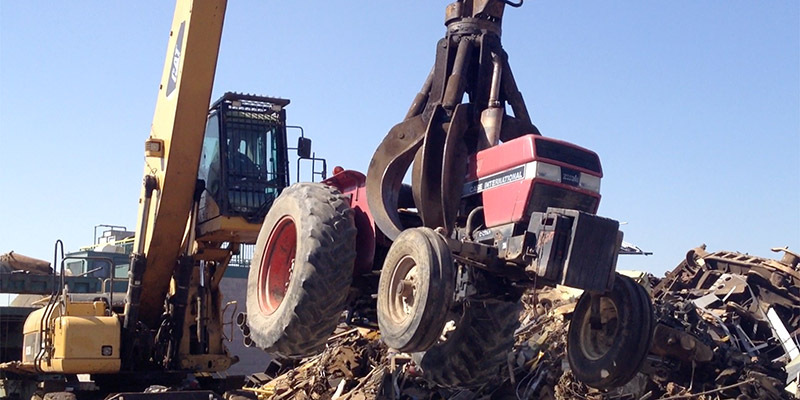 The USDA’s Natural Resources Conservation Service in New Jersey (NRCS-NJ) has adopted a FY26 NRCS Air Quality Initiative which will help producers across the state improve air quality.
NRCS-NJ will focus on air quality improvements in the upcoming fiscal year where agricultural emissions from cropping systems are determined to be contributors to air quality impairment. Strategies to reduce agricultural emissions include:
The primary goal of this initiative is to help farmers improve air quality across New Jersey and the northeast region. The initiative targets emissions of nitrogen oxides and particulate matter.
Assistance is available in New Jersey through the Environmental Quality Incentives Program (EQIP) and Conservation Stewardship Program (CSP). NRCS accepts applications for these programs year-round. Submission of a program application does not guarantee funding. EQIP and CSP are voluntary, technical, and financial assistance programs designed to help farmers, ranchers, forestland owners, and Tribes with the application of conservation measures. These programs focus strongly on conservation planning, conservation implementation, and solving natural resource concerns.
While NRCS accepts applications year-round, New Jersey producers and landowners should apply by October 17, 2025 to be considered for funding in the current cycle.
Each applicant must establish themselves as a USDA customer and obtain all Farm Service Agency (FSA) eligibility requirements. Please note, Adjusted Gross Income (AGI) determination takes an average three weeks to be processed by the Internal Revenue Service (IRS).
To learn how to get started with NRCS, click here, or visit your local USDA service center.
For more information about EQIP, please refer to the NRCS-NJ EQIP Program Webpage. For more information about CSP, please refer to the NRCS-NJ CSP Program Webpage. To learn how to sign up for free email and text alerts about the latest NRCS program and national funding opportunities, click here.
Top of page
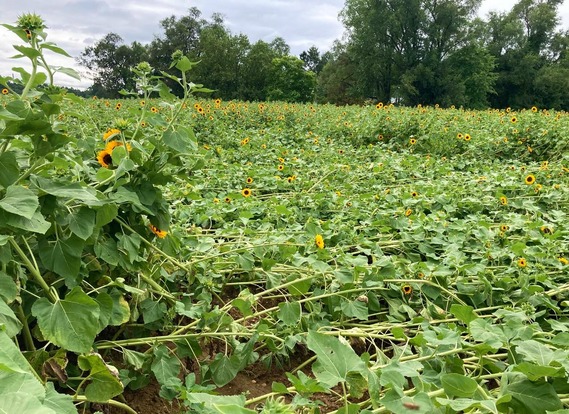 Farm Service Agency (FSA) reminds producers of approaching application deadlines for purchasing risk coverage for some crops through the Noninsured Crop Disaster Assistance Program (NAP). NAP provides financial assistance to producers of non-insurable crops impacted by natural disasters that result in lower yields, crop losses, or prevented crop planting.
NAP covers losses from natural disasters on crops for which no permanent federal crop insurance program is available, including forage and grazing crops, fruits, vegetables, floriculture, ornamental nursery, aquaculture, turf grass and more.
Upcoming application deadlines for NAP coverage for the 2026 production season include:
-
September 30, 2025- Aquaculture, Christmas Trees, Flowers, Garlic, Grass Hay, Grass-Sod, Mixed Forages, Rye and Teff.
-
November 20, 2025 - Apricots, Grapes (fresh market), Caneberries, Cherries, Onions, Pears, Plums, and Scallions.
-
December 31, 2025 - Honey, Asparagus, Beets, Broccoli, Cabbage, Carrots, Cauliflower, Greens, Herbs, Horseradish, Kohlrabi, Leeks, Lettuce, Parsnip, Peas, Radishes, Rhubarb, Turnips, Water Cress.
NAP basic coverage is available at 55% of the average market price for crop losses that exceed 50% of expected production. Buy-up coverage is available in some cases. NAP offers higher levels of coverage, ranging from 50% to 65% of expected production in 5% increments, at 100% of the average market price. Producers of organic crops and crops marketed directly to consumers also may exercise the “buy-up” option to obtain NAP coverage of 100% of the average market price at coverage levels ranging between 50% and 65% of expected production. Buy-up coverage is not available for crops intended for grazing.
For all coverage levels, the NAP service fee is the lesser of $325 per crop or $825 per producer per county, not to exceed a total of $1,950 for a producer with farming interests in multiple counties. Premiums apply for buy-up coverage.
If a producer has a Socially Disadvantaged, Limited Resource, Beginning and Veteran Farmer or Rancher Certification (form CCC-860) on file with FSA, it may serve as an application for basic coverage for all eligible crops beginning with crop year 2022. These producers will have all NAP-related service fees for basic coverage waived. These producers may also receive a 50% premium reduction if higher levels of coverage are elected on form CCC-471, prior to the application closing date for each crop.
To learn more about NAP visit fsa.usda.gov/nap or contact the Freehold Service Center at 732-460-0075 ext. 2.
Top of page
The U.S. Department of Agriculture’s Risk Management Agency (RMA) made significant enhancements to federal crop insurance programs by expanding benefits for beginning farmers and ranchers, increasing coverage options, and making crop insurance more affordable and accessible across multiple insurance programs.
Putting American Farmers First with Enhanced Support for Beginning Farmers and Ranchers
Beginning farmers and ranchers will receive substantially increased premium support during their first decade of farming operations, making crop insurance more affordable for the next generation of American agricultural producers. The enhanced benefits mean beginning farmers and ranchers will now receive:
- 15 percentage points additional subsidy for the first two crop years
- 13 percentage points for the third crop year
- 11 percentage points for the fourth crop year
- 10 percentage points for years five through ten
These benefits build upon existing support that waives administrative fees and provides base premium subsidies. A beginning farmer or rancher is now defined as an individual who has not actively operated and managed a farm or ranch for more than 10 crop years.
Making Crop Insurance More Accessible with Expanded Coverage Options
Improvements to area-based crop insurance programs include:
- Whole Farm Revenue Protection (WFRP) maximum coverage level increase from 85% to 90%, providing producers with enhanced protection for diversified operations.
- Supplemental Coverage Option (SCO) premium support increase from 65% to 80%, making this valuable gap coverage more affordable. Additionally, producers can now purchase SCO regardless of their Area Risk Coverage (ARC) elections with the Farm Service Agency, dramatically increasing accessibility.
- Enhanced Coverage Option (ECO) and similar programs including Margin Coverage Option (MCO), Hurricane Insurance Protection Wind Index (HIP-WI), and Fire Insurance Protection Smoke Index (FIP-SI) will also receive the increased 80% in premium support, making comprehensive coverage more affordable than ever.
- SCO coverage will also expand to a coverage level of 90% (from 86%). Producers will have access to this option in 2026 via the ECO product, which has identical coverage at the same cost and premium support levels. USDA will then change the SCO policy for the 2027 crop year.
These changes will be effective for all crops with sales closing dates on or after July 1, 2025.
RMA will provide additional guidance on other provisions within the One Big Beautiful Bill Act as implementation details are finalized. Producers should contact their local crop insurance agent or visit the RMA website for more information about how these changes may affect their coverage options.
Beginners Guide to Crop Insurance
Don’t know much about Federal crop insurance, but you want to learn more? Crop insurance is a risk management strategy that farmers use to protect their livelihoods. By purchasing a policy through a crop insurance agent, farmers are financially protected if there are losses due to a covered cause of loss. It’s not so different from car or homeowners insurance. Start your journey out right by reading RMA’s Beginners Guide to Crop Insurance.
Top of page
|
 Are you interested in working with USDA to start or grow your farm, ranch, or private forest operation, but don’t know where to start?
Whether you’re looking to access capital or disaster assistance through USDA’s Farm Service Agency (FSA) or address natural resource concerns on your land with assistance from USDA’s Natural Resources Conservation Service (NRCS), a great place to start is farmers.gov.
Farmers.gov is a one-stop shop for information about the assistance available from FSA and NRCS. The site also offers many easy-to-use tools for farmers, ranchers, and private forestland owners, whether you are reaching out for the first time or are a long-term customer with a years-long relationship with USDA.
With a farmers.gov account you can:
- Complete an AD-2047, Customer Data Worksheet, prior to your first meeting with FSA and NRCS.
- View farm loan payments history from FSA.
- View cost share assistance received and anticipated from NRCS conservation programs.
- Request conservation assistance from NRCS as well as view and track your conservation plans, practices, and contracts.
- View, print, and export detailed farm records and farm/tract maps for the current year, which are particularly useful when fulfilling acreage reporting requirements.
- Print FSA-156 EZ, Abbreviated Farm Record and your Producer Farm Data Report for the current year.
- Pay FSA debt using the “Make an FSA Payment” feature
- Apply for a farm loan online, view information on your existing loans, and make USDA direct farm loan payments using the Pay My Loan feature.
Learn how to create a farmers.gov account today!
Top of page
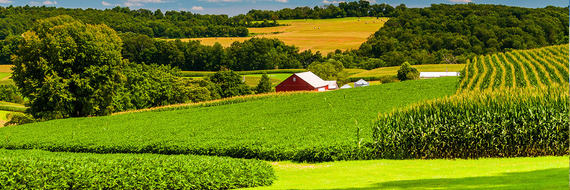 The USDA Farm Service Agency’s (FSA) Direct Farm Ownership loans can help farmers and ranchers become owner-operators of family farms, improve and expand current operations, increase agricultural productivity, and assist with land tenure to save farmland for future generations.
There are three types of Direct Farm Ownership Loans: regular, down payment and joint financing. FSA also offers a Direct Farm Ownership Microloan option for smaller financial needs up to $50,000.
Joint financing allows FSA to provide more farmers and ranchers with access to capital. FSA lends up to 50 percent of the total amount financed. A commercial lender, a state program or the seller of the property being purchased, provides the balance of loan funds, with or without an FSA guarantee. The maximum loan amount for a joint financing loan is $600,000, and the repayment period for the loan is up to 40 years.
The operation must be an eligible farm enterprise. Farm Ownership loan funds cannot be used to finance nonfarm enterprises and all applicants must be able to meet general eligibility requirements. Loan applicants are also required to have participated in the business operations of a farm or ranch for at least three years out of the 10 years prior to the date the application is submitted. The applicant must show documentation that their participation in the business operation of the farm or ranch was not solely as a laborer.
For more information about farm loans, contact your local USDA Service Center or visit fsa.usda.gov.
Top of page

The U.S. Department of Agriculture (USDA) Farm Service Agency (FSA) reminds foreign investors with an interest in agricultural land in the United States that they are required to report their land holdings and transactions to USDA.
The Agricultural Foreign Investment Disclosure Act (AFIDA) requires foreign investors who buy, sell or hold an interest in U.S. agricultural land to report their holdings and transactions to the USDA. Foreign investors must file AFIDA Report Form FSA-153 with the FSA county office in the county where the land is located. Large or complex filings may be handled by AFIDA headquarters staff in Washington, D.C.
According to CFR Title 7 Part 781, any foreign person who holds an interest in U.S. agricultural land is required to report their holdings no later than 90 days after the date of the transaction.
Foreign investors should report holdings of agricultural land totaling 10 acres or more used for farming, ranching or timber production, and leaseholds on agricultural land of 10 or more years. Tracts totaling 10 acres or less in the aggregate, and which produce annual gross receipts in excess of $1,000 from the sale of farm, ranch, forestry or timber products, must also be reported. AFIDA reports are also required when there are changes in land use, such as from agricultural to nonagricultural use. Foreign investors must also file a report when there is a change in the status of ownership.
The information from AFIDA reports is used to prepare an annual report to Congress. These annual reports to Congress, as well as more information, are available on the FSA AFIDA webpage.
Assistance in completing the FSA-153 report may be obtained from the local FSA office.
Top of page
|
Top of page
USDA is an equal opportunity provider, employer and lender. To file a complaint of discrimination, write: USDA, Office of the Assistant Secretary for Civil Rights, Office of Adjudication, 1400 Independence Ave., SW, Washington, DC 20250-9410 or call (866) 632-9992 (Toll-free Customer Service), (800) 877-8339 (Local or Federal relay), (866) 377-8642 (Relay voice users).
|






