
Alaska State FSA September Newsletter - 22 September 2025
In This Issue:
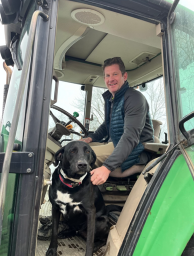
The fall harvest is in full swing, and we know this is one of the busiest times of year for our farmers. Amidst the hard work and long days, please keep in mind that the RTCP Reimbursement Transportation Cost Payment Program (RTCP) sign-up deadline is fast approaching on September 30. Our dedicated staff is here to assist you and ensure you don’t miss out on the benefits of this important program—please don’t hesitate to reach out with any questions.
As we move through this season, I invite you to join me and take a moment to reflect and be thankful—for our families, our friends and colleagues, and for the incredible state and country we are fortunate to live in.
As a father of grown children, I’m often reminded of how quickly life moves. Let’s stay grounded and grateful together.
Arthur Keyes
arthur.keyes@usda.gov
(907)761-7750
|
Northern County Updates
The Delta Junction office regular hours:
Monday, Wednesday & Friday- 8:00am-4:30pm
Tuesday, Thursday- 8:00am-12:00pm;
12:00pm-4:30pm by appointment only.
Southern County Updates
The Palmer FSA staff will be in the Wasilla NRCS office every Thursday from 8:30am-4pm.
Hazen Kazaks, Southern County Executive Director, will be visiting the Kenai Peninsula September 22nd-26th. Come in and sign up for RTCP! Office hours will be held as follows:
Homer NRCS office: Tuesday, September 23rd from 8:00am-12:00pm
Kenai NRCS office: Thursday, September 25th from 8:00am-12:00pm
Upcoming Office Closures:
Monday, October 13th for Columbus Day
Upcoming Deadlines:
Tuesday, September 30th- 2025 RTCP Application Deadline
Tuesday, September 30th- 2026 Acreage Reporting Deadline for Value-loss crops (including Peonies) and controlled environment crops (except nursery)
Tuesday, September 30th- 2026 NAP Deadline for Perennial Grass Forage and Honey
Monday, November 3rd- 2025 RTCP Deadline to submit supporting documentation
Click here to learn more about upcoming deadlines and ongoing programs
Top of page
 Agricultural producers who suffered eligible crop losses due to natural disasters in 2023 and 2024 can now apply for $16 billion in assistance through the Supplemental Disaster Relief Program (SDRP).
To expedite the implementation of SDRP, USDA’s Farm Service Agency (FSA) is delivering assistance in two stages. This first stage is open to producers with eligible crop losses that received assistance under crop insurance or the Noninsured Crop Disaster Assistance Program during 2023 and 2024. Stage One sign up started in-person at FSA county offices on July 10 and prefilled applications were mailed to producers starting July 9. SDRP Stage Two signups for eligible shallow or uncovered losses will begin in early fall.
SDRP Stage One
FSA is launching a streamlined, pre-filled application process for eligible crop, tree, and vine losses by leveraging existing Noninsured Crop Disaster Assistance Program (NAP) and Risk Management Agency (RMA) indemnified loss data. The pre-filled applications were mailed on July 9, 2025.
Eligibility
Eligible losses must be the result of natural disasters occurring in calendar years 2023 and/or 2024. These disasters include wildfires, hurricanes, floods, derechos, excessive heat, tornadoes, winter storms, freeze (including a polar vortex), smoke exposure, excessive moisture, qualifying drought, and related conditions.
To qualify for drought related losses, the loss must have occurred in a county rated by the U.S. Drought Monitor as having a D2 (severe drought) for eight consecutive weeks, D3 (extreme drought), or greater intensity level during the applicable calendar year.
Producers in Connecticut, Hawaii, Maine, and Massachusetts will not be eligible for SDRP program payments. Instead, these states chose to cover eligible crop, tree, bush, and vine losses through separate block grants. These block grants are funded through the $220M provided for this purpose to eligible states in the American Relief Act.
How to Apply
To apply for SDRP, producers must submit the FSA-526, Supplemental Disaster Relief Program (SDRP) Stage One Application, in addition to having other forms on file with FSA.
SDRP Stage One Payment Calculation
Stage One payments are based on the SDRP adjusted NAP or Federal crop insurance coverage level the producer purchased for the crop. The net NAP or net federal crop insurance payments (NAP or crop insurance indemnities minus administrative fees and premiums) will be subtracted from the SDRP calculated payment amount.
For Stage One, the total SDRP payment to indemnified producers will not exceed 90% of the loss and an SDRP payment factor of 35% will be applied to all Stage One payments. If additional SDRP funds remain, FSA may issue a second payment.
Future Insurance Coverage Requirements
All producers who receive SDRP payments are required to purchase federal crop insurance or NAP coverage for the next two available crop years at the 60% coverage level or higher. Producers who fail to purchase crop insurance for the next two available crop years will be required to refund the SDRP payment, plus interest, to USDA.
SDRP Stage 2
FSA will announce additional SDRP assistance for uncovered losses, including non-indemnified shallow losses and quality losses and how to apply later this fall.
Learn more by visiting fsa.usda.gov/sdrp.
Top of page
When natural disasters occur, USDA is here to support your operation as you recover. Disaster assistance program payments provide critical support and peace of mind following an extreme weather event, but there are also tax considerations producers should keep in mind. If your farm experiences a disaster there may be special tax provisions that apply to you that are known as “casualty losses”.
USDA has partnered with experts to bring producers important tax information on farm tax topics. In the first of a two-part Ask the Expert series on taxes and dealing with disasters, Dr. Tamara Cushing answers questions about defining and determining casualty losses for tax purposes.
Learn how USDA disaster payments may impact your taxes.
Top of page
A farmers.gov account provides self-service opportunities to Farm Service Agency (FSA) and Natural Resources Conservation Service (NRCS) customers through a secure, authenticated access process.
A new feature now provides access to your current or prior year FSA-578, Report of Commodities (Nationwide Producer Print). Your FSA-578 contains annual crop acreage reporting information submitted to USDA’s Farm Service Agency (FSA). If you are a shareholder (operator, owner or other producer) for a crop on the acreage report, you will be able to view, save and/or print your selected annual FSA-578.
How to Access Your FSA-578’s
From the Land tab in your farmers.gov account, click Land Overview on the navigation drop-down. On the Land Overview page, you will see an information block that states “View and Print Your Acreage Reports” containing a View Your FSA-578 button.
Clicking the button will open a popup modal with a drop-down menu to select the acreage report year. Once you have selected a year, the View FSA-578 button becomes active. Clicking the button will open a new tab with a message indicating the PDF file is being loaded. Once the load is complete, the FSA-578, Report of Commodities (Nationwide Producer Print) PDF document is displayed. You can view, save and/or print the FSA-578 as needed.
If there is no acreage report information on file for the selected acreage report year, the PDF will display the message, “This producer does not have a producer print currently available.”
How to Access FSA-578s Using Your Representative Authority to Act on Behalf of Another Customer
Additionally, if you have been granted the authority to act on behalf of another individual or entity, you can use the yellow banner to “Switch Profile” and view the current or prior year FSA-578, Report of Commodities (Nationwide Producer Print) for the customer you on whose behalf you have been elected to act.
Contact your local FSA office for more information or questions regarding your FSA-578, Report of Commodities (Nationwide Producer Print) or if you have questions regarding establishing representative authority or do not see the expected representative authority options when you log in.
More information can be found in the farmers.gov Fact Sheet and video tutorials. Visit the farmers.gov Account page to log in or learn how to create an account.
Top of page
The new customer kiosks from USDA’s Farm Service Agency are available at every county office nationwide. These kiosks help to streamline your visit to your local county office and easily access a variety of features such as signing FSA documents, utilizing the Loan Assistance Tool, browsing USDA programs, accessing the internet, accessing necessary personal information, and signing up for a Login.gov account, which provides access to farmers.gov level two features and other USDA and U.S. Government web resources. Future kiosk functionality enhancements include a customer check-in application, self-service option for FSA program applications and documents, financial inquiries and more.
Learn more about how FSA is modernizing our customer experience here.
Top of page
The Conservation Reserve Program (CRP) is a program administered by the Farm Service Agency (FSA) to conserve farmland for future generations while providing habitat for wildlife, reducing soil erosion, and improving water quality. Regular maintenance on CRP acres is needed to ensure the acreage continues to provide conservation benefits and remains in compliance with the CRP contract.
Regular Maintenance
Producers with CRP contracts are required to control all weeds, insects, pests, and other undesirable species to the extent necessary to ensure that the approved conservation cover is adequately protected and to ensure there is no adverse impact on surrounding land. Mowing is one of the allowable practices for weed control, but mowing for aesthetic purposes is never permitted. The Conservation Plan states the required weed control methods for each site.
Once a stand has been certified as fully established, participants are required to maintain plant diversity and stand density according to the Conservation Plan and offer (CRP-2) for the life of the contract. Stands that do not meet practice specific plant diversity or density requirements may be considered non-compliant. Refer to your conservation plan or contact FSA if you have any questions or concerns about the vegetative cover requirements.
Maintenance activities cannot occur during the primary nesting season for birds without written prior approval from the local county office. The primary nesting season in Alaska is May 15 through June 25.
Mid-Contract Management
Regular maintenance for weed and pest control is separate from the Mid-Contract Management (MCM) requirement. MCM ensures plant diversity and wildlife benefits while ensuring protection of the soil and water resources. Such activities are site-specific and are for the purpose of enhancing the approved cover.
MCM must be completed between years four and six of a 10-year contract and between years seven and nine of a 15-year contract. The Conservation Plan will state what year MCM must take place.
Noncompliance with Maintenance Requirements
Failure to adequately maintain the stand may result in noncompliance with the terms and conditions of the CRP contract. Noncompliance can result in adverse actions up to and including termination of the CRP contract. Contracts that are out of compliance are ineligible to re-enroll, unless the stand is brought back into compliance prior to the enrollment deadline.
For general information about CRP, visit the Conservation Reserve Program webpage. For information about specific contracts, reach out to the local FSA office.
Top of page
Farm Service Agency (FSA) farm loans are considered progression lending. Unlike loans from a commercial lender, FSA loans are intended to be temporary in nature. Our goal is to help you graduate to commercial credit, and our farm loan staff is available to help borrowers through training and credit counseling.
The FSA team will help borrowers identify their goals to ensure financial success. FSA staff will advise borrowers on developing strategies and a plan to meet your goals and graduate to commercial credit. FSA borrowers are responsible for the success of their farming operation, but FSA staff will help in an advisory role, providing the tools necessary to help you achieve your operational goals and manage your finances.
For more information on FSA farm loan programs, please contact your Northern County USDA Service Center at (907)895-4242 ext. 2 or Southern County FSA Office at (907)761-7738. You may also visit fsa.usda.gov.
Top of page
Alaska State Farm Service Agency
|
800 E Palmer-Wasilla Hwy., Suite 216
Palmer, AK 99645
Phone: 907-761-7738
Fax: 855-638-4864
|
|
Alaska FSA Website
|
|
Northern County FSA Service Center
PO BOX 585
Delta Junction AK 99737
Phone: 907-895-4242 ext. 2
Fax: 855-711-9095
Email: akdeltajun-fsa@usda.gov
Northern County Committee
Steve Helkenn- Committee Chair
Becky Hammond- Vice Chair
Matt Bates- Member
|
Southern County FSA Office
800 E Palmer-Wasilla Hwy., Ste 216
Palmer AK 99645
Phone: 907-761-7773
Fax: 855-638-4864
Email: akpalmer-fsa@usda.gov
Southern County Committee
Carol Symonds- Committee Chair
Ina Jones- Vice Chair
Abby Ala- Member
|
|
Hours: Monday-Friday 8:00 a.m.- 4:30 p.m.
|
|






