News & Updates from the Iowa Farm Service Agency - August 28, 2025
In This Issue:
Physical loss loans through the United States Department of Agriculture’s (USDA) Farm Service Agency (FSA) can help producers repair or replace damaged or destroyed physical property essential to the success of the agricultural operation, including livestock losses. Examples of property commonly affected include essential farm buildings, fixtures to real estate, equipment, livestock, perennial crops, fruit and nut bearing trees, and harvested or stored crops and hay.
Triggering Disaster #1
Impacted Area: Minnesota
Triggering Disaster: High Winds, Hail, and Excessive Rain (N1821)
Application Deadline: December 29, 2025
Primary Counties Eligible:
Minnesota: Faribault
Contiguous Counties Also Eligible:
Iowa: Kossuth, Winnebago
Minnesota: Blue Earth, Freeborn, Martin, Waseca
Triggering Disaster #2
Impacted Area: Minnesota
Triggering Disaster: High winds that occurred on May 15-20, 2025 (N1866)
Application Deadline: April 13, 2026
Primary Counties Eligible:
Minnesota: Cottonwood, Jackson
Contiguous Counties Also Eligible:
Minnesota: Brown, Martin, Murray, Nobles, Redwood, Watonwan
Iowa: Dickinson, Emmet, Osceola
Triggering Disaster #3
Impacted Area: Iowa
Triggering Disaster: Severe thunderstorms and high winds that occurred on June 11, 2025 (N1878)
Application Deadline: April 20, 2026
Primary Counties Eligible:
Iowa: Lyon, Osceola
Contiguous Counties Also Eligible:
Iowa: Clay, Dickinson, O'Brien, Sioux
Minnesota: Jackson, Nobles, Rock
South Dakota: Lincoln, Minnehaha
More Resources
On farmers.gov, the Disaster Assistance Discovery Tool, Disaster Assistance-at-a-Glance fact sheet, and Loan Assistance Tool can help you determine program or loan options. To file a Notice of Loss or to ask questions about available programs, contact your local USDA Service Center.
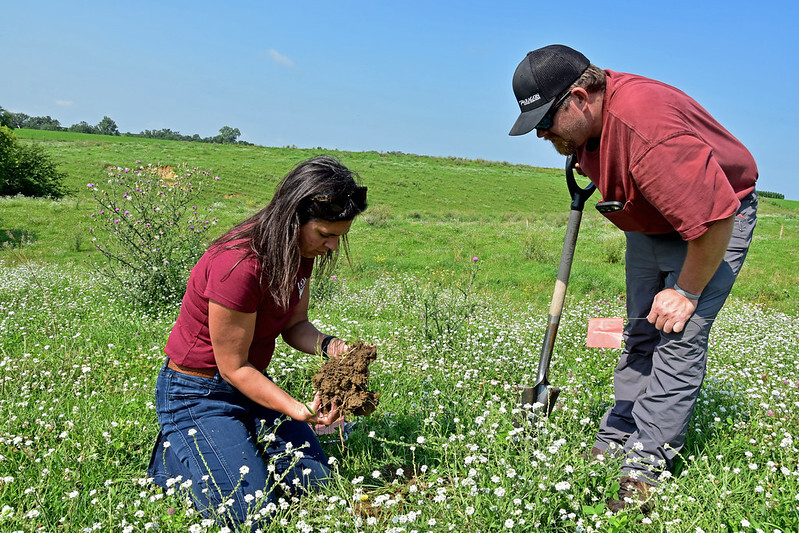
Soil conservation is the reason NRCS came to be 90 years ago following the destructive Dust Bowl era. However, the demand for conservation planning assistance is the reason the federal agency is in every Iowa county and thriving today.
To help improve land and water conditions and farming productivity, comprehensive conservation planning has been the basis for gathering solid data and providing step-by-step information to Iowa’s private landowners.
Conservation Plans Provide Multiple Benefits Every year, NRCS staff develop thousands of conservation plans that cover millions of Iowa acres. NRCS State Conservationist Jon Hubbert says conservation plans can transform an operation by helping farmers achieve both their conservation and production goals. “When farmers have long-term conservation goals like improving wildlife habitat and soil health, or even reducing energy and input costs, they can achieve their annual production goals, too,” he said. “They really go hand in hand.”
Hubbert says comprehensive conservation plans can also increase overall effectiveness of the practices because they are implemented more strategically.
“A plan will also set up an implementation schedule that fits the operator’s timetable and resources,” he said.
Read more about ways conservation planning helps Iowa farmers
Farmers and ranchers rely on crop insurance to protect themselves from disasters and unforeseen events, but not all crops are insurable through the USDA’s Risk Management Agency. The Farm Service Agency’s (FSA) Noninsured Crop Disaster Assistance Program (NAP) provides producers another option to obtain coverage against disaster for these crops. NAP provides financial assistance to producers of non-insurable crops impacted by natural disasters that result in lower yields, crop losses, or prevents crop planting.
Commercially produced crops and agricultural commodities for which crop insurance is not available are generally eligible for NAP. Eligible crops include those grown specifically for food, fiber, livestock consumption, biofuel or biobased products, or value loss crops such as aquaculture, Christmas trees, ornamental nursery, and others. Contact your local FSA office to see which crops are eligible in your county.
Eligible causes of loss include drought, freeze, hail, excessive moisture, excessive wind or hurricanes, earthquake and flood. These events must occur during the NAP policy coverage period, before or during harvest, and the disaster must directly affect the eligible crop. For guidance on causes of loss not listed, contact your local FSA county office.
Interested producers apply for NAP coverage and pay the applicable service fee at the FSA office where their farm records are maintained. These must be filed by the application closing date, which varies by crop. Contact your local FSA office to verify application closing dates and ensure coverage for eligible NAP crops.
At the time of application, each producer acknowledges they have received the NAP Basic Provisions, which describes NAP requirements for coverage. NAP participants must report crop acreage shortly after planting and provide verifiable or reliable crop production records when required by FSA.
Producers are required to pay service fees which vary depending on the number of crops and number of counties your operation is located in. The NAP service fee is the lesser of $325 per crop or $825 per producer per administrative county, not to exceed a total of $1,950 for a producer with farming interests in multiple counties. Premiums also apply when producers elect higher levels of coverage with a maximum premium of $15,750 per person or legal entity.
A producer’s certification on Form CCC-860 Socially Disadvantaged, Limited Resource, Beginning and Veteran Farmer or Rancher Certification may serve as an application for basic NAP coverage for all eligible crops beginning with crop year 2022. These producers will have all NAP-related service fees for basic coverage waived, in addition to a 50 percent premium reduction if higher levels of coverage are elected.
he U.S. Department of Agriculture (USDA) Farm Service Agency (FSA) reminds foreign investors with an interest in agricultural land in the United States that they are required to report their land holdings and transactions to USDA.
The Agricultural Foreign Investment Disclosure Act (AFIDA) requires foreign investors who buy, sell or hold an interest in U.S. agricultural land to report their holdings and transactions to the USDA. Foreign investors must file AFIDA Report Form FSA-153 with the FSA county office in the county where the land is located. Large or complex filings may be handled by AFIDA headquarters staff in Washington, D.C.
According to CFR Title 7 Part 781, any foreign person who holds an interest in U.S. agricultural land is required to report their holdings no later than 90 days after the date of the transaction.
Foreign investors should report holdings of agricultural land totaling 10 acres or more used for farming, ranching or timber production, and leaseholds on agricultural land of 10 or more years. Tracts totaling 10 acres or less in the aggregate, and which produce annual gross receipts in excess of $1,000 from the sale of farm, ranch, forestry or timber products, must also be reported. AFIDA reports are also required when there are changes in land use, such as from agricultural to nonagricultural use. Foreign investors must also file a report when there is a change in the status of ownership.
The information from AFIDA reports is used to prepare an annual report to Congress. These annual reports to Congress, as well as more information, are available on the FSA AFIDA webpage.
Assistance in completing the FSA-153 report may be obtained from the local FSA office. For more information regarding AFIDA or FSA programs, contact the Name County FSA office at phone or visit farmers.gov.
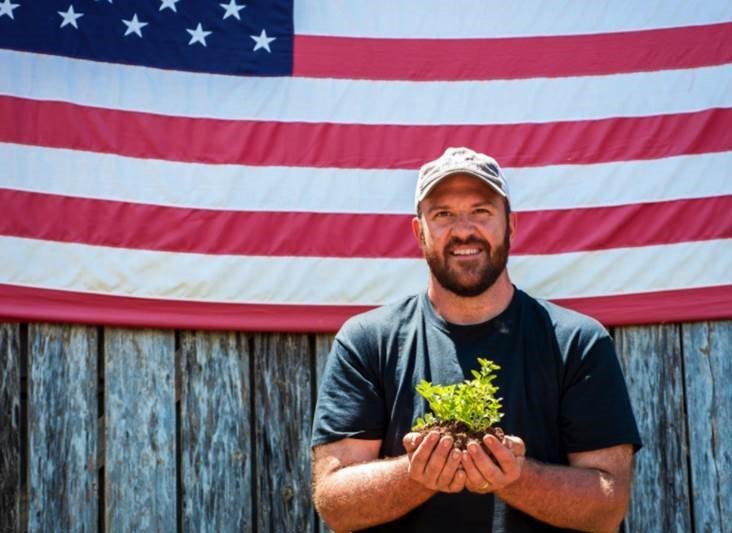
Conservation Reserve Program (CRP) contract holders are encouraged to transition their CRP acres to beginning, veteran or socially disadvantaged farmers or ranchers through the Transition Incentives Program (TIP). TIP provides annual rental payments to the landowner or operator for up to two additional years after the CRP contract expires.
CRP contract holders no longer need to be a retired or retiring owner or operator to transition their land. TIP participants must agree to sell, have a contract to sell, or agree to lease long term (at least five years) land enrolled in an expiring CRP contract to a beginning, veteran, or socially disadvantaged farmer or rancher who is not a family member.
Beginning, veteran or social disadvantaged farmers and ranchers and CRP participants may enroll in TIP beginning two years before the expiration date of the CRP contract. The TIP application must be submitted prior to completing the lease or sale of the affected lands. New landowners or renters that return the land to production must use sustainable grazing or farming methods.
For more information, contact your local USDA Service Center or visit fsa.usda.gov.
The Farm Loan team in Iowa is already working on operating loans for spring 2026 and asks potential borrowers to submit their requests early so they can be timely processed. The farm loan team can help determine which loan programs are best for applicants.
FSA offers a wide range of low-interest loans that can meet the financial needs of any farm operation for just about any purpose. The traditional farm operating and farm ownership loans can help large and small farm operations take advantage of early purchasing discounts for spring inputs as well expenses throughout the year.
Microloans are a simplified loan program that will provide up to $50,000 for both Farm Ownership and Operating Microloans to eligible applicants. These loans, targeted for smaller and non-traditional operations, can be used for operating expenses, starting a new operation, purchasing equipment, and other needs associated with a farming operation. Loans to beginning farmers and members of underserved groups are a priority.
Other types of loans available include:
Marketing Assistance Loans allow producers to use eligible commodities as loan collateral and obtain a 9-month loan while the crop is in storage. These loans provide cash flow to the producer and allow them to market the crop when prices may be more advantageous.
Farm Storage Facility Loans can be used to build permanent structures used to store eligible commodities, for storage and handling trucks, or portable or permanent handling equipment. A variety of structures are eligible under this loan, including bunker silos, grain bins, hay storage structures, and refrigerated structures for vegetables and fruit. A producer may borrow up to $500,000 per loan.
Iowa State Office
10500 Buena Vista Court
Des Moines, IA 50322
Phone: 515-254-1540
Karen Rawson, Acting State Executive Director
|
|