
Michigan Farm Service Agency Newsletter - August 21, 2025
In This Issue:

August 31, 2025: 2026 NAP Fall Seeded Canola Application for Coverage Deadline
September 1, 2025: DMC Premiums Due
September 26, 2025: Farm Records Rollover to Program Year 2026
September 30, 2025: 2025 ARCPLC Contract Period Deadline
September 30, 2025: 2026 NAP Value Loss Crop Application for Coverage Deadline and Acreage Reporting Deadline
September 30, 2025: 2026 NAP Forage and Grazing Crop Application for Coverage Deadline
September 30, 2025: 2026 NAP Small Grain Application for Coverage Deadline (fall seeded and some spring seeded)
September 30, 2025: 2026 NAP Wild Rice Application for Coverage Deadline
More Information
The above information is for general awareness. Program deadlines may change or vary by county. Be sure to verify program deadlines for your land or operation by contacting your local USDA Service Center.
|
It’s an honor to serve as the Michigan State Executive Director of the Farm Service Agency again, after serving in this position during the first Trump Administration.
For those who don’t know me, I grew up on a beef/cash crop farm near Merrill, Michigan. I spent 32 years working in various agricultural business firms followed by 6 years of service as the state representative for the people of Michigan’s 97th district, 3 ½ years as a constituent relations representative in a congressional office, and my time with FSA. My wife and I have a small beef farm near Clare, Michigan.
I love serving farmers with our dedicated FSA team. We work relentlessly to implement President Trump’s America First Agenda at FSA, ensuring the needs of America’s farmers and ranchers remain a top priority.
Here are a couple of quick highlights you may find beneficial:
Our FSA County Offices are now taking applications for the Supplemental Disaster Relief Program (SDRP) Stage 1. This assistance program is designed to provide financial relief to producers who had losses of revenue, quality or production of crops due to certain weather-related events in 2023 and/or 2024. Prefilled applications have been mailed to impacted producers who received crop insurance indemnification or Noninsured Crop Disaster Assistance Program (NAP) payments in either of those years. Producers must submit the FSA-526 application to their FSA office. For more information, producers can visit the SDRP webpage or contact your FSA County office. SDRP Stage 2 for uncovered/shallow losses will be announced at a later date.
FSA has several farm loan program options that might be the right fit for you. FSA offers direct operating and ownership loans as well as guaranteed loans in partnership with your local lender. We encourage you to view the various farm loan program options and then call your local FSA farm loan team to begin the conversation.
FSA also offers an online application for Direct loan customers. The Online Loan Application (OLA) tool is interactive, guided, paperless, and provides customers with features such as an electronic signature option, the ability to attach documents such as tax returns, and to complete a balance sheet and build a farm operating plan. Visit farmers.gov/loan-application. The OLA tool is only available to producers who will be or are currently operating their agricultural operation as an individual. FSA is expanding the tools availability to married couples applying jointly and other legal entities in the future.
Additional program details and more in-depth information is provided in this newsletter. Please don’t hesitate to contact your FSA County office with questions about our programs, loans and information that is included in this edition.
I look forward to meeting and working with producers across Michigan, the most beautiful state in the U.S.A.
Top of page
Are you interested in working with USDA to start or grow your farm, ranch, or private forest operation, but don’t know where to start?
Whether you’re looking to access capital or disaster assistance through USDA’s Farm Service Agency (FSA) or address natural resource concerns on your land with assistance from USDA’s Natural Resources Conservation Service (NRCS), a great place to start is farmers.gov.
Farmers.gov is a one-stop shop for information about the assistance available from FSA and NRCS. The site also offers many easy-to-use tools for farmers, ranchers, and private forestland owners, whether you are reaching out for the first time or are a long-term customer with a years-long relationship with USDA.
With a farmers.gov account you can:
- Complete an AD-2047, Customer Data Worksheet, prior to your first meeting with FSA and NRCS.
- View farm loan payments history from FSA.
- View cost share assistance received and anticipated from NRCS conservation programs.
- Request conservation assistance from NRCS as well as view and track your conservation plans, practices, and contracts.
- View, print, and export detailed farm records and farm/tract maps for the current year, which are particularly useful when fulfilling acreage reporting requirements.
- Print FSA-156 EZ, Abbreviated Farm Record and your Producer Farm Data Report for the current year.
- Pay FSA debt using the “Make an FSA Payment” feature
- Apply for a farm loan online, view information on your existing loans, and make USDA direct farm loan payments using the Pay My Loan feature.
Learn how to create a farmers.gov account today!
Top of page
|
Farm Service Agency (FSA) farm loans are considered progression lending. Unlike loans from a commercial lender, FSA loans are intended to be temporary in nature. Our goal is to help you graduate to commercial credit, and our farm loan staff is available to help borrowers through training and credit counseling.
The FSA team will help borrowers identify their goals to ensure financial success. FSA staff will advise borrowers on developing strategies and a plan to meet your goals and graduate to commercial credit. FSA borrowers are responsible for the success of their farming operation, but FSA staff will help in an advisory role, providing the tools necessary to help you achieve your operational goals and manage your finances.
For more information on FSA farm loan programs, contact your USDA Service Center or visit fsa.usda.gov.
Top of page
|
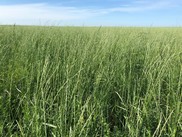
The Conservation Reserve Program (CRP) is a program administered by the Farm Service Agency (FSA) to conserve farmland for future generations while providing habitat for wildlife, reducing soil erosion, and improving water quality. Regular maintenance on CRP acres is needed to ensure the acreage continues to provide conservation benefits and remains in compliance with the CRP contract.
Regular Maintenance
Producers with CRP contracts are required to control all weeds, insects, pests, and other undesirable species to the extent necessary to ensure that the approved conservation cover is adequately protected and to ensure there is no adverse impact on surrounding land. Mowing is one of the allowable practices for weed control, but mowing for aesthetic purposes is never permitted. The Conservation Plan states the required weed control methods for each site.
Once a stand has been certified as fully established, participants are required to maintain plant diversity and stand density according to the Conservation Plan and offer (CRP-2) for the life of the contract. Stands that do not meet practice specific plant diversity or density requirements may be considered non-compliant. Refer to your conservation plan or contact FSA if you have any questions or concerns about the vegetative cover requirements.
Maintenance activities cannot occur during the primary nesting season for birds without written prior approval from the local county office. The primary nesting season in Michigan is May 1st through July 31st.
Mid-Contract Management
Regular maintenance for weed and pest control is separate from the Mid-Contract Management (MCM) requirement. MCM ensures plant diversity and wildlife benefits while ensuring protection of the soil and water resources. Such activities are site-specific and are for the purpose of enhancing the approved cover.
MCM must be completed between years four and six of a 10-year contract and between years seven and nine of a 15-year contract. The Conservation Plan will state what year MCM must take place.
Noncompliance with Maintenance Requirements
Failure to adequately maintain the stand may result in noncompliance with the terms and conditions of the CRP contract. Noncompliance can result in adverse actions up to and including termination of the CRP contract. Contracts that are out of compliance are ineligible to re-enroll, unless the stand is brought back into compliance prior to the enrollment deadline.
For general information about CRP, visit the Conservation Reserve Program webpage. For information about specific contracts, reach out to the local FSA office.
|
Top of page
The USDA Farm Service Agency (FSA) is now authorizing cost share assistance for Grassland Conservation Reserve Program (Grassland CRP) components installed on acres not enrolled in a CRP contract that, once completed, provide a water source for livestock and resolves the resource concern on acreage enrolled in CRP. The installation of water developments, water facilities, and pipelines on these acres must be the most cost-effective method of providing water sources. Contact your local FSA office for more information on the requirements and to apply for cost share assistance.
The Natural Resources Conservation Service or a Technical Service Provider will plan locations for water development, water facilities, and pipeline during development of the conservation plan. Watering facilities must be available to livestock grazing the acreage enrolled in Grassland CRP.
For new contracts, practice components installation will be included in the conservation plan and will be eligible for cost share assistance. The installation must be completed within 36 months after the contract effective date. The deadline for FSA to accept offers for new enrollment in Grassland CRP was Aug. 8, 2025. Learn more in the July 14 announcement.
For existing contracts, cost share is available to address a new resource concern. Activities planned to meet the new resource concern must be completed as soon as possible after the plan modification is approved.
About Grassland CRP
Grassland CRP helps landowners and operators protect grassland, including rangeland, pastureland, and certain other lands, while maintaining the areas as grazing lands. Grassland CRP provides participants with rental payments and cost-share assistance. Contract duration is 10 to 15 years. Contact your local USDA Service Center to learn more.
Top of page
Marketing Assistance Loans (MALs) and Loan Deficiency Payments (LDPs) provide financing and marketing assistance for producers of many commodities, including graded and non-graded wool, mohair, and unshorn pelts. MALs and LDPs are available during shearing and provide interim financing to help you meet cash flow needs without having to sell commodities when market prices are low, enabling you to delay selling until more favorable marketing conditions emerge. LDPs are payments made to producers who, although eligible to obtain an MAL, agree to forgo the loan in return for a payment on the eligible commodity.
FSA is now accepting requests for 2025 MALs and LDPs for all eligible wool, mohair and unshorn pelts. These requests should be made on or before the final availability date of Jan. 31, 2026. USDA recently announced 2025 wool and mohair marketing assistance loan rates.
Eligibility
To be eligible for a wool or mohair MAL or LDP, producers must produce and shear eligible mohair and wool in the U.S. during the applicable crop year and must:
- comply with conservation and wetland protection requirements;
- report all cropland acreage on applicable farms where the eligible commodity is produced;
- have and retain beneficial interest in the commodity until the MAL is repaid or the Commodity Credit Corporation (CCC) takes title to the commodity, and;
- meet Adjusted Gross Income (AGI) limitations.
Unshorn pelts are eligible for LDPs only. In addition to the criteria above, producers of unshorn pelts must have sold the unshorn lamb for immediate slaughter or slaughter the lambs for personal use. LDPs and marketing loan gains are not subject to payment limitation, including actively engaged in farming and cash rent tenant provisions.
In addition to producer eligibility, the loan commodity must have been produced and shorn from live animals by an eligible producer, be in storable condition, and meet specific CCC minimum grade and quality standards. Producers are responsible for any loss in quantity or quality of the wool or mohair pledged as loan collateral.
To retain beneficial interest, the producer must have control and title of the wool, mohair, or unshorn pelt. If beneficial interest in the commodity is lost, the commodity loses eligibility for an MAL or LDP and remains ineligible even if the producer later regains beneficial interest. The producer must be able to make all decisions affecting the commodity including movement, sale, and the request for an MAL or LDP.
Producers may repay an MAL any time during the loan period at the lesser of the loan rate plus accrued interest and other charges or an alternative loan repayment rate, the national posted price, which is announced weekly. Visit the Farm Service Agency (FSA) website for posted loan and LDP rates.
How to Apply
Producers can apply for an MAL by contacting their local FSA county office. To be considered for a LDP, producers must first have the form CCC-633 EZ, Page 1, on file with FSA prior to losing beneficial interest in the wool, mohair or unshorn pelt. It is best to visit the county office and submit the CCC-633 Page 1 right before you shear. This is completed one time per crop year and indicates your intention to receive LDP benefits.
To apply and learn more information, contact your local USDA Service Center or visit fsa.usda.gov.
Top of page
The USDA Farm Service Agency (FSA) opened enrollment on July 10 for the Supplemental Disaster Relief Program (SDRP), which provides assistance for eligible crop losses due to natural disasters in 2023 and 2024.
Eligible U.S. Drought Monitor Losses
To qualify for drought related losses, the loss must have occurred in a county rated by the U.S. Drought Monitor as having a D2 (severe drought) for eight consecutive weeks, D3 (extreme drought), or greater intensity level during the applicable calendar year. View the list of counties eligible for SDRP due to qualifying drought for 2023 and 2024.
Other Eligible Disaster Events and Related Conditions
Producers who received an indemnity in 2023 or 2024 but did not qualify based on the U.S. Drought monitor may still be eligible for assistance. If your county did not trigger based on the U.S. Drought Monitor, do not certify “drought” as the cause of loss on your application as it will not be approved. Instead, producers should review all qualifying disaster events and related conditions such as excessive heat or excessive wind and select all applicable causes of loss.
Below is a list of all qualifying disaster events with the eligible related conditions in parentheses:
- Wildfires
- Hurricanes (including related excessive wind, storm surges, tornadoes, tropical storms, and tropical depression)
- Floods (including related silt and debris)
- Derechos (including related excessive wind)
- Excessive heat
- Tornadoes
- Winter storms (including related blizzard and excessive wind)
- Freeze (including a polar vortex)
- Smoke exposure
- Excessive moisture
- Qualifying drought
Related conditions must have occurred as a direct result of the indicated disaster event.
Losses due to Hail
Hail is not a qualifying disaster event, but you may be eligible if it was directly related to a qualifying disaster event.
For example, if a producer’s crop suffered damage from hail, but the hail damage was directly related to a tornado, then this would qualify for an SDRP payment since tornado is a qualifying disaster event.
Documentation for Spot Checks
Producers who certify that a qualifying disaster event caused the loss should be prepared to provide documentation to support their self-certification if they are selected for a spot check. Documentation is not required to be submitted with your application. Additionally, producers are not required to verify the cause of loss with their crop insurance agent.
Producers should complete the pre-filled application that was mailed on July 9. If you received a crop insurance indemnity in 2023 or 2024 and did not receive an application, please visit your local FSA office and they can print your pre-filled application.
For additional help with your application, please review the FSA-526 Instructions for Stage 1. Learn more about SDRP, eligibility and future insurance requirements by visiting fsa.usda.gov/sdrp.
Top of page
|
The Farm Service Agency (FSA), Natural Resources Conservation Service (NRCS) and Risk Management Agency (RMA) worked together to develop consistent, simple and a flexible policy for cover crop practices.
Cover crops, such as grasses, legumes and forbs, can be planted: with no subsequent crop planted, before a subsequent crop, after prevented planting acreage, after a planted crop, or into a standing crop.
Termination:
The cover crop termination guidelines provide the timeline for terminating cover crops, are based on zones and apply to non-irrigated cropland. To view the zones and additional guidelines visit nrcs.usda.gov/wps/portal/nrcs/main/national/landuse/crops/ and click “Cover Crop Termination Guidelines.”
The cover crop may be terminated by natural causes, such as frost, or intentionally terminated through chemical application, crimping, rolling, tillage or cutting. A cover crop managed and terminated according to NRCS Cover Crop Termination Guidelines is not considered a crop for crop insurance purposes.
Reporting:
The intended use of cover only will be used to report cover crops. This includes crops
that were terminated by tillage and reported with an intended use code of green manure. An FSA policy change will allow cover crops to be hayed and grazed. Program eligibility for the cover crop that is being hayed or grazed will be determined by each specific program.
If the crop reported as cover only is harvested for any use other than forage or grazing and is not terminated properly, then that crop will no longer be considered a cover crop.
Crops reported with an intended use of cover only will not count toward the total cropland on the farm. In these situations, a subsequent crop will be reported to account for all cropland on the farm.
Top of page
The U.S. Department of Agriculture (USDA) reminds agricultural producers that the final date to apply for or make changes to their existing crop insurance coverage is quickly approaching for summer planted crops, annual forage and forage seeding. Sales closing dates vary by crop and location, but the next major sales closing dates are July 15 and July 31.
Producers are encouraged to visit their crop insurance agent soon to learn specific details for the 2025 crop year. Crop insurance coverage decisions must be made on or before the applicable sales closing date.
The USDA’s Risk Management Agency lists sales closing dates in the Actuarial Information Browser, under the “Dates” tab.
Producers can also access the RMA Map Viewer tool to visualize the insurance program date choices for acreage reporting, cancellation, contract change, earliest planting, end of insurance, end of late planting period, final planting, premium billing, production reporting, sales closing, and termination dates, when applicable, per commodity, insurance plan, type and practice. Additionally, producers can access the RMA Information Reporting System tool to specifically identify applicable dates for their operation, using the “Insurance Offer Reports” application.
Federal crop insurance is critical to the farm safety net. It helps producers and owners manage revenue risks and strengthens the rural economy. Producers may select from several coverage options, including yield coverage, revenue protection and area risk plans of insurance.
Crop insurance options include Whole-Farm Revenue Protection and Micro Farm. Whole-Farm Revenue Protection provides a risk management safety net for all commodities on the farm under one insurance policy and is available in all counties nationwide. Micro Farm aims to help direct market and small-scale producers that may sell locally, and this policy simplifies record keeping and covers post-production costs like washing and value-added products.
Crop insurance is sold and delivered solely through private crop insurance agents. A list of crop insurance agents is available online at the RMA Agent Locator. Producers can learn more about crop insurance and the modern farm safety net at rma.usda.gov or by contacting their RMA Regional Office. RMA’s Basics for Beginners provides information for those new to crop insurance.
Top of page
The U.S. Department of Agriculture (USDA) announced loan interest rates for August 2025, which are effective Aug. 1, 2025. USDA Farm Service Agency (FSA) loans provide important access to capital to help agricultural producers start or expand their farming operation, purchase equipment and storage structures or meet cash flow needs.
Operating, Ownership and Emergency Loans
FSA offers farm ownership, operating and emergency loans with favorable interest rates and terms to help eligible agricultural producers obtain financing needed to start, expand or maintain a family agricultural operation.
Interest rates for Operating and Ownership loans for August 2025 are as follows:
FSA also offers guaranteed loans through commercial lenders at rates set by those lenders. To access an interactive online, step-by-step guide through the farm loan process, visit the Loan Assistance Tool on farmers.gov.
Commodity and Storage Facility Loans
Additionally, FSA provides low-interest financing to producers to build or upgrade on-farm storage facilities and purchase handling equipment and loans that provide interim financing to help producers meet cash flow needs without having to sell their commodities when market prices are low. Funds for these loans are provided through the Commodity Credit Corporation (CCC) and are administered by FSA.
More Information
To learn more about FSA programs, producers can contact their local USDA Service Center. Additionally, producers can use online tools, such as the Loan Assistance Tool and Debt Consolidation Tool to explore loan options.
|
Top of page
Michigan Farm Service Agency
3001 Coolidge Road
Suite 350
East Lansing, MI 48823
Phone: 517-324-5110
State Executive Director
Joel Johnson
Deputy State Executive Director
Christina Salenbien
Administrative Officer
Troy Nichols
Conservation Programs Chief
Farm Loan Programs Chief
Dave Russ
Price Support Programs Chief
Ken Schapman
Production Adjustment Programs Chief
Kyle Knapp
Outreach & Communications
|
| |
| |
|
| |
|








