
New Jersey USDA Newsletter - August 2025
In this issue:
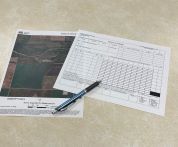
Agricultural producers should make an appointment with your local County Farm Service Agency (FSA)to complete crop acreage reports before the applicable deadline.
How to File a Report
A crop acreage report documents a crop grown on a farm, its intended use and location. Producers should file an accurate crop acreage report for all crops and land uses, including failed acreage and prevented planted acreage before the applicable deadline. Producers are encouraged to file their acreage reports as soon as planting is completed.
The following upcoming acreage reporting dates are applicable in New Jersey:
-
August 15 - Processing Beans
-
September 15 - Planting Period 2 Cabbage (Atlantic Co Only)
-
September 30 - 2026 value loss crops except nursery (i.e. Aquaculture, Christmas trees, Flowers, Sod)
-
November 15 - Fall planted small grains
Electronic Geospatial Acreage Reporting
Acreage reports using precision agriculture planting boundaries can be filed electronically with an approved insurance provider or an authorized third-party provider, who will then share the file with FSA staff. Producers should notify their local FSA office if they submitted an electronic geospatial acreage report containing precision planting boundaries that they want to use as part of their FSA acreage report.
Top of page
|
 Are you interested in working with USDA to start or grow your farm, ranch, or private forest operation, but don’t know where to start?
Whether you’re looking to access capital or disaster assistance through USDA’s Farm Service Agency (FSA) or address natural resource concerns on your land with assistance from USDA’s Natural Resources Conservation Service (NRCS), a great place to start is farmers.gov.
Farmers.gov is a one-stop shop for information about the assistance available from FSA and NRCS. The site also offers many easy-to-use tools for farmers, ranchers, and private forestland owners, whether you are reaching out for the first time or are a long-term customer with a years-long relationship with USDA.
With a farmers.gov account you can:
- Complete an AD-2047, Customer Data Worksheet, prior to your first meeting with FSA and NRCS.
- View farm loan payments history from FSA.
- View cost share assistance received and anticipated from NRCS conservation programs.
- Request conservation assistance from NRCS as well as view and track your conservation plans, practices, and contracts.
- View, print, and export detailed farm records and farm/tract maps for the current year, which are particularly useful when fulfilling acreage reporting requirements.
- Print FSA-156 EZ, Abbreviated Farm Record and your Producer Farm Data Report for the current year.
- Pay FSA debt using the “Make an FSA Payment” feature
- Apply for a farm loan online, view information on your existing loans, and make USDA direct farm loan payments using the Pay My Loan feature.
Learn how to create a farmers.gov account today!
Top of page
 Water can be tricky, especially in the farming community, there always seems to be either too much or not enough. But what if you had the ability to actively control the water on your farm?
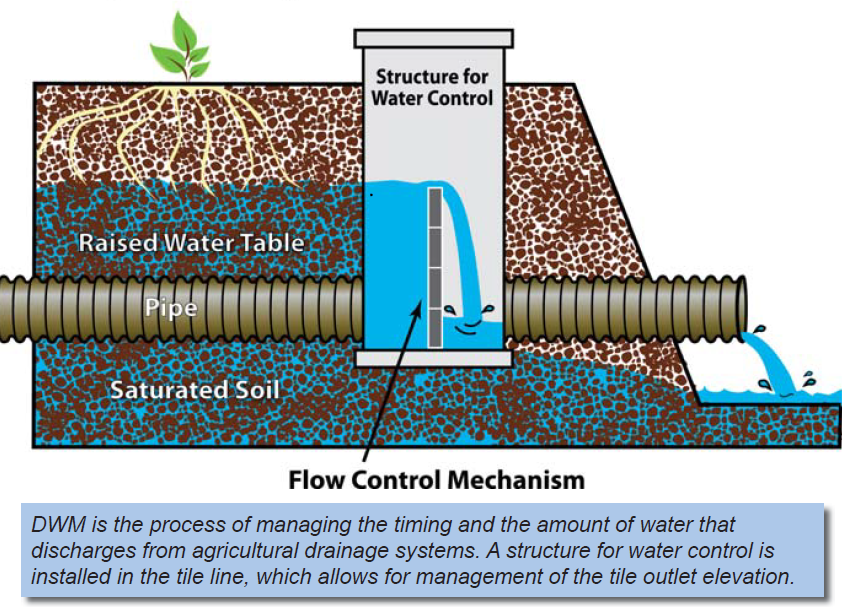
Drainage Water Management (DWM)may be your answer. DWM is a conservation practice that allows farmers to manage the timing and amount of water leaving their fields through the subsurface drainage system. Instead of allowing water to flow freely through the drainage system, farmers can strategically manage it using water control structures, which slows or stops the outflow of water when drainage is not needed. This simple yet powerful adjustment can have far-reaching benefits for both the farm’s productivity and the community’s environmental wellbeing.
At its core, DWM involves placing a water control structure, typically a series of adjustable boards or gates, at the outlet of a drainage system. By strategically raising or lowering these boards, farmers can manage the water table in their fields. During the growing season or periods of heavy precipitation, boards can be removed to promote proper drainage for planting and field access. In contrast, during the non-growing season or drought, boards can be installed to hold water in the soil profile. This stored water can reduce nutrient loss, especially nitrates, by slowing the movement of water through the soil and keeping valuable nutrients in place for future crops.
One of the primary benefits of DWM for farmers is reduced nutrient loss. This is achieved by reducing the total drainage volume and associated nutrient loads from the drainage system. Additionally, in times of drought or inconsistent rainfall, fields with managed drainage may retain more moisture, improving crop yields. This contributes to better water quality downstream, helping protect rivers, lakes and other local waterbodies from nutrient loading and harmful algal blooms.
The USDA Natural Resources Conservation Service (NRCS) offers support to farmers interested in implementing DWM. Through technical planning and financial assistance programs such as the Environmental Quality Incentives Program (EQIP), NRCS can help landowners design and install appropriate water control structures tailored to their fields. NRCS staff work directly with producers to evaluate the landscape, determine the feasibility of the practice and develop a site-specific drainage water management plan, where appropriate. With the right tools, planning and support, this practice can make a real difference on your farm and beyond.
Top of page
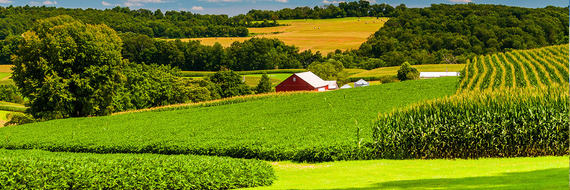 The USDA Farm Service Agency’s (FSA) Direct Farm Ownership loans can help farmers and ranchers become owner-operators of family farms, improve and expand current operations, increase agricultural productivity, and assist with land tenure to save farmland for future generations.
There are three types of Direct Farm Ownership Loans: regular, down payment and joint financing. FSA also offers a Direct Farm Ownership Microloan option for smaller financial needs up to $50,000.
Joint financing allows FSA to provide more farmers and ranchers with access to capital. FSA lends up to 50 percent of the total amount financed. A commercial lender, a state program or the seller of the property being purchased, provides the balance of loan funds, with or without an FSA guarantee. The maximum loan amount for a joint financing loan is $600,000, and the repayment period for the loan is up to 40 years.
The operation must be an eligible farm enterprise. Farm Ownership loan funds cannot be used to finance nonfarm enterprises and all applicants must be able to meet general eligibility requirements. Loan applicants are also required to have participated in the business operations of a farm or ranch for at least three years out of the 10 years prior to the date the application is submitted. The applicant must show documentation that their participation in the business operation of the farm or ranch was not solely as a laborer.
For more information about farm loans, contact your local USDA Service Center or visit fsa.usda.gov.
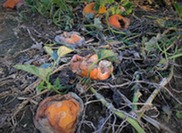
The Noninsured Crop Disaster Assistance Program (NAP) provides financial assistance to producers of non-insurable crops when low yields, loss of inventory, or prevented planting occur due to natural disasters and other damaging weather events.
To receive payment, you had to purchase NAP coverage for 2025 crops and file a notice of loss within 15 days of the occurrence of the disaster or when losses become apparent or within 15 days of the final harvest date, which ever is earlier.
For hand-harvested crops and certain perishable crops, you must notify FSA within 72 hours of when a loss becomes apparent.
Eligible crops must be commercially produced agricultural commodities for which crop insurance is not available, including perennial grass forage and grazing crops, fruits, vegetables, mushrooms, floriculture, ornamental nursery, aquaculture, turf grass, ginseng, honey, syrup, bioenergy, and industrial crops.
Also remember that September 30, 2025 is NAP Coverage Deadline for 2026: Small Grains, Grasses, Mixed Forage, Aquaculture, Christmas trees, Flowers, Sod, and Garlic.
For more information on NAP, contact your local USDA Service Center or visit fsa.usda.gov/nap.
Top of page
|
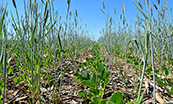
Each year, state committees review and approve or disapprove county committee recommended changes or additions to specific combinations of crops.
Double-cropping is approved when two specific crops have the capability to be planted and carried to maturity for the intended use, as reported by the producer, on the same acreage within a crop year under normal growing conditions. The specific combination of crops recommended by the county committee must be approved by the state committee.
Double-cropping is approved in New Jersey on a county-by-county basis. Click here for a list of approved double-cropping combinations for your county.
A crop following a cover crop terminated according to termination guidelines is approved double cropping and these combinations do not have to be approved by the state committee.
Top of page
|

Click here for August lending rates
Aug 8 Grassland CRP sign-up deadline.
Aug 15 Acreage reporting deadline for processing beans
Aug 15 Emergency Commodity Assistance Program (ECAP) Deadline
Sept 15 Acreage reporting deadline for planting period 2 cabbage in Atlantic County only
Sept 30 NAP Coverage Deadline for Subsequent Year's Small Grains, Grasses, Mixed Forage, Aquaculture, Christmas trees, Flowers, Sod, and Garlic
Sept 30 Acreage reporting deadline for value loss crops except nursery (i.e. Aquaculture, Christmas trees, Flowers, Sod)
Top of page
|
Top of page
USDA is an equal opportunity provider, employer and lender. To file a complaint of discrimination, write: USDA, Office of the Assistant Secretary for Civil Rights, Office of Adjudication, 1400 Independence Ave., SW, Washington, DC 20250-9410 or call (866) 632-9992 (Toll-free Customer Service), (800) 877-8339 (Local or Federal relay), (866) 377-8642 (Relay voice users).
|






