Nevada August USDA Newsletter
In This Issue:
Are you interested in working with USDA to start or grow your farm, ranch, or private forest operation, but don’t know where to start?
Whether you’re looking to access capital or disaster assistance through USDA’s Farm Service Agency (FSA) or address natural resource concerns on your land with assistance from USDA’s Natural Resources Conservation Service (NRCS), a great place to start is farmers.gov.
Farmers.gov is a one-stop shop for information about the assistance available from FSA and NRCS. The site also offers many easy-to-use tools for farmers, ranchers, and private forestland owners, whether you are reaching out for the first time or are a long-term customer with a years-long relationship with USDA.
With a farmers.gov account you can:
- Complete an AD-2047, Customer Data Worksheet, prior to your first meeting with FSA and NRCS.
- View farm loan payments history from FSA.
- View cost share assistance received and anticipated from NRCS conservation programs.
- Request conservation assistance from NRCS as well as view and track your conservation plans, practices, and contracts.
- View, print, and export detailed farm records and farm/tract maps for the current year, which are particularly useful when fulfilling acreage reporting requirements.
- Print FSA-156 EZ, Abbreviated Farm Record and your Producer Farm Data Report for the current year.
- Pay FSA debt using the “Make an FSA Payment” feature
- Apply for a farm loan online, view information on your existing loans, and make USDA direct farm loan payments using the Pay My Loan feature.
Learn how to create a farmers.gov account today!
NAP provides financial assistance to you for crops that aren’t eligible for crop insurance to protect against lower yields or crops unable to be planted due to natural disasters including freeze, hail, excessive moisture, excessive wind or hurricanes, flood, excessive heat and qualifying drought (includes native grass for grazing), among others.
To receive payment, you had to purchase NAP coverage for 2025 crops and file a notice of loss the earlier of 15 days of the occurrence of the disaster or when losses become apparent or 15 days of the final harvest date. For hand-harvested crops and certain perishable crops, you must notify FSA within 72 hours of when a loss becomes apparent.
Eligible crops must be commercially produced agricultural commodities for which crop insurance is not available, including perennial grass forage and grazing crops, fruits, vegetables, mushrooms, floriculture, ornamental nursery, aquaculture, turf grass, ginseng, honey, syrup, bioenergy, and industrial crops.
For more information on NAP, contact your County USDA Service Center or visit fsa.usda.gov/nap.
FSA guaranteed loans allow lenders to provide agricultural credit to farmers who do not meet the lender's normal underwriting criteria. Farmers and ranchers apply for a guaranteed loan through a lender, and the lender arranges for the guarantee. FSA can guarantee up to 95 percent of the loss of principal and interest on a loan. Guaranteed loans can be used for both farm ownership and operating purposes.
Guaranteed farm ownership loans can be used to purchase farmland, construct or repair buildings, develop farmland to promote soil and water conservation or to refinance debt.
Guaranteed operating loans can be used to purchase livestock, farm equipment, feed, seed, fuel, farm chemicals, insurance and other operating expenses.
FSA can guarantee farm ownership and operating loans up to $2,251,000. Repayment terms vary depending on the type of loan, collateral and the producer's ability to repay the loan. Operating loans are normally repaid within seven years and farm ownership loans are not to exceed 40 years.
For more information on guaranteed loans, contact your County USDA Service Center or visit fsa.usda.gov.
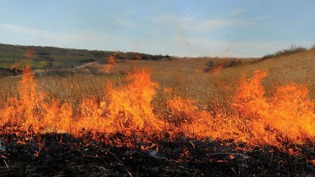
USDA’s Farm Service Agency (FSA) offers disaster assistance and low-interest loan programs to assist you in your recovery efforts following wildfires or other qualifying natural disasters.
Available programs and loans include:
-
Non-Insured Crop Disaster Assistance Program (NAP) - provides financial assistance to producers of non-insurable crops when low yields, loss of inventory, or prevented planting occur due to natural disasters including excessive wind and qualifying drought (includes native grass for grazing).
-
Livestock Indemnity Program (LIP) - offers payments to eligible producers for livestock death losses in excess of normal mortality due to adverse weather.
-
Tree Assistance Program (TAP) – provides assistance to eligible orchardists and nursery tree growers for qualifying tree, shrub and vine losses due to natural disasters including excessive wind and qualifying drought.
-
Emergency Assistance for Livestock, Honeybees, and Farm-Raised Fish Program (ELAP) - provides emergency relief for losses due to feed or water shortages, disease, adverse weather, or other conditions, which are not adequately addressed by other disaster programs.
-
Emergency Loan Program – available to producers with agriculture operations located in a county under a primary or contiguous Presidential or Secretarial disaster designation. These low interest loans help producers recover from production and physical losses.
-
Emergency Conservation Program (ECP) - provides emergency funding for farmers and ranchers to rehabilitate land severely damaged by natural disasters; includes fence loss.
For more information on these programs, contact your County USDA Service Center or visit fsa.usda.gov/disaster.
FSA offers direct farm ownership and direct farm operating loans to producers who want to establish, maintain, or strengthen their farm or ranch. Direct loans are processed, approved and serviced by FSA loan officers.
Direct farm operating loans can be used to purchase livestock and feed, farm equipment, fuel, farm chemicals, insurance, and other costs including family living expenses. Operating loans can also be used to finance minor improvements or repairs to buildings and to refinance some farm-related debts, excluding real estate.
Direct farm ownership loans can be used to purchase farmland, enlarge an existing farm, construct and repair buildings, and to make farm improvements.
The maximum loan amount for direct farm ownership loans is $600,000 and the maximum loan amount for direct operating loans is $400,000 and a down payment is not required. Repayment terms vary depending on the type of loan, collateral and the producer's ability to repay the loan. Operating loans are normally repaid within seven years and farm ownership loans are not to exceed 40 years.
Please contact your local FSA office for more information or to apply for a direct farm ownership or operating loan.
If you’ve suffered excessive livestock death losses and grazing or feed losses due to recent wildfires, you may be eligible for disaster assistance programs.
The Livestock Indemnity Program (LIP) offers payments to you for livestock death losses in excess of normal mortality due to adverse weather and the Emergency Assistance for Livestock, Honeybees, and Farm-Raised Fish Program (ELAP) provides emergency relief for losses due to feed or water shortages, disease, adverse weather, or other conditions, which are not adequately addressed by other disaster programs.
To participate in LIP, you will be required to provide verifiable documentation of death losses resulting from an eligible adverse weather event, and you must submit a notice of loss to your local FSA by the application deadline, which is March 2, 2026, for calendar year 2025 losses. To participate in ELAP, you must submit a notice of loss to your local FSA office no later than March 2, 2026, for calendar year 2025 losses.
You should record all pertinent information regarding livestock losses due to the eligible adverse weather or loss condition, including:
- Documentation of the number, kind, type, and weight range of livestock that have died, supplemented if possible by photographs or video records of ownership and losses;
- Rendering truck receipts by kind, type and weight - important to document prior to disposal;
- Beginning inventory supported by birth recordings or purchase receipts;
- Documentation from Animal Plant Health Inspection Service, Department of Natural Resources, or other sources to substantiate eligible death losses due to an eligible loss condition;
- Documentation that livestock were removed from grazing pastures due to an eligible adverse weather or loss condition;
- Costs of transporting livestock feed to eligible livestock, such as receipts for equipment rental fees for hay lifts and snow removal;
- Feed purchase receipts if feed supplies or grazing pastures are destroyed;
- Number of gallons of water transported to livestock due to water shortages.
For more information on these programs and documentation requirements, contact your County USDA Service Center or visit fsa.usda.gov/disaster.
FSA/NRCS Contacts
Nevada State Office
300 Booth Street, Suite 2081 Reno, NV 89509
775-857-8500
|
Deputy State Executive Director
Katie Nuffer
775.834.0882
|
NRCS State Conservationist
Heidi Ramsey
775.857.8500
|
|
Acting District Director District 1 FSA
Katie Nuffer
775.834.0882
|
District Director District 2 FSA
Claire Kehoe
775.738.6445 x 106
|
|
Elko
Tamara Thompson, Acting CED - FSA
775.738.6445 x 106
Allen Moody, Acting DC - NRCS
775.433.3921
|
Ely
Chris Ward, CED - FSA
775.738.6445 x 106
Joe Noyes, Acting DC - NRCS
775.289.4065 x 105
|
|
Fallon
Krysta Roose, CED - FSA
775.423.5124 x 109
Albert Mulder, DC - NRCS
775.423.5124 x 114
|
Las Vegas
Dariya Zaporozhchenko,Urban Ag CED - FSA
702.407.1400
Jasmine Wilson, Urban Ag DC - NRCS
702.407.1400 x 6003
Jamie Gottilieb, DC-NRCS
775.623.5025 x 101
|
|
Lovelock
Ali Phillips, CED - FSA
775.273.2922 x 100
Chrisite Scilacci, Resource Conservationist - NRCS
775.857.8500
|
Minden
Carson Hicks, DC - NRCS
775.782.3661
Caliente
Amanda Wheatley, Range Managment Specialist - NRCS
775.726.3101
|
|
Winnemucca
Leah Mori, CED - FSA
775.623.5025 x 107
Morgan Weigand, Natural Resource Specialist - NRCS
775.623.5025 X 120
|
Yerington
Julie Thompson, CED - FSA
775.463.2265
Jessica Gwerder, Acting District Conservationist- NRCS
775.463.2265
|
###
USDA is an equal opportunity provider, employer and lender
|