
West Virginia Farm Service Agency - August 5, 2025.
In This Issue:
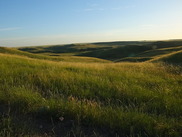
USDA announced that agricultural producers and private landowners can now enroll in the Grassland Conservation Reserve Program (Grassland CRP). The sign-up runs from July 14 to Aug. 8, 2025. Grassland CRP, offered by USDA’s Farm Service Agency (FSA), is a voluntary working lands conservation program that enables participants to conserve grasslands while also continuing most grazing and haying practices.
Grassland CRP emphasizes support for grazing operations, plant and animal biodiversity, and grasslands and land with shrubs and forbs under the greatest threat of conversion.
CRP, USDA’s flagship conservation program, celebrates its 40th anniversary this year. For four decades, CRP has provided financial and technical support to agricultural producers and landowners whose accepted acres are placed under contract for 10-15 years and who agree to voluntarily convert the land to beneficial vegetative cover to improve water quality, prevent soil erosion and support wildlife habitat. The American Relief Act, 2025, extended provisions for CRP through Sept. 30, 2025.
Currently, more than 25.8 million acres are enrolled in CRP, with nearly 9.7 million acres in Grassland CRP. On May 12, FSA opened General and Continuous CRP enrollment for 2025. FSA is currently reviewing submitted offers and will announce accepted offers at a later date. Due to the 27-million-acre statutory cap, only 1.8 million acres are available for all CRP enrollment this fiscal year.
Landowners and producers interested in Grassland CRP should contact their local USDA Service Center to learn more or apply for the program before the Aug. 8 deadline.
|

Are you a military veteran interested in farming? USDA offers resources to help you:
· Fund Your Operation: USDA’s Farm Service Agency offers a variety of funding opportunities to help agricultural producers finance their businesses. Certain funds are targeted for veterans and beginning farmers and ranchers.
· Conserve Natural Resources: USDA’s Natural Resources Conservation Service offers conservation programs and expert one-on-one technical assistance to strengthen agricultural operations now and into the future. Veterans may be eligible for a cost share of up to 90 percent and advance payments of up to 50 percent to cover certain conservation practices.
· Manage Risks: USDA is here to help you prepare for and recover from the unexpected. Veterans who are beginning farmers may be eligible for reduced premiums, application fee waivers, increased insurance coverage, and other incentives for multiple USDA programs that support risk management.
USDA wants to ensure that veterans transitioning to agriculture have the resources needed to succeed. To conduct business, please contact your local USDA Service Center. If you’re a new farmer, you can also reach out to your state Beginning Farmer and Rancher Coordinator.
|
U.S. Secretary of Agriculture Brooke L. Rollins announced that agricultural producers who suffered eligible crop losses due to natural disasters in 2023 and 2024 can now apply for $16 billion in assistance through the Supplemental Disaster Relief Program (SDRP).
To expedite the implementation of SDRP, USDA’s Farm Service Agency (FSA) is delivering assistance in two stages. This first stage is open to producers with eligible crop losses that received assistance under crop insurance or the Noninsured Crop Disaster Assistance Program during 2023 and 2024. Stage One sign up started in-person at FSA county offices on July 10 and prefilled applications were mailed to producers starting July 9. SDRP Stage Two signups for eligible shallow or uncovered losses will begin in early fall.
SDRP Stage One
FSA is launching a streamlined, pre-filled application process for eligible crop, tree, and vine losses by leveraging existing Noninsured Crop Disaster Assistance Program (NAP) and Risk Management Agency (RMA) indemnified loss data. The pre-filled applications were mailed on July 9, 2025.
Eligibility
Eligible losses must be the result of natural disasters occurring in calendar years 2023 and/or 2024. These disasters include wildfires, hurricanes, floods, derechos, excessive heat, tornadoes, winter storms, freeze (including a polar vortex), smoke exposure, excessive moisture, qualifying drought, and related conditions.
To qualify for drought related losses, the loss must have occurred in a county rated by the U.S. Drought Monitor as having a D2 (severe drought) for eight consecutive weeks, D3 (extreme drought), or greater intensity level during the applicable calendar year.
Producers in Connecticut, Hawaii, Maine, and Massachusetts will not be eligible for SDRP program payments. Instead, these states chose to cover eligible crop, tree, bush, and vine losses through separate block grants. These block grants are funded through the $220M provided for this purpose to eligible states in the American Relief Act.
How to Apply
To apply for SDRP, producers must submit the FSA-526, Supplemental Disaster Relief Program (SDRP) Stage One Application, in addition to having other forms on file with FSA.
SDRP Stage One Payment Calculation
Stage One payments are based on the SDRP adjusted NAP or Federal crop insurance coverage level the producer purchased for the crop. The net NAP or net federal crop insurance payments (NAP or crop insurance indemnities minus administrative fees and premiums) will be subtracted from the SDRP calculated payment amount.
For Stage One, the total SDRP payment to indemnified producers will not exceed 90% of the loss and an SDRP payment factor of 35% will be applied to all Stage One payments. If additional SDRP funds remain, FSA may issue a second payment.
Future Insurance Coverage Requirements All producers who receive SDRP payments are required to purchase federal crop insurance or NAP coverage for the next two available crop years at the 60% coverage level or higher. Producers who fail to purchase crop insurance for the next two available crop years will be required to refund the SDRP payment, plus interest, to USDA.
SDRP Stage 2
FSA will announce additional SDRP assistance for uncovered losses, including non-indemnified shallow losses and quality losses and how to apply later this fall.
Learn more by visiting fsa.usda.gov/sdrp.
 |
|
USDA’s National Agricultural Statistics Service (NASS) conducts hundreds of surveys every year and prepares reports covering virtually every aspect of U.S. agriculture.
If you receive a survey questionnaire, please respond quickly and online if possible.
The results of the surveys help determine the structure of USDA farm programs, such as soil rental rates for the Conservation Reserve Program and prices and yields used for the Agriculture Risk Coverage and Price Loss Coverage programs. This county-level data is critical for USDA farm payment determinations. Survey responses also help associations, businesses and policymakers advocate for their industry and help educate others on the importance of agriculture.
NASS safeguards the privacy of all respondents and publishes only aggregate data, ensuring that no individual operation or producer can be identified. NASS data is available online at nass.usda.gov/Publications and through the searchable Quick Stats database. Watch a video on how NASS data is used at youtube.com/watch?v=m-4zjnh26io&feature=youtu.be
|
Top of page
|






