
Newsletter - August 2025
In This Issue:
The U.S. Department of Agriculture (USDA) in Hawaii and the Pacific Basin opened enrollment for the Reimbursement Transportation Cost Payment Program (RTCP) for fiscal year 2025. The enrollment period began July 7 and will run through Sept. 30. The deadline for producers to provide supporting documentation is Nov. 3, 2025.
RTCP helps U.S. farmers and ranchers offset a portion of the cost of transporting agricultural products over long distances.
The Full-Year Continuing Appropriations and Extensions Act, 2025 authorized $3.5 million for RTCP and allows farmers and livestock producers in Alaska, Hawaii and insular areas including the Commonwealth of Puerto Rico, Guam, American Samoa, Commonwealth of Northern Mariana Islands, Virgin Islands of the United States, Federated States of Micronesia, Republic of the Marshall Islands and Republic of Palau, to recover costs to transport agricultural commodities or inputs used to produce an agricultural commodity.
Roughly $3.5 million was issued to more than 1,100 producers, in all eligible areas combined, through the 2024 RTCP.
RTCP payments are calculated based on the costs incurred for transportation of agricultural commodities or inputs during a 12-month period, subject to an $8,000 per producer cap per fiscal year. A higher payment cap may be determined if claims for payments do not exceed available funding. Therefore, applicants are encouraged to submit all eligible receipts. If claims for payments exceed the funds available from the program for a fiscal year, payments will be reduced on a pro-rata basis.
Farmers and livestock producers interested in participating in RTCP can obtain applications and other documents by your FSA County Office, click the following link for direct phone and email contact information for Hawaii and the Pacific Basin offices. https://www.fsa.usda.gov/state-offices/Hawaii/service-centers
The U.S. Department of Agriculture (USDA) reminds specialty crop producers that the application period for the Food Safety Certification for Specialty Crops (FSCSC) program for program year 2025 opened Jan. 1, 2025, and runs through Jan. 31, 2026. The program has been expanded to include medium-sized businesses in addition to small businesses. Eligible specialty crop growers can apply for assistance for expenses related to obtaining or renewing a food safety certification.
Program Details
FSCSC covers a percentage of the specialty crop operation’s cost of obtaining or renewing its on-farm food safety certification, as well as a portion of related expenses.
Eligible FSCSC applicants must be a specialty crop operation; meet the definition of a small or medium-size business and have paid eligible expenses related to certification.
- A small business has an average annual monetary value of specialty crops sold by the applicant during the three-year period preceding the program year of no more than $500,000.
- A medium size business has an average annual monetary value of specialty crops the applicant sold during the three-year period preceding the program year of at least $500,001 but no more than $1,000,000.
Specialty crop operations can receive the following cost assistance:
- Developing a food safety plan for first-time food safety certification.
- Maintaining or updating an existing food safety plan.
- Food safety certification.
- Certification upload fees.
- Microbiological testing for products, soil amendments and water.
- Training.
FSCSC payments are calculated separately for each eligible cost category. Details about payment rates and limitations are available at farmers.gov/food-safety.
Applying for Assistance
For program year 2025, the application period began Jan. 1, 2025, and runs through Jan. 31, 2026. FSA will issue 50% of the calculated payment for program year 2025 following application approval, with the remaining amount to be paid after the application deadline. If calculated payments exceed the amount of available funding, payments will be prorated.
Specialty crop producers can apply by completing the FSA-888-1, Food Safety Certification for Specialty Crops Program (FSCSC) for Program Years 2024 and 2025 application. The application, along with the AD-2047, Customer Data Worksheet and SF-3881, ACH Vendor/Miscellaneous Payment Enrollment Form, if not already on file with FSA, can be submitted to the FSA county office at any USDA Service Center nationwide by mail, fax, hand delivery or via electronic means. Producers with an eAuthentication account can apply for FSCSC online. Producers interested in creating an eAuthentication account should visit farmers.gov/sign-in.
Visit farmers.gov/food-safety for additional program details, eligibility information and application forms.
The Certified Mediation Program (CMP), administered by the Farm Service Agency (FSA), offers mediation services to agricultural producers, creditors, and other parties involved in disputes. Mediation is a voluntary process where a neutral mediator assists the parties in negotiating a mutually acceptable resolution.
CMP aims to improve communication, foster understanding, and resolve conflicts without the need for litigation. This program covers a range of issues, including farm loans, adverse decisions by USDA agencies, rural housing loans, and other agricultural disputes.
Eligible applicants include agricultural producers, creditors, and other stakeholders involved in disputes related to farm loans, USDA program decisions, rural housing loans, and other agricultural issues. Mediation is available to any party seeking to resolve conflicts through a neutral and confidential process. Producers and stakeholders are encouraged to check with their local FSA office or certified state mediation program for specific requirements, application procedures, and additional program details.
Learn more on our Certified Mediation Program webpage.
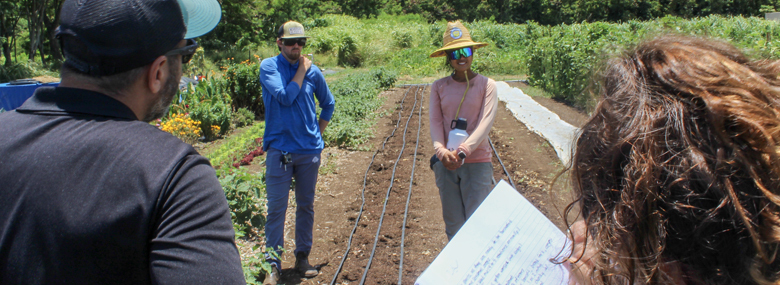
The U.S. Department of Agriculture (USDA) National Agricultural Statistics Service (NASS), in partnership with USDA’s Natural Resources Conservation Service (NRCS), is reaching out to farmers, ranchers and agricultural landowners to gather in-depth information about the conservation practices they use.
Nearly 23,000 operators nationwide will receive the 2025 Conservation Effects Assessment Project survey. Data obtained will support the third set of national and regional cropland assessments delivered by USDA’s Conservation Effects Assessment Project (CEAP), a multi-agency effort led by NRCS to quantify the effects of conservation practices across the nation’s working lands.
Local NASS representatives will visit farmers and agricultural landowners in August and September of 2025 to determine if their operations and properties meet the criteria to be considered eligible candidates for the survey. Eligible farmers and landowners may be contacted between November 2025 and March 2026 and asked to participate in the survey. Typical questions will discuss farm production practices; chemical, fertilizer, and manure applications; tillage; irrigation use; and installed conservation practices. NASS will provide survey data to NRCS, the agency tasked with publishing findings.
CEAP Cropland Assessments quantify the environmental outcomes associated with implementation and installation of conservation practices on agricultural lands. Findings are used to guide conservation program development and support agricultural producers and partners in making informed management decisions backed by data and science.
Specifically, CEAP results may help:
- Evaluate the resources farmers may need in the future to protect soil, water, and habitat.
- Shed light on techniques farmers use to conserve healthy environments.
- Improve and strengthen technical and financial programs that help landowners plan and install conservation practices on agricultural land.
- Support the conservation programs that can help producers’ profits while also protecting natural resources.
The CEAP survey is conducted through a cooperative agreement between NRCS and NASS. NRCS will couple survey results with modeling to report on trends in cropland conservation – and associated outcomes – from 2024 through 2026.
Information provided to NASS and analyzed by NRCS is kept confidential, as required by federal law. The agencies only publish data in aggregate form, ensuring that no individual respondent or operation can be identified.
The data from this survey will be published as a report on the CEAP Cropland Assessments webpage at nrcs.usda.gov/ceap/croplands. If you have questions about the survey, please contact us at 888-424-7828 or visit the NASS Website.
USDA is reducing red tape around the Natural Resources Conservation Service (NRCS) and National Environmental Policy Act (NEPA)-related reviews, which will improve conservation delivery to America’s farmers and ranchers.
NEPA requires all federal agencies to consider the environmental impact of their proposed actions before deciding whether and how to proceed. NEPA’s aims are to ensure that agencies consider the potential environmental effects of their proposed actions in their decision-making processes and encourage public engagement in that process.
To comply with NEPA, agencies determine the appropriate level of review for a proposed action. Where required, these levels of review may be documented in an environmental impact statement (EIS), an environmental assessment (EA), or categorical exclusion. A federal agency may establish categorical exclusions — categories of actions that the agency has determined normally do not significantly affect the quality of the human environment — in its agency NEPA procedures.
Notice with Revised Guidelines
The notice describes the categories of proposed actions for which NRCS intends to apply the categorical exclusions, the considerations that NRCS will use in determining the applicability of the categorical exclusions and the consultation between the agencies on the use of the categorical exclusions, including application of extraordinary circumstances. The notice is available at the NRCS NEPA website under the “NRCS NEPA Regulations, Guidance, and Related Documents.”
| Program |
Interest Rates |
| Farm Operating - Direct |
5.000% |
| Farm Operating - Microloan |
5.000% |
| Farm Ownership - Direct |
6.000% |
| Farm Ownership - Microloan |
6.000% |
| Farm Ownership - Direct, Joint Financing |
4.000% |
| Farm Ownership - Down Payment |
2.000% |
| Emergency Loan - Amount of Actual Loss |
3.750% |
| Effective as of August 1, 2025 |
Top of page
Hawaii State and Pacific Basin
|
|
USDA website: https://www.usda.gov
Farmer.gov website: https://www.farmers.gov
|
|
Hawaii and Pacific Basin FSA State Office USDA Farm Service Agency
Prince Jonah Kuhio Kalanianaole (PJKK) Federal Building
P.O. Box 50065
300 Ala Moana Blvd. Rm 5-108
Honolulu, Hawaii 96850
Telephone: (808) 600-2964
Toll Free: 1-866-794+1079
Fax: (855) 356-9493
Website: Hawaii State and Pacific Basin Farm Service Agency
Shirley Nakamura
Deputy State Executive Director
shirley.nakamura@usda.gov
|
Natural Resources Conservation Service Pacific Islands Area
Prince Jonah Kuhio Kalanianaole (PJKK) Federal Building
P. O. Box 50004
300 Ala Moana Blvd. Rm 4-118 Honolulu, Hawaii 96850
Telephone: (808) 600-2911
Fax: (855) 838-6330
Website: Natural Resources Conservation Service - Pacific Islands Area
J.B. Martin
State Director
jb.martin@usda.gov
|
|






