
Mississippi State Office July News - July 2025
In This Issue:
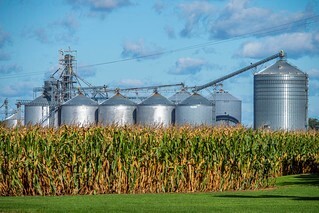
Celebrating 25 Years of USDA’s Farm Storage Facility Loan Program
USDA’s Farm Service Agency (FSA) celebrated 25 years of the agency’s popular Farm Storage Facility Loan Program (FSFL) this May. For a quarter century, family-owned agricultural operations have received low-interest financing through the program to enhance or expand their operations and manage marketing of the commodities they produce by building or upgrading permanent and portable storage facilities and purchasing needed handling equipment.
The FSFL program was created in May 2000 to address existing on-farm grain storage needs. Since the program’s inception, more than 40,000 loans have been issued for on-farm storage, increasing storage capacity by one billion bushels. While many producers primarily associate the program with grain storage, over the past 25 years the eligible storage has expanded to include a wide variety of facilities and related equipment - new or used and permanent or portable - including hay barns, bulk tanks, and facilities for cold storage. Drying, handling and storage equipment is also eligible, including skid steers and storage and handling trucks.
Eligibility
Eligible commodities for storage loans include grains, oilseeds, peanuts, pulse crops, hay, hemp, honey, renewable biomass commodities, fruits and vegetables, floriculture, hops, seed cotton, wool, maple sap, maple syrup, milk, cheese, yogurt, butter, eggs, unprocessed meat and poultry, rye and aquaculture. Most recently, controlled atmosphere storage was added as an eligible facility and bison meat has been also added to the list of eligible commodities.
FSFL is an excellent financing program to address on-farm storage and handling needs for small and mid-sized farms, and for new farmers. Loan terms vary from three to 12 years. The maximum loan amount for storage facilities is $500,000. The maximum loan amount for storage and handling trucks is $100,000.
In 2016, FSA introduced a new storage loan category, the microloan, for loans with an aggregate balance up to $50,000. Microloans offer a 5% down payment requirement, compared to a 15% down payment for a regular FSFL, and microloans waive the regular three-year production history requirement.
How to apply
Loan applications should be filed in the administrative FSA county office that maintains a producer’s farm records. Producers can contact their FSA County Office to make an appointment. Beginning farmers who haven’t worked with FSA can visit farmers.gov/your-business/beginning-farmers for more information or view the New Farmers Fact Sheet.
For more information, visit the FSFL webpage, view the fact sheet and our Ask the Expert Blog, or contact your FSA County Office.
|
The new customer kiosks from USDA’s Farm Service Agency are available at every county office nationwide. These kiosks help to streamline your visit to your local county office and easily access a variety of features such as signing FSA documents, utilizing the Loan Assistance Tool, browsing USDA programs, accessing the internet, accessing necessary personal information, and signing up for a Login.gov account, which provides access to farmers.gov level two features and other USDA and U.S. Government web resources. Future kiosk functionality enhancements include a customer check-in application, self-service option for FSA program applications and documents, financial inquiries and more.
Learn more about how FSA is modernizing our customer experience here.

The National Environmental Policy Act (NEPA) requires Federal agencies to consider all potential environmental impacts for federally funded projects before the project is approved.
For all Farm Service Agency (FSA) programs, an environmental review must be completed before actions are approved, such as site preparation or ground disturbance. These programs include, but are not limited to, the Emergency Conservation Program (ECP), Farm Storage Facility Loan (FSFL) program and farm loans. If project implementation begins before FSA has completed an environmental review, the request will be denied. Although there are exceptions regarding the Stafford Act and emergencies, it’s important to wait until you receive written approval of your project proposal before starting any actions.
Applications cannot be approved until FSA has copies of all permits and plans. Contact your local FSA office early in your planning process to determine what level of environmental review is required for your program application so that it can be completed timely.
|
Farmers can use USDA farm ownership microloans to buy and improve property. These microloans are especially helpful to beginning or underserved farmers, U.S. veterans looking for a career in farming, and those who have small and mid-sized farming operations. Microloans have helped farmers and ranchers with operating costs, such as feed, fertilizer, tools, fencing, equipment, and living expenses since 2013.
Microloans can also help with farmland and building purchases and soil and water conservation improvements. FSA designed the expanded program to simplify the application process, expand eligibility requirements and expedite smaller real estate loans to help farmers strengthen their operations. Microloans provide up to $50,000 to qualified producers and can be issued to the applicant directly from the USDA Farm Service Agency (FSA).
To learn more about the FSA microloan program, contact your local County USDA Service Center or visit fsa.usda.gov/microloans.
If you want to use the Noninsured Crop Disaster Assistance Program (NAP) organic price and you select the "organic" option on your NAP application, you must report your crops as organic.
When certifying organic acres, the buffer zone acreage must be included in the organic acreage.
You must also provide a current organic plan, organic certificate or documentation from a certifying agent indicating an organic plan is in effect. Documentation must include:
- name of certified individuals
- address
- telephone number
- effective date of certification
- certificate number
- list of commodities certified
- name and address of certifying agent
- a map showing the specific location of each field of certified organic, including the buffer zone acreage
Certification exemptions are available for producers whose annual gross agricultural income from organic sales totals $5,000 or less. Although exempt growers are not required to provide a written certificate, they are still required to provide a map showing the specific location of each field of certified organic, transitional, and buffer zone acreage.
For questions about reporting organic crops, contact your local County USDA Service Center.
The U.S. Department of Agriculture’s (USDA) updates to the Farm Service Agency’s (FSA) Farm Loan Programs are officially in effect. These changes, part of the Enhancing Program Access and Delivery for Farm Loans rule, are designed to increase financial flexibility for agricultural producers, allowing them to grow their operations, boost profitability, and build long-term savings.
These program updates reflect USDA’s ongoing commitment to supporting the financial success and resilience of farmers and ranchers nationwide, offering critical tools to help borrowers manage their finances more effectively.
What the new rules mean for you:
- Low-interest installment set-aside program: Financially distressed borrowers can now defer up to one annual loan payment at a reduced interest rate. This simplified option helps ease financial pressure while keeping farming operations running smoothly.
- Flexible repayment terms: New repayment options give borrowers the ability to increase their cash flow and build working capital reserves, allowing for long-term financial planning that includes saving for retirement, education, and other future needs.
- Reduced collateral requirements: FSA has lowered the amount of additional loan security needed for direct farm loans, making it easier for borrowers to leverage their existing equity without putting their personal residence at risk.
These new rules provide more financial freedom to borrowers. By giving farmers and ranchers better tools to manage their operations, we’re helping them build long-term financial stability. It’s all about making sure they can keep their land, grow their business, and invest in the future.
If you’re an FSA borrower or considering applying for a loan, now is the time to take advantage of these new policies. We encourage you to reach out to your local FSA farm loan staff to ensure you fully understand the wide range of loan making and servicing options available to assist with starting, expanding, or maintaining your agricultural operation.
To conduct business with FSA, please contact your local USDA Service Center.

The USDA Farm Service Agency’s (FSA) Direct Farm Ownership loans can help farmers and ranchers become owner-operators of family farms, improve and expand current operations, increase agricultural productivity, and assist with land tenure to save farmland for future generations.
There are three types of Direct Farm Ownership Loans: regular, down payment and joint financing. FSA also offers a Direct Farm Ownership Microloan option for smaller financial needs up to $50,000.
Joint financing allows FSA to provide more farmers and ranchers with access to capital. FSA lends up to 50 percent of the total amount financed. A commercial lender, a state program or the seller of the property being purchased, provides the balance of loan funds, with or without an FSA guarantee. The maximum loan amount for a joint financing loan is $600,000, and the repayment period for the loan is up to 40 years.
The operation must be an eligible farm enterprise. Farm Ownership loan funds cannot be used to finance nonfarm enterprises and all applicants must be able to meet general eligibility requirements. Loan applicants are also required to have participated in the business operations of a farm or ranch for at least three years out of the 10 years prior to the date the application is submitted. The applicant must show documentation that their participation in the business operation of the farm or ranch was not solely as a laborer.
For more information about farm loans, contact your local County USDA Service Center or visit fsa.usda.gov.
|
MISSISSIPPI STATE OFFICE
6311 Ridgewood Road,
Jackson, MS 39211
State Executive Director
Christopher McDonald
Deputy State Executive Director
Demetrice Evans
|
|






