
New York FSA Updates - August 15, 2025
In This Issue:
|
August 15
|
Emergency Commodity Assistance Program Deadline
|
|
August 15
|
Acreage Reporting Deadline for Cabbage and Beans
|
|
September 1
|
All Offices Closed for Labor Day
|
|
September 2
|
Noninsured Crop Disaster Program (NAP) Deadline for 2026 Garlic
|
|
September 30
|
Noninsured Crop Disaster Program (NAP) Deadline for all perennial grasses, alfalfa, clover, and mixed forage; all small grains such as barley, oats, wheat, and rye; and value loss crops (aquaculture, Christmas trees, finfish, floriculture, ginseng root, ginseng seed, mollusk, mushrooms, and turf grass sod)
|
|
September 30
|
Acreage Reporting Deadline for value loss/controlled environment crops for subsequent year (except nursery). Includes Mollusk, Christmas trees, floriculture and turf grass sod.
|
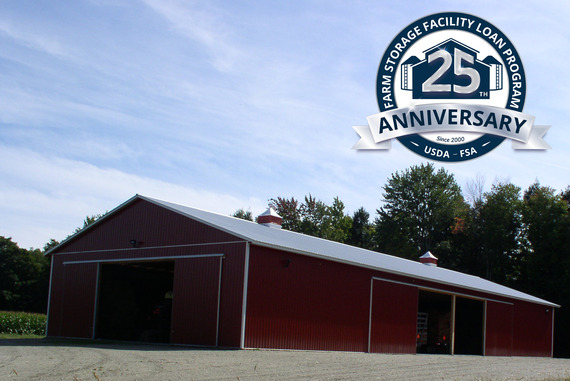 USDA’s Farm Service Agency (FSA) celebrated 25 years of the agency’s popular Farm Storage Facility Loan Program (FSFL) this May. For a quarter century, family-owned agricultural operations have received low-interest financing through the program to enhance or expand their operations and manage marketing of the commodities they produce by building or upgrading permanent and portable storage facilities and purchasing needed handling equipment.
The FSFL program was created in May 2000 to address existing on-farm grain storage needs. Since the program’s inception, more than 40,000 loans have been issued for on-farm storage, increasing storage capacity by one billion bushels. While many producers primarily associate the program with grain storage, over the past 25 years the eligible storage has expanded to include a wide variety of facilities and related equipment - new or used and permanent or portable - including hay barns, bulk tanks, and facilities for cold storage. Drying, handling and storage equipment is also eligible, including skid steers and storage and handling trucks.
Eligibility
Eligible commodities for storage loans include grains, oilseeds, peanuts, pulse crops, hay, hemp, honey, renewable biomass commodities, fruits and vegetables, floriculture, hops, seed cotton, wool, maple sap, maple syrup, milk, cheese, yogurt, butter, eggs, unprocessed meat and poultry, rye and aquaculture. Most recently, controlled atmosphere storage was added as an eligible facility and bison meat has been also added to the list of eligible commodities.
FSFL is an excellent financing program to address on-farm storage and handling needs for small and mid-sized farms, and for new farmers. Loan terms vary from three to 12 years. The maximum loan amount for storage facilities is $500,000. The maximum loan amount for storage and handling trucks is $100,000.
In 2016, FSA introduced a new storage loan category, the microloan, for loans with an aggregate balance up to $50,000. Microloans offer a 5% down payment requirement, compared to a 15% down payment for a regular FSFL, and microloans waive the regular three-year production history requirement.
How to apply
Loan applications should be filed in the administrative FSA county office that maintains a producer’s farm records. Producers can contact their FSA County Office to make an appointment. Beginning farmers who haven’t worked with FSA can visit farmers.gov/your-business/beginning-farmers for more information or view the New Farmers Fact Sheet.
For more information, visit the FSFL webpage, view the fact sheet and our Ask the Expert Blog, or contact your FSA County Office.
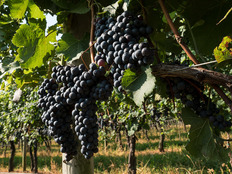
As late summer approaches, you may begin to see symptoms of Leafroll and Red Blotch diseases in your vineyards. The Farm Service Agency’s Tree Assistance Program (TAP) can assist you with losses associated with these two diseases. TAP provides cost-share on a percentage of your actual costs up to a maximum set rate for replacement vines, planting costs, rehabilitation of damaged vines, and site preparation, including removal of affected vines and preparation of the area to plant replacement vines.
Requirements:
- To confirm the disease, a minimum of 10 vines per stand must be submitted for testing to an acceptable lab.
- Samples must be taken from various areas of the stand.
- The number of stands can vary, depending on your vineyard.
- Work with your local FSA office to identify the stand(s) in your vineyard.
- Contact your local Cornell Cooperative Extension viticulturalist for a list of testing labs.
-
**Important** Do not remove any vines until you have received authorization from FSA. Prior to authorization, an environmental review must be completed, and the CCC-899 Notice of Loss must be approved.
To be eligible, there must be at least 16% mortality of vines per stand. Vines do not need to die to be eligible. The certified loss adjuster determines the number of vines that are dead and damaged per stand. If it is determined a vine is damaged to the extent that it is no longer cost-effective to rehabilitate, the loss adjuster will count that vine towards mortality. Once the 16% minimum mortality has been met in the stand, any vines determined to be damaged within the stand are eligible for rehabilitation; there is no minimum threshold for rehabilitation.
Only vines affected by the disease as determined by the loss adjuster will be eligible for financial assistance. If the decision is made to remove the entire stand, even though not all vines have been affected by the disease, unaffected vines and acreage will not be eligible for cost-share assistance.
It is very important to file a notice of loss and submit samples for testing as soon as symptoms appear. Given the short window that symptoms can be observed, we need to ensure enough time for the certified loss adjuster to conduct an inspection. Once the vines lose their leaves in the fall, the loss adjuster can no longer verify the number of affected vines, and the inspection will have to wait until the following year once symptoms reappear.
If you have questions, please contact your local FSA office.
|
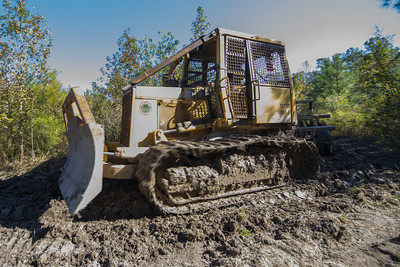
The National Environmental Policy Act (NEPA) requires Federal agencies to consider all potential environmental impacts for federally funded projects before the project is approved.
For all Farm Service Agency (FSA) programs, an environmental review must be completed before actions are approved, such as site preparation or ground disturbance. These programs include, but are not limited to, the Emergency Conservation Program (ECP), Farm Storage Facility Loan (FSFL) program and farm loans. If project implementation begins before FSA has completed an environmental review, the request will be denied. Although there are exceptions regarding the Stafford Act and emergencies, it’s important to wait until you receive written approval of your project proposal before starting any actions.
Applications cannot be approved until FSA has copies of all permits and plans. Contact your local FSA office early in your planning process to determine what level of environmental review is required for your program application so that it can be completed timely.
|
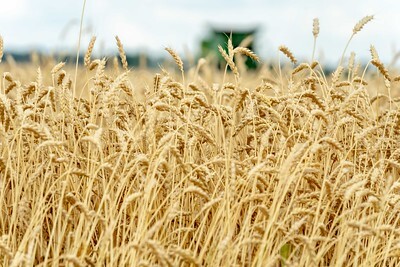
Marketing Assistance Loans (MALs) and Loan Deficiency Payments (LDPs) provide financing and marketing assistance for wheat, feed grains, soybeans, and other oilseeds, pulse crops, rice, peanuts, cotton, wool and honey. MALs provide you with interim financing after harvest to help you meet cash flow needs without having to sell your commodities when market prices are typically at harvest-time lows. A producer who is eligible to obtain a loan, but agrees to forgo the loan, may obtain an LDP if such a payment is available.
FSA is now accepting requests for 2025 MALs and LDPs for all eligible commodities after harvest. Requests for loans and LDPs shall be made on or before the final availability date for the respective commodities.
Commodity certificates are available to loan holders who have outstanding nonrecourse loans for wheat, upland cotton, rice, feed grains, pulse crops (dry peas, lentils, large and small chickpeas), peanuts, wool, soybeans and designated minor oilseeds. These certificates can be purchased at the posted county price (or adjusted world price or national posted price) for the quantity of commodity under loan, and must be immediately exchanged for the collateral, satisfying the loan. MALs redeemed with commodity certificates are not subject to Adjusted Gross Income provisions.
To be considered eligible for an LDP, you must have form CCC-633EZ, Page 1 on file at your local FSA Office before losing beneficial interest in the crop. Pages 2, 3 or 4 of the form must be submitted when payment is requested.
Marketing loan gains (MLGs) and loan deficiency payments (LDPs) are no longer subject to payment limitations, actively engaged in farming and cash-rent tenant rules.
Adjusted Gross Income (AGI) provisions state that if your total applicable three-year average AGI exceeds $900,000, then you’re not eligible to receive an MLG or LDP. You must have a valid CCC-941 on file to earn a market gain of LDP. The AGI does not apply to MALs redeemed with commodity certificate exchange.
For more information and additional eligibility requirements, contact your local USDA Service Center or visit fsa.usda.gov.
|
The USDA Farm Service Agency’s (FSA) Direct Farm Ownership loans can help farmers and ranchers become owner-operators of family farms, improve and expand current operations, increase agricultural productivity, and assist with land tenure to save farmland for future generations.
There are three types of Direct Farm Ownership Loans: regular, down payment and joint financing. FSA also offers a Direct Farm Ownership Microloan option for smaller financial needs up to $50,000.
Joint financing allows FSA to provide more farmers and ranchers with access to capital. FSA lends up to 50 percent of the total amount financed. A commercial lender, a state program or the seller of the property being purchased, provides the balance of loan funds, with or without an FSA guarantee. The maximum loan amount for a joint financing loan is $600,000, and the repayment period for the loan is up to 40 years.
The operation must be an eligible farm enterprise. Farm Ownership loan funds cannot be used to finance nonfarm enterprises and all applicants must be able to meet general eligibility requirements. Loan applicants are also required to have participated in the business operations of a farm or ranch for at least three years out of the 10 years prior to the date the application is submitted. The applicant must show documentation that their participation in the business operation of the farm or ranch was not solely as a laborer.
For more information about farm loans, contact your local USDA Service Center or visit fsa.usda.gov.
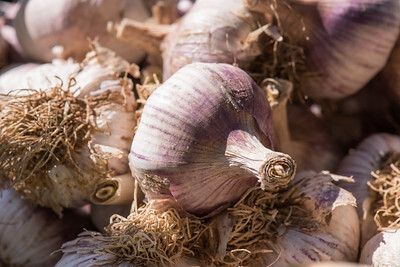
USDA Name County Farm Service Agency (FSA) reminds producers of approaching application deadlines for purchasing risk coverage for some crops through the Noninsured Crop Disaster Assistance Program (NAP). NAP provides financial assistance to producers of non-insurable crops impacted by natural disasters that result in lower yields, crop losses, or prevented crop planting.
NAP covers losses from natural disasters on crops for which no permanent federal crop insurance program is available, including forage and grazing crops, fruits, vegetables, floriculture, ornamental nursery, aquaculture, turf grass and more.
Upcoming application deadlines for NAP coverage in New York for the 2026 production season include:
-
September 2 - Garlic
-
September 30 - All perennial grasses, alfalfa, clover, and mixed forage
-
September 30 - All small grains such as barley, oats, wheat, and rye; and value loss crops (aquaculture, Christmas trees, finfish, floriculture, ginseng root, ginseng seed, mollusk, mushrooms, and turf grass sod)
NAP basic coverage is available at 55% of the average market price for crop losses that exceed 50% of expected production. Buy-up coverage is available in some cases. NAP offers higher levels of coverage, ranging from 50% to 65% of expected production in 5% increments, at 100% of the average market price. Producers of organic crops and crops marketed directly to consumers also may exercise the “buy-up” option to obtain NAP coverage of 100% of the average market price at coverage levels ranging between 50% and 65% of expected production. Buy-up coverage is not available for crops intended for grazing.
For all coverage levels, the NAP service fee is the lesser of $325 per crop or $825 per producer per county, not to exceed a total of $1,950 for a producer with farming interests in multiple counties. Premiums apply for buy-up coverage.
If a producer has a Socially Disadvantaged, Limited Resource, Beginning and Veteran Farmer or Rancher Certification (form CCC-860) on file with FSA, it may serve as an application for basic coverage for all eligible crops beginning with crop year 2022. These producers will have all NAP-related service fees for basic coverage waived. These producers may also receive a 50% premium reduction if higher levels of coverage are elected on form CCC-471, prior to the application closing date for each crop.
To learn more about NAP visit fsa.usda.gov/nap or contact your local USDA Service Center.
|
Farmers can use USDA farm ownership microloans to buy and improve property. These microloans are especially helpful to beginning or underserved farmers, U.S. veterans looking for a career in farming, and those who have small and mid-sized farming operations. Microloans have helped farmers and ranchers with operating costs, such as feed, fertilizer, tools, fencing, equipment, and living expenses since 2013.
Microloans can also help with farmland and building purchases and soil and water conservation improvements. FSA designed the expanded program to simplify the application process, expand eligibility requirements and expedite smaller real estate loans to help farmers strengthen their operations. Microloans provide up to $50,000 to qualified producers and can be issued to the applicant directly from the USDA Farm Service Agency (FSA).
To learn more about the FSA microloan program, contact your local USDA Service Center or visit fsa.usda.gov/microloans.
|
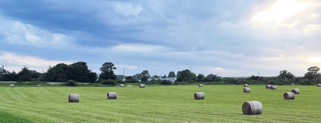
Reduced forage quality is considered a production loss for weather disaster assistance coverage under the buy-up provisions of the Farm Service Agency (FSA) Noninsured Crop Disaster Assistance Program (NAP). This safety net is important for cattlemen who produce non-insurable forages for feeding livestock.
To receive coverage for this crop year, you must enroll your eligible forage acreage in NAP by September 30, 2025. Beginning, limited resource and targeted underserved farmers or ranchers are eligible for a waiver of the NAP service fee and a 50 percent premium reduction in buy-up provisions.
For more information on NAP, contact your local USDA Service Center or visit fsa.usda.gov/nap.
|
Remember to discuss your USDA Farm Service Agency (FSA) account information only with people you recognize and trust.
If you have questions about your FSA accounts, including your farm loans, contact your local USDA Service Center or visit fsa.usda.gov.
Top of page
Farm Service Agency
New York State Office
441 S. Salina St.
Syracuse, NY 13202
Ph: 315-477-6300
http://www.fsa.usda.gov/ny
Click to find your local USDA office.
|
|
State Executive Director
Clark Putman
clark.putman@usda.gov
|
|
Farm Program Chief:
Jenifer Dean
jenifer.dean@usda.gov
|
Acting Farm Loan Chief:
Christen Trewer
christen.trewer@usda.gov
|
|
________________________________________________________
|
|
Current Interest Rates
|
|
Farm Storage Facility Loans:
3 yr - 3.750%
5 yr - 3.875%
7 yr - 4.125%
10 yr -4.375%
12 yr - 4.500%
Commodity Loans: 5.000%
|
Farm Loan Programs:
Farm Operating: 5.000%
Farm Ownership: 6.000%
Conservation Loans: 6.000%
Direct Down Payment: 2.000%
Joint Financing: 4.000%
Emergency Loan: 3.750%
|
|








