
Hardin County Ohio USDA Service Center News and Updates - July 29, 2025
In this issue:
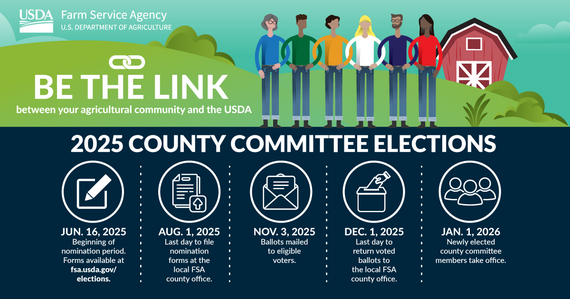
In early 1935, Congress set up a unique system under which federal farm programs are administered locally. The system called for the establishment of a board consisting of local farmers and ranchers who were elected by local farmers and ranchers in their jurisdiction to serve 3-year terms to oversee county USDA FSA field office operations.
What do FSA County Committee Members do?
Elected County FSA Committee members represent local farmers and ranchers and serve as the first recourse for review and reconsideration in FSA's appeal and dispute resolution processes when producers are faced with the consequences of adverse program eligibility determinations and program noncompliance issues.
The FSA County committee also makes critical determinations impacting local producers, when required, in the administration of federal farm, commodity, conservation and disaster programs. The Committee provides guidance and insight to FSA staff regarding the impact of farm programs in their community. The committee communicates program availability and provisions at the local level, makes recommendations for program changes to their state's FSA committee and monitors changes in federal farm programs as they relate to their local administrative area (LAA).
Elected committee members have an excellent opportunity to serve producers in their LAA. Serving on the county committee is also an excellent opportunity to acquire in-depth knowledge of FSA programs.
Nomination Process
The Hardin County FSA Committee is seeking a diverse group of nominees to include on the ballot in the upcoming FSA County Committee election process. Women, beginning farmers, and members of underrepresented groups are strongly encouraged to participate in the nomination process by nominating themselves or other eligible individuals through August 1, 2025.
Women fill many roles in agriculture in Hardin County including farmers, farm owners, farm managers, farm laborers, agricultural educators and agribusiness employees. A beginning farmer or rancher is an individual or entity that has not operated a farm or ranch for more than 10 consecutive years and substantially participates in the operation of the farm or ranch. An underrepresented farmer or rancher is one who identifies with a group whose members have been subject to racial or ethnic prejudice because of their identity as members of a group without regard to their individual qualities.
The Hardin County FSA COC election will be conducted in local administrative area number 3 this election year. Nominees must have an interest as an owner, operator, or tenant of a farm located in Buck, Dudley, Hale, Lynn, and Taylor Creek townships. Eligible voters in these townships may nominate themselves or any other eligible individual as a candidate.
Nomination forms are filed in the FSA office that administers a producer’s farm records and are available at the FSA county office or online here.
Learn More About the COC Election Process
A workshop to explain the nomination and election process to beginning farmers, females and individuals who identify as members of underserved groups has been set for Thursday, July 31, 2025, at 10:00 a.m. at the Hardin County FSA Office. Although this meeting is specifically a targeted outreach to women, beginning farmers, and members of underserved groups, it is open to all producers who are interested in obtaining more specific COC election details.
Top of page

The objective of USDA’s Grasslands Conservation Reserve Program (CRP) is to help landowners and operators protect grassland, including rangeland, pastureland, and certain other lands, while maintaining the areas as hay lands or grazing lands. The program emphasizes support for grazing operations, plant and animal biodiversity, and eligible land containing shrubs and forbs under the greatest threat of conversion. The grasslands CRP program is a working lands program. Working lands conservation programs help farmers to enhance the sustainability of their operations while keeping land in production.
FSA provides CRP Grasslands participants with annual rental payments and cost share assistance in return for conserving the grazing lands according to an NRCS developed conservation plan. FSA bases rental rates on 75 percent of the cash rent data provided by the National Agricultural Statistics Service (NASS) plus a climate smart practice incentive. The maximum CRP Grasslands rental rate for each offer is calculated in advance of enrollment. The 2024 maximum rental rate for Hardin County is $28 per acre. Producers may offer land at the maximum rental rate or offer a lower rental rate to increase the chances of the offer being accepted. Like General CRP signups, the CRP Grasslands signup is subject to a nationally competitive offer ranking system.
Cost share is available to participants if fencing or livestock watering facilities are needed to facilitate grazing distribution although boundary fences are not eligible for cost share assistance. Producers are permitted to graze and harvest hay and seed on acres enrolled in CRP Grasslands while receiving an annual rental payment for maintaining the existing permanent cover that is offered. Producers may be required to perform needed enhancements and maintenance on acres enrolled in CRP Grasslands. Producers may need to introduce additional grasses or legumes and make applicable fertilizer and chemical applications. All activities are subject to a conservation plan, with certain restrictions for haying and grazing during the primary nesting season. Offered Land with more than 5% tree canopy is ineligible for the grasslands CRP Program. The CRP Grasslands contract duration is 10 or 15 years.
The deadline to submit an offer to participate in CRP Grasslands is Friday, August 8, 2025.
|
Top of page
Sign-up began July 10
U.S. Secretary of Agriculture Brooke L. Rollins announced today that agricultural producers who suffered eligible crop losses due to natural disasters in 2023 and 2024 can now apply for $16 billion in assistance through the Supplemental Disaster Relief Program (SDRP).
To expedite the implementation of SDRP, USDA’s Farm Service Agency (FSA) is delivering assistance in two stages. This first stage is open to producers with eligible crop losses that received assistance under crop insurance or the Noninsured Crop Disaster Assistance Program during 2023 and 2024. Stage One sign up started in person at FSA county offices on July 10 and prefilled applications were mailed to producers on July 9. SDRP Stage Two signups for eligible shallow or uncovered losses will begin in early fall.
SDRP Stage One
FSA is launching a streamlined, pre-filled application process for eligible crop, tree, and vine losses by leveraging existing Noninsured Crop Disaster Assistance Program (NAP) and Risk Management Agency (RMA) indemnified loss data. The pre-filled applications were mailed on July 9, 2025.
Eligibility
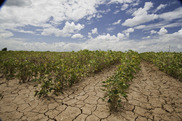
Eligible losses must be the result of natural disasters occurring in calendar years 2023 and/or 2024. These disasters include wildfires, hurricanes, floods, derechos, excessive heat, tornadoes, winter storms, freeze (including a polar vortex), smoke exposure, excessive moisture, qualifying drought, and related conditions.
To qualify for drought related losses, the loss must have occurred in a county rated by the U.S. Drought Monitor as having a D2 (severe drought) for eight consecutive weeks, D3 (extreme drought), or greater intensity level during the applicable calendar year. Hardin County, Ohio did not meet this criterion in either 2023 or 2024.
Producers in Connecticut, Hawaii, Maine, and Massachusetts will not be eligible for SDRP program payments. Instead, these states chose to cover eligible crop, tree, bush, and vine losses through separate block grants. These block grants are funded through the $220M provided for this purpose to eligible states in the American Relief Act.
How to Apply
To apply for SDRP, producers must submit the FSA-526, Supplemental Disaster Relief Program (SDRP) Stage One Application, in addition to having other forms on file with FSA.
SDRP Stage One Payment Calculation
Stage One payments are based on the SDRP adjusted NAP or Federal crop insurance coverage level the producer purchased for the crop. The net NAP or net federal crop insurance payments (NAP or crop insurance indemnities minus administrative fees and premiums) will be subtracted from the SDRP calculated payment amount.
For Stage One, the total SDRP payment to indemnified producers will not exceed 90% of the loss and an SDRP payment factor of 35% will be applied to all Stage One payments. If additional SDRP funds remain, FSA may issue a second payment.
Future Insurance Coverage Requirements
All producers who receive SDRP payments are required to purchase federal crop insurance or NAP coverage for the next two available crop years at the 60% coverage level or higher. Producers who fail to purchase crop insurance for the next two available crop years will be required to refund the SDRP payment, plus interest, to USDA.
SDRP Stage 2
FSA will announce additional SDRP assistance for uncovered losses, including non-indemnified shallow losses and quality losses and how to apply later this fall.
Learn more by visiting fsa.usda.gov/sdrp.
|
Top of page
The U.S. Department of Agriculture’s (USDA) updates to the Farm Service Agency’s (FSA) Farm Loan Programs are officially in effect. These changes, part of the Enhancing Program Access and Delivery for Farm Loans rule, are designed to increase financial flexibility for agricultural producers, allowing them to grow their operations, boost profitability, and build long-term savings.
These program updates reflect USDA’s ongoing commitment to supporting the financial success and resilience of farmers and ranchers nationwide, offering critical tools to help borrowers manage their finances more effectively.
What the new rules mean for you:
- Low-interest installment set-aside program: Financially distressed borrowers can now defer up to one annual loan payment at a reduced interest rate. This simplified option helps ease financial pressure while keeping farming operations running smoothly.
- Flexible repayment terms: New repayment options give borrowers the ability to increase their cash flow and build working capital reserves, allowing for long-term financial planning that includes saving for retirement, education, and other future needs.
- Reduced collateral requirements: FSA has lowered the amount of additional loan security needed for direct farm loans, making it easier for borrowers to leverage their existing equity without putting their personal residence at risk.
These new rules provide more financial freedom to borrowers. By giving farmers and ranchers better tools to manage their operations, we’re helping them build long-term financial stability. It’s all about making sure they can keep their land, grow their business, and invest in the future.
If you’re an FSA borrower or considering applying for a loan, now is the time to take advantage of these new policies. We encourage you to reach out to your local FSA farm loan staff to ensure you fully understand the wide range of loan making and servicing options available to assist with starting, expanding, or maintaining your agricultural operation.
To conduct business with FSA, please contact your local USDA Service Center.
|
Top of page

The Ohio Soil and Water Conservation Commission will cause an election of Supervisors of the Hardin Soil and Water Conservation District (SWCD) to be held in accordance with Chapter 940 of the Ohio Revised Code. Individuals who own or occupy land within the Hardin Soil and Water Conservation District and are 18 years of age or older may vote for Supervisor.
There are three ways an eligible voter can cast a ballot:
- At the SWCD office, 950 West Kohler Street, Kenton, Ohio 43326, from 7/23/2025 until 8/20/2025 during normal business hours; or
- At the SWCD Annual Meeting, which will take place at Hardin County Fairgrounds Shelter House on 8/21/2025 from 5:00-6:00; or
- Voting absentee from 7/23/2025 until 8/20/2025, by requesting the ballot application and election ballot from the SWCD office at the following address 950 West Kohler Street, Kenton, Ohio, by calling 419-673-0456, or email denna.clem@usda.gov. Absentee ballots must be received by the SWCD office by 8/21/2025 at 12:00 pm.
One supervisor will be elected to a three‐year term commencing January 1, 2026, and ending December 31, 2028.
Nominees are:
- Matthew Haun
- Kyle Searson
|
Top of page
Rate
|
Loan Type
|
|
5.000
|
Farm Operating Loans, Direct
|
|
5.875
|
Farm Ownership Loans, Direct
|
|
3.875
|
Farm Ownership Loans – Direct Joint Financing
|
|
5.000
|
Limited Resource Loans
|
|
1.875
|
Farm Ownership Loans, Down Payment
|
|
3.750
|
Emergency Loans
|
|
varies
|
Guaranteed Loans (through commercial lenders)
|
|
3.875
|
Farm Storage Facility Loans, 3-year term
|
|
4.000
|
Farm Storage Facility Loans, 5-year term
|
|
4.250
|
Farm Storage Facility Loans, 7-year term
|
|
4.500
|
Farm Storage Facility Loans, 10-year term
|
|
4.625
|
Farm Storage Facility Loans, 12-year term
|
|
5.125
|
Commodity Loans
|
Top of page
|
Aug 1
|
Deadline to file a Farm Service Agency County Committee nomination form for Hardin County local administrative area number 3 consisting of Buck, Dudley, Hale, Lynn, and Taylor Creek townships. Eligible voters in these townships may nominate themselves or any other eligible individual as a candidate.
|
|
Aug 1
|
Deadline to request a reconstitution (a combination or division of FSA farm records) for the 2025 program year.
|
|
Aug 1
|
Deadline to request a transfer of FSA farm records to another FSA county office for administration purposes for the 2024 program year.
|
|
Aug 8
|
Deadline to submit offers to enroll land under CRP Grasslands signup 207.
|
|
Aug 15
|
Deadline to submit applications for the Emergency Commodity Assistance Program (ECAP).
|
|
Aug 21
|
SWCD Annual Meeting at Hardin County Fairgrounds Shelter House from 5:00 PM -6:00 PM
|
|
Sep 1
|
Labor Day Holiday. USDA Service Center is closed.
|
|
Continuing Reminders
|
|
Inform the USDA Service Center of changes in demographic information such as name, address, and contact information.
|
|
Ensure the following are reported as they occur: changes in cropland status; changes in field boundaries; changes of owners and operators; and addition of other producers who share in a crop on a farm.
|
|
Report changes in bank accounts for ACH deposits.
|
Top of page
Hardin County USDA Service Center
12757 State Route 309 W.
Kenton, Ohio 43326
Phone: 419-673-7238
Fax: 855-835-8360
|
|
Hardin County Farmers.gov Dashboard
|
|
Farm Service Agency - Farm Programs
Phillip E. Lautenschlager II
County Executive Director
419-673-7238 - Extension 2
phil.lautenschlager@usda.gov
Farm Service Agency - Farm Loan Programs
Tiffany Grody
Farm Loan Manager
937-592-8896 - Extension 2 tiffany.grody@usda.gov
FSA County Committee
Spencer Breidenbach
William James II
Next Meeting: To be determined
|
Natural Resources Conservation Service
Cristhian Carrasquillo
Acting District Conservationist
419-673-7238 - Extension 3
cristhian.carrasquillo@usda.gov
Hardin Soil and Water Conservation District
Denna Clem, Administrator
419-673-0456
denna.clem@usda.gov
|
| |
|






