
News & Updates from the Iowa Farm Service Agency - July 30, 2025
In This Issue:
U.S. Secretary of Agriculture Brooke L. Rollins recently announced that agricultural producers who suffered eligible crop losses due to natural disasters in 2023 and 2024 can now apply for $16 billion in assistance through the Supplemental Disaster Relief Program (SDRP).
To expedite the implementation of SDRP, USDA’s Farm Service Agency (FSA) is delivering assistance in two stages. This first stage is open to producers with eligible crop losses that received assistance under crop insurance or the Noninsured Crop Disaster Assistance Program during 2023 and 2024. Stage One sign up began in person at FSA county offices on July 10 and prefilled applications were mailed to producers on July 9. SDRP Stage Two signups for eligible shallow or uncovered losses will begin in early fall.
SDRP Stage One
FSA is launching a streamlined, pre-filled application process for eligible crop, tree, and vine losses by leveraging existing Noninsured Crop Disaster Assistance Program (NAP) and Risk Management Agency (RMA) indemnified loss data. The pre-filled applications were mailed on July 9, 2025.
Eligibility
Eligible losses must be the result of natural disasters occurring in calendar years 2023 and/or 2024. These disasters include wildfires, hurricanes, floods, derechos, excessive heat, tornadoes, winter storms, freeze (including a polar vortex), smoke exposure, excessive moisture, qualifying drought, and related conditions.
To qualify for drought related losses, the loss must have occurred in a county rated by the U.S. Drought Monitor as having a D2 (severe drought) for eight consecutive weeks, D3 (extreme drought), or greater intensity level during the applicable calendar year.
Producers in Connecticut, Hawaii, Maine, and Massachusetts will not be eligible for SDRP program payments. Instead, these states chose to cover eligible crop, tree, bush, and vine losses through separate block grants. These block grants are funded through the $220M provided for this purpose to eligible states in the American Relief Act.
How to Apply
To apply for SDRP, producers must submit the FSA-526, Supplemental Disaster Relief Program (SDRP) Stage One Application, in addition to having other forms on file with FSA.
SDRP Stage One Payment Calculation
Stage One payments are based on the SDRP adjusted NAP or Federal crop insurance coverage level the producer purchased for the crop. The net NAP or net federal crop insurance payments (NAP or crop insurance indemnities minus administrative fees and premiums) will be subtracted from the SDRP calculated payment amount.
For Stage One, the total SDRP payment to indemnified producers will not exceed 90% of the loss and an SDRP payment factor of 35% will be applied to all Stage One payments. If additional SDRP funds remain, FSA may issue a second payment.
Future Insurance Coverage Requirements
All producers who receive SDRP payments are required to purchase federal crop insurance or NAP coverage for the next two available crop years at the 60% coverage level or higher. Producers who fail to purchase crop insurance for the next two available crop years will be required to refund the SDRP payment, plus interest, to USDA.
SDRP Stage 2
FSA will announce additional SDRP assistance for uncovered losses, including non-indemnified shallow losses and quality losses and how to apply later this fall.
Learn more by visiting fsa.usda.gov/sdrp.
This announcement follows Secretary Rollins’ comprehensive plan to deliver the total amount of Congressionally appropriated $30 billion in disaster assistance to farmers and ranchers this year. These programs will complement the forthcoming state block grants that USDA is working with 14 different states to develop.
To date, USDA has issued more than $7.8 billion in Emergency Commodity Assistance Program (ECAP) payments to eligible producers. Additionally, USDA has provided over $1 billion in emergency relief through the Emergency Livestock Relief Program to producers who suffered grazing losses due to drought or wildfires in calendar years 2023 and 2024.
USDA disaster assistance information can be found on farmers.gov, including the Disaster Assistance Discovery Tool, Disaster-at-a-Glance fact sheet, Loan Assistance Tool, and the FarmRaise online FSA education hub. Payment details will be updated here weekly. For more information, contact your local USDA Service Center.
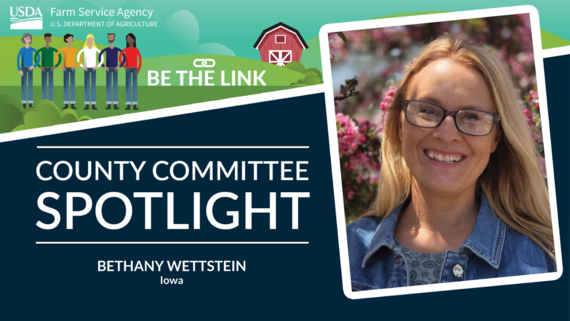
It’s time once again for the USDA Farm Service Agency’s (FSA) annual county committee elections. We're introducing you to current committee members across the nation throughout the nomination period, which runs now through Aug. 1, 2025. This week, meet Bethany Wettstein of Davis County, Iowa. Read more
he U.S. Department of Agriculture (USDA) has announced that agricultural producers and private landowners can now enroll in the Grassland Conservation Reserve Program (Grassland CRP). The sign-up runs from July 14, to Aug. 8, 2025. Grassland CRP, offered by USDA’s Farm Service Agency (FSA), is a voluntary working lands conservation program that enables participants to conserve grasslands while also continuing most grazing and haying practices.
Grassland CRP emphasizes support for grazing operations, plant and animal biodiversity, and grasslands and land with shrubs and forbs under the greatest threat of conversion.
“Through the conservation of America’s essential grasslands, Grassland CRP supports continued agricultural productivity while at the same time prioritizing private lands stewardship,” said FSA Administrator Bill Beam. “By offering landowners the best of both worlds — economic viability and working lands preservation — Grassland CRP provisions support USDA’s commitment to Farmers First.”
CRP, USDA’s flagship conservation program, celebrates its 40th anniversary this year. For four decades, CRP has provided financial and technical support to agricultural producers and landowners whose accepted acres are placed under contract for 10-15 years and who agree to voluntarily convert the land to beneficial vegetative cover to improve water quality, prevent soil erosion and support wildlife habitat. The American Relief Act, 2025, extended provisions for CRP through Sept. 30, 2025.
Currently, more than 25.8 million acres are enrolled in CRP, with nearly 9.7 million acres in Grassland CRP. On May 12, FSA opened General and Continuous CRP enrollment for 2025. FSA is currently reviewing submitted offers and will announce accepted offers at a later date. Due to the 27-million-acre statutory cap, only 1.8 million acres are available for all CRP enrollment this fiscal year.
Landowners and producers interested in Grassland CRP should contact their local USDA Service Center to learn more or apply for the program before the Aug. 8 deadline.
FSA helps America’s farmers, ranchers and forest landowners invest in, improve, protect and expand their agricultural operations through the delivery of agricultural programs for all Americans. FSA implements agricultural policy, administers credit and loan programs, and manages conservation, commodity, disaster recovery and marketing programs through a national network of state and county offices and locally elected county committees. For more information, visit fsa.usda.gov.
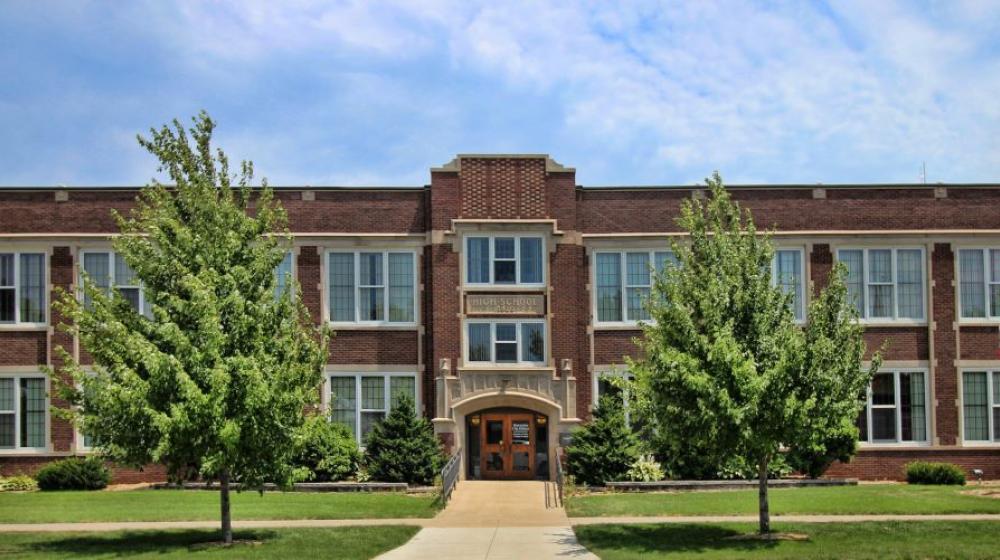 n 2008, the city of Hawarden in Sioux County, Iowa, established a revolving loan fund (RLF) utilizing funds from the U.S. Department of Agriculture (USDA) Rural Development Rural Business Development Grant (RBDG) program. In far northwestern Iowa, Hawarden, population 2,700, lies on the banks of the Big Sioux River, a major tributary of the Missouri River.
Carol Hoogestraat, Community and Economic Development Director for Hawarden, was interested in USDA business programs. “Coming from a business background, I know financing, and I jumped into this role in 2021 to get the ball rolling on helping to create a more successful business environment here in Hawarden.”
USDA awarded the city of Hawarden a $99,000 RBDG grant to expand the RLF in 2022, and in 2023, USDA awarded the city a $124,000 RBDG grant so the expanded RLF could help local businesses stabilize and increase local employment opportunities.
Disaster struck on June 22, 2024, when record-breaking floodwater from the Big Sioux River inundated the community, damaging and destroying many homes and businesses. “I couldn’t get straight into town from my house because of the flooding, so I had to go all the way around on the few roads that weren’t flooded and could see the devastation,” said Hoogestraat.
The need for financial assistance for those affected by the disaster was immediate. To help with recovery, many people and organizations pitched in.
“My job came first, it truly did,” said Hoogestraat. “Working with the folks representing the state of Iowa was fantastic. Michael Nelson, the loan specialist at the USDA, was phenomenal. He was a real anchor of support. I could call or email him and get quick answers and the information we needed to utilize our existing RLF for local businesses that needed short-term, low-interest loans. That was the best part of this difficult experience, getting support from outside. These great individuals from different organizations were hanging in there with us.”
The town continues to recover from the damage a year later.
Michael Nelson, USDA Rural Development Area Specialist in Iowa, worked on several financing projects in town. “I could see that leaders in Hawarden had a vision for what they wanted in their community,” he said. “The funding from USDA in Hawarden’s RLF was ready to lend when the floodwaters rose in the streets of the city. It is personally very rewarding to support the creation and preservation of jobs and communities in rural areas.”
RBDG program funds may be awarded to non-profit entities to establish and replenish RLFs to make loans for small businesses for a variety of purposes such as purchasing a business, business expansion, working capital, and needed repairs.
To find out more about this program and others, click here.
 Nominations are now being accepted for farmers and ranchers to serve on local U.S. Department of Agriculture (USDA) Farm Service Agency (FSA) county committees. These committees make important decisions about how federal farm programs are administered locally. All nomination forms for the 2025 election must be postmarked or received in the local FSA office by Aug. 1, 2025.
Elections for committee members will occur in certain Local Administrative Areas (LAA). LAAs are elective areas for FSA committees in a single county or multi-county jurisdiction and may include LAAs that are focused on an urban or suburban area.
Producers interested in serving on the FSA county committee can locate their LAA through a geographic information system locator tool available at fsa.usda.gov/elections and determine if their LAA is up for election by contacting their local FSA office.
Agricultural producers may be nominated for candidacy for the county committee if they:
- Participate or cooperate in a USDA program.
- Reside in the LAA that is up for election this year.
A cooperating producer is someone who has provided information about their farming or ranching operation to FSA, even if they have not applied or received program benefits.
Individuals may nominate themselves or others and qualifying organizations may also nominate candidates. USDA encourages all eligible producers to nominate, vote and hold office.
More Information
Producers should contact their local FSA office today to register and find out how to get involved in their county’s election, including if their LAA is up for election this year. To be considered, a producer must be registered and sign an FSA-669A nomination form. This form and other information about FSA county committee elections are available at fsa.usda.gov/elections.
All nomination forms for the 2025 election must be postmarked or received in the local USDA Service Center by the Aug.1, 2025, deadline. Election ballots will be mailed to eligible voters in November 2025.
Farmers can use USDA farm ownership microloans to buy and improve property. These microloans are especially helpful to beginning or underserved farmers, U.S. veterans looking for a career in farming, and those who have small and mid-sized farming operations. Microloans have helped farmers and ranchers with operating costs, such as feed, fertilizer, tools, fencing, equipment, and living expenses since 2013.
Microloans can also help with farmland and building purchases and soil and water conservation improvements. FSA designed the expanded program to simplify the application process, expand eligibility requirements and expedite smaller real estate loans to help farmers strengthen their operations. Microloans provide up to $50,000 to qualified producers and can be issued to the applicant directly from the USDA Farm Service Agency (FSA).
To learn more about the FSA microloan program, contact your local USDA Service Center at or visit fsa.usda.gov/microloans.
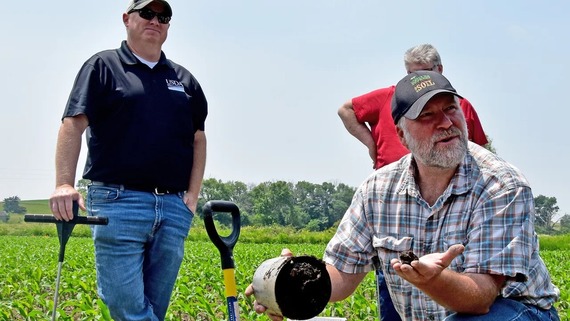 Soil scientist Jason Steele helps Iowa farmers build conservation from the ground up. Read more
Iowa State Office
10500 Buena Vista Court
Des Moines, IA 50322
Phone: 515-254-1540
Karen Rawson, Acting State Executive Director
|
|








