
Connecticut State Newsletter - July 15, 2025
In This Issue:
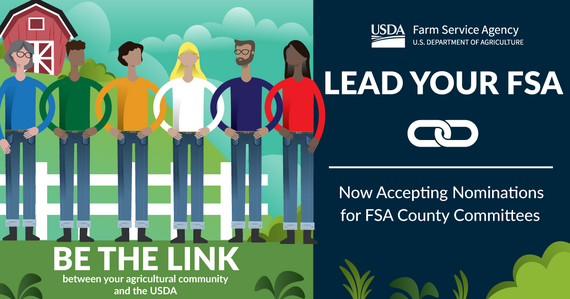 Nominations due Aug. 1
The U.S. Department of Agriculture (USDA) Farm Service Agency (FSA) is now accepting nominations for county committee members and encourages all farmers, ranchers, and FSA program participants to take part in their local County Committee election nomination process.
Elections will occur in certain Local Administrative Areas (LAA) for members. LAAs are elective areas for FSA committees in a single county or multi-county jurisdiction. In Connecticut elections will take place in:
-
Windham County LAA 1 which consists of Ashford, Canterbury, Chaplin, Eastford, Hampton, Scotland, and Windham.
-
New London County LAA 1 which consists of Colchester, Franklin, and Lebanon.
-
Hartford/Tolland Counties LAA 4 which consists of Ellington, Enfield, Tolland, Somers, Stafford, Union and Willington.
-
New Haven/Middlesex Counties LAA 3 which consists of Chester, Clinton, Cromwell, Deep River, Durham, East Haddam, East Hampton, Essex, Haddam, Killingworth, Middlefield, Middletown, Old Saybrook, Portland, and Westbrook.
-
Fairfield/Litchfield Counties LAA 1 which consists of Barkhamsted, Colebrook, Goshen, Harwinton, Litchfield, New Hartford, Norfolk, Torrington, and Winchester.
Customers can identify which LAA they or their farming or ranching operation is in by using our GIS locator tool available at fsa.usda.gov/elections.
County committee members make important decisions about how Federal farm programs are administered locally. All nomination forms for the 2025 election must be postmarked or received in the local FSA office by Aug. 1, 2025.
Agricultural producers who participate or cooperate in a USDA program and reside in the LAA that is up for election this year, may be nominated for candidacy for the county committee. A cooperating producer is someone who has provided information about their farming or ranching operation to FSA, even if they have not applied or received program benefits.
Individuals may nominate themselves or others and qualifying organizations may also nominate candidates. USDA encourages minority producers, women, and beginning farmers or ranchers to nominate, vote and hold office.
Nationwide, more than 7,700 dedicated members of the agricultural community serve on FSA county committees. The committees are made up of 3 to 11 members who serve three-year terms. Committee members are vital to how FSA carries out disaster programs, as well as conservation, commodity and price support programs, county office employment and other agricultural issues.
For more information on FSA county committee elections, including fact sheets, nomination forms and FAQs, visit fsa.usda.gov/elections.
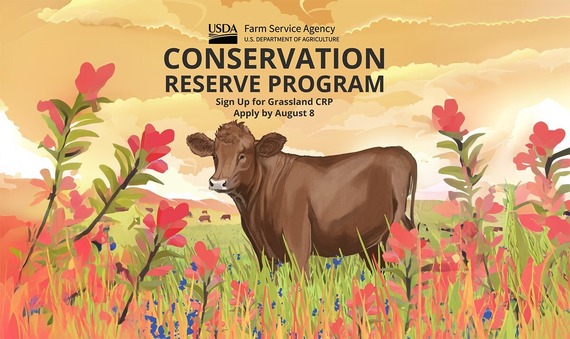 Supporting economic viability and working lands preservation
The U.S. Department of Agriculture (USDA) today announced that agricultural producers and private landowners can now enroll in the Grassland Conservation Reserve Program (Grassland CRP). The sign-up runs from today, July 14, to Aug. 8, 2025. Grassland CRP, offered by USDA’s Farm Service Agency (FSA), is a voluntary working lands conservation program that enables participants to conserve grasslands while also continuing most grazing and haying practices.
Grassland CRP emphasizes support for grazing operations, plant and animal biodiversity, and grasslands and land with shrubs and forbs under the greatest threat of conversion.
“Through the conservation of America’s essential grasslands, Grassland CRP supports continued agricultural productivity while at the same time prioritizing private lands stewardship,” said FSA Administrator Bill Beam. “By offering landowners the best of both worlds — economic viability and working lands preservation — Grassland CRP provisions support USDA’s commitment to Farmers First.”
CRP, USDA’s flagship conservation program, celebrates its 40th anniversary this year. For four decades, CRP has provided financial and technical support to agricultural producers and landowners whose accepted acres are placed under contract for 10-15 years and who agree to voluntarily convert the land to beneficial vegetative cover to improve water quality, prevent soil erosion and support wildlife habitat. The American Relief Act, 2025, extended provisions for CRP through Sept. 30, 2025.
Currently, more than 25.8 million acres are enrolled in CRP, with nearly 9.7 million acres in Grassland CRP. On May 12, FSA opened General and Continuous CRP enrollment for 2025. FSA is currently reviewing submitted offers and will announce accepted offers at a later date. Due to the 27-million-acre statutory cap, only 1.8 million acres are available for all CRP enrollment this fiscal year.
Landowners and producers interested in Grassland CRP should contact their local USDA Service Center to learn more or apply for the program before the Aug. 8 deadline.
FSA helps America’s farmers, ranchers and forest landowners invest in, improve, protect and expand their agricultural operations through the delivery of agricultural programs for all Americans. FSA implements agricultural policy, administers credit and loan programs, and manages conservation, commodity, disaster recovery and marketing programs through a national network of state and county offices and locally elected county committees. For more information, visit fsa.usda.gov.
NRCS is celebrating its 90th anniversary this year. We began our celebration by posting a blog and an interactive timeline about NRCS history and a video about how we’ve helped farmers over the years. We’ve also been sharing some historical photos on social media that show how our mission has changed and stayed the same over the years.
Now, we’d like for you to join us in our celebration. We’d like to hear your stories and see photos of your operation – Then and Now.
Does your agricultural operation have a fascinating history you’d like to share? Are there interesting stories about how your operation came to be or how it’s evolved? Do you have photos of your operation from its beginnings to the present day? If so, we want to hear from you!
This summer, we want to highlight how things have changed on your operation over the years in our #ThenAndNow campaign on NRCS and FarmersGov social media.
Here’s how to participate:
- Find a few historical photos of your operation from when it began - Then.
- Using your smartphone or digital camera, take photos of your operation - Now.
- In a few sentences, tell us: how has your operation changed over the years? How has it expanded, modernized equipment and practices, or transformed with conservation?
- Include your name, the location of your operation, and links to any social media accounts you manage to promote your operation.
- Submit the above to SM.FPAC.NRCS.Facebook@usda.gov by Friday, August 1, 2025.
Please note that by submitting your photo/video, you are granting USDA permission to use these materials for outreach and education purposes.
Follow NRCS on X and Facebook, and FarmersGov on Facebook, X , and Instagram. We look forward to seeing and sharing your stories!
Farm loan borrowers who have pledged real estate as security for their Farm Service Agency (FSA) direct or guaranteed loans are responsible for maintaining loan collateral. Borrowers must obtain prior consent or approval from FSA or the guaranteed lender for any transaction that affects real estate security. These transactions include, but are not limited to:
- Leases of any kind
- Easements of any kind
- Subordinations
- Partial releases
- Sales
Failure to meet or follow the requirements in the loan agreement, promissory note, and other security instruments could lead to nonmonetary default which could jeopardize your current and future loans.
It is critical that borrowers keep an open line of communication with their FSA loan staff or guaranteed lender when it comes to changes in their operation. For more information on borrower responsibilities, read Your FSA Farm Loan Compass.
Producers are encouraged to call their local FSA office to schedule an appointment to ensure maximum use of their time and to make sure FSA staff is available to tend to their important business needs. Please call your local FSA office ahead to set an appointment and to discuss any records or documentation that might be needed during your appointment. To find your local FSA office, visit farmers.gov/working-with-us/service-center-locator.
Farm Service Agency (FSA) program payments are issued electronically into your bank account. In order to receive timely payments, you need to notify your FSA servicing office if you close your account or if your bank information is changed for any reason (such as your financial institution merging or being purchased). Payments can be delayed if FSA is not notified of changes to account and bank routing numbers.
For some programs, payments are not made until the following year. For example, payments for crop year 2019 through the Agriculture Risk Coverage and Price Loss Coverage program aren’t paid until 2020. If the bank account was closed due to the death of an individual or dissolution of an entity or partnership before the payment was issued, please notify your local FSA office as soon as possible to claim your payment.
Farmers and ranchers working with USDA’s Farm Service Agency or Natural Resources Conservation Service can now sign and share documents online in just a few clicks. By using Box or OneSpan, producers can digitally complete business transactions without leaving their homes or agricultural operations. Both services are free, secure, and available for multiple FSA and NRCS programs.
Box is a secure, cloud-based site where FSA or NRCS documents can be managed and shared. Producers who choose to use Box can create a username and password to access their secure Box account, where documents can be downloaded, printed, manually signed, scanned, uploaded, and shared digitally with Service Center staff. This service is available to any FSA or NRCS customer with access to a mobile device or computer with printer connectivity.
OneSpan is a secure eSignature solution for FSA and NRCS customers. Like Box, no software downloads or eAuthentication is required for OneSpan. Instead, producers interested in eSignature through OneSpan can confirm their identity through two-factor authentication using a verification code sent to their mobile device or a personalized question and answer. Once identity is confirmed, documents can be reviewed and e-signed through OneSpan via the producer’s personal email address. Signed documents immediately become available to the appropriate Service Center staff.
Box and OneSpan are both optional services for customers interested in improved efficiency in signing and sharing documents with USDA, and they do not replace existing systems using eAuthentication for digital signature. Instead, these tools provide additional digital options for producers to use when conducting business with FSA or NRCS.
USDA Service Center staff are available to help producers get started with Box and OneSpan through a few simple steps. Please visit farmers.gov/service-locator to find your local office and let Service Center staff know you’re interested in signing and sharing documents through these new features. In most cases, one quick phone call will be all that is needed to initiate the process. Visit farmers.gov/mydocs to learn more about Box and OneSpan, steps for getting started, and additional resources for conducting business with USDA online.
The U.S. Department of Agriculture (USDA) is extending the rainfall collection period for the Hurricane Insurance Protection – Wind Index (HIP-WI) and the Tropical Storm Option (TS) to include unique circumstances when a storm lingers over a county or re-enters a county.
Beginning with the 2026 crop year, USDA’s Risk Management Agency (RMA) will add one day to the rainfall collection period for each 24 hours that the tropical storm force winds are present within a county. RMA will also add an additional four-day collection period for each instance a storm exits and re-enters a county.
HIP-WI and TS are crop insurance tools that help deliver prompt assistance to farmers in hurricane prone areas. These innovative policies build off a farmer’s underlying policy with no additional paperwork or loss adjustment needed. HIP-WI and TS generally pay within weeks following a hurricane or tropical storm – the fastest payments from USDA following a disaster.
HIP-WI provides an indemnity if the county experiences sustained winds of 64 knots during the insurance period. The optional TS can be added to provide 50% of HIP-WI indemnity if the county experiences sustained winds of at least 34 knots and at least six inches of gridded precipitation within the rainfall collection period. The collection period is generally four days – the day the tropical storm enters the county, the day before, and two days after. All windspeed and precipitation data are provided from the National Oceanographic and Atmospheric Administration.
HIP-WI coverage must be purchased by the sales closing date (SCD) of a producer’s underlying policy. Sales closing dates vary by crop. Therefore, producers should check with a crop insurance agent to verify the sales closing date for a crop and county.
Since the implementation of HIP-WI in crop year 2020 and TS in crop year 2023, these programs have paid over $1.6 billion within a few weeks after each tropical cyclone. In 2024, five hurricanes triggered $960 million in payments across nine states (hurricanes Beryl, Debby, Francine, Helene, and Milton).
To find additional information about the policy, including frequently asked questions, videos, and a fact sheet, please visit the HIP-WI website.
Connecticut State NRCS Office
344 Merrow Road, Suite A
Tolland, CT 06084-3917
Phone: 860-871-4011
Connecticut State FSA Office
344 Merrow Road, Suite B
Tolland, CT 06084-3917
Phone: 860-871-4090
Fax: 855-934-2463
Deputy State Executive Director:
Nathan Wilson
|
|
Connecticut FSA State Website
|
|
State Office Staff:
Jule Dybdahl, Administrative Officer
Rebecca Palmer, Program Chief
A.J. Bellagamba, Program Specialist
Claire Vaterlaus-Staby, Outreach Coordinator
Keith Durao, Administrative Specialist
|
State Committee Chair:
Vacant
State Committee Members:
Vacant
|
Top of page
|






