
Rhode Island Service Center Newsletter - July 16, 2025
In This Issue:

Hello, my name is Robert Sullivan - I am the new State Executive Director here at Rhode Island FSA and I am truly honored to have been appointed to this position. I’ve spent my entire life here in Rhode Island and have seen firsthand the incredible role that agricultural producers play in our traditions, culture, and economy. Building trust within the agricultural sectors in Rhode Island is one of my top priorities as State Executive Director. We are committed to providing our producers with prompt response times, quick delivery of programs, and building and strengthening relationships. I’m proud to work with an administration that puts farmers first and with the Rhode Island FSA employees who go the extra mile to provide excellent service to producers.
FSA is currently rolling out a suite of Supplemental Disaster Assistance programs which you can read more about by following the links below. Here’s a quick rundown of what we’re administering:
- The Emergency Commodity Assistance Program (ECAP) sign-up runs through Aug. 15, 2025. ECAP payments are based on your 2024 planted and prevented planted acres. In Rhode Island, we have already approved 18 applications, so this is a reminder to those who haven’t submitted their application.
- The Supplemental Disaster Relief Program (SDRP) provides assistance to producers with revenue, quality or production losses due to weather-related events in 2023 and 2024. For producers with indemnified losses, Stage 1 sign-up opened July 10.
I would also like to remind you that the nomination period is open for our FSA County Committee. Please consider this an opportunity to be a vital link between your ag community and USDA. If you picked up a nomination form to potentially serve on the RI FSA County Committee thank you! And be sure to return it to your office by Aug. 1, 2025.
In the coming months I and my staff plan to be out visiting farms, both big and small, to listen to your concerns and get the word out about all FSA has to offer. We want to hear from you so please reach out to me or my staff to start the conversation.
I hope to see you out there!
Robert Sullivan
State Executive Director, Rhode Island
|
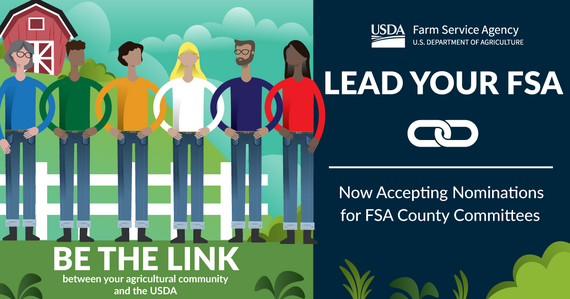 Nominations due Aug. 1
The U.S. Department of Agriculture (USDA) Farm Service Agency (FSA) is now accepting nominations for county committee members and encourages all farmers, ranchers, and FSA program participants to take part in their local County Committee election nomination process.
Elections will occur in certain Local Administrative Areas (LAA) for members. LAAs are elective areas for FSA committees in a single county or multi-county jurisdiction. In Rhode Island elections will take place in:
-
Kent County LAA 2 which consists of Coventry, East Greenwich, West Greenwich, Warwick, and West Warwick.
-
Newport County LAA 4 which consists of Jamestown, Little Compton, Middletown, Newport, Portsmouth, and Tiverton.
-
Bristol County LAA 5 which consists of Barrington, Bristol, and Warren.
Customers can identify which LAA they or their farming or ranching operation is in by using our GIS locator tool available at fsa.usda.gov/elections.
County committee members make important decisions about how Federal farm programs are administered locally. All nomination forms for the 2025 election must be postmarked or received in the local FSA office by Aug. 1, 2025.
Agricultural producers who participate or cooperate in a USDA program and reside in the LAA that is up for election this year, may be nominated for candidacy for the county committee. A cooperating producer is someone who has provided information about their farming or ranching operation to FSA, even if they have not applied or received program benefits.
Individuals may nominate themselves or others and qualifying organizations may also nominate candidates. USDA encourages minority producers, women, and beginning farmers or ranchers to nominate, vote and hold office.
Nationwide, more than 7,700 dedicated members of the agricultural community serve on FSA county committees. The committees are made up of 3 to 11 members who serve three-year terms. Committee members are vital to how FSA carries out disaster programs, as well as conservation, commodity and price support programs, county office employment and other agricultural issues.
For more information on FSA county committee elections, including fact sheets, nomination forms and FAQs, visit fsa.usda.gov/elections.
^ back to top
U.S. Secretary of Agriculture Brooke L. Rollins announced that agricultural producers who suffered eligible crop losses due to natural disasters in 2023 and 2024 can now apply for $16 billion in assistance through the Supplemental Disaster Relief Program (SDRP).
To expedite the implementation of SDRP, USDA’s Farm Service Agency (FSA) is delivering assistance in two stages. This first stage is open to producers with eligible crop losses that received assistance under crop insurance or the Noninsured Crop Disaster Assistance Program during 2023 and 2024. Stage One sign up will start in person at FSA county offices on July 10 and prefilled applications were mailed to producers on July 9. SDRP Stage Two signups for eligible shallow or uncovered losses will begin in early fall.
SDRP Stage One
FSA is launching a streamlined, pre-filled application process for eligible crop, tree, and vine losses by leveraging existing Noninsured Crop Disaster Assistance Program (NAP) and Risk Management Agency (RMA) indemnified loss data. The pre-filled applications were mailed on July 9, 2025.
Eligibility
Eligible losses must be the result of natural disasters occurring in calendar years 2023 and/or 2024. These disasters include wildfires, hurricanes, floods, derechos, excessive heat, tornadoes, winter storms, freeze (including a polar vortex), smoke exposure, excessive moisture, qualifying drought, and related conditions.
To qualify for drought related losses, the loss must have occurred in a county rated by the U.S. Drought Monitor as having a D2 (severe drought) for eight consecutive weeks, D3 (extreme drought), or greater intensity level during the applicable calendar year.
Producers in Connecticut, Hawaii, Maine, and Massachusetts will not be eligible for SDRP program payments. Instead, these states chose to cover eligible crop, tree, bush, and vine losses through separate block grants. These block grants are funded through the $220M provided for this purpose to eligible states in the American Relief Act.
How to Apply
To apply for SDRP, producers must submit the FSA-526, Supplemental Disaster Relief Program (SDRP) Stage One Application, in addition to having other forms on file with FSA.
SDRP Stage One Payment Calculation
Stage One payments are based on the SDRP adjusted NAP or Federal crop insurance coverage level the producer purchased for the crop. The net NAP or net federal crop insurance payments (NAP or crop insurance indemnities minus administrative fees and premiums) will be subtracted from the SDRP calculated payment amount.
For Stage One, the total SDRP payment to indemnified producers will not exceed 90% of the loss and an SDRP payment factor of 35% will be applied to all Stage One payments. If additional SDRP funds remain, FSA may issue a second payment.
Future Insurance Coverage Requirements
All producers who receive SDRP payments are required to purchase federal crop insurance or NAP coverage for the next two available crop years at the 60% coverage level or higher. Producers who fail to purchase crop insurance for the next two available crop years will be required to refund the SDRP payment, plus interest, to USDA.
SDRP Stage 2
FSA will announce additional SDRP assistance for uncovered losses, including non-indemnified shallow losses and quality losses and how to apply later this fall.
Learn more by visiting fsa.usda.gov/sdrp.
This announcement follows Secretary Rollins’ comprehensive plan to deliver the total amount of Congressionally appropriated $30 billion in disaster assistance to farmers and ranchers this year. These programs will complement the forthcoming state block grants that USDA is working with 14 different states to develop.
To date, USDA has issued more than $7.8 billion in Emergency Commodity Assistance Program (ECAP) payments to eligible producers. Additionally, USDA has provided over $1 billion in emergency relief through the Emergency Livestock Relief Program to producers who suffered grazing losses due to drought or wildfires in calendar years 2023 and 2024.
USDA disaster assistance information can be found on farmers.gov, including the Disaster Assistance Discovery Tool, Disaster-at-a-Glance fact sheet, Loan Assistance Tool, and the FarmRaise online FSA education hub. Payment details will be updated here weekly. For more information, contact your local RI FSA Office at (401) 828-3120 (ext. 1) or email Lillian Toth at Lillian.Toth@usda.gov.
^ back to top
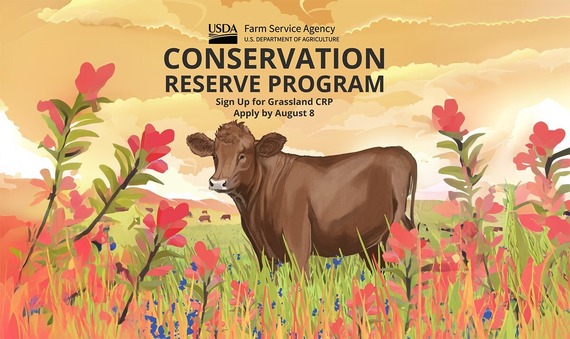 Supporting economic viability and working lands preservation
The U.S. Department of Agriculture (USDA) announced that agricultural producers and private landowners can now enroll in the Grassland Conservation Reserve Program (Grassland CRP). The sign-up runs from today, July 14, to Aug. 8, 2025. Grassland CRP, offered by USDA’s Farm Service Agency (FSA), is a voluntary working lands conservation program that enables participants to conserve grasslands while also continuing most grazing and haying practices.
Grassland CRP emphasizes support for grazing operations, plant and animal biodiversity, and grasslands and land with shrubs and forbs under the greatest threat of conversion.
“Through the conservation of America’s essential grasslands, Grassland CRP supports continued agricultural productivity while at the same time prioritizing private lands stewardship,” said FSA Administrator Bill Beam. “By offering landowners the best of both worlds — economic viability and working lands preservation — Grassland CRP provisions support USDA’s commitment to Farmers First.”
CRP, USDA’s flagship conservation program, celebrates its 40th anniversary this year. For four decades, CRP has provided financial and technical support to agricultural producers and landowners whose accepted acres are placed under contract for 10-15 years and who agree to voluntarily convert the land to beneficial vegetative cover to improve water quality, prevent soil erosion and support wildlife habitat. The American Relief Act, 2025, extended provisions for CRP through Sept. 30, 2025.
Currently, more than 25.8 million acres are enrolled in CRP, with nearly 9.7 million acres in Grassland CRP. On May 12, FSA opened General and Continuous CRP enrollment for 2025. FSA is currently reviewing submitted offers and will announce accepted offers at a later date. Due to the 27-million-acre statutory cap, only 1.8 million acres are available for all CRP enrollment this fiscal year.
Landowners and producers interested in Grassland CRP should contact their local RI FSA Office at (401) 828-3120 (ext. 1) or email Lillian Toth at Lillian.Toth@usda.gov to learn more or apply for the program before the Aug. 8 deadline.
FSA helps America’s farmers, ranchers and forest landowners invest in, improve, protect and expand their agricultural operations through the delivery of agricultural programs for all Americans. FSA implements agricultural policy, administers credit and loan programs, and manages conservation, commodity, disaster recovery and marketing programs through a national network of state and county offices and locally elected county committees. For more information, visit fsa.usda.gov.
^ back to top
Farm loan borrowers who have pledged real estate as security for their Farm Service Agency (FSA) direct or guaranteed loans are responsible for maintaining loan collateral. Borrowers must obtain prior consent or approval from FSA or the guaranteed lender for any transaction that affects real estate security. These transactions include, but are not limited to:
- Leases of any kind
- Easements of any kind
- Subordinations
- Partial releases
- Sales
Failure to meet or follow the requirements in the loan agreement, promissory note, and other security instruments could lead to nonmonetary default which could jeopardize your current and future loans.
It is critical that borrowers keep an open line of communication with their FSA loan staff or guaranteed lender when it comes to changes in their operation. For more information on borrower responsibilities, read Your FSA Farm Loan Compass.
^ back to top
 NRCS is celebrating its 90th anniversary this year. We began our celebration by posting a blog, an interactive timeline about NRCS history, and a video about how we’ve helped farmers over the years. We’ve also been sharing some historical photos on social media that show how our mission has changed and stayed the same over the years.
Now, we’d like for you to join us in our celebration. We’d like to hear your stories and see photos of your operation – Then and Now.
Does your agricultural operation have a fascinating history you’d like to share? Are there interesting stories about how your operation came to be or how it’s evolved? Do you have photos of your operation from its beginnings to the present day? If so, we want to hear from you!
This summer, we want to highlight how things have changed on your operation over the years in our #ThenAndNow campaign on NRCS and FarmersGov social media.
Here’s how to participate:
- Find a few historical photos of your operation from when it began - Then.
- Using your smartphone or digital camera, take photos of your operation - Now.
- In a few sentences, tell us: how has your operation changed over the years? How has it expanded, modernized equipment and practices, or transformed with conservation?
- Include your name, the location of your operation, and links to any social media accounts you manage to promote your operation.
- Submit the above to SM.FPAC.NRCS.Facebook@usda.gov by Friday, August 1, 2025.
Please note that by submitting your photo/video, you are granting USDA permission to use these materials for outreach and education purposes.
Follow NRCS on X and Facebook, and FarmersGov on Facebook, X , and Instagram. We look forward to seeing and sharing your stories!
^ back to top
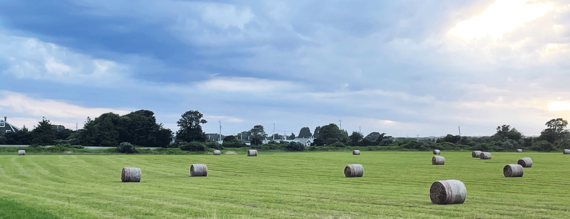 The Conservation Stewardship Program (CSP) is sometimes misunderstood. Some folks may think it is too complicated or not for small operations, but neither of those perceptions is true. CSP is designed to help you take your existing conservation efforts on your farm, ranch or woodland to the next higher level while maintaining your current ones. It’s supposed to help you add to what you’re already doing, either by enhancing your current practices or adding new ones.
NRCS will work one-on-one with you to develop a conservation plan under CSP to implement these additions or enhancements and help strengthen your operation.
Under CSP, you receive annual payments ($4,000 minimum) to help you maintain your existing conservation efforts and enhance them using new conservation practices or activities. CSP contracts last five years, with the opportunity to compete for a contract renewal if you successfully fulfill the initial contract and agree to achieve additional conservation objectives.
CSP is often misunderstood, so here are a few “myths” about the program that we want to dispel.
Myth #1: The deadline to apply for CSP in my state has already passed, so I don’t need to think about applying until next year.
Don’t wait to apply! We accept applications year-round, but funding decisions are made locally at specific times and that “ranking date” may be coming up soon in your area. If we already have your application, it will be considered at the next ranking date. Plus, if you start planning now, you will be ready for application ranking dates as they approach. See program application ranking dates for all states at https://www.nrcs.usda.gov/ranking-dates.
Myth #2: Enrolling land in CSP is complicated and time-consuming.
If you have a farm and tract number (available from USDA’s Farm Service Agency) and have kept good farm records, you’re already well on your way. You just need to complete a three-page NRCS-CPA-1200 form, see Applications and Forms. You can even complete this form online if you create a farmers.gov account at https://www.farmers.gov/account.
Read more myths...
^ back to top

Irrigation management is a vital part of successful farming, particularly in areas where rainfall is inconsistent or insufficient to meet crop needs. At its core, it is the process of applying the right amount of water at the right time and the right application rate to achieve optimal crop production all while conserving water, energy and protecting soil and water quality. When done properly, this practice supports plant health, reduces input costs and promotes long-term sustainability of agricultural operations.
For farmers, effective irrigation management offers a wide range of benefits. First and foremost, it improves water use efficiency. By tailoring water applications to the specific needs of the crops, taking into account weather conditions, soil types and field variability, farmers can avoid overwatering or underwatering. This leads to healthier crops, reduced disease pressure and ultimately higher yields. Additionally, managing irrigation wisely helps reduce labor costs and energy usage, especially for systems that rely on pumps. Less water applied means less energy needed, which can result in significant cost savings.
Beyond economic gains, good irrigation practices also play an important role in environmental stewardship. Over-irrigation can lead to surface water runoff, which may carry field nutrients, pesticides and sediments into nearby waterbodies. These pollutants can have negative impacts on water quality and aquatic ecosystems. By applying water more efficiently, farmers help protect these natural resources and support the long-term health of the land.
NRCS offers valuable support for farmers looking to improve their irrigation systems and water management practices. Through technical and financial assistance, NRCS works directly with producers to assess their current systems and identify opportunities for improvement. Conservation practices like irrigation water management (practice 449), irrigation pipeline (practice 430), micro irrigation (practice 441) and sprinkler system (practice 442) can be personalized to each farm’s needs.
When a farmer partners with NRCS, the process begins with a conservation plan that evaluates soil, water, crops and existing infrastructure. From there, NRCS conservationists can recommend practical steps to optimize irrigation efficiency. These might include adjusting application schedules or pressures, upgrading to a more efficient system or installing tools to monitor soil moisture and weather conditions. In many cases, financial assistance is available through programs like the Environmental Quality Incentives Program (EQIP) and the Conservation Stewardship Program (CSP), making it more affordable for producers to invest in upgrades that benefit both their bottom line and the environment.
Ultimately, irrigation water management is about making the most out of every drop. As weather patterns become more unpredictable and water resources face increasing environmental pressures, it is now more important than ever for farmers to take a thoughtful, proactive approach to how they water their crops. With the support of NRCS, producers can build more resilient operations while increasing their productivity and protecting their valuable farmland.
^ back to top
|

USDA is extending the rainfall collection period for the Hurricane Insurance Protection – Wind Index (HIP-WI) and the Tropical Storm Option (TS) to include unique circumstances when a storm lingers over a county or re-enters a county.
Beginning with the 2026 crop year, USDA’s Risk Management Agency (RMA) will add one day to the rainfall collection period for each 24 hours that the tropical storm force winds are present within a county. RMA will also add an additional four-day collection period for each instance a storm exits and re-enters a county.
HIP-WI and TS are crop insurance tools that help deliver prompt assistance to farmers in hurricane prone areas. These innovative policies build off a farmer’s underlying policy with no additional paperwork or loss adjustment needed. HIP-WI and TS generally pay within weeks following a hurricane or tropical storm – the fastest payments from USDA following a disaster.
HIP-WI provides an indemnity if the county experiences sustained winds of 64 knots during the insurance period. The optional TS can be added to provide 50% of HIP-WI indemnity if the county experiences sustained winds of at least 34 knots and at least six inches of gridded precipitation within the rainfall collection period. The collection period is generally four days – the day the tropical storm enters the county, the day before, and two days after. All windspeed and precipitation data are provided from the National Oceanographic and Atmospheric Administration.
HIP-WI coverage must be purchased by the sales closing date (SCD) of a producer’s underlying policy. Sales closing dates vary by crop. Therefore, producers should check with a crop insurance agent to verify the sales closing date for a crop and county.
Since the implementation of HIP-WI in crop year 2020 and TS in crop year 2023, these programs have paid over $1.6 billion within a few weeks after each tropical cyclone. In 2024, five hurricanes triggered $960 million in payments across nine states (hurricanes Beryl, Debby, Francine, Helene, and Milton).
To find additional information about the policy, including frequently asked questions, videos, and a fact sheet, please visit the HIP-WI website.
^ back to top
|
USDA – Rhode Island
60 Quaker Lane
Warwick, RI 02886
|
Natural Resources Conservation Service (NRCS)
401-828-1300 | www.RI.nrcs.usda.gov
|
|
Eastern RI – Serving Newport and Bristol counties
|
|
NRCS Field Office
Kat Zuromski, District Conservationist (Acting)
401-786-1389
Kathryn.Zuromski@usda.gov
|
Conservation District Office
401-934-0842/ info@easternriconservation.org
|
|
Northern RI – Serving Providence County
|
|
NRCS Field Office
Ghyllian Alger, District Conservationist (Acting)
401-822-8835/ Ghyllian.Alger@usda.gov
|
Conservation District Office
401-934-0840/ mallard.nricd@gmail.com
|
|
Southern RI – Serving Kent and Washington counties
|
|
NRCS Field Office
Jameson Long, District Conservationist
401-822-8837/ Jameson.Long@usda.gov
|
Conservation District Office
401-661-5761/ gfuller@sricd.org
|
|
|
|
RI FSA County Office, Suite 49
RI FSA Farm Loan Team, Suite 62
RI FSA State Office, Suite 62
|
401-828-3120 Option 1
401-828-3120 Option 2
401-828-3120 Option 3
|
|
County Committee
|
|
Gilbert Rathbun Jr., Chairperson
John Sousa, Member
Howard Tucker III, Member
|
Erin Cabot, Vice Chairperson
William Coulter, Member
Dawn M Spears, SDA Member
|
|
|
|






