
Louisiana USDA-FSA Updates - July 2025
Table of Contents:
Well, they say that “time flies when you are having fun.” We must be having fun, because it’s already July and rice harvest has started in the southernmost regions.
We all know the challenges of weather and economics are real, and this year has been no exception. We have been challenged by rain and flooding, especially when it came to planting soybeans. The good news is that cattle are fat, grass is plentiful, and most row crops appear to be progressing well!
Our local FSA offices have been busy rolling out a suite of Supplemental Disaster Assistance programs. Here’s a quick rundown:
- The Supplemental Disaster Relief Program (SDRP) provides assistance to producers with revenue, quality or production losses due to weather-related events in 2023 and 2024. For producers with indemnified losses, Stage 1 sign-up opened on July 10. Prefilled applications were mailed to producers.
- The Emergency Commodity Assistance Program (ECAP) sign-up runs through Aug. 15, 2025. ECAP payments are based on your 2024 planted and prevented planted acres. In Louisiana, we have already approved close to 8,893 applications, so this is a reminder to those who haven’t submitted their application.
- The Emergency Livestock Relief Program (ELRP) for Drought and Wildfire provides assistance for losses due to drought or wildfires in 2023 or 2024. Payments have already been issued for producers who have an approved Livestock Forage Disaster Program application on file for those years. A second round of ELRP will be announced soon for producers impacted by flooding.
Finally, a reminder that the nomination period is open for our FSA County Committees. Please consider this opportunity to be the link between your ag community and USDA. If you picked up a nomination form to potentially serve on your local FSA county committee, be sure to return it to your office by Aug. 1, 2025.
Craig McCain
State Executive Director
U.S. Secretary of Agriculture Brooke L. Rollins announced today that agricultural producers who suffered eligible crop losses due to natural disasters in 2023 and 2024 can now apply for $16 billion in assistance through the Supplemental Disaster Relief Program (SDRP).
To expedite the implementation of SDRP, USDA’s Farm Service Agency (FSA) is delivering assistance in two stages. This first stage is open to producers with eligible crop losses that received assistance under crop insurance or the Noninsured Crop Disaster Assistance Program during 2023 and 2024. Stage One sign up will start in person at FSA county offices on July 10 and prefilled applications are being mailed to producers today, July 9. SDRP Stage Two signups for eligible shallow or uncovered losses will begin in early fall.
FSA is launching a streamlined, pre-filled application process for eligible crop, tree, and vine losses by leveraging existing Noninsured Crop Disaster Assistance Program (NAP) and Risk Management Agency (RMA) indemnified loss data. The pre-filled applications will be mailed on July 9, 2025.
Eligible losses must be the result of natural disasters occurring in calendar years 2023 and/or 2024. These disasters include wildfires, hurricanes, floods, derechos, excessive heat, tornadoes, winter storms, freeze (including a polar vortex), smoke exposure, excessive moisture, qualifying drought, and related conditions.
To qualify for drought related losses, the loss must have occurred in a county rated by the U.S. Drought Monitor as having a D2 (severe drought) for eight consecutive weeks, D3 (extreme drought), or greater intensity level during the applicable calendar year.
Producers in Connecticut, Hawaii, Maine, and Massachusetts will not be eligible for SDRP program payments. Instead, these states chose to cover eligible crop, tree, bush, and vine losses through separate block grants. These block grants are funded through the $220M provided for this purpose to eligible states in the American Relief Act.
To apply for SDRP, producers must submit the FSA-526, Supplemental Disaster Relief Program (SDRP) Stage One Application, in addition to having other forms on file with FSA.
SDRP Stage One Payment Calculation
Stage One payments are based on the SDRP adjusted NAP or Federal crop insurance coverage level the producer purchased for the crop. The net NAP or net federal crop insurance payments (NAP or crop insurance indemnities minus administrative fees and premiums) will be subtracted from the SDRP calculated payment amount.
For Stage One, the total SDRP payment to indemnified producers will not exceed 90% of the loss and an SDRP payment factor of 35% will be applied to all Stage One payments. If additional SDRP funds remain, FSA may issue a second payment.
Future Insurance Coverage Requirements
All producers who receive SDRP payments are required to purchase federal crop insurance or NAP coverage for the next two available crop years at the 60% coverage level or higher. Producers who fail to purchase crop insurance for the next two available crop years will be required to refund the SDRP payment, plus interest, to USDA.
FSA will announce additional SDRP assistance for uncovered losses, including non-indemnified shallow losses and quality losses and how to apply later this fall.
This announcement follows Secretary Rollins’ comprehensive plan to deliver the total amount of Congressionally appropriated $30 billion in disaster assistance to farmers and ranchers this year. These programs will complement the forthcoming state block grants that USDA is working with 14 different states to develop.
USDA offers programs to help producers recover from disasters; FEMA can help you prepare ahead of time.
The Federal Emergency Management Agency (FEMA) has a free mobile app that explains what to do before, during and after emergencies. The app is available for download for Apple, Android and Blackberry mobile devices.
Download the app to:
- Receive alerts from the National Weather Service for up to five locations
- Get safety reminders, read tips to survive natural disasters and customize your emergency checklist
- Locate open shelters and where to talk to FEMA in person (or on the phone)
- Upload and share your disaster photos to help first responders.
For more information about the FEMA app, visit fema.gov/mobile-app. To download the FEMA app from the Apple Store visit itunes.apple.com/us/app/fema/id474807486?mt=8. To download the FEMA app on Google Play for Android visit: play.google.com/store/apps/details?id=gov.fema.mobile.android&hl=en.

Farmers can use USDA farm ownership microloans to buy and improve property. These microloans are especially helpful to beginning or underserved farmers, U.S. veterans looking for a career in farming, and those who have small and mid-sized farming operations. Microloans have helped farmers and ranchers with operating costs, such as feed, fertilizer, tools, fencing, equipment, and living expenses since 2013.
Microloans can also help with farmland and building purchases and soil and water conservation improvements. FSA designed the expanded program to simplify the application process, expand eligibility requirements and expedite smaller real estate loans to help farmers strengthen their operations. Microloans provide up to $50,000 to qualified producers and can be issued to the applicant directly from the USDA Farm Service Agency (FSA).
To learn more about the FSA microloan program, contact your local Parish USDA Service Center or visit fsa.usda.gov/microloans.
|
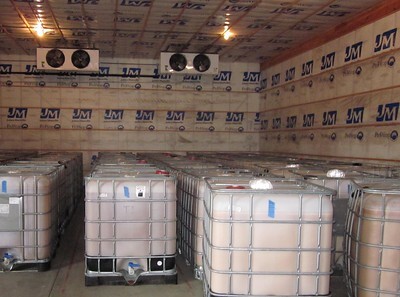
USDA’s Farm Service Agency (FSA) celebrated 25 years of the agency’s popular Farm Storage Facility Loan Program (FSFL) this May. For a quarter century, family-owned agricultural operations have received low-interest financing through the program to enhance or expand their operations and manage marketing of the commodities they produce by building or upgrading permanent and portable storage facilities and purchasing needed handling equipment.
The FSFL program was created in May 2000 to address existing on-farm grain storage needs. Since the program’s inception, more than 40,000 loans have been issued for on-farm storage, increasing storage capacity by one billion bushels. While many producers primarily associate the program with grain storage, over the past 25 years the eligible storage has expanded to include a wide variety of facilities and related equipment - new or used and permanent or portable - including hay barns, bulk tanks, and facilities for cold storage. Drying, handling and storage equipment is also eligible, including skid steers and storage and handling trucks.
Eligibility
Eligible commodities for storage loans include grains, oilseeds, peanuts, pulse crops, hay, hemp, honey, renewable biomass commodities, fruits and vegetables, floriculture, hops, seed cotton, wool, maple sap, maple syrup, milk, cheese, yogurt, butter, eggs, unprocessed meat and poultry, rye and aquaculture. Most recently, controlled atmosphere storage was added as an eligible facility and bison meat has been also added to the list of eligible commodities.
FSFL is an excellent financing program to address on-farm storage and handling needs for small and mid-sized farms, and for new farmers. Loan terms vary from three to 12 years. The maximum loan amount for storage facilities is $500,000. The maximum loan amount for storage and handling trucks is $100,000.
In 2016, FSA introduced a new storage loan category, the microloan, for loans with an aggregate balance up to $50,000. Microloans offer a 5% down payment requirement, compared to a 15% down payment for a regular FSFL, and microloans waive the regular three-year production history requirement.
How to apply
Loan applications should be filed in the administrative FSA county office that maintains a producer’s farm records. Producers can contact their FSA County Office to make an appointment. Beginning farmers who haven’t worked with FSA can visit farmers.gov/your-business/beginning-farmers for more information or view the New Farmers Fact Sheet.
For more information, visit the FSFL webpage, view the fact sheet and our Ask the Expert Blog, or contact your FSA County Office.
|
The new customer kiosks from USDA’s Farm Service Agency are available at every county office nationwide. These kiosks help to streamline your visit to your local county office and easily access a variety of features such as signing FSA documents, utilizing the Loan Assistance Tool, browsing USDA programs, accessing the internet, accessing necessary personal information, and signing up for a Login.gov account, which provides access to farmers.gov level two features and other USDA and U.S. Government web resources. Future kiosk functionality enhancements include a customer check-in application, self-service option for FSA program applications and documents, financial inquiries and more.
Learn more about how FSA is modernizing our customer experience here.
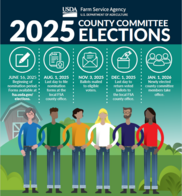
The U.S. Department of Agriculture (USDA) Farm Service Agency (FSA) county committees are a critical component of the day-to-day operations of FSA and allow grassroots input and local administration of federal farm programs.
Committees are comprised of locally elected agricultural producers responsible for the fair and equitable administration of FSA farm programs in their counties. Committee members are accountable to the Secretary of Agriculture. If elected, members become part of a local decision-making and farm program delivery process.
A county committee is composed of 3 to 11 elected members from Local Administrative Areas (LAA). Each member serves a three-year term. To be eligible for nomination and hold office as a committee member or alternate, a person must fulfill each of the following requirements:
- Be eligible to vote in an FSA county committee election*.
- Reside in the LAA that is up for election.
- Must not have been:
- Removed or disqualified from:
- FSA county committee membership or alternate membership, or
- FSA employment.
- Removed for cause from any public office or have been convicted of fraud, larceny, embezzlement or any other felony.
- Dishonorably discharged from any branch of the armed services.
*The following requirements must be met for a person to be eligible to vote in the county committee elections:
- Be of legal voting age or, if not of legal voting age, supervise and conduct the farming operation of an entire farm.
- Have an interest in a farm or ranch as either:
- An individual who meets one or more of the following:
- Is eligible and capable to vote in one’s own right.
- Is a partner of a general partnership.
- Is a member of a joint venture.
- Is an authorized representative of a legal entity.
- Participates or cooperates in any FSA program that is provided by law. A cooperating producer is someone who has provided information about their farming or ranching operation(s) but may not have applied or received FSA program benefits.
All nomination forms for the 2025 election must be postmarked or received in the local USDA Service Center by Aug. 1, 2025. For more information on FSA county committee elections, including fact sheets, nomination forms and FAQs, visit fsa.usda.gov/elections.
|
The U.S. Department of Agriculture (USDA) is announcing the launch of the Debt Consolidation Tool, an innovative online tool available through farmers.gov that allows agricultural producers to enter their farm operating debt and evaluate the potential savings that might be provided by obtaining a debt consolidation loan with USDA’s Farm Service Agency (FSA) or a local lender.
A debt consolidation loan is a new loan used to pay off other existing operating loans or lines of credit that might have unreasonable rates and terms. By combining multiple eligible debts into a single, larger loan, borrowers may obtain more favorable payment terms such as a lower interest rate or lower payments. Consolidating debt may also provide farmers and ranchers additional cash flow flexibilities.
The Debt Consolidation Tool is a significant addition to FSA’s suite of improvements designed to modernize its Farm Loan Programs. The tool enhances customer service and increases opportunities for farmers and ranchers to achieve financial viability by helping them identify potential savings that could be reinvested in their farming and ranching operation, retirement accounts, or college savings accounts.
Producers can access the Debt Consolidation Tool by visiting farmers.gov/debt-consolidation-tool. The tool is built to run on modern browsers including Chrome, Edge, Firefox, or the Safari browser. Producers do not need to create a farmers.gov account or access the authenticated customer portal to use the tool.
USDA encourages producers to reach out to their local FSA farm loan staff to ensure they fully understand the wide range of loan and servicing options available to assist with starting, expanding, or maintaining their agricultural operation. To conduct business with FSA, please contact your local USDA Service Center.
Operating, Ownership and Emergency Loans
FSA offers farm ownership, operating and emergency loans with favorable interest rates and terms to help eligible agricultural producers obtain financing needed to start, expand or maintain a family agricultural operation.
Interest rates for Operating and Ownership loans for July 2025 are as follows:
FSA also offers guaranteed loans through commercial lenders at rates set by those lenders. To access an interactive online, step-by-step guide through the farm loan process, visit the Loan Assistance Tool on farmers.gov.
Commodity and Storage Facility Loans
Additionally, FSA provides low-interest financing to producers to build or upgrade on-farm storage facilities and purchase handling equipment and loans that provide interim financing to help producers meet cash flow needs without having to sell their commodities when market prices are low. Funds for these loans are provided through the Commodity Credit Corporation (CCC) and are administered by FSA.
More Information
To learn more about FSA programs, producers can contact their local USDA Service Center. Additionally, producers can use online tools, such as the Loan Assistance Tool and Debt Consolidation Tool to explore loan options.
August 1: Last day to request a farm Reconstitution
August 1: County Committee Nomination form return postmark deadline
August 8: Grassland Conservation Reserve Program (CRP) sign-up ends
August 15: Deadline to apply for Emergency Commodity Assistance Program (ECAP)
September 1: Office closure for Labor Day
September 30: Last day to certify 2026 Crawfish
September 30 – Sales closing date for 2026 NAP Grazing/Forage, strawberries, aquaculture, and most fall seeded vegetable crops
|








