Nevada July USDA Newsletter
In This Issue:
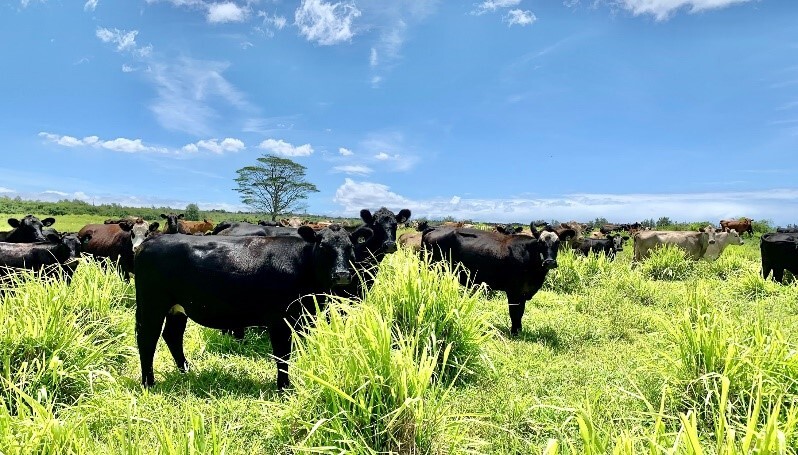
USDA’s Farm Service Agency (FSA) reminds drought-impacted producers in Nevada that they may be eligible for assistance through the Emergency Assistance for Livestock, Honey Bees, and Farm-Raised Fish Program (ELAP).
For eligible livestock in qualifying counties, ELAP provides financial assistance for:
- the transportation of water to livestock;
- the above normal cost of mileage for transporting feed to livestock; and
- the above normal cost of transporting livestock to forage/grazing acres.* *Hauling livestock both ways starting in 2023, one haul per animal reimbursement and no payment for “empty miles.”
Eligible livestock include cattle, bison, goats and sheep, among others, that are maintained for commercial use and located in a county where qualifying drought conditions occur. A county must have had D2 severe drought intensity on the U.S. Drought Monitor for eight consecutive weeks during the normal grazing period, or D3 or D4 drought intensity at any time during the normal grazing period. Producers must have risk in both eligible livestock and eligible grazing land in an eligible county to qualify for ELAP assistance.
Transporting Water
Producers must be transporting water to eligible livestock on eligible grazing land where adequate livestock watering systems or facilities were in place before the drought occurred and where water transportation is not normally required. ELAP covers costs associated with personal labor, equipment, hired labor, and contracted water transportation fees. Cost of the water itself is not covered. ELAP covers $0.10 per gallon to transport water.
Transporting Feed
ELAP provides financial assistance to livestock producers who incur above normal expenses for transporting feed to livestock during drought. The payment formula excludes the first 25 miles and any mileage over 1,000 miles. The reimbursement rate is 60% of the cost above what would normally would have been incurred during the same time period in a normal (non-drought) year.
Livestock feed that is transported to livestock located on land enrolled in the Conservation Reserve Program (CRP) is eligible if the producer has an approved conservation plan with acceptable grazing practices developed in coordination with the Natural Resources Conservation Service
The payment rate to transport feed is $3.50/ loaded mile for expenses above what would have normally been incurred.
Transporting Livestock
ELAP provides financial assistance to livestock producers who are hauling livestock to a new location for feed resources due to insufficient feed or grazing in drought-impacted areas. As with transporting feed, the payment formula for transporting livestock excludes the first 25 miles and any mileage over 1,000 miles. The reimbursement rate is 60% of the costs above what would normally have been incurred during the same time period in a normal (non-drought) year.
The payment rate to transport livestock is $3.50/loaded mile for expenses above what would have normally been incurred and covers hauling livestock one-way, one haul per animal reimbursement and no payment for “empty miles.”
An online tool is now available to help ranchers document and estimate payments to cover feed and livestock transportation costs caused by drought.
Reporting Losses
Producers should contact FSA as soon as the loss of water or feed resources are known.
For ELAP eligibility, documentation of expenses is critical. Producers should maintain records and receipts associated with the costs of transporting water to eligible livestock, the costs of transporting feed to eligible livestock, the costs of additional feed purchases, and the costs of transporting eligible livestock to forage or other grazing acres.
More Information
Producers interested in ELAP assistance can contact their local USDA Service Center to learn more or to apply for programs.
When changes in farm ownership or operation take place, a farm reconstitution is necessary. The reconstitution — or recon — is the process of combining or dividing farms or tracts of land based on the farming operation.
To be effective for the current fiscal year, farm combinations and farm divisions must be requested by August 1 of the fiscal year for farms subject to the Agriculture Risk Coverage (ARC) and Price Loss Coverage (PLC) program. A reconstitution is considered to be requested when all of the required signatures are on FSA-155 and all other applicable documentation, such as proof of ownership, is submitted.
Total Conservation Reserve Program (CRP) and non-ARC/PLC farms may be reconstituted at any time.
The following are the different methods used when doing a farm recon:
-
Estate Method — the division of bases, allotments and quotas for a parent farm among heirs in settling an estate
-
Designation of Landowner Method — may be used when (1) part of a farm is sold or ownership is transferred; (2) an entire farm is sold to two or more persons; (3) farm ownership is transferred to two or more persons; (4) part of a tract is sold or ownership is transferred; (5) a tract is sold to two or more persons; or (6) tract ownership is transferred to two or more persons. In order to use this method, the land sold must have been owned for at least three years, or a waiver granted, and the buyer and seller must sign a Memorandum of Understanding
-
DCP Cropland Method — the division of bases in the same proportion that the DCP cropland for each resulting tract relates to the DCP cropland on the parent tract
-
Default Method — the division of bases for a parent farm with each tract maintaining the bases attributed to the tract level when the reconstitution is initiated in the system.
For questions on your farm reconstitution, contact your County USDA Service Center.
The Noninsured Crop Disaster Assistance Program (NAP) provides financial assistance to you for crops that aren’t eligible for crop insurance to protect against lower yields or crops unable to be planted due to natural disasters including freeze, hail, excessive moisture, excessive wind or hurricanes, flood, excessive heat and qualifying drought (includes native grass for grazing), among others.
In order to participate, you must obtain NAP coverage for the crop year by the applicable deadline using form CCC-471 “Application for Coverage” and pay the service fee. Application closing dates vary by crop. Producers are also required to submit an acceptable crop acreage report. Additionally, NAP participants must provide:
- The quantity of all harvested production of the crop in which the producer held an interest during the crop year
- The disposition of the harvested crop, such as whether it is marketable, unmarketable, salvaged or used differently than intended
- Acceptable crop production records (when requested by FSA)
Producers who fail to report acreage and production information for NAP-covered crops could see reduced or zero NAP assistance. These reports are used to calculate the approved yield.
If your NAP-covered crops are affected by a natural disaster, notify your FSA office by completing Part B of form CCC-576 “Notice of Loss and Application for Payment.” This must be completed within 15 calendar days of the occurrence of the disaster or when losses become apparent or 15 days of the final harvest date. For hand-harvested crops and certain perishable crops, you must notify FSA within 72 hours of when a loss becomes apparent.
To receive benefits, you must also complete Parts D, E, F, G and H of the CCC-576 “Notice of Loss and Application for Payment” within 60 days of the last day of coverage for the crop year for any NAP covered crops. The CCC-576 requires acceptable appraisal information. Producers must provide evidence of production and note whether the crop was marketable, unmarketable, salvaged or used differently than intended.
Eligible crops must be commercially produced agricultural commodities for which crop insurance is not available, including perennial grass forage and grazing crops, fruits, vegetables, mushrooms, floriculture, ornamental nursery, aquaculture, turf grass, ginseng, honey, syrup, bioenergy, and industrial crops.
For more information on NAP, contact your County USDA Service Center or visit fsa.usda.gov/nap.
If you have experienced delays in receiving Agriculture Risk Coverage (ARC) and Price Loss Coverage (PLC) payments, Loan Deficiency Payments (LDPs) and Market Gains on Marketing Assistance Loans (MALs), it may be because you have not filed form CCC-941, Adjusted Gross Income Certification.
If you don’t have a valid CCC-941 on file for the applicable crop year you will not receive payments. All farm operator/tenants/owners who have not filed a CCC-941 and have pending payments should IMMEDIATELY file the form with their recording county FSA office. Farm operators and tenants are encouraged to ensure that their landowners have filed the form.
FSA can accept the CCC-941 for 2018, 2019, 2020, 2021, 2022, 2023 and 2024. Unlike the past, you must have the CCC-941 certifying your AGI compliance before any payments can be issued.
USDA’s Farm Service Agency (FSA) offers disaster assistance and low-interest loan programs to assist you in your recovery efforts following wildfires or other qualifying natural disasters.
Available programs and loans include:
-
Non-Insured Crop Disaster Assistance Program (NAP) - provides financial assistance to producers of non-insurable crops when low yields, loss of inventory, or prevented planting occur due to natural disasters including excessive wind and qualifying drought (includes native grass for grazing).
-
Livestock Indemnity Program (LIP) - offers payments to eligible producers for livestock death losses in excess of normal mortality due to adverse weather.
-
Tree Assistance Program (TAP) – provides assistance to eligible orchardists and nursery tree growers for qualifying tree, shrub and vine losses due to natural disasters including excessive wind and qualifying drought.
-
Emergency Assistance for Livestock, Honeybees, and Farm-Raised Fish Program (ELAP) - provides emergency relief for losses due to feed or water shortages, disease, adverse weather, or other conditions, which are not adequately addressed by other disaster programs.
-
Emergency Loan Program – available to producers with agriculture operations located in a county under a primary or contiguous Presidential or Secretarial disaster designation. These low interest loans help producers recover from production and physical losses.
-
Emergency Conservation Program (ECP) - provides emergency funding for farmers and ranchers to rehabilitate land severely damaged by natural disasters; includes fence loss.
For more information on these programs, contact your County USDA Service Center or visit fsa.usda.gov/disaster.
There are options for Farm Service Agency (FSA) loan customers during financial stress. If you are a borrower who is unable to make payments on a loan, contact your local FSA Farm Loan Manager to learn about your options.
A Federal Register Notice for updates to the National Handbook of Conservation Practice Standards was published Monday 6/30/25 and is now open for public comment (NRCS external comments). The comment period will close on 7/30/24.
The notice, which includes the ability to submit comments directly from the page, can be found here: https://www.federalregister.gov/documents/2025/06/30/2025-12056/proposed-revisions-to-the-national-handbook-of-conservation-practices-for-the-natural-resources
Copies of the proposed conservation practice standards along with redline documents (showing changes from current to proposed) can be found on the Conservation Practice Standards Information webpage here https://www.nrcs.usda.gov/getting-assistance/conservation-practices towards the middle of the page.
For questions, please reach out to J’Que Jones, National Agricultural Engineer at jque.jones@usda.gov
Practices included are:
Access Control (Code 472): Revised to add clarity, to align the purposes with resource concerns, and to clarify that the practice is used to protect sensitive areas and practice is not used to manage livestock. The general criteria information was incorporated into to the plans and specifications section.
Controlled Traffic Farming (Code 334): Only minor changes were made in this revision to simplify language in the “Definition, Practice Purpose, and the Conditions Where Practice Applies sections”. The term “tram lines” changed to traffic lanes. The “General Criteria” section received minor changes such as: removal of the axle weight and tire PSI as these are difficult for conservation planners to determine. Wording was also included to state this practice should be focused on the interior of the field production footprint with lesser emphasis on incidental turning at the ends of the field. Only minor wording changes were made to the “Considerations, Plans and Specifications, Operation and Maintenance” section. No Reference changes.
Irrigation Canal or Lateral (Code 320): Minor rewording edits were made throughout the standard to provide clarity and improve readability. A new subsection was added to address considerations for cultural resources. Revised the “Plans and Specifications” and “Consideration” sections to account for safety features and relationship between freeboard and overtopping.
Irrigation Ditch Lining (Code 428): The “Definition,” and “Purpose” sections of the standard were edited for clarity. A section on “Additional Criteria to Reduce Energy Use” was added. Revised the minimum required thickness for reinforced polyethylene and reinforced flexible polypropylene lining materials under the heading “Geosynthetic and semi‐rigid formed plastic” in the “Materials” subsection of “General Criteria Applicable to All Purposes” section. The “References” section was also updated. Minor rewording edits throughout the standard to improve readability.
Irrigation Field Ditch (Code 388): Improved readability and added statements ensuring compliance with laws and regulations to the “General Criteria Application to All Purposes” subsection. Removed reference to Conservation Practice Standard (CPS) Open Channel (Code 582) within the “Capacity requirements” subsection since it does contain requirements pertaining to these criteria. Added new “Vegetation” subsections within “General Criteria” section. Updated “Spoil” subsection to reflect the name change of CPS Code 572 to “Spoil Disposal.” A new subsection was added to address considerations for cultural resources. In the “Cross section” subsection, clarified the freeboard requirement. A new consideration for overtopping was added to the “Consideration” section.
Open Channel (Code 582): Revised the “Purpose” section to clarify that the CPS will provide outlets to drainage systems and to protect or enhance wildlife habitat. Moved the statement of “In urban areas, consider the design impacts on high-value developments” from the “Criteria” section to the “Consideration” section. Removed the “Cultural Resources” section because the policies and regulations should not be repeated in CPS's. Minor revisions were made for clarity and readability purposes.
Pest Management Conservation System (Code 595): Reworded throughout to clarify statements that have caused confusion. Reworded purposes for air resource concerns. Clarified “Purpose” section to reduce emissions of volatile organic compounds is only applicable in ozone nonattainment areas. Included additional land uses: pasture, range, and forest. Updated “Reference” section to the updated Technical Note 5. Added reference to Prescribed Burning (CPS 338) when using it as a pest management technique in “General Criteria Applicable to All Purposes” section. Added the table of hazard rating categories and mitigation points needed in the “Additional Criteria to Reduce Pesticides Transported to Surface and Ground Waters” section. Separated the “Additional Criteria” into different sections. Refined the “Considerations” section and updated the “References” section.
Pumping Plant (Code 533): The revised standard expands the practice purpose to include fire suppression. Methods for gathering wind speed data were added to the “Windmills” subsection. Also, pump enclosure criteria were added to the “Buildings and accessories” subsection. Renamed “Photovoltaic panels” subsection to “Photovoltaic arrays” and established degradation rate criteria therein. Additionally, updates were made to the “Considerations” section to include opportunities for greenhouse gas emissions reduction and the use of water well yield capacity data. Further, minor rewording edits were made throughout the standard to improve readability.
Waste Treatment Lagoon (Code 359): The practice standard was updated to include requirements for foundation and embankments to improve consistency with conservation practice standard, waste Storage Facility (Code 313). A requirement was added to require a lagoon cover for lagoons used on operations with greater than 1000 animal units. Changes to the “Purposes” section were made to adequately align with resource concerns. Minor changes were made for clarity and to better describe the practice definition, purpose, criteria, and considerations. The “References” section was also updated.
Waste Recycling (Code 633): The document revisions are minor and include adding a new purpose, revising wording to clarify meaning, modifications to align with the current format requirements, NRCS general writing guidelines, and the Plain Language Act.
Wildlife Habitat (Code 645): This new standard combines Conservation Practice Standard 644 Wetland Wildlife Habitat Management and 645 Upland Wildlife Habitat Management. The title has been revised to “Wildlife Habitat Management” which articulates the use of this practice is appropriate on all land uses where habitat exists and can be managed. The updated version of the standard removes all habitat development actions and focuses on management actions, better aligning with the one-year lifespan.
The USDA Risk Management Agency (RMA) encourages interested nursery producers to join an informational workshop on Aug. 7, 2025, to learn about the Nursery Value Select (NVS) pilot program.
About the Program:
NVS is a pilot program that allows nursery producers to select the dollar amount of coverage that best fits their risk management needs. Beginning with crop year 2026, NVS will replace the Nursery Field Grown and Container crop insurance program, offering comparable and improved risk management options. The sales closing date for all Gulf Coast states, East Coast states, and West Virginia was May 1, 2025. The sales closing date in all other states is Sept.1, 2025.
Event Details:
Nursery Value Select Webinar Thursday, Aug. 7, 2025 11a.m. Pacific
To learn more go here https://www.rma.usda.gov/news-events/events/2025-08-07/nursery-value-select-nvs-webinar
|
Acting State Executive Director
Katie Nuffer
775.834.0882
|
NRCS State Conservationist
Heidi Ramsey
775.857.8500
|
|
Acting District Director District 1 FSA
Katie Nuffer
775.834.0882
|
District Director District 2 FSA
Claire Kehoe
775.738.6445 x 106
|
|
Elko
Tamara Thompson, Acting CED - FSA
775.738.6445 x 106
Allen Moody, Acting DC - NRCS
775.433.3921
|
Ely
Chris Ward, CED - FSA
775.738.6445 x 106
Joe Noyes, Acting DC - NRCS
775.289.4065 x 105
|
|
Fallon
Krysta Roose, CED - FSA
775.423.5124 x 109
Albert Mulder, DC - NRCS
775.423.5124 x 114
|
Las Vegas
Dariya Zaporozhchenko,Urban Ag CED - FSA
702.407.1400
Jasmine Wilson, Urban Ag DC - NRCS
702.407.1400 x 6003
Jamie Gottilieb, DC-NRCS
775.623.5025 x 101
|
|
Lovelock
Ali Phillips, CED - FSA
775.273.2922 x 100
Chrisite Scilacci, Resource Conservationist - NRCS
775.857.8500
|
Minden
Carson Hicks, DC - NRCS
775.782.3661
Caliente
Amanda Wheatley, Range Managment Specialist - NRCS
775.726.3101
|
|
Winnemucca
Leah Mori, CED - FSA
775.623.5025 x 107
Morgan Weigand, Natural Resource Specialist - NRCS
775.623.5025 X 120
|
Yerington
Julie Thompson, CED - FSA
775.463.2265
Jessica Gwerder, Acting District Conservationist- NRCS
775.463.2265
|
###
USDA is an equal opportunity provider, employer and lender
|