
Michigan Farm Service Agency Newsletter - June 23, 2025
In This Issue:

July 15, 2025: 2025 Spring Seeded Crops and CRP Certification Deadline
August 1, 2025: COC Election Nomination Period Ends
More Information
The above information is for general awareness. Program deadlines may change or vary by county. Be sure to verify program deadlines for your land or operation by contacting your local USDA Service Center.
|

The U.S. Department of Agriculture announced the release of Congressionally mandated Emergency Livestock Relief Program (ELRP) payments to cover grazing losses due to eligible drought or wildfire events in 2023 and/or 2024.
USDA’s Farm Service Agency (FSA) is leveraging existing Livestock Forage Disaster Program (LFP) data to streamline payment calculations and expedite relief. Emergency relief payments are automatically issued for producers who have an approved LFP application on file for 2023 and/or 2024.
The American Relief Act, 2025, provided funds for emergency relief payments. This program is the first of two programs authorized to assist with eligible losses suffered by livestock producers. FSA will announce additional ELRP assistance for other losses authorized by the Act, including flooding, later this summer.
ELRP Eligibility
ELRP payment eligibility requires livestock producers to have suffered grazing losses in a county rated by the U.S. Drought Monitor as having a D2 (severe drought) for eight consecutive weeks or a D3 (extreme drought) or higher level of drought intensity during 2023, 2024 or both calendar years, and have applied and been approved for LFP.
Additionally, producers whose permitted grazing on federally managed lands was reduced due to wildfire are also eligible for ELRP, if they applied and were approved for LFP in 2023, 2024 or both calendar years.
To streamline and simplify the delivery of ELRP benefits, producers are not required to submit an application for payment; however, they must have the following forms on file with FSA:
- CCC-853, Livestock Forage Disaster Program Application
-
Form AD-2047, Customer Data Worksheet.
-
Form CCC-902, Farm Operating Plan for an individual or legal entity.
-
Form CCC-901, Member Information for Legal Entities (if applicable).
- Form FSA-510, Request for an Exception to the $125,000 Payment Limitation for Certain Programs (if applicable). This form is required to be on file for both 2023 and 2024 to be eligible for the payment limitation exception.
-
SF-3881, Direct Deposit.
-
AD-1026, Highly Erodible Land Conservation (HELC) and Wetland Conservation (WC) Certification.
Most producers, especially those who have previously participated in FSA programs, likely have these forms on file. However, those who are uncertain and want to confirm the status of their forms, can contact their local FSA county office.
ELRP Payment Calculation
To expedite payments to eligible livestock producers, determine eligibility, and calculate an ELRP payment, FSA uses livestock inventories and drought-affected forage acreage or restricted animal units and grazing days due to wildfire already reported by the producer on the CCC-853, Livestock Forage Disaster Program Application form, for 2023, 2024 or both calendar years.
ELRP payments will be equal to the eligible livestock producer’s gross LFP calculated payment for the calendar year multiplied by an ELRP 2023 or 2024 payment factor to determine the total gross ELRP payments for 2023 and/or 2024. The initial payment factor for 2023 and 2024 ELRP payments is 35%. If additional funds remain, FSA may issue a second payment.
Supplemental Disaster Assistance Timeline
USDA is fully committed to expediting remaining disaster assistance provided by the American Relief Act, 2025. On May 7, we launched our 2023/2024 Supplemental Disaster Assistance public landing page where the status of USDA disaster assistance and block grant rollout timeline can be tracked. The page is updated regularly and accessible through fsa.usda.gov.
The Act also authorized $10 billion in economic loss assistance to producers of covered commodities based on 2024 planted and prevented planted acres. To date, USDA has delivered more than $7.7 billion to producers through the Emergency Commodity Assistance Program (ECAP). The ECAP deadline is Aug. 15, 2025. Contact your local FSA county office for information.
To learn more visit the ELRP website.
|
The U.S. Department of Agriculture (USDA) is issuing up to $10 billion directly to agricultural producers through the Emergency Commodity Assistance Program (ECAP) for the 2024 crop year. Administered by USDA’s Farm Service Agency (FSA), ECAP will help agricultural producers mitigate the impacts of increased input costs and falling commodity prices.
Authorized by the American Relief Act, 2025, these economic relief payments are based on planted and prevented planted crop acres for eligible commodities for the 2024 crop year. To streamline and simplify the delivery of ECAP, FSA will begin sending pre-filled applications to producers who submitted acreage reports to FSA for 2024 eligible ECAP commodities soon after the signup period opens on March 19, 2025. Producers do not have to wait for their pre-filled ECAP application to apply. They can visit fsa.usda.gov/ecap to apply using a login.gov account or contact their local FSA office to request an application once the signup period opens.
Eligible Commodities and Payment Rates
The commodities below are eligible for these per-acre payment rates:
|
· Wheat - $30.69
|
Eligible oilseeds:
|
|
· Corn - $42.91
|
· Canola – $31.83
|
|
· Sorghum - $42.52
|
· Crambe – $19.08
|
|
· Barley - $21.67
|
· Flax - $20.97
|
|
· Oats - $77.66
|
· Mustard - $11.36
|
|
· Upland cotton & Extra-long staple cotton - $84.74
|
· Rapeseed -$23.63
|
|
· Long & medium grain rice - $76.94
|
· Safflower - $26.32
|
|
· Peanuts - $75.51
|
· Sesame - $16.83
|
|
· Soybeans - $29.76
|
· Sunflower – $27.23
|
|
· Dry peas - $16.02
|
|
|
· Lentils - $19.30
|
|
|
· Small Chickpeas - $31.45
|
|
|
· Large Chickpeas - $24.02
|
|
Producer Eligibility
Eligible producers must report 2024 crop year planted and prevented planted acres to FSA on an FSA-578, Report of Acreage form. Producers who have not previously reported 2024 crop year acreage or filed a notice of loss for prevented planted crops must submit an acreage report by the Aug. 15, 2025, deadline. Eligible producers can visit fsa.usda.gov/ecap for eligibility and payment details.
Applying for ECAP
Producers must submit ECAP applications to their local FSA county office by Aug. 15, 2025. Only one application is required for all ECAP eligible commodities nationwide. ECAP applications can be submitted to FSA in-person, electronically using Box and One-Span, by fax or by applying online at fsa.usda.gov/ecap utilizing a secure login.gov account.
If not already on file for the 2024 crop year, producers must have the following forms on file with FSA:
-
Form AD-2047, Customer Data Worksheet.
-
Form CCC-901, Member Information for Legal Entities (if applicable).
-
Form CCC-902, Farm Operating Plan for an individual or legal entity.
-
Form CCC 943, 75 percent of Average Gross Income from Farming, Ranching, or Forestry Certification (if applicable).
-
AD-1026, Highly Erodible Land Conservation (HELC) and Wetland Conservation (WC) Certification.
-
SF-3881, Direct Deposit.
Except for the new CCC-943, most producers, especially those who have previously participated in FSA programs, likely have these forms on file. However, those who are uncertain and want to confirm the status of their forms or need to submit the new CCC-943, can contact their local FSA county office.
If a producer does not receive a pre-filled ECAP application, and they planted or were prevented from planting ECAP eligible commodities in 2024, they should contact their local FSA office.
ECAP Payments and Calculator
ECAP payments will be issued as applications are approved. Initial ECAP payments will be factored by 85% to ensure that total program payments do not exceed available funding. If additional funds remain, FSA may issue a second payment.
ECAP assistance will be calculated using a flat payment rate for the eligible commodity multiplied by the eligible reported acres. Payments are based on acreage and not production. For acres reported as prevented plant, ECAP assistance will be calculated at 50%.
For ECAP payment estimates, producers are encouraged to visit fsa.usda.gov/ecap to use the ECAP online calculator.
|
The U.S. Department of Agriculture’s Farm Service Agency (FSA) is extending the prevented planting crop reporting deadline for producers affected by spring flooding, excessive moisture, or qualifying drought.
Producers who intended to plant this spring, but were unable due to weather conditions, now have until the acreage reporting deadline for the applicable crop being claimed as prevented planting. July 15 is a major deadline for most crops, but acreage reporting deadlines vary by county and by crop.
Producers need to report prevented planting acres to retain eligibility for FSA program benefits. Normally, the prevented planting reporting deadline is 15 calendar days after the final planting date for a crop as established by FSA and the Risk Management Agency (RMA). The prevented planting reporting deadline extension only applies to FSA and does not change any RMA crop insurance reporting deadline requirements.
The extension does not apply to crops covered by FSA’s Noninsured Crop Disaster Assistance Program (NAP). Producers should check with their local FSA office regarding prevented planting provisions for NAP-covered crops.
Producers are encouraged to contact their local FSA office as soon as possible to make an appointment to report prevented planting acres and submit their spring crop acreage report. To locate your local FSA office, visit farmers.gov/service-locator.
Top of page
The U.S. Department of Agriculture (USDA) is announcing the launch of the Debt Consolidation Tool, an innovative online tool available through farmers.gov that allows agricultural producers to enter their farm operating debt and evaluate the potential savings that might be provided by obtaining a debt consolidation loan with USDA’s Farm Service Agency (FSA) or a local lender.
A debt consolidation loan is a new loan used to pay off other existing operating loans or lines of credit that might have unreasonable rates and terms. By combining multiple eligible debts into a single, larger loan, borrowers may obtain more favorable payment terms such as a lower interest rate or lower payments. Consolidating debt may also provide farmers and ranchers additional cash flow flexibilities.
The Debt Consolidation Tool is a significant addition to FSA’s suite of improvements designed to modernize its Farm Loan Programs. The tool enhances customer service and increases opportunities for farmers and ranchers to achieve financial viability by helping them identify potential savings that could be reinvested in their farming and ranching operation, retirement accounts, or college savings accounts.
Producers can access the Debt Consolidation Tool by visiting farmers.gov/debt-consolidation-tool. The tool is built to run on modern browsers including Chrome, Edge, Firefox, or the Safari browser. Producers do not need to create a farmers.gov account or access the authenticated customer portal to use the tool.
USDA encourages producers to reach out to their local FSA farm loan staff to ensure they fully understand the wide range of loan and servicing options available to assist with starting, expanding, or maintaining their agricultural operation. To conduct business with FSA, please contact your local USDA Service Center.
Top of page
|
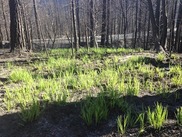
Landowners and operators are reminded that in order to receive payments from USDA, compliance with Highly Erodible Land (HEL) and Wetland Conservation (WC) provisions are required. Farmers with HEL determined soils are reminded of tillage, crop residue, and rotation requirements as specified per their conservation plan. Producers are to notify the USDA Farm Service Agency prior to breaking sod, clearing land (tree removal), and of any drainage projects (tiling, ditching, etc.) to ensure compliance. Failure to update certification of compliance, with form AD-1026, triggering applicable HEL and/or wetland determinations, for any of these situations, can result in the loss of FSA farm program payments, FSA farm loans, NRCS program payments, and premium subsidy to Federal Crop Insurance administered by RMA.
|

If you’re an orchardist or nursery tree grower who experienced losses from natural disasters during calendar year 2025, you must submit a TAP application either 90 calendar days after the disaster event or the date when the loss is apparent.
TAP provides financial assistance to help you replant or rehabilitate eligible trees, bushes and vines damaged by natural disasters.
Eligible tree types include trees, bushes or vines that produce an annual crop for commercial purposes. Nursery trees include ornamental, fruit, nut and Christmas trees that are produced for commercial sale. Trees used for pulp or timber are ineligible.
To qualify for TAP, orchardists must suffer a qualifying tree, bush or vine loss in excess of 15 percent mortality from an eligible natural disaster, plus an adjustment for normal mortality. The eligible trees, bushes or vines must have been owned when the natural disaster occurred; however, eligible growers are not required to own the land on which the eligible trees, bushes and vines were planted.
If the TAP application is approved, the eligible trees, bushes and vines must be replaced within 12 months from the date the application is approved. The cumulative total quantity of acres planted to trees, bushes or vines, for which you can receive TAP payments, cannot exceed 1,000 acres annually.
|
Top of page
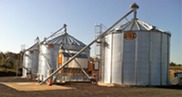
The Farm Service Agency’s (FSA) Farm Storage Facility Loan (FSFL) program provides low-interest financing to help you build or upgrade storage facilities and to purchase portable (new or used) structures, equipment and storage and handling trucks.
Eligible commodities include corn, grain sorghum, rice, soybeans, oats, peanuts, wheat, barley, minor oilseeds harvested as whole grain, pulse crops (lentils, chickpeas and dry peas), hay, honey, renewable biomass, fruits, nuts and vegetables for cold storage facilities, controlled atmosphere storage, floriculture, hops, malted small grains, maple sap, maple syrup, rye, milk, cheese, butter, yogurt, meat and poultry (unprocessed), eggs, and aquaculture (excluding systems that maintain live animals through uptake and discharge of water). Qualified facilities include grain bins, hay barns and cold storage facilities for eligible commodities.
Loans up to $50,000 can be secured by a promissory note/security agreement, loans between $50,000 and $100,000 may require additional security, and loans exceeding $100,000 require additional security.
You do not need to demonstrate the lack of commercial credit availability to apply. The loans are designed to assist a diverse range of farming operations, including small and mid-sized businesses, new farmers, operations supplying local food and farmers markets, non-traditional farm products, and underserved producers.
For more information and additional eligibility requirements, contact your local County USDA Service Center or visit fsa.usda.gov/pricesupport.
|
Top of page

The Farm Service Agency’s (FSA) Noninsured Crop Disaster Assistance Program (NAP) provides financial assistance to producers of non-insurable crops, including mechanically harvested forage with NAP coverage, to protect against natural disasters that occur during the coverage, resulting in loss of production, loss of value, or prevented planting of an eligible crop.
If you have NAP coverage on mechanically harvested forage, you must:
- Maintain separate production records for each unit, crop, practice, crop type, and intended use.
- Submit production records to FSA by the designated production reporting date for the crop.
- Notify your FSA administrative county office before grazing, abandoning, or destroying forage acreage reported, on FSA form FSA-578, as intended to be mechanically harvested; and request an appraisal.
- Notify your FSA administrative county office of a loss and timely file CCC-576, Notice of Loss and Application for Payment, Part B, the earlier of:
- 15 calendar days after the disaster occurs, or damage first becomes apparent.
- 15 calendar days after the crop’s normal harvest date.
- If you change your intended use or experience a loss during the coverage period, you must:
- Establish and maintain representative sample areas when an appraisal of the acreage is required.
- Inform your FSA administrative county office of the location of representative sample areas within 15 days of placing the panels.
- Request an appraisal of the representative sample areas at the end of harvest period but before first freeze.
For more information on NAP and NAP compliance requirements you must follow to retain NAP coverage, contact your local USDA service center.
|

If you’re enrolled in the Agriculture Risk Coverage (ARC) or Price Loss Coverage (PLC) programs, you must protect all cropland and noncropland acres on the farm from wind and water erosion and noxious weeds. By signing ARC county or individual contracts and PLC contracts, you agree to effectively control noxious weeds on the farm according to sound agricultural practices. If you fail to take necessary actions to correct a maintenance problem on your farm that is enrolled in ARC or PLC, the County Committee may elect to terminate your contract for the program year.
|
Top of page

The U.S. Department of Agriculture’s (USDA) Risk Management Agency (RMA) approved changes to improve insurance coverage for American livestock producers. These updates will take effect for the Livestock Risk Protection (LRP), Livestock Gross Margin (LGM), and Dairy Revenue Protection (DRP) insurance programs beginning with the 2026 crop year.
Livestock Risk Protection
LRP provides protection for livestock producers looking to insure against declining market prices. This program offers coverage levels ranging from 70% to 100% of the “expected ending values” (expected price at the end of the insurance period).
The changes to LRP include:
- Modifying the termination date to Sept. 30 and the premium billing date to the first day of the second month after the end date of endorsement.
- Adding two new types of LRP coverage:
- Feeder Cattle - Unborn Calves will provide coverage for beef or beef/dairy cross calves sold within two weeks after birth.
- Fed Cattle - Cull Cows will provide coverage for dairy cull cows with a coverage limitation of 13 weeks.
- Allowing coverage based on a forward contract or purchase agreement.
- Additional record requirement includes a copy of the purchase agreement and proof of delivery.
- Adding drought exemption for Feeder Cattle that will be based on the Drought Monitor’s Drought Severity and Coverage Index (DSCI).
- Adding additional record requirements for Feeder Cattle:
- Applicable when livestock are purchased and not marketed within 60 days of the end date.
- The sex of the feeder cattle must be verified in the marketing or purchase records.
Livestock Gross Margin
LGM provides protection to cattle, dairy and swine producers against unexpected decreases in gross margin (market value of livestock or milk minus input costs). The program calculates the expected gross margin for a period using future market prices and pays an indemnity to the extent that the actual gross margin is less than the expected gross margin.
The changes to LGM include:
- Modifying the termination date to Aug. 31 and the premium billing date to the first day of the second month after the Specific Coverage Endorsement ended.
Dairy Revenue Protection
For dairy producers, DRP provides protection against a decline in revenue (yield and/or price) on the milk produced from dairy cows on a quarterly basis. The expected revenue is based on futures prices for milk and dairy commodities, and the amount of covered milk production elected by the dairy producer.
The changes to DRP include:
- Modifying the DRP termination date to Jan. 31 and the premium billing date to the first day of the third month after the end date of endorsement.
- Modifying the program to give additional flexibilities to producers impacted by an animal disease when they have suffered an eligible loss.
- RMA is increasing the minimum declarable butterfat test to 4.00 pounds, increasing maximum declarable butterfat test to 6.00 pounds and increasing minimum declarable protein test to 3.20 pounds.
More Information
LRP, LGM and DRP are available to livestock producers in all states and counties. Crop insurance is sold and delivered solely through private crop insurance agents. A list of crop insurance agents is available online at the RMA Agent Locator. Producers can learn more about crop insurance and the modern farm safety net at rma.usda.gov or by contacting their RMA Regional Office. RMA’s Basics for Beginners provides information for those new to crop insurance.
Top of page
|

The U.S. Department of Agriculture (USDA) announced loan interest rates for June 2025, which are effective June 2, 2025. USDA Farm Service Agency (FSA) loans provide important access to capital to help agricultural producers start or expand their farming operation, purchase equipment and storage structures or meet cash flow needs.
Operating, Ownership and Emergency Loans
FSA offers farm ownership, operating and emergency loans with favorable interest rates and terms to help eligible agricultural producers obtain financing needed to start, expand or maintain a family agricultural operation.
Interest rates for Operating and Ownership loans for June 2025 are as follows:
FSA also offers guaranteed loans through commercial lenders at rates set by those lenders. To access an interactive online, step-by-step guide through the farm loan process, visit the Loan Assistance Tool on farmers.gov.
Commodity and Storage Facility Loans
Additionally, FSA provides low-interest financing to producers to build or upgrade on-farm storage facilities and purchase handling equipment and loans that provide interim financing to help producers meet cash flow needs without having to sell their commodities when market prices are low. Funds for these loans are provided through the Commodity Credit Corporation (CCC) and are administered by FSA.
More Information
To learn more about FSA programs, producers can contact their local USDA Service Center. Additionally, producers can use online tools, such as the Loan Assistance Tool and Debt Consolidation Tool to explore loan options.
|
Top of page
Michigan Farm Service Agency
3001 Coolidge Road
Suite 350
East Lansing, MI 48823
Phone: 517-324-5110
State Executive Director
Joel Johnson
Deputy State Executive Director
Christina Salenbien
Administrative Officer
Troy Nichols
Conservation Programs Chief
Farm Loan Programs Chief
Dave Russ
Price Support Programs Chief
Ken Schapman
Production Adjustment Programs Chief
Kyle Knapp
Outreach & Communications
|
| |
| |
|
| |
|








