Rhode Island Service Center Newsletter - June 18, 2025
In This Issue:
July 15, 2025 - Deadline to report acreage for perennial crops, annual crops, mixed forage, and all other crops.
August 1, 2025 - Deadline to submit nominations for County Committee elections.
August 15, 2025 - Deadline to submit application for the Emergency Commodity Assistance Program (ECAP).
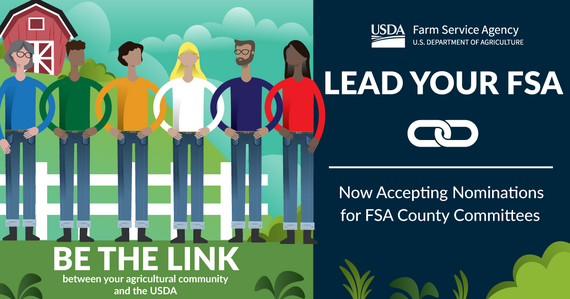 Nominations due Aug. 1
Nominations are now being accepted for farmers and ranchers to serve on local U.S. Department of Agriculture (USDA) Farm Service Agency (FSA) county committees. These committees make important decisions about how federal farm programs are administered locally. All nomination forms for the 2025 election must be postmarked or received in the local FSA office by Aug. 1, 2025.
Elections for committee members will occur in certain Local Administrative Areas (LAA). LAAs are elective areas for FSA committees in a single county or multi-county jurisdiction and may include LAAs that are focused on an urban or suburban area.
Producers interested in serving on the FSA county committee can locate their LAA through a geographic information system locator tool available at fsa.usda.gov/elections and determine if their LAA is up for election by contacting their local FSA office.
Agricultural producers may be nominated for candidacy for the county committee if they:
- Participate or cooperate in a USDA program.
- Reside in the LAA that is up for election this year.
A cooperating producer is someone who has provided information about their farming or ranching operation to FSA, even if they have not applied or received program benefits.
Individuals may nominate themselves or others and qualifying organizations may also nominate candidates. USDA encourages all eligible producers to nominate, vote and hold office.
Nationwide, more than 7,700 dedicated members of the agriculture community serve on FSA county committees. The committees are made up of three to 11 members who serve three-year terms. Committee members play a key role in how FSA delivers disaster recovery, conservation, commodity and price support programs, as well as making decisions on county office employment and other agricultural issues.
More Information
Producers should contact their local FSA office today to register and find out how to get involved in their county’s election, including if their LAA is up for election this year. To be considered, a producer must be registered and sign an FSA-669A nomination form. This form and other information about FSA county committee elections are available at fsa.usda.gov/elections.
All nomination forms for the 2025 election must be postmarked or received in the local USDA Service Center by the Aug.1, 2025, deadline. Election ballots will be mailed to eligible voters in November 2025.
^ back to top
 Hurricane season is here, beginning June 1 and running through Nov. 30. Farmers, ranchers and forest landowners have been significantly impacted by hurricanes in recent years. USDA encourages agricultural producers to prepare for the 2025 season and get familiar with recovery resources.
USDA’s Farm Service Agency (FSA), Natural Resources Conservation Service (NRCS), and Risk Management Agency (RMA) offer a suite of disaster assistance programs to help you recover from the impacts of natural disasters.
Get Prepared
^ back to top
Assistance for Flood-Impacted Producers Coming Summer 2025
U.S. Secretary of Agriculture Brooke L. Rollins today announced the release of Congressionally mandated Emergency Livestock Relief Program (ELRP) payments to cover grazing losses due to eligible drought or wildfire events in 2023 and/or 2024. Secretary Rollins committed on May 7 to release these emergency payments by May 30, and today she is delivering on that commitment ahead of schedule.
The U.S. Department of Agriculture’s (USDA) Farm Service Agency (FSA) is leveraging existing Livestock Forage Disaster Program (LFP) data to streamline payment calculations and expedite relief. Emergency relief payments are automatically issued for producers who have an approved LFP application on file for 2023 and/or 2024.
Learn more...
^ back to top
|
After spring planting is complete, agricultural producers should make an appointment with the Rhode Island Farm Service Agency (FSA) to complete crop acreage reports before the applicable deadline.
How to File a Report
A crop acreage report documents a crop grown on a farm or ranch, its intended use and location. Producers should file an accurate crop acreage report for all crops and land uses, including failed acreage and prevented planted acreage before the applicable deadline.
The following acreage reporting dates are applicable in Rhode Island:
July 15, 2025 - Perennial crops, annual crops, mixed forage, and all other crops.
To file a crop acreage report, producers need to provide:
- Crop and crop type or variety
- Intended crop use
- Number of crop acres
- Map with approximate crop boundaries
- Planting date(s)
- Planting pattern, when applicable
- Producer share(s)
- Irrigation practice(s)
- Acreage prevented from planting, when applicable
- Other required information
Acreage Reporting Details
The following exceptions apply to acreage reporting dates:
- If the crop has not been planted by the acreage reporting deadline, then the acreage must be reported no later than 15 calendar days after planting is completed.
- If a producer acquires additional acreage after the acreage reporting deadline, then the acreage must be reported no later than 30 calendar days after purchase or acquiring the lease. Appropriate documentation must be provided to the county office.
Noninsured Crop Disaster Assistance Program (NAP) policy holders should note that the acreage reporting date for NAP-covered crops is the acreage reporting date or 15 calendar days before grazing or crop harvesting begins, whichever is earlier.
Producers with perennial forage crops should check with their local FSA office to see if their crops are eligible for continuous certification, which rolls the certified acreage forward each year until a change is made.
Prevented Planted Acreage
Producers should also report the crop acreage they intended to plant but were unable to because of a natural disaster, including drought. Prevented planted acreage must be reported on form CCC-576, Notice of Loss, no later than 15 calendar days after the final planting date as established by FSA and USDA’s Risk Management Agency (RMA).
Farmers.gov Portal
Producers can access their FSA farm records, maps, and common land units through the farmers.gov customer portal. The portal allows producers to export field boundaries as shapefiles and import and view other shapefiles, such as precision agriculture boundaries within farm records mapping. Producers can view, print and label their maps for acreage reporting purposes. A login.gov account that is linked to a USDA customer record is required to use the portal.
Producers can visit farmers.gov/account to learn more about creating an account. Producers who have the authority to act on behalf of another customer as a grantee via an FSA-211 Power of Attorney form, Business Partner Signature Authority or as a member of a business with signature authority can now access information for the business in the farmers.gov portal.
Electronic Geospatial Acreage Reporting
Acreage reports using precision agriculture planting boundaries can be filed electronically with an approved insurance provider or an authorized third-party provider, who will then share the file with FSA staff. Producers should notify their local FSA office if they submitted an electronic geospatial acreage report containing precision planting boundaries that they want to use as part of their FSA acreage report.
More Information
For more information, contact the RI FSA Office at (401) 828-3120 (ext. 1) or email Lillian Toth at Lillian.Toth@usda.gov.
^ back to top
|
USDA’s Farm Service Agency (FSA) celebrated 25 years of the agency’s popular Farm Storage Facility Loan Program (FSFL) this May. For a quarter century, family-owned agricultural operations have received low-interest financing through the program to enhance or expand their operations and manage marketing of the commodities they produce by building or upgrading permanent and portable storage facilities and purchasing needed handling equipment.
The FSFL program was created in May 2000 to address existing on-farm grain storage needs. Since the program’s inception, more than 40,000 loans have been issued for on-farm storage, increasing storage capacity by one billion bushels. While many producers primarily associate the program with grain storage, over the past 25 years the eligible storage has expanded to include a wide variety of facilities and related equipment - new or used and permanent or portable - including hay barns, bulk tanks, and facilities for cold storage. Drying, handling and storage equipment is also eligible, including skid steers and storage and handling trucks.
Learn More...
^ back to top
NRCS State Resources Conservationist, Cassius Spears, Jr. (left), awarded 2025 RI Envirothon Champs, Wheeler School, Team 1, which will be representing Rhode Island at the International Envirothon competition in Calgary, Alberta, Canada.
It’s a three-peat! Wheeler School, Team 1, was crowned 2025 Champions at the 31st annual Rhode Island Envirothon competition held Friday, May 23rd, at Kent County YMCA in Warwick. This is the third year in a row that Wheeler School has won top honors.
On Friday, May 23rd, 55 Rhode Island middle and high school students tested their knowledge of the area’s soils, forests, water, and wildlife. School teams rotated through four stations where they answered written questions and engaged in hands-on activities such as soil analysis, wildlife identification, tree identification, and water quality testing. Each team also delivered a 12-15-minute presentation on “Roots and Resiliency: Fostering Forest Stewardship in a Canopy of Change,” this year’s environmental issue, to a panel of subject matter judges.
Competing teams represented East Providence High School, Narragansett High School, Providence Country Day Middle School, The Greene School in West Greenwich, and The Wheeler School in Providence. Second place overall was captured by Team 1 from The Greene School, and third place overall went to The Wheeler School, Team 2. Rounding out the winners were overall Middle School Champs, Providence Country Day School.
Read more about this year's competition...
^ back to top
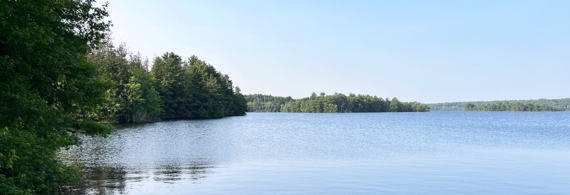 The USDA Natural Resources Conservation Service (NRCS) in Rhode Island and Northern Rhode Island Conservation District (NRICD) announce the completion of three HUC-12 watershed assessments for the Scituate Reservoir and surrounding areas. (HUC-12 is a “12-digit Hydrologic Unit Code” watershed ID.) Watershed plans are useful tools to help communities and groups prioritize activities to improve water quality and resources in targeted areas.
The new watershed plans assess water quality conditions related to agriculture in the area surrounding the Scituate Reservoir to determine voluntary conservation efforts to protect this vital drinking water supply.
NRCS & NRICD will be holding a public meeting at the Scituate Community House on Wednesday, June 18th, from 6:00-7:00 p.m. to discuss the watershed assessment findings and planning efforts with area farmers and community members. Staff will also be available to provide information on assistance available to area farmers to apply practices and activities to address their water quality concerns. Please RSVP at jlebeau.nricd@gmail.com.
To learn more about NRCS watershed planning, please contact Rhode Island NRCS State Resource Conservationist, Cassius Spears, Jr., at 401-822-8833 or Cassius.Spears@usda.gov, or visit www.RI.nrcs.usda.gov.
^ back to top
 Join NRCS for The Great Pollinator Road Trip June 16-22, as we hit the road and make scenic stops to celebrate the vital role pollinators play in our world. Follow along on NRCS’ Facebook, X and LinkedIn accounts throughout the week and see how these tiny travelers keep our world blooming. The celebration kicked off today with the pollinators hitting the road over on Facebook, X and LinkedIn.
Did you know that Rhode Island has over 250 native species of bees? We also have a host of other animal pollinators, like moths, butterflies, birds, and bats. However, many pollinator populations are declining because of habitat loss, disease, parasites, and pesticide use. But there’s good news. There are simple ways you can help. It can be as easy as selecting high-quality pollinator plants for your garden. To find the best plants for your area, check out our Rhode Island Pollinator Garden Design Guide or contact the URI Bee Lab.
^ back to top

USDA is extending the rainfall collection period for the Hurricane Insurance Protection – Wind Index (HIP-WI) and the Tropical Storm Option (TS) to include unique circumstances when a storm lingers over a county or re-enters a county.
Beginning with the 2026 crop year, USDA’s Risk Management Agency (RMA) will add one day to the rainfall collection period for each 24 hours that the tropical storm force winds are present within a county. RMA will also add an additional four-day collection period for each instance a storm exits and re-enters a county.
About the Program
HIP-WI and TS are crop insurance tools that help deliver prompt assistance to farmers in hurricane prone areas. These innovative policies build off a farmer’s underlying policy with no additional paperwork or loss adjustment needed. HIP-WI and TS generally pay within weeks following a hurricane or tropical storm – the fastest payments from USDA following a disaster.
For more information, including frequently asked questions, videos, and a fact sheet, please visit the HIP-WI website.
^ back to top
|
USDA – Rhode Island
60 Quaker Lane
Warwick, RI 02886
|
Natural Resources Conservation Service (NRCS)
401-828-1300 | www.RI.nrcs.usda.gov
|
|
Eastern RI – Serving Newport and Bristol counties
|
|
NRCS Field Office
Kat Zuromski, District Conservationist (Acting)
401-786-1389
Kathryn.Zuromski@usda.gov
|
Conservation District Office
401-934-0842/ info@easternriconservation.org
|
|
Northern RI – Serving Providence County
|
|
NRCS Field Office
Ghyllian Alger, District Conservationist (Acting)
401-822-8835/ Ghyllian.Alger@usda.gov
|
Conservation District Office
401-934-0840/ mallard.nricd@gmail.com
|
|
Southern RI – Serving Kent and Washington counties
|
|
NRCS Field Office
Jameson Long, District Conservationist
401-822-8837/ Jameson.Long@usda.gov
|
Conservation District Office
401-661-5761/ gfuller@sricd.org
|
|
|
|
RI FSA County Office, Suite 49
RI FSA Farm Loan Team, Suite 62
RI FSA State Office, Suite 62
|
401-828-3120 Option 1
401-828-3120 Option 2
401-828-3120 Option 3
|
|
County Committee
|
|
Gilbert Rathbun Jr., Chairperson
John Sousa, Member
Howard Tucker III, Member
|
Erin Cabot, Vice Chairperson
William Coulter, Member
Dawn M Spears, SDA Member
|
|
|
|