
New Jersey USDA Newsletter - June 2025
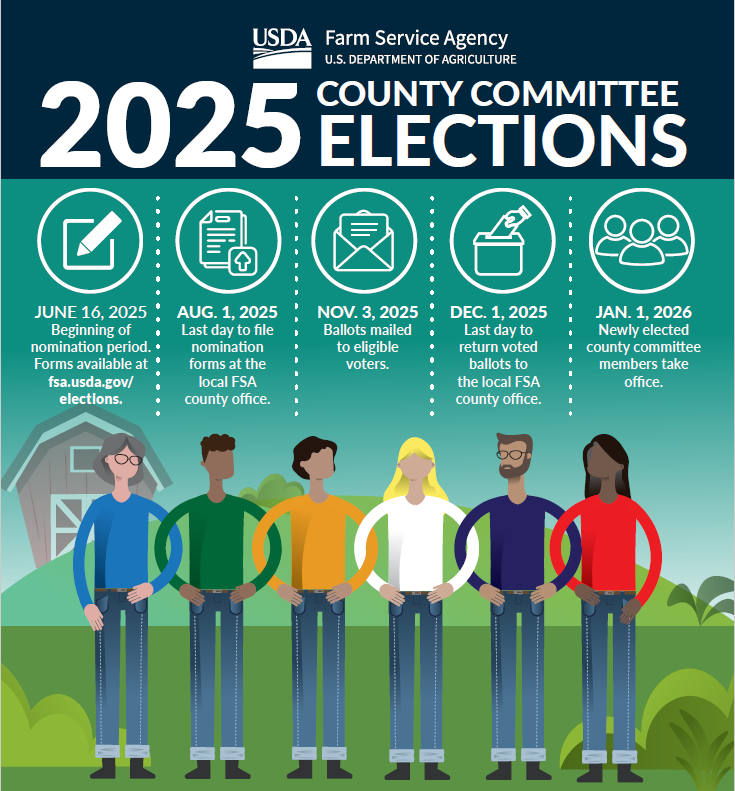
Elections will occur in certain Local Administrative Areas (LAA) for members. LAAs are elective areas for FSA committees in a single county or multi-county jurisdiction. For New Jersey Counties, please visit our state website to see which LAAs are up for election at https://www.fsa.usda.gov/state-offices/new-jersey. Customers can identify which LAA they or their farming or ranching operation is in by using our GIS locator tool available at fsa.usda.gov/elections.
County committee members make important decisions about how Federal farm programs are administered locally. All nomination forms for the 2025 election must be postmarked or received in the local FSA office by Aug. 1, 2025.
Agricultural producers who participate or cooperate in a USDA program and reside in the LAA that is up for election this year, may be nominated for candidacy for the county committee. A cooperating producer is someone who has provided information about their farming or ranching operation to FSA, even if they have not applied or received program benefits.
Individuals may nominate themselves or others and qualifying organizations may also nominate candidates. USDA encourages minority producers, women, and beginning farmers or ranchers to nominate, vote and hold office.
Nationwide, more than 7,700 dedicated members of the agricultural community serve on FSA county committees. The committees are made up of 3 to 11 members who serve three-year terms. Committee members are vital to how FSA carries out disaster programs, as well as conservation, commodity and price support programs, county office employment and other agricultural issues.
After spring planting is complete, agricultural producers should make an appointment with your local County Farm Service Agency (FSA)to complete crop acreage reports before the applicable deadline.
How to File a Report
A crop acreage report documents a crop grown on a farm or ranch, its intended use and location. Producers should file an accurate crop acreage report for all crops and land uses, including failed acreage and prevented planted acreage before the applicable deadline. Producers are encouraged to file their acreage reports as soon as planting is completed.
The following acreage reporting dates are applicable in New Jersey:
-
June 16 - Planting Period 1 Cabbage (Atlantic Co Only)
-
July 15 - Soybeans, Corn and Other Spring Planted Feed Grains, Perennial Forage, CRP, Hemp & Most Other Crops, including fruits and vegetables
-
August 15 - Processing Beans
-
September 15 - Planting Period 2 Cabbage (Atlantic Co Only)
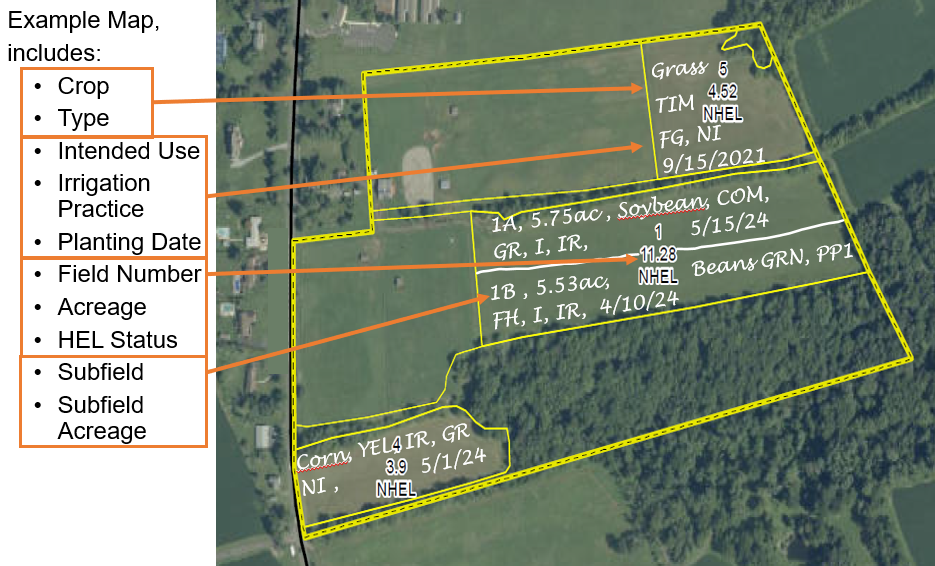
To file a crop acreage report, producers need to provide:
- Crop and crop type or variety
- Intended crop use
- Number of crop acres
- Map with approximate crop boundaries
- Planting date(s)
- Planting pattern, when applicable
- Producer share(s)
- Irrigation practice(s)
- Acreage prevented from planting, when applicable
- Other required information
|
 Acreage Reporting Details
The following exceptions apply to acreage reporting dates:
- If the crop has not been planted by the acreage reporting deadline, then the acreage must be reported no later than 15 calendar days after planting is completed.
- If a producer acquires additional acreage after the acreage reporting deadline, then the acreage must be reported no later than 30 calendar days after purchase or acquiring the lease. Appropriate documentation must be provided to the county office.
Noninsured Crop Disaster Assistance Program (NAP) policy holders should note that the acreage reporting date for NAP-covered crops is the acreage reporting date or 15 calendar days before grazing or crop harvesting begins, whichever is earlier.
Producers with perennial forage crops should check with their local FSA office to see if their crops are eligible for continuous certification, which rolls the certified acreage forward each year until a change is made.
Prevented Planted Acreage
Producers should also report the crop acreage they intended to plant but were unable to because of a natural disaster, including drought. Prevented planted acreage must be reported on form CCC-576, Notice of Loss, no later than 15 calendar days after the final planting date as established by FSA and USDA’s Risk Management Agency (RMA).
Farmers.gov Portal
Producers can access their FSA farm records, maps, and common land units through the farmers.gov customer portal. The portal allows producers to export field boundaries as shapefiles and import and view other shapefiles, such as precision agriculture boundaries within farm records mapping. Producers can view, print and label their maps for acreage reporting purposes. A login.gov account that is linked to a USDA customer record is required to use the portal.
Producers can visit farmers.gov/account to learn more about creating an account. Producers who have the authority to act on behalf of another customer as a grantee via an FSA-211 Power of Attorney form, Business Partner Signature Authority or as a member of a business with signature authority can now access information for the business in the farmers.gov portal.
Electronic Geospatial Acreage Reporting
Acreage reports using precision agriculture planting boundaries can be filed electronically with an approved insurance provider or an authorized third-party provider, who will then share the file with FSA staff. Producers should notify their local FSA office if they submitted an electronic geospatial acreage report containing precision planting boundaries that they want to use as part of their FSA acreage report.
Top of page
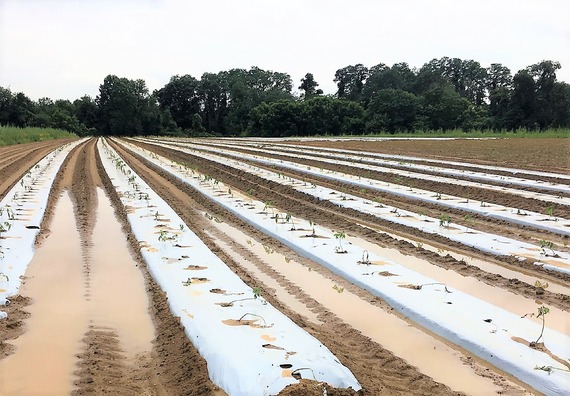 The Noninsured Crop Disaster Assistance Program (NAP) provides financial assistance to producers of non-insurable crops when low yields, loss of inventory, or prevented planting occur due to natural disasters and other damaging weather events.
To receive payment, you had to purchase NAP coverage for 2025 crops and file a notice of loss the earlier of 15 days of the occurrence of the disaster or when losses become apparent or 15 days of the final harvest date.
For hand-harvested crops and certain perishable crops, you must notify FSA within 72 hours of when a loss becomes apparent.
Eligible crops must be commercially produced agricultural commodities for which crop insurance is not available, including perennial grass forage and grazing crops, fruits, vegetables, mushrooms, floriculture, ornamental nursery, aquaculture, turf grass, ginseng, honey, syrup, bioenergy, and industrial crops.
For more information on NAP, contact your local USDA Service Center or visit fsa.usda.gov/nap.

FSA Direct Farm Loan Program borrowers whose loans were closed before September 25, 2024, may be eligible for assistance under the Distressed Borrower Set-Aside Program (DBSA). DBSA is a servicing tool that may assist financially distressed borrowers by providing a one-time deferral of a past due or upcoming installment at a reduced interest rate. In certain situations, DBSA may be a viable alternative to Primary Loan Servicing.
The principal portion of the set-aside will continue to accrue interest at a reduced rate of 0.125%. Any payment set-aside must be repaid prior to the final maturity date of the note.
Additional information, eligibility criteria and program limitations may be found in the DBSA fact sheet. https://www.fsa.usda.gov/sites/default/files/documents/fact_sheet-distressed_borrower_set_aside_program.pdf
If you have any questions or would like to request DBSA, contact Farm Service Agency (FSA) at your local USDA Service Center.
|
U.S. Secretary of Agriculture Brooke Rollins, on National Agriculture Day, announced that the U.S. Department of Agriculture (USDA) is issuing up to $10 billion directly to agricultural producers through the Emergency Commodity Assistance Program (ECAP) for the 2024 crop year. Administered by USDA’s Farm Service Agency (FSA), ECAP will help agricultural producers mitigate the impacts of increased input costs and falling commodity prices.
Authorized by the American Relief Act, 2025, these economic relief payments are based on planted and prevented planted crop acres for eligible commodities for the 2024 crop year. To streamline and simplify the delivery of ECAP, FSA will begin sending pre-filled applications to producers who submitted acreage reports to FSA for 2024 eligible ECAP commodities soon after the signup period opens on March 19, 2025. Producers do not have to wait for their pre-filled ECAP application to apply. They can visit fsa.usda.gov/ecap to apply using a login.gov account or contact their local FSA office to request an application once the signup period opens.
Eligible Commodities and Payment Rates
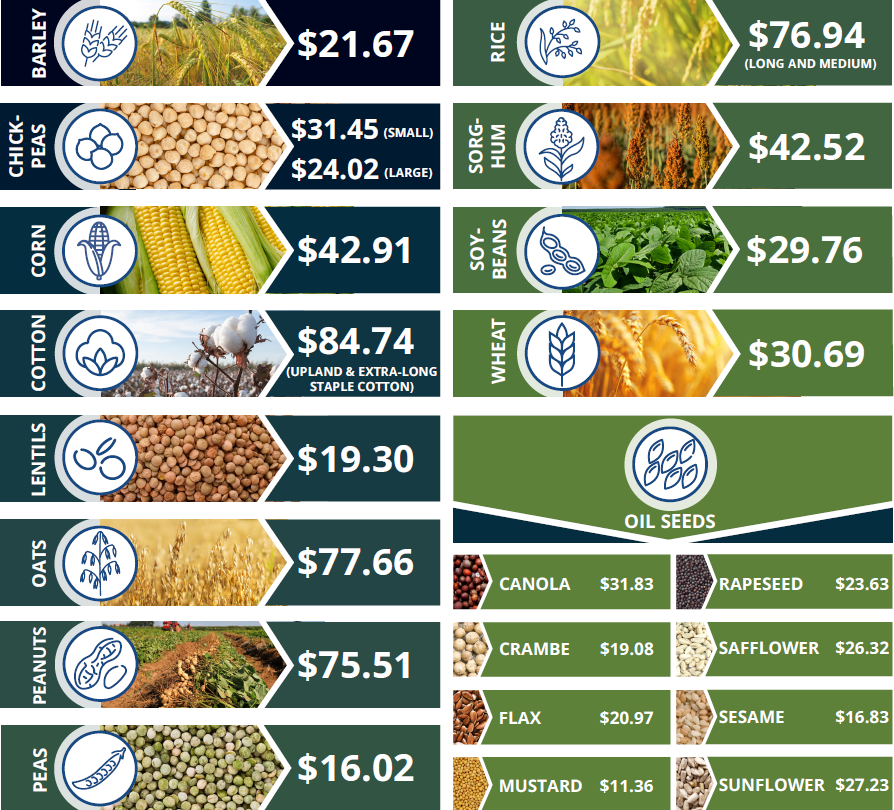
The commodities below are eligible for these per-acre payment rates:
|
 Producer Eligibility
Eligible producers must report 2024 crop year planted and prevented planted acres to FSA on an FSA-578, Report of Acreage form. Producers who have not previously reported 2024 crop year acreage or filed a notice of loss for prevented planted crops must submit an acreage report by the Aug. 15, 2025, deadline. Eligible producers can visit fsa.usda.gov/ecap for eligibility and payment details.
Applying for ECAP
Producers must submit ECAP applications to their local FSA county office by Aug. 15, 2025. Only one application is required for all ECAP eligible commodities nationwide. ECAP applications can be submitted to FSA in-person, electronically using Box and One-Span, by fax or by applying online at fsa.usda.gov/ecap utilizing a secure login.gov account.
If not already on file for the 2024 crop year, producers must have the following forms on file with FSA:
-
Form AD-2047, Customer Data Worksheet.
-
Form CCC-901, Member Information for Legal Entities (if applicable).
-
Form CCC-902, Farm Operating Plan for an individual or legal entity.
-
Form CCC 943, 75 percent of Average Gross Income from Farming, Ranching, or Forestry Certification (if applicable).
-
AD-1026, Highly Erodible Land Conservation (HELC) and Wetland Conservation (WC) Certification.
-
SF-3881, Direct Deposit.
Except for the new CCC-943, most producers, especially those who have previously participated in FSA programs, likely have these forms on file. However, those who are uncertain and want to confirm the status of their forms or need to submit the new Form-943, can contact their local FSA county office.
If a producer does not receive a pre-filled ECAP application, and they planted or were prevented from planting ECAP eligible commodities in 2024, they should contact their local FSA office.
ECAP Payments and Calculator
ECAP payments will be issued as applications are approved. Initial ECAP payments will be factored by 85% to ensure that total program payments do not exceed available funding. If additional funds remain, FSA may issue a second payment.
ECAP assistance will be calculated using a flat payment rate for the eligible commodity multiplied by the eligible reported acres. Payments are based on acreage and not production. For acres reported as prevented plant, ECAP assistance will be calculated at 50%.
For ECAP payment estimates, producers are encouraged to visit fsa.usda.gov/ecap to use the ECAP online calculator.
Top of page

Each year, state committees review and approve or disapprove county committee recommended changes or additions to specific combinations of crops.
Double-cropping is approved when two specific crops have the capability to be planted and carried to maturity for the intended use, as reported by the producer, on the same acreage within a crop year under normal growing conditions. The specific combination of crops recommended by the county committee must be approved by the state committee.
Double-cropping is approved in New Jersey on a county-by-county basis. Click here for a list of approved double-cropping combinations for your county.
A crop following a cover crop terminated according to termination guidelines is approved double cropping and these combinations do not have to be approved by the state committee.
Top of page
|
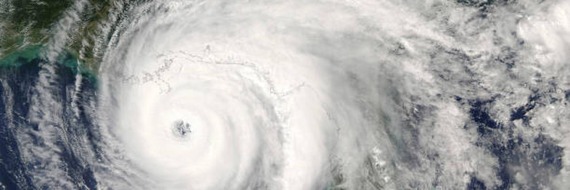 Hurricane season is here and runs through Nov. 30. Farmers, ranchers and forest landowners have been significantly impacted by hurricanes in recent years. USDA encourages agricultural producers to prepare for the 2025 season and get familiar with recovery resources.
Get Prepared
-
Develop an Emergency Plan: Make sure your employees and members of your household know your plan, including meeting points, emergency contact lists, and alternate evacuation routes in case of infrastructure damage.
-
Remove Debris and Secure Large Objects: Most injuries to animals, people, or structures during a hurricane are caused by flying objects. To lessen the risk, minimize the presence of equipment, supplies, and debris that may become airborne during high winds or encountered in floodwaters. Clean out culverts, ditches, and other drainage areas, especially before and during peak hurricane season to reduce water damage.
-
Document Inventory and Secure Important Records: It is critical to document inventory of farm buildings, vehicles, equipment, and livestock before a disaster occurs. Take photos, videos, or make written lists with descriptions. Gathering documentation before and after a storm is important for insurance compensation and recovery assistance. You’ll likely need thorough records of any damage and losses sustained on your farm as well as documentation of your cleanup and recovery efforts. Keep copies of these records in multiple places: a computer, off-site in a safe location, and on a cloud-based server.
-
Know Your Insurance Options: Regularly review your insurance policies with your agent to be sure you have adequate coverage, including flood insurance, for your facilities, vehicles, farm buildings, equipment, crops and livestock. Note, there are limitations on how soon insurance coverage will take effect. Generally, insurance policies will not cover damage if the policy was not in place before a disaster.
-
Gather Supplies: Have drinking water, canned food, a generator, batteries, a flashlight, and fuel available in case you lose power. Have cash on hand in cases of widespread outages, when credit and debit cards may not work.
-
Access Real-time Emergency Information: Download the FEMA app for free on the App Store and Google Play for safety tips on what to do before, during, and after disasters.
How USDA Can Help
USDA’s Farm Service Agency (FSA), Natural Resources Conservation Service (NRCS), and Risk Management Agency (RMA) offer a suite of disaster assistance programs to help you recover from the impacts of natural disasters.
Insurance and Risk Protection
If you have risk protection through Federal Crop Insurance, report crop damage to your crop insurance agent within 72 hours of discovering damage and be sure to follow up in writing within 15 days.
For producers with coverage through the RMA’s Hurricane Insurance Protection – Wind Index (HIP-WI) and Tropical Storm Option (TS), payments are generally made within weeks following a hurricane or tropical storm. For more resources, including a recent webinar, visit the HIP-WI webpage.
If you have coverage under the Noninsured Crop Disaster Assistance Program (NAP), you should report crop damage to your local FSA office and file a Notice of Loss (CCC-576) within 15 days of the loss becoming apparent, except for hand-harvested crops, which should be reported within 72 hours.
Disaster Assistance
FSA offers several disaster programs to help producers recover from crop, livestock and infrastructure losses, including low-interest emergency loans. A full list of programs is available on the Hurricane webpage.
NRCS provides technical and financial assistance to producers through its Environmental Quality Incentives Program to help with immediate needs and long-term support to help recover from natural disasters and conserve environmental resources. The program can assist with restoring livestock infrastructure, emergency animal mortality disposal, and immediate soil erosion protection.
Additionally, NRCS offers help to communities through its Emergency Watershed Protection (EWP) Program which provides assistance to landowners and project sponsors following a natural disaster. EWP is designed to help people and conserve natural resources by relieving imminent hazards to life and property caused by floods, fires, windstorms, and other natural occurrences.
More Information
Visit our Hurricane webpage for more information. Our Disaster Assistance Discovery Tool, Disaster Assistance at a Glance fact sheet, Farm Loan Assistance Tool can help you determine program or loan options. Additionally, the FarmRaise educational hub can also help with disaster recovery program decisions.
To report losses or ask questions about available programs, contact your local USDA Service Center.
Top of page
Top of page
USDA is an equal opportunity provider, employer and lender. To file a complaint of discrimination, write: USDA, Office of the Assistant Secretary for Civil Rights, Office of Adjudication, 1400 Independence Ave., SW, Washington, DC 20250-9410 or call (866) 632-9992 (Toll-free Customer Service), (800) 877-8339 (Local or Federal relay), (866) 377-8642 (Relay voice users).
|






