Nevada June USDA Newsletter
In This Issue:
Severe weather events create significant challenges and often result in catastrophic loss for agricultural producers. Despite every attempt to mitigate risk, your operation may suffer losses. USDA offers several programs to help with recovery.
Risk Management
For producers with coverage through the Noninsured Crop Disaster Assistance Program (NAP), we want to remind you to report crop damage to your local Farm Service Agency (FSA) office. You will need to file a Notice of Loss (also called Form CCC-576) within 15 days of loss becoming apparent, except for hand-harvested crops, which should be reported within 72 hours.
If you have Federal Crop Insurance, contact your crop insurance agent within 72 hours of discovering damage and be sure to follow up in writing within 15 days.
Disaster Assistance
USDA also offers disaster assistance programs, which is especially important to livestock, fruit and vegetable, specialty and perennial crop producers who have fewer risk management options.
First, the Livestock Indemnity Program (LIP) and Emergency Assistance for Livestock, Honeybee and Farm-raised Fish Program (ELAP) reimburses producers for a portion of the value of livestock, poultry and other animals that died as a result of a qualifying natural disaster event or for loss of grazing acres, feed and forage. And, the Livestock Forage Disaster Program (LFP) provides assistance to producers of grazed forage crop acres that have suffered crop loss due to a qualifying drought. Livestock producers suffering the impacts of drought can also request Emergency Haying and Grazing on Conservation Reserve Program (CRP) acres.
Next, the Tree Assistance Program (TAP) provides cost share assistance to rehabilitate and replant tree, vines or shrubs loss experienced by orchards and nurseries. This complements NAP or crop insurance coverage, which cover the crop but not the plants or trees in all cases.
For LIP and ELAP, you will need to file a Notice of Loss for livestock and grazing or feed losses by the application deadline for each program. For TAP, you will need to file a program application within 90 days.
Documentation
It’s critical to keep accurate records to document all losses following this devastating cold weather event. Livestock producers are advised to document beginning livestock numbers by taking time and date-stamped video or pictures prior to after the loss.
Other common documentation options include:
- Purchase records
- Production records
- Vaccination records
- Bank or other loan documents
- Third-party certification
Other Programs
The Emergency Conservation Program and Emergency Forest Restoration Program can assist landowners and forest stewards with financial and technical assistance to restore damaged farmland or forests.
Additionally, FSA offers a variety of loans available including emergency loans that are triggered by disaster declarations and operating loans that can assist producers with credit needs. You can use these loans to replace essential property, purchase inputs like livestock, equipment, feed and seed, or refinance farm-related debts, and other needs.
Meanwhile, USDA’s Natural Resources Conservation Service (NRCS) provides financial resources through its Environmental Quality Incentives Program to help with immediate needs and long-term support to help recover from natural disasters and conserve water resources. Assistance may also be available for emergency animal mortality disposal from natural disasters and other causes.
Additional Resources
Additional details – including payment calculations – can be found on our NAP, ELAP, LIP, and TAP fact sheets. On farmers.gov, the Disaster Assistance Discovery Tool, Disaster-at-a-Glance fact sheet, and Farm Loan Discovery Tool can help you determine program or loan options.
Looking for ways to do business with USDA that saves you time? Look no further than farmers.gov.
When you create an account for the farmers.gov authenticated customer portal, you have access to self-service features through a secure login. Managing your business with USDA’s Farm Service Agency (FSA) and Natural Resources Conservation Service (NRCS) is faster than ever. From e-signing documents, viewing, printing, and exporting maps and receiving notifications of payment disbursements, a farmers.gov authenticated account makes doing business with USDA easy and secure.
What can you do with your farmers.gov account?
- View FSA Farm Loan information including interest payments, loan advances, payment history and paid-in-full/restructured loans.
- Make USDA direct farm loan payments using the Pay My Loan feature.
- Access the Online Loan Application portal.
- View, print and export detailed FSA farm records and farm/tract maps.
- Import precision agriculture planting boundaries, create labels containing crop information, and print both on farm tract maps.
- View and print your FSA-156EZ with farm details
- View and print your Producer Farm Data Report
- View NRCS Disbursements and Farm Loans financial activity from the past 180 days.
- View your land, access NRCS data on your conservation plans, contracts, and planning land units through the Conservation Land Area page.
- View, upload, download and e-sign NRCS documents.
- Request NRCS conservation and financial assistance, including submitting a program application.
- View detailed information on all previous and ongoing NRCS contracts, including the amount of cost- share assistance received and anticipated; and even request contract modifications, report practice completion and request practice certification.
- “Switch Profiles” to act on behalf of your entity or another individual when you have active representative authority on file
If you’d like to see the features in action and learn more about how to use them, check out the 3-5 minute farmers.gov account video tutorials.
How do you create a farmers.gov account?
Visit farmers.gov/account to access information about farmers.gov accounts and sign in to the site’s authenticated portal. You will need a Login.gov account linked to your USDA customer record to access your farmers.gov authenticated site. Customers who are new to USDA should visit Get Started at Your USDA Service Center, then go to farmers.gov/account to create a farmers.gov account.
To create a farmers.gov account you will need:
- A USDA individual customer record — A customer record contains information you have given to USDA to do business with them, like your name, address, phone number, and any legal representative authority relationships. Contact your local USDA Service Center to make sure you have an individual USDA customer record on file and your information is up to date.
- A Login.gov account — Login.gov is a sign-in service that gives people secure online access to participating government programs. You can create a Login.gov account linked to your customer record by following the directions on gov/account.
- Identity Verification — You can choose to verify your identity with Login.gov or in-person at a USDA Service Center.
In addition to the self-service features, farmers.gov also has information on USDA programs, farm loans, disaster assistance, conservation programs and crop insurance.
Options Help More Beginning, Small and Urban Producers Gain Access to Credit
Producers can apply for a streamlined version of USDA guaranteed loans, which are tailored for smaller scale farms and urban producers EZ Guarantee Loans use a simplified application process to help beginning, small, underserved, and family farmers and ranchers apply for loans of up to $100,000 from USDA-approved lenders to purchase farmland or finance agricultural operations.
A new category of lenders will join traditional lenders, such as banks and credit unions, in offering USDA EZ Guarantee Loans. Microlenders, which include Community Development Financial Institutions and Rural Rehabilitation Corporations, will be able to offer their customers up to $50,000 of EZ Guaranteed Loans, helping to reach urban areas and underserved producers. Banks, credit unions and other traditional USDA-approved lenders, can offer customers up to $100,000 to help with agricultural operation costs.
EZ Guarantee Loans offer low interest rates and terms up to seven years for financing operating expenses and 40 years for financing the purchase of farm real estate. USDA-approved lenders can issue these loans with the Farm Service Agency (FSA) guaranteeing the loan up to 95 percent.
For more information about the available types of FSA farm loans, contact your County USDA Service Center or visit fsa.usda.gov/farmloans.
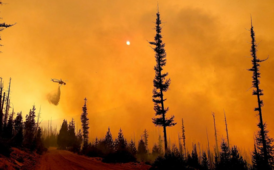
If you’ve suffered excessive livestock death losses and grazing or feed losses due to recent wildfires, you may be eligible for disaster assistance programs.
The Livestock Indemnity Program (LIP) offers payments to you for livestock death losses in excess of normal mortality due to adverse weather and the Emergency Assistance for Livestock, Honeybees, and Farm-Raised Fish Program (ELAP) provides emergency relief for losses due to feed or water shortages, disease, adverse weather, or other conditions, which are not adequately addressed by other disaster programs.
To participate in LIP, you will be required to provide verifiable documentation of death losses resulting from an eligible adverse weather event, and you must submit a notice of loss to your local FSA by the application deadline, which is March 2, 2026, for calendar year 2025 losses. To participate in ELAP, you must submit a notice of loss to your local FSA office no later than March 2, 2026, for calendar year 2025 losses.
You should record all pertinent information regarding livestock losses due to the eligible adverse weather or loss condition, including:
- Documentation of the number, kind, type, and weight range of livestock that have died, supplemented if possible by photographs or video records of ownership and losses;
- Rendering truck receipts by kind, type and weight - important to document prior to disposal;
- Beginning inventory supported by birth recordings or purchase receipts;
- Documentation from Animal Plant Health Inspection Service, Department of Natural Resources, or other sources to substantiate eligible death losses due to an eligible loss condition;
- Documentation that livestock were removed from grazing pastures due to an eligible adverse weather or loss condition;
- Costs of transporting livestock feed to eligible livestock, such as receipts for equipment rental fees for hay lifts and snow removal;
- Feed purchase receipts if feed supplies or grazing pastures are destroyed;
- Number of gallons of water transported to livestock due to water shortages.
For more information on these programs and documentation requirements, contact your County USDA Service Center or visit fsa.usda.gov/disaster.
Free basic coverage available for new and underserved loan applicants
Producers who apply for Farm Service Agency (FSA) farm loans will be offered the opportunity to enroll in the Noninsured Crop Disaster Assistance Program (NAP). NAP is available to producers who grow non-insurable crops and is especially important to fruit, vegetable, and other specialty crop growers. New, underserved and limited income specialty growers who apply for farm loans could qualify for basic loss coverage at no cost.
The basic disaster coverage protects at 55 percent of the market price for crop losses that exceed 50 percent of production. Covered “specialty” crops include vegetables, fruits, mushrooms, floriculture, ornamental nursery, aquaculture, turf grass, ginseng, honey, syrup, hay, forage, grazing and energy crops. FSA allows beginning, underserved or limited income producers to obtain NAP coverage up to 90 days after the normal application closing date when they also apply for FSA credit.
Producers can also protect value-added production, such as organic or direct market crops, at their fair market value in those markets. Targeted underserved groups eligible for free or discounted coverage include American Indians or Alaskan Natives, Asians, Blacks or African Americans, Native Hawaiians or other Pacific Islanders, Hispanics, and women.
FSA offers a variety of loan products, including farm ownership loans, operating loans and microloans that have a streamlined application process.
NAP coverage is not limited to FSA borrowers, beginning, limited resource, or underserved farmers. Any producer who grows eligible NAP crops can purchase coverage. To learn more, contact your County USDA Service Center or visit fsa.usda.gov/nap or fsa.usda.gov/farmloans.
The U.S. Department of Agriculture (USDA) Farm Service Agency (FSA) reminds foreign investors with an interest in agricultural land in the United States that they are required to report their land holdings and transactions to USDA.
The Agricultural Foreign Investment Disclosure Act (AFIDA) requires foreign investors who buy, sell or hold an interest in U.S. agricultural land to report their holdings and transactions to the USDA. Foreign investors must file AFIDA Report Form FSA-153 with the FSA county office in the county where the land is located. Large or complex filings may be handled by AFIDA headquarters staff in Washington, D.C.
According to CFR Title 7 Part 781, any foreign person who holds an interest in U.S. agricultural land is required to report their holdings no later than 90 days after the date of the transaction.
Foreign investors should report holdings of agricultural land totaling 10 acres or more used for farming, ranching or timber production, and leaseholds on agricultural land of 10 or more years. Tracts totaling 10 acres or less in the aggregate, and which produce annual gross receipts in excess of $1,000 from the sale of farm, ranch, forestry or timber products, must also be reported. AFIDA reports are also required when there are changes in land use, such as from agricultural to nonagricultural use. Foreign investors must also file a report when there is a change in the status of ownership.
The information from AFIDA reports is used to prepare an annual report to Congress. These annual reports to Congress, as well as more information, are available on the FSA AFIDA webpage.
Assistance in completing the FSA-153 report may be obtained from the local FSA office. For more information regarding AFIDA or FSA programs, contact your County FSA office at phone or visit farmers.gov.
Farm Service Agency (FSA) loans require applicants to have a satisfactory credit history. A credit report is requested for all FSA direct farm loan applicants. These reports are reviewed to verify outstanding debts, see if bills are paid timely and to determine the impact on cash flow.
Information on your credit report is strictly confidential and is used only as an aid in conducting FSA business.
Our farm loan staff will discuss options with you if you have an unfavorable credit report and will provide a copy of your report. If you dispute the accuracy of the information on the credit report, it is up to you to contact the issuing credit report company to resolve any errors or inaccuracies.
There are multiple ways to remedy an unfavorable credit score:
- Make sure to pay bills on time
- Setting up automatic payments or automated reminders can be an effective way to remember payment due dates.
- Pay down existing debt
- Keep your credit card balances low
- Avoid suddenly opening or closing existing credit accounts
FSA’s farm loan staff will guide you through the process, which may require you to reapply for a loan after improving or correcting your credit report.
For more information on FSA farm loan programs, contact your County USDA Service Center or visit fsa.usda.gov.
As snow disappears on the mountains, wildflowers are taking over. Looking back snowpacks in water year 2025 were a mixed bag across the state. On April 1, eastern Sierra and northern Nevada snowpacks were generally near or above normal. The same wasn’t true in southern Nevada, where SNOTELs in the Spring Mountains had already melted out on April 1. By May 1, below normal precipitation and above normal temperatures in April led to rapid declines in snowpack percentages in northeastern Nevada, as well as moderate declines in eastern and western Nevada and the eastern Sierra. With June 1 marking the beginning of meteorological summer, snowpacks in the eastern Sierra and across Nevada now only persist at high elevations, if at all. Streamflow has likely already peaked in many watersheds and is progressing to overall recession, except where reservoir storage sustains flows.
Our staff has already been busy with summer maintenance at SNOwpack TELemetry (SNOTEL) sites in the Sierra since early May. We continue to upgrade snow depth and air temperature sensors and hope to have this project complete, for at least the eastern Sierra network, by early fall. The next Water Supply Outlook Report will be available in in early January 2026. Until then use the Current Conditions link on our website to access relevant data.
Streamflow Forecasts
The June 1 streamflow forecast can be accessed on our website: https://www.nrcs.usda.gov/nevada/snow-survey
These are the last streamflow forecasts the NRCS will be making this season. April through July forecast volumes have decreased statewide since the forecasts made on April 1. The main cause can be attributed to April and May precipitation in most basins being well below normal. This month most of the 50% exceedance forecasts for the remaining June-July period are in the 70-120% of median range. A few notable exceptions include the Little Truckee River below Boca Dam at 160% and Lake Powell Inflow at just 48%.
Snowpack
Periods of well above average temperatures in May further accelerated the uphill retreat of the snowpack in the eastern Sierra and throughout Nevada, leaving only select, high-elevation sites with snow remaining by June 1. In the eastern Sierra, only four SNOTELs still had snow at the beginning of June. Independence Lake SNOTEL, at 8,340ft in the Truckee Basin, maintained the most, with 64 inches of snow depth and 31.9 inches of snow water equivalent (SWE). That beat out the usual, high-elevation winner, the Leavitt Lake SNOTEL at 9,600 ft in the Walker Basin, which had 55 inches of snow depth and 29.0 inches of SWE. Across the rest of Nevada only two SNOTELs still had snow on June 1 and both are in the Upper Humboldt Basin. These include Lamoille Upper at 8,030 ft (16 inches of snow depth and 8.4 inches of SWE) and Robinson Lake at 9,200 ft (19 inches of snow depth). Keep in mind that above treeline terrain is not well represented by the SNOTEL network and those areas in the eastern Sierra, Ruby Mountains, and possibly other high elevation ranges in Nevada will likely maintain deep, persistent snow deposits into June or later.
Precipitation
Water year precipitation from October 1 through June 1 is 79-110% of median across the state. Precipitation in May was generally below normal, with the eastern Sierra and western Nevada at 34-53% of median, increasing to 60-93% of median across basins in northeastern Nevada. The highest monthly precipitation in the Ruby Mountains was measured at Corral Canyon and Green Mountain SNOTELs, with 118% and 148%. Green Mountain SNOTEL recorded 3.4 inches last month. Eastern Nevada, at 111% of median, had a wetter than normal month but the basin percentage was skewed by the Wheeler Peak SNOTEL, at 172% of median, where 3.1 inches of precipitation accumulated for the month. That may not do much to balance the water supply deficit around Wheeler Peak, as indicated by the early snow melt highlighted in the May 1 report but in the Great Basin every drop helps. The Spring Mountains also saw above normal precipitation in May at 143% of median. Hopefully monsoons bring additional rain to southern Nevada and the desert southwest this summer as this area endures drought conditions.
Reservoirs
June 1 storage amounts are above median for most reservoirs. See the following report for a summary:
https://nwcc-apps.sc.egov.usda.gov/basin-reports/?state=nv&hideReports=snow,prec,fcst&basin=state%20of%20nevada&month=June&year=2025
The contact list for NRCS offices in Nevada was updated 6/2/25 and can be found at https://www.nrcs.usda.gov/sites/default/files/2025-06/250602-nrcs-office-map-w-contacts_0.pdf
|
Acting State Executive Director
Katie Nuffer
775.834.0882
|
NRCS State Conservationist
Heidi Ramsey
775.857.8500
|
|
Acting District Director District 1 FSA
Katie Nuffer
775.834.0882
|
District Director District 2 FSA
Claire Kehoe
775.738.6445 x 106
|
|
Elko
Tamara Thompson, Acting CED - FSA
775.738.6445 x 106
Jaime Jasmine, DC - NRCS
775.738.8431 x 120
|
Ely
Chris Ward, CED - FSA
775.738.6445 x 106
Joe Noyes, Acting DC - NRCS
775.289.4065 x 105
|
|
Fallon
Krysta Roose, CED - FSA
775.423.5124 x 109
Albert Mulder, DC - NRCS
775.423.5124 x 114
|
Las Vegas
Dariya Zaporozhchenko,Urban Ag CED - FSA
702.407.1400
Jasmine Wilson, Urban Ag DC - NRCS
702.407.1400 x 6003
Jamie Gottilieb, DC-NRCS
775.623.5025 x 101
|
|
Lovelock
Ali Phillips, CED - FSA
775.273.2922 x 100
Chrisite Scilacci, Resource Conservationist - NRCS
775.857.8500
|
Minden
Carson Hicks, DC - NRCS
775.782.3661
Caliente
Amanda Wheatley, Range Managment Specialist - NRCS
775.726.3101
|
|
Winnemucca
Leah Mori, CED - FSA
775.623.5025 x 107
Morgan Weigand, Natural Resource Specialist - NRCS
775.623.5025 X 120
|
Yerington
Julie Thompson, CED - FSA
775.463.2265
Jessica Gwerder, Acting District Conservationist- NRCS
775.463.2265
|
|