
Licking County USDA News - May 2025
In This Issue:
FSA accepting offers for both the General and Continuous CRP
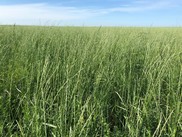
USDA announced several Conservation Reserve Program (CRP) enrollment opportunities for agricultural producers and landowners. USDA’s Farm Service Agency (FSA) is accepting offers for both the General and Continuous CRP through Friday June 6, 2025.
CRP, USDA’s flagship conservation program, celebrates its 40th anniversary this year. For four decades, CRP has provided financial and technical support to agricultural producers and landowners who place unproductive or marginal cropland under contract for 10-15 years and who agree to voluntarily convert the land to beneficial vegetative cover to improve water quality, prevent soil erosion and support wildlife habitat. The American Relief Act, 2025, extended provisions for CRP through Sept. 30, 2025.
General CRP (Signup 64)
Agricultural producers and landowners submit offers for General CRP through a competitive bid process. Offers are ranked and scored, by FSA, using nationally established environmental benefits criteria. USDA will announce accepted offers once ranking and scoring for all offers is completed. In addition to annual rental payments, approved General CRP participants may also be eligible for cost-share assistance to establish long-term, resource-conserving vegetative cover.
Continuous CRP (Signup 63)
Unlike General CRP, Continuous CRP offers are not subject to a competitive bid process. To ensure enrolled acres do not exceed the current statutory cap of 27 million acres, FSA is accepting Continuous CRP offers on a first-come, first-served basis through June 6. However, should allotted CRP acreage remain available following the June 6 deadline, FSA will accept continuous CRP offers from interested landowners through July 31, 2025, and may be subsequently considered for acceptance, in batches, if it’s determined that the offered acres support USDA’s conservation priorities.
Continuous CRP participants voluntarily offer environmentally sensitive lands, typically smaller parcels than offered through General CRP including wetlands, riparian buffers, and varying wildlife habitats. In return, they receive annual rental payments and cost-share assistance to establish long-term, resource-conserving vegetative cover.
Continuous CRP enrollment options:
-
State Acres for Wildlife Enhancement Initiative: Restores vital habitat in order to meet high-priority state wildlife conservation goals.
-
Highly Erodible Land Initiative: Producers and landowners can enroll in CRP to establish long-term cover on highly erodible cropland that has a weighted erodibility index greater than or equal to 20.
-
Clean Lakes, Estuaries and Rivers (CLEAR) Initiative: Prioritizes water quality practices on the land that, if enrolled, will help reduce sediment loadings, nutrient loadings, and harmful algal blooms. The vegetative covers also contribute to increased wildlife populations.
-
CLEAR30 (a component of the CLEAR Initiative): Offers additional incentives for water quality practice adoption and can be accessed in 30-year contracts.
-
Conservation Reserve Enhancement Program: Addresses high priority conservation objectives of states and Tribal governments on agricultural lands in specific geographic areas.
Grassland and Expiring CRP Acres
FSA will announce dates for Grassland CRP signup in the near future.
Additionally, landowners with acres enrolled in CRP set to expire Sept. 30, 2025, can offer acres for re-enrollment beginning today. A producer can offer to enroll new acres into CRP and also offer to re-enroll any acres expiring Sept. 30, 2025.
For more information on CRP participant and land eligibility, approved conservation practices and detailed program fact sheets, visit FSA’s CRP webpage.
More Information
Interested producers should apply through the FSA at their local USDA Service Center.
Signed into law in 1985, CRP is one of the largest voluntary private-lands conservation programs in the United States. Originally intended to primarily control soil erosion and potentially stabilize commodity prices by taking marginal lands out of production, the program has evolved over the years, providing many conservation and economic benefits.
|
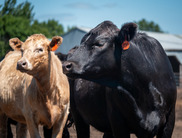
U.S. Secretary of Agriculture Brooke L. Rollins today announced the release of Congressionally mandated Emergency Livestock Relief Program (ELRP) payments to cover grazing losses due to eligible drought or wildfire events in 2023 and/or 2024. Secretary Rollins committed on May 7 to release these emergency payments by May 30, and today she is delivering on that commitment ahead of schedule.
The U.S. Department of Agriculture’s (USDA) Farm Service Agency (FSA) is leveraging existing Livestock Forage Disaster Program (LFP) data to streamline payment calculations and expedite relief. Emergency relief payments are automatically issued for producers who have an approved LFP application on file for 2023 and/or 2024.
The American Relief Act, 2025, provided funds for emergency relief payments. This program is the first of two programs authorized to assist with eligible losses suffered by livestock producers. FSA will announce additional ELRP assistance for other losses authorized by the Act, including flooding, later this summer.
ELRP Eligibility
ELRP payment eligibility requires livestock producers to have suffered grazing losses in a county rated by the U.S. Drought Monitor as having a D2 (severe drought) for eight consecutive weeks or a D3 (extreme drought) or higher level of drought intensity during 2023, 2024 or both calendar years, and have applied and been approved for LFP.
Additionally, producers whose permitted grazing on federally managed lands was reduced due to wildfire are also eligible for ELRP, if they applied and were approved for LFP in 2023, 2024 or both calendar years.
To streamline and simplify the delivery of ELRP benefits, producers are not required to submit an application for payment; however, they must have the following forms on file with FSA:
- CCC-853, Livestock Forage Disaster Program Application
-
Form AD-2047, Customer Data Worksheet.
-
Form CCC-902, Farm Operating Plan for an individual or legal entity.
-
Form CCC-901, Member Information for Legal Entities (if applicable).
- Form FSA-510, Request for an Exception to the $125,000 Payment Limitation for Certain Programs (if applicable). This form is required to be on file for both 2023 and 2024 to be eligible for the payment limitation exception.
-
SF-3881, Direct Deposit.
-
AD-1026, Highly Erodible Land Conservation (HELC) and Wetland Conservation (WC) Certification.
Most producers, especially those who have previously participated in FSA programs, likely have these forms on file. However, those who are uncertain and want to confirm the status of their forms, can contact their local FSA county office.
ELRP Payment Calculation
To expedite payments to eligible livestock producers, determine eligibility, and calculate an ELRP payment, FSA uses livestock inventories and drought-affected forage acreage or restricted animal units and grazing days due to wildfire already reported by the producer on the CCC-853, Livestock Forage Disaster Program Application form, for 2023, 2024 or both calendar years.
ELRP payments will be equal to the eligible livestock producer’s gross LFP calculated payment for the calendar year multiplied by an ELRP 2023 or 2024 payment factor to determine the total gross ELRP payments for 2023 and/or 2024. The initial payment factor for 2023 and 2024 ELRP payments is 35%. If additional funds remain, FSA may issue a second payment.
Supplemental Disaster Assistance Timeline
USDA is fully committed to expediting remaining disaster assistance provided by the American Relief Act, 2025. On May 7, we launched our 2023/2024 Supplemental Disaster Assistance public landing page where the status of USDA disaster assistance and block grant rollout timeline can be tracked. The page is updated regularly and accessible through fsa.usda.gov.
The Act also authorized $10 billion in economic loss assistance to producers of covered commodities based on 2024 planted and prevented planted acres. To date, USDA has delivered more than $7.7 billion to producers through the Emergency Commodity Assistance Program (ECAP). The ECAP deadline is Aug. 15, 2025. Contact your local FSA county office for information.
To learn more visit the ELRP website.
|
USDA Farm Service Agency (FSA) reminds you to report prevented planted and failed acres in order to establish or retain FSA program eligibility for some programs.
You should report crop acreage you intended to plant, but due to natural disaster, were prevented from planting. Prevented planting acreage must be reported on form CCC-576, Notice of Loss, no later than 15 calendar days after the final planting date as established by FSA and the Risk Management Agency (RMA).
The final planting date for Corn is June 5th and Soybeans is June 20th.
You have 15 days from these dates to file form CCC-576, Notice of Loss with the FSA office.
Additionally, if you have failed acres, you should also use form CCC-576, Notice of Loss, to report failed acres.
For hand-harvested crops and certain perishables, you must notify FSA of damage or loss through the administrative county office within 72 hours of the date of damage or loss first becomes apparent. This notification can be provided by filing a CCC-576, email, fax or phone. If you notify the County Office by any method other than by filing the CCC-576, you are still required to file a CCC-576, Notice of Loss, within the required 15 calendar days.
For losses on crops covered by the Noninsured Crop Disaster Assistance Program (NAP), you must file a Notice of Loss within 15 days of the occurrence of the disaster or when losses become apparent. You must timely file a Notice of Loss for failed acres on all crops including grasses.
To file a Notice of Loss, contact the Licking County Farm Service Agency at 740-670-5340 or visit www.fsa.usda.gov.

On April 27, 1935, Congress established the Soil Conservation Service, which would later become the Natural Resources Conservation Service (NRCS), as a permanent agency in the U.S. Department of Agriculture. For 90 years, NRCS has helped farmers, ranchers and forestland owners make critical investments in their operations and local communities to keep working lands working and boost agricultural production, while at the same time improving the quality of our air, water, soil, and wildlife habitats.
See our compilation of videos, stories and resources here.
|
The USDA Farm Service Agency’s (FSA) Direct Farm Ownership loans can help farmers and ranchers become owner-operators of family farms, improve and expand current operations, increase agricultural productivity, and assist with land tenure to save farmland for future generations.
There are three types of Direct Farm Ownership Loans: regular, down payment and joint financing. FSA also offers a Direct Farm Ownership Microloan option for smaller financial needs up to $50,000.
- Direct Farm Ownership Loans: Provide financing directly from the FSA for the purchase and development of farm property.
- Down Payment Program: Helps beginning farmers and ranchers by requiring only a 5% down payment. The maximum amount for the Down Payment Program is $300,150, as FSA can finance up to 45% and the repayment period for the loan is up to 20 years. FSA offers a reduced interest rate for this loan option.
- Joint Financing: FSA provides financing in conjunction with other lenders, covering up to 50% of the purchase cost. Joint financing allows FSA to provide more farmers and ranchers with access to capital. A commercial lender, a state program or the seller of the property being purchased, provides the balance of loan funds, with or without an FSA guarantee. The maximum loan amount for a joint financing loan is $600,000, and the repayment period for the loan is up to 40 years. FSA offers a reduced interest rate for this loan option.
The operation must be an eligible farm enterprise. Farm Ownership loan funds cannot be used to finance nonfarm enterprises, and all applicants must be able to meet general eligibility requirements. Loan applicants are also required to have participated in the business operations of a farm or ranch for at least three years out of the 10 years prior to the date the application is submitted. The applicant must show documentation that their participation in the business operation of the farm or ranch was not solely as a laborer.
For more information about farm loans, contact the Farm Loan Team at 740-454-2824.
Top of page
|






