
Alaska State FSA May Newsletter - 27 June 2025
In This Issue:
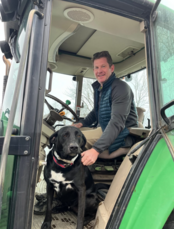
Today marks the fourth week I have been on the job as the State Executive Director for the Farm Service Agency in Alaska. This past month has been a whirlwind of meetings and training on the programs available for Alaska Agriculture producers. I am looking forward to meeting you all and doing the work to support Alaskan agriculture. See you in the field.
Arthur Keyes
arthur.keyes@usda.gov
(907)761-7750
The Palmer FSA staff will be in the Wasilla NRCS office every Thursday from 8:30am-4pm.
The Delta Junction office will be open:
Monday, Wednesday & Friday- 8:00am-4:30pm
Tuesday, Thursday- 8:00am-12:00pm;
12:00pm-4:30pm by appointment only.
Upcoming Office Closures:
Friday, July 4th for Independence Day
Upcoming Deadlines:
Tuesday, July 15th- 2025 Acreage Reporting Deadline for all other spring planted crops, CRP and perennial forage
Friday, August 15th- Emergency Commodity Assistance Program (ECAP) Deadline
Monday, September 1st- 2026 NAP Deadline for Floriculture (Peonies), Aquaculture and Turf Grass
Tuesday, September 30th- 2026 Acreage Reporting Deadline for Value-loss crops (including Peonies) and controlled environment crops (except nursery)
Tuesday, September 30th- 2026 NAP Deadline for Perennial Grass Forage and Honey
Click here to learn more about upcoming deadlines and ongoing programs
|
Top of page

Nominations are now being accepted for farmers and ranchers to serve on local U.S. Department of Agriculture (USDA) Farm Service Agency (FSA) county committees. These committees make important decisions about how federal farm programs are administered locally. All nomination forms for the 2025 election must be postmarked or received in the local FSA office by Aug. 1, 2025.
Elections for committee members will occur in certain Local Administrative Areas (LAA). LAAs are elective areas for FSA committees in a single county or multi-county jurisdiction and may include LAAs that are focused on an urban or suburban area.
Producers interested in serving on the FSA county committee can locate their LAA through a geographic information system locator tool available at fsa.usda.gov/elections and determine if their LAA is up for election by contacting their local FSA office.
Agricultural producers may be nominated for candidacy for the county committee if they:
-
Participate or cooperate in a USDA program.
-
Reside in the LAA that is up for election this year.
A cooperating producer is someone who has provided information about their farming or ranching operation to FSA, even if they have not applied or received program benefits.
Individuals may nominate themselves or others and qualifying organizations may also nominate candidates. USDA encourages all eligible producers to nominate, vote and hold office.
Nationwide, more than 7,700 dedicated members of the agriculture community serve on FSA county committees. The committees are made up of three to 11 members who serve three-year terms. Committee members play a key role in how FSA delivers disaster recovery, conservation, commodity and price support programs, as well as making decisions on county office employment and other agricultural issues.
Urban and Suburban County Committees
FSA urban county committees work to promote urban, indoor and other emerging agricultural production practices. Urban committee members are nominated and elected to serve by local urban producers in the same jurisdiction. Urban county committee members provide outreach to ensure urban producers understand USDA programs, serve as the voice of other urban producers and assist in program implementation that support the needs of growing urban communities.
Producers should contact their local FSA office today to register and find out how to get involved in their county’s election, including if their LAA is up for election this year. To be considered, a producer must be registered and sign an FSA-669A nomination form. This form and other information about FSA county committee elections are available at fsa.usda.gov/elections.
All nomination forms for the 2025 election must be postmarked or received in the local USDA Service Center by the Aug.1, 2025, deadline. Election ballots will be mailed to eligible voters in November 2025.
Top of page
Producers are encouraged to call their local FSA office to schedule an appointment to ensure maximum use of their time and to make sure FSA staff is available to tend to their important business needs. Please call your local FSA office ahead to set an appointment and to discuss any records or documentation that might be needed during your appointment. To find your local FSA office, visit farmers.gov/working-with-us/service-center-locator.
Top of page
Program payments may be limited by direct attribution to individuals or entities. A legal entity is defined as an entity created under Federal or State law that owns land or an agricultural commodity, product or livestock.
Through direct attribution, payment limitation is based on the total payments received by a person or legal entity, both directly and indirectly.
Payments and benefits under certain FSA programs are subject to some or all of the following:
- payment limitation by direct attribution (including common attribution)
- payment limitation amounts for the applicable programs
- substantive change requirements when a farming operation adds persons, resulting in an increase in persons to which payment limitation applies
- actively engaged in farming requirements
- cash-rent tenant rule
- foreign person rule
- average AGI limitations
- programs subject to AGI limitation
No program benefits subject to payment eligibility and limitation will be provided until all required forms for the specific situation are provided and necessary payment eligibility and payment limitation determinations are made.
Payment eligibility and payment limitation determinations may be initiated by the County Committee or requested by the producer.
Statutory and Regulatory rules require persons and legal entities, provide the names and Tax Identification Numbers (TINs) for all persons and legal entities with an ownership interest in the farming operation to be eligible for payment.
Payment eligibility and payment limitation forms submitted by persons and legal entities are subject to spot check through FSA’s end-of-year review process.
Persons or legal entities selected for end-of-year review must provide the County Committee with operating loan documents, income and expense ledgers, canceled checks for all expenditures, lease and purchase agreements, sales contracts, property tax statements, equipment listings, lease agreements, purchase contracts, documentation of who provided actual labor and management, employee time sheets or books, crop sales documents, warehouse ledgers, gin ledgers, corporate or entity papers, etc.
A finding that a person or legal entity is not actively engaged in farming results in the person or legal entity being ineligible for any payment or benefit subject to the actively engaged in farming rules.
Noncompliance with AGI provisions, either by exceeding the applicable limitation or failure to submit a certification and consent for disclosure statement, will result in payment ineligibility for all program benefits subject to AGI provisions. Program payments are reduced in an amount that is commensurate with the direct and indirect interest held by an ineligible person or legal entity in any legal entity, general partnership, or joint operation that receives benefits subject to the average AGI limitations.
If any changes occur that could affect an actively engaged in farming, cash-rent tenant, foreign person, or average Adjusted Gross Income (AGI) determination, producers must timely notify the County FSA Office by filing revised farm operating plans and/or supporting documentation, as applicable. Failure to timely notify the County Office may adversely affect payment eligibility.
Top of page
Flowing grain in a storage bin or gravity-flow wagon is like quicksand — it can kill quickly. It takes less than five seconds for a person caught in flowing grain to be trapped.
The mechanical operation of grain handling equipment also presents a real danger. Augers, power take offs, and other moving parts can grab people or clothing.
These hazards, along with pinch points and missing shields, are dangerous enough for adults; not to mention children. It is always advisable to keep children at a safe distance from operating farm equipment. Always use extra caution when backing or maneuvering farm machinery. Ensure everyone is visibly clear and accounted for before machinery is engaged.
FSA wants all farmers to have a productive crop year and that begins with putting safety first.
Top of page
NAP provides financial assistance to you for crops that aren’t eligible for crop insurance to protect against lower yields or crops unable to be planted due to natural disasters including freeze, hail, excessive moisture, excessive wind or hurricanes, flood, excessive heat and qualifying drought (includes native grass for grazing), among others.
To receive payment, you had to purchase NAP coverage for 2025 crops and file a notice of loss the earlier of 15 days of the occurrence of the disaster or when losses become apparent or 15 days of the final harvest date. For hand-harvested crops and certain perishable crops, you must notify FSA within 72 hours of when a loss becomes apparent.
Eligible crops must be commercially produced agricultural commodities for which crop insurance is not available, including perennial grass forage and grazing crops, fruits, vegetables, mushrooms, floriculture, ornamental nursery, aquaculture, turf grass, ginseng, honey, syrup, bioenergy, and industrial crops.
For more information on NAP, contact your Northern County USDA Service Center at (907)895-4242 ext. 2 or Southern County FSA Office at (907)761-7738 or visit fsa.usda.gov.
Top of page
If you have experienced delays in receiving Agriculture Risk Coverage (ARC) and Price Loss Coverage (PLC) payments, Loan Deficiency Payments (LDPs) and Market Gains on Marketing Assistance Loans (MALs), it may be because you have not filed form CCC-941, Adjusted Gross Income Certification.
If you don’t have a valid CCC-941 on file for the applicable crop year you will not receive payments. All farm operator/tenants/owners who have not filed a CCC-941 and have pending payments should IMMEDIATELY file the form with their recording county FSA office. Farm operators and tenants are encouraged to ensure that their landowners have filed the form.
FSA can accept the CCC-941 for 2018, 2019, 2020, 2021, 2022, 2023, 2024 and 2025. Unlike the past, you must have the CCC-941 certifying your AGI compliance before any payments can be issued.
Top of page
The Farm Loan team in Alaska are already working on operating loans and ask potential borrowers to submit their requests early so they can be timely processed. The farm loan team can help determine which loan programs are best for applicants.
FSA offers a wide range of low-interest loans that can meet the financial needs of any farm operation for just about any purpose. The traditional farm operating and farm ownership loans can help large and small farm operations take advantage of early purchasing discounts for spring inputs as well expenses throughout the year.
Microloans are a simplified loan program that will provide up to $50,000 for both Farm Ownership and Operating Microloans to eligible applicants. These loans, targeted for smaller and non-traditional operations, can be used for operating expenses, starting a new operation, purchasing equipment, and other needs associated with a farming operation. Loans to beginning farmers and members of underserved groups are a priority.
Other types of loans available include:
Marketing Assistance Loans allow producers to use eligible commodities as loan collateral and obtain a 9-month loan while the crop is in storage. These loans provide cash flow to the producer and allow them to market the crop when prices may be more advantageous.
Farm Storage Facility Loans can be used to build permanent structures used to store eligible commodities, for storage and handling trucks, or portable or permanent handling equipment. A variety of structures are eligible under this loan, including bunker silos, grain bins, hay storage structures, and refrigerated structures for vegetables and fruit. A producer may borrow up to $500,000 per loan.
Top of page
In this Ask the Expert, Tina Mellinger answers questions about Farm Service Agency (FSA) Youth Loans. Tina is a Farm Loan Manager in Ohio and has worked for FSA for 37 years. Her FSA farm loan team makes an average of around 50 loans each year, with around five of those being Youth Loans. Her entire career has been centered around loan-making. At the beginning of her career, she worked for Rural Development making home loans.
Tina grew up on a 50-cow dairy farm in southeastern Ohio. She earned an animal science and ag education degree from the Ohio State University.
To read the full blog, visit farmers.gov/blog/ask-expert-qa-on-youth-loans-with-tina-mellinger.
Top of page
Alaska State Farm Service Agency
|
800 E Palmer-Wasilla Hwy., Suite 216
Palmer, AK 99645
Phone: 907-761-7738
Fax: 855-638-4864
|
|
Alaska FSA Website
|
|
Northern County FSA Service Center
PO BOX 585
Delta Junction AK 99737
Phone: 907-895-4242 ext. 2
Fax: 855-711-9095
Email: akdeltajun-fsa@usda.gov
Northern County Committee
Steve Helkenn- Committee Chair
Becky Hammond- Vice Chair
Matt Bates- Member
|
Southern County FSA Office
800 E Palmer-Wasilla Hwy., Ste 216
Palmer AK 99645
Phone: 907-761-7773
Fax: 855-638-4864
Email: akpalmer-fsa@usda.gov
Southern County Committee
Carol Symonds- Committee Chair
Ina Jones- Vice Chair
Abby Ala- Member
|
|
Hours: Monday-Friday 8:00 a.m.- 4:30 p.m.
|
|






