Nevada May USDA Newsletter
In This Issue:
 |
All producers are encouraged to contact their local FSA office for more information on the final planting date for specific crops. The final planting dates vary by crop; planting period and county so please contact your local FSA office for a list of county-specific planting deadlines. The timely planting of a crop, by the final planting date, may prevent loss of program benefits.
Farmers can use USDA farm ownership microloans to buy and improve property. These microloans are especially helpful to beginning or underserved farmers, U.S. veterans looking for a career in farming, and those who have small and mid-sized farming operations. Microloans have helped farmers and ranchers with operating costs, such as feed, fertilizer, tools, fencing, equipment, and living expenses since 2013.
Microloans can also help with farmland and building purchases and soil and water conservation improvements. FSA designed the expanded program to simplify the application process, expand eligibility requirements and expedite smaller real estate loans to help farmers strengthen their operations. Microloans provide up to $50,000 to qualified producers and can be issued to the applicant directly from the USDA Farm Service Agency (FSA).
To learn more about the FSA microloan program, contact your County USDA Service Center or visit fsa.usda.gov/microloans.
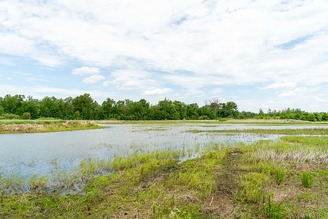
Landowners and operators are reminded that in order to receive payments from USDA, compliance with Highly Erodible Land (HEL) and Wetland Conservation (WC) provisions are required. Farmers with HEL determined soils are reminded of tillage, crop residue, and rotation requirements as specified per their conservation plan. Producers are to notify the USDA Farm Service Agency prior to breaking sod, clearing land (tree removal), and of any drainage projects (tiling, ditching, etc.) to ensure compliance. Failure to update certification of compliance, with form AD-1026, triggering applicable HEL and/or wetland determinations, for any of these situations, can result in the loss of FSA farm program payments, FSA farm loans, NRCS program payments, and premium subsidy to Federal Crop Insurance administered by RMA.
USDA’s Farm Service Agency (FSA) has implemented pre-authorized debit (PAD) for Farm Loan Program (FLP) borrowers. PAD is a voluntary and alternative method for making weekly, bi-weekly, monthly, quarterly, semi-annual or annual payments on loans.
PAD payments are pre-authorized transactions that allow the National Financial and Accounting Operations Center (NFAOC) to electronically collect loan payments from a customer’s account at a financial institution.
PAD may be useful if you use nonfarm income from regular wages or salary to make payments on loans or adjustment offers or for payments from seasonal produce stands. PAD can only be established for future payments.
To request PAD, customers, along with their financial institution, must fill out form RD 3550-28. This form has no expiration date, but a separate form RD 3550-28 must be completed for each loan to which payments are to be applied. A fillable form can be accessed on the USDA Rural Development (RD) website at rd.usda.gov/publications/regulations-guidelines. Click forms and search for “Form 3550-28.”
If you have a “filter” on the account at your financial institution, you will need to provide the financial institution with the following information: Origination ID: 1220040804, Agency Name: USDA RD DCFO.
PAD is offered by FSA at no cost. Check with your financial institution to discuss any potential cost. Preauthorized debit has no expiration date, but you can cancel at any time by submitting a written request to your local FSA office. If a preauthorized debit agreement receives three payment rejections within a three-month period, the preauthorized debit agreement will be cancelled by FSA. The payment amount and due date of your loan is not affected by a cancellation of preauthorized debit. You are responsible to ensure your full payment is made by the due date.
For more information about PAD, contact your County USDA Service Center at or visit fsa.usda.gov.
Farm Service Agency (FSA) farm loans are considered progression lending. Unlike loans from a commercial lender, FSA loans are intended to be temporary in nature. Our goal is to help you graduate to commercial credit, and our farm loan staff is available to help borrowers through training and credit counseling.
The FSA team will help borrowers identify their goals to ensure financial success. FSA staff will advise borrowers on developing strategies and a plan to meet your goals and graduate to commercial credit. FSA borrowers are responsible for the success of their farming operation, but FSA staff will help in an advisory role, providing the tools necessary to help you achieve your operational goals and manage your finances.
For more information on FSA farm loan programs, contact your County USDA Service Center at or visit fsa.usda.gov.
Many Farm Service Agency (FSA) programs require all program participants, either individuals or legal entities, to be “actively engaged in farming.” This means participants provide a significant contribution to the farming operation, whether it is capital, land, equipment, active personal labor and/or management. For entities, each partner, stockholder or member with an ownership interest, must contribute active personal labor and/or management to the operation on a regular basis that is identifiable and documentable as well as separate and distinct from contributions of any other member. Members of joint operations must have a share of the profits or losses from the farming operation commensurate with the member’s contributions to the operation and must make contributions to the farming operation that are at risk for a loss, with the level of risk being commensurate with the member’s claimed share on the farming operation.
Joint operations comprised of non-family members or partners, stockholders or persons with an ownership in the farming operation must meet additional payment eligibility provisions. Joint operations comprised of family members are exempt from these additional requirements. For 2016 and subsequent crop years, non-family joint operations can have one member that may use a significant contribution of active personal management
exclusively to meet the requirements to be determined “actively engaged in farming.” The person or member will be defined as the farm manager for the purposes of administering these management provisions.
Non-family joint operations may request to add up to two additional managers for their farming operation based on the size and/or complexity of the operation. If additional farm managers are requested and approved, all members who contribute management are required to complete form CCC-902MR, Management Activity Record. The farm manager should use the form to record management activities including capital, labor and agronomics, which includes crop selection, planting decisions, acquisition of inputs, crop management and marketing decisions. One form should be used for each month and the farm manager should enter the number of hours of time spent for each activity under the date of the month the actions were completed. The farm manager must also document if each management activity was completed on the farm or remotely.
The records and supporting business documentation must be maintained and timely made available for review by the appropriate FSA reviewing authority, if requested.
If the farm manager fails to meet these requirements, their contribution of active personal management to the farming operation for payment eligibility purposes will be disregarded and their payment eligibility status will be re-determined for the applicable program year.
In some instances, additional persons or members of a non-family member joint operation who meet the definition of farm manager may also be allowed to use such a contribution of active personal management to meet the eligibility requirements. However, under no circumstances may the number of farm managers in a non-family joint operation exceed a total of three in any given crop and program year.
 |
|
|
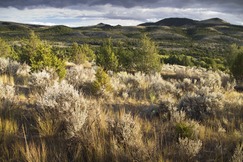
USDA’s Working Lands for Wildlife initiative recently unveiled the latest sagebrush science through a special issue of the 2024 Journal of Rangeland Ecology & Management. A group of experts from across the sagebrush biome, came together to publish the Sagebrush Conservation Design. The design is a roadmap that identifies the last, best, ecologically intact sagebrush areas to safeguard and also analyzes the largest threats degrading the biome today. Learn more about how the Sagebrush Conservation Design is providing a roadmap for diverse stakeholders to proactively conserve the sagebrush biome in the American West at https://sagebrushconservation.org/.
Carrie-Ann Houdeshell is a Grazing Land Co-Lead for the Conservation Effects Assessment Project (CEAP), an effort led by USDA’s Natural Resources Conservation Service (NRCS) to evaluate and inform voluntary conservation across the nation’s working lands. In this Ask the Expert, Carrie-Ann answers questions about recent findings on three key grazing land conservation practices, new resources to assist data-driven conservation decision making across the nation’s non-federal grazing land and federal rangeland, and NRCS programs and services to support ranchers and other land managers in pursuing voluntary conservation.
Let’s start with the basics: When we talk about “grazing land,” what is included?
Grazing land is a collective term that includes rangeland, pastureland, grazed forests, native and naturalized pasture, hayland, and grazed cropland. All 50 states have grazing land, and the national grazing land footprint is incredible – approximately 40 percent of all land across the United States. That includes more than 580 million acres of private land and more than 390 million acres of land managed by federal agencies.
Ranchers and other land managers use grazing land to feed and raise livestock, providing food and fiber for the United States and beyond. Through their stewardship, grazing land also delivers a suite of ecosystem services – like water conservation, wildlife habitat, and carbon sequestration – that benefit us all.
In the minds of many, a freshly tilled field is picturesque – cleaned and ordered for the next planting. But we’ve learned from studying soil that heavy tillage isn’t good. When soil is heavily tilled, the stalks and leaves remaining from the previous crop are chopped, disturbing the top several inches of soil. This “fluffing” action allows for better seed placement according to some, but soil scientists say not tilling leads to healthier, more drought-resistant soil.
USDA’s Natural Resources Conservation Service and other groups recommend producers to not till and leave the stalks and leaves, called residue, in place. By not tilling, soil organic matter is enhanced, increasing water infiltration and reducing erosion. No-till is a conservation practice that leaves the crop residue undisturbed from harvest.
Any tillage causes a flush of organic matter decomposition, resulting in loss of soil carbon. Tillage also breaks up soil aggregates, which are important for water infiltration, providing oxygen to plant roots, and reducing erosion.
Healthy soils cycle water and nutrients more efficiently. And they function better, enabling them to buffer against extreme drought and flooding. Plus, they reduce soil loss into waterways, which can cause problems for water quality.
Good management of field residue can increase efficiency of irrigation and control erosion. No-till can be used for many crops in almost any soil and can save producers labor costs and fuel. It’s a sound investment for the environment and the farm.
A hybrid State Technical Committee meeting will be held on May 19, 2025 from 9 a.m. to 12:30 p.m. This committee serves in an advisory capacity on technical matters related to NRCS programs. The agenda and additional information, including the link to the meeting, is on the NRCS Nevada State Technical Committee website https://www.nrcs.usda.gov/state-offices/nevada/technical-committee
If you have questions please reach out to Chris Rose, Partnership Coordinator, at christopher.rose@usda.gov.
|
Acting State Executive Director
Katie Nuffer
775.834.0882
|
NRCS State Conservationist
Heidi Ramsey
775.857.8500
|
|
Acting District Director District 1 FSA
Katie Nuffer
775.834.0882
|
District Director District 2 FSA
Claire Kehoe
775.738.6445 x 106
|
|
Elko
Tamara Thompson, Acting CED - FSA
775.738.6445 x 106
Jaime Jasmine, DC - NRCS
775.738.8431 x 120
|
Ely
Chris Ward, CED - FSA
775.738.6445 x 106
Joe Noyes, Acting DC - NRCS
775.289.4065 x 105
|
|
Fallon
Krysta Roose, CED - FSA
775.423.5124 x 109
Albert Mulder, DC - NRCS
775.423.5124 x 114
|
Las Vegas
Dariya Zaporozhchenko,Urban Ag CED - FSA
702.407.1400
Jasmine Wilson, Urban Ag DC - NRCS
702.407.1400 x 6003
Jamie Gottilieb, DC-NRCS
775.623.5025 x 101
|
|
Lovelock
Ali Phillips, CED - FSA
775.273.2922 x 100
Chrisite Scilacci, Resource Conservationist - NRCS
775.857.8500
|
Minden
Carson Hicks, DC - NRCS
775.782.3661
Caliente
Amanda Wheatley, Range Managment Specialist - NRCS
775.726.3101
|
|
Winnemucca
Leah Mori, CED - FSA
775.623.5025 x 107
Morgan Weigand, Natural Resource Specialist - NRCS
775.623.5025 X 120
|
Yerington
Julie Thompson, CED - FSA
775.463.2265
Angela Mushrush, Range Managment Specialist - NRCS
775.782.3661
|
|