
Saginaw County - April 28, 2025
In This Issue:
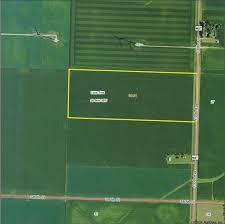
Maps are now available at the Saginaw County FSA Office for acreage reporting purposes. If you wish to receive your maps by e-mail, please call our office or email Tara Clapp at tara.clapp@usda.gov. Please see the following acreage reporting deadlines for Saginaw County:
- JULY15, 2025: Spring planted feed grains, forage, Conservation Reserve Program acreage, and most other crops
- AUGUST15, 2025: Cucumbers
In order to maintain program eligibility and benefits, you must file timely acreage reports. Failure to file an acreage report by the crop acreage reporting deadline may cause ineligibility for future program benefits. FSA will not accept acreage reports provided more than a year after the acreage reporting deadline.
Producers are encouraged to file their acreage reports as soon as planting is completed.
|
Top of page
The U.S. Department of Agriculture (USDA) is issuing up to $10 billion directly to agricultural producers through the Emergency Commodity Assistance Program (ECAP) for the 2024 crop year. Administered by USDA’s Farm Service Agency (FSA), ECAP will help agricultural producers mitigate the impacts of increased input costs and falling commodity prices.
Authorized by the American Relief Act, 2025, these economic relief payments are based on planted and prevented planted crop acres for eligible commodities for the 2024 crop year. To streamline and simplify the delivery of ECAP, FSA will begin sending pre-filled applications to producers who submitted acreage reports to FSA for 2024 eligible ECAP commodities soon after the signup period opens on March 19, 2025. Producers do not have to wait for their pre-filled ECAP application to apply. They can visit fsa.usda.gov/ecap to apply using a login.gov account or contact their local FSA office to request an application once the signup period opens.
Eligible Commodities and Payment Rates
The commodities below are eligible for these per-acre payment rates:
|
|
Eligible oilseeds:
|
|
|
|
|
|
|
|
|
|
|
|
|
- Upland cotton & Extra-long staple cotton - $84.74
|
|
- Long & medium grain rice - $76.94
|
|
|
|
|
|
|
|
|
|
|
|
|
|
|
|
|
|
|
|
Producer Eligibility
Eligible producers must report 2024 crop year planted and prevented planted acres to FSA on an FSA-578, Report of Acreage form. Producers who have not previously reported 2024 crop year acreage or filed a notice of loss for prevented planted crops must submit an acreage report by the Aug. 15, 2025, deadline. Eligible producers can visit fsa.usda.gov/ecap for eligibility and payment details.
Applying for ECAP
Producers must submit ECAP applications to their local FSA county office by Aug. 15, 2025. Only one application is required for all ECAP eligible commodities nationwide. ECAP applications can be submitted to FSA in-person, electronically using Box and One-Span, by fax or by applying online at fsa.usda.gov/ecap utilizing a secure login.gov account.
If not already on file for the 2024 crop year, producers must have the following forms on file with FSA:
-
Form AD-2047, Customer Data Worksheet.
-
Form CCC-901, Member Information for Legal Entities (if applicable).
-
Form CCC-902, Farm Operating Plan for an individual or legal entity.
-
Form CCC 943, 75 percent of Average Gross Income from Farming, Ranching, or Forestry Certification (if applicable).
-
AD-1026, Highly Erodible Land Conservation (HELC) and Wetland Conservation (WC) Certification.
-
SF-3881, Direct Deposit.
Except for the new CCC-943, most producers, especially those who have previously participated in FSA programs, likely have these forms on file. However, those who are uncertain and want to confirm the status of their forms or need to submit the new CCC-943, can contact their local FSA county office.
If a producer does not receive a pre-filled ECAP application, and they planted or were prevented from planting ECAP eligible commodities in 2024, they should contact their local FSA office.
ECAP Payments and Calculator
ECAP payments will be issued as applications are approved. Initial ECAP payments will be factored by 85% to ensure that total program payments do not exceed available funding. If additional funds remain, FSA may issue a second payment.
ECAP assistance will be calculated using a flat payment rate for the eligible commodity multiplied by the eligible reported acres. Payments are based on acreage and not production. For acres reported as prevented plant, ECAP assistance will be calculated at 50%.
For ECAP payment estimates, producers are encouraged to visit fsa.usda.gov/ecap to use the ECAP online calculator.
|
FSA and NRCS program applicants for benefits are required to submit a completed CCC-902 Farming Operation Plan and CCC-941 Average Gross Income (AGI) Certification and Consent to Disclosure of Tax Information for FSA to determine the applicant’s payment eligibility and establish the maximum payment limitation applicable to the program applicant.
Participants are not required to annually submit new CCC-902s for payment eligibility and payment limitation purposes unless a change in the farming operation occurs that may affect the previous determination of record. A valid CCC-902 filed by the participant is considered to be a continuous certification used for all payment eligibility and payment limitation determinations applicable for the program benefits requested.
Participants are responsible for ensuring that all CCC-902 and CCC-941 and related forms on file in the county office are updated, current, and correct. Participants are required to timely notify the county office of any changes in the farming operation that may affect the previous determination of record by filing a new or updated CCC-902 as applicable.
Changes that may require a new determination include, but are not limited to, a change of:
- Shares of a contract, which may reflect:
- A land lease from cash rent to share rent
- A land lease from share rent to cash rent (subject to the cash rent tenant rule
- A modification of a variable/fixed bushel-rent arrangement
- The size of the producer’s farming operation by the addition or reduction of cropland that may affect the application of a cropland factor
- The structure of the farming operation, including any change to a member's share
- The contribution of farm inputs of capital, land, equipment, active personal labor, and/or active personal management
- Farming interests not previously disclosed on CCC-902 including the farming interests of a spouse or minor child
- Certifications of average AGI are required to be filed annually for participation in an annual USDA program. For multi-year conservation contracts and NRCS easements, a certification of AGI must be filed prior to approval of the contract or easement and is applicable for the duration of the contract period.
Participants are encouraged to file or review these forms within the deadlines established for each applicable program for which program benefits are being requested.
Top of page
FSA is cleaning up our producer record database and needs your help. Please report any changes of address, zip code, phone number, email address or an incorrect name or business name on file to our office. You should also report changes in your farm operation, like the addition of a farm by lease or purchase. You should also report any changes to your operation in which you reorganize to form a Trust, LLC or other legal entity.
FSA and NRCS program participants are required to promptly report changes in their farming operation to the County Committee in writing and to update their Farm Operating Plan on form CCC-902.
To update your records, contact your Saginaw County USDA Service Center at 989-781-1720.
|
Top of page

Flowing grain in a storage bin or gravity-flow wagon is like quicksand — it can kill quickly. It takes less than five seconds for a person caught in flowing grain to be trapped.
The mechanical operation of grain handling equipment also presents a real danger. Augers, power take offs, and other moving parts can grab people or clothing.
These hazards, along with pinch points and missing shields, are dangerous enough for adults; not to mention children. It is always advisable to keep children at a safe distance from operating farm equipment. Always use extra caution when backing or maneuvering farm machinery. Ensure everyone is visibly clear and accounted for before machinery is engaged.
FSA wants all farmers to have a productive crop year and that begins with putting safety first.
|
Farm Service Agency (FSA) is committed to providing our farm loan borrowers the tools necessary to be successful. FSA staff will provide guidance and counsel from the loan application process through the borrower’s graduation to commercial credit. While it is FSA’s commitment to advise borrowers as they identify goals and evaluate progress, it is crucial for borrowers to communicate with their farm loan staff when changes occur. It is the borrower’s responsibility to alert FSA to any of the following:
- Any proposed or significant changes in the farming operation
- Any significant changes to family income or expenses
- The development of problem situations
- Any losses or proposed significant changes in security
If a farm loan borrower can’t make payments to suppliers, other creditors, or FSA on time, contact your farm loan staff immediately to discuss loan servicing options.
For more information on FSA farm loan programs, contact your Gratiot County USDA Service Center at 989-875-3900 or visit fsa.usda.gov.
|

Summer is the season for freshwater harmful algal blooms, which can produce toxins that are harmful to humans, livestock, working animals, and pets. The U.S. Department of Agriculture’s (USDA) Natural Resources Conservation Service (NRCS) has several conservation practices that may help farmers and ranchers protect animals and people by restricting access to contaminated water or providing alternate water sources.
The ABCs of HABs
Freshwater harmful algal blooms (HABs) are usually caused by rapid of blue-green algae (known as cyanobacteria) in water bodies such as lakes, ponds, and streams. These organisms can produce toxins (known as cyanotoxins) that are harmful to humans, livestock, working animals, and pets. Contacting or ingesting contaminated water (including water spray or mist) can result in irritation, illness, or even death.
Cyanobacteria are naturally found in water bodies, so they cannot be eradicated. Instead, it’s important to understand how and why blooms occur. Cyanobacterial blooms and their potential toxicity often are a result of excess nutrients, such as phosphorus and nitrogen, in water bodies. Excess nutrients can come from adjacent agricultural lands, livestock waste, and leaky septic systems, among other sources. HABs typically form in summer, when warm, nutrient-rich, stagnant waters and more frequent sunlight increase the opportunity for their growth.
Treatment of current HABs involves chemical, biological, or mechanical treatment targeted directly at the contaminated waters. Prevention of future HABs involves changing the conditions that favor cyanobacteria, including nutrient management of the surrounding land and trapping or treating nutrient losses to waterbodies.
Risks HABs pose to livestock, working animals, and pets
Symptoms* of cyanotoxin exposure in animals include:
- vomiting
- excessive salivation
- fatigue
- staggered walking
- difficulty breathing
- weakness
- convulsions
- liver failure
In severe cases, HAB poisoning can lead to death. Therefore, any potential intoxication needs to be immediately addressed by qualified professionals.
NRCS is not the authority on HAB symptoms in animals and humans. Please refer to the Centers for Disease Control (CDC) website for further information on HAB symptoms or contact your state or county health department.
Steps you can take if a potential exposure to cyanotoxins has occurred:
- Eliminate animal access to the suspected contaminated water source.
- Wash animals with clean water and monitor for symptoms of exposure to cyanotoxins. Isolate any animals exhibiting symptoms and seek veterinary care as soon as possible.
- An alternative source of livestock drinking water might be needed.
- Contact the appropriate state agency for sampling and testing guidance to test the water source for HABs and cyanotoxins. It is not safe for landowners to sample the water themselves without proper personal protective equipment and procedures.
- If a HAB occurs, there is potential for recurrence. Therefore, the waterbody should be monitored.
- Adopt conservation practices that reduce the risk of livestock exposure to HABs and prevent and reduce nutrient loading to waters to minimize the risk of future HABs occurrences.
Reduce livestock exposure to HABs
If HABs or cyanotoxins have been detected in a water body, preventing exposure by restricting access is key to ensuring the health and well-being of people, livestock, working animals and pets on the farm.
NRCS has several conservation practices that may be useful to exclude livestock from contaminated waters or provide alternative water sources. Some examples are:
- Fencing
- Pond
- Access control
- Water well
- Watering facility
For more information or assistance:
To learn more about how NRCS can help address HAB concerns or other natural resource concerns, visit the NRCS website or contact NRCS at your local USDA Service Center.
|
|






