
NRCS-Michigan Conservation Notes Newsletter - March/April 2025
 In This Issue:
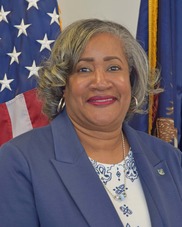
State Conservationist Diane Gray
I was honored to be selected as the 11th State Conservationist for NRCS-Michigan. I began my USDA career as a clerk-typist for Rural Development in my home state of Illinois. In 1986, I joined NRCS, and in 1995 my career took me to Michigan.
Over 40 years I have seen many changes in our agency including its name being changed from the Soil Conservation Service. Change is a constant, and our agency has only persevered and become stronger and better at what we do, helping people help the land. I look forward to meeting the challenges the future will bring. My optimism comes from working for NRCS-Michigan for more than 30 years and knowing that the people who make up this agency have met every challenge set before them.
This year marks the 90th anniversary of our agency, I hope the following brief history of NRCS will inspire you and that you will take pride in your contribution to our agency’s mission.
|
It is said that you can't really know where you're going until you know where you have been. Since April 27, 2025, marks the 90th anniversary of the Natural Resources Conservation Service (NRCS), I’d like to take you back to the official beginning.
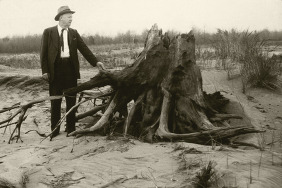
In 1935, the United States was in the middle of a man-made natural disaster now remembered as the Dust Bowl. High crop prices and a series of wet years in the 1920s led farmers to plow up native grasslands and plant crops on the usually arid Great Plains. By the 1930s, an unrelenting drought accompanied by merciless winds hit the area, particularly in the southern plains. As crops withered, the land, now bare of both crops and native vegetation to hold the soil, simply blew away. Huge dust clouds blew across the Great Plains, dumping midwestern soil on eastern cities and even on ships far out into the Atlantic Ocean. An ongoing series of severe dust storms in the early 30s destroyed farms, killed people and livestock, and contributed to the economic ruin and displacement of thousands of people who were forced to abandon their homes and farms.
In the midst of these storms, Hugh Hammond Bennett, the “father of soil conservation” led the US government’s nationwide effort to halt the “national menace” of unchecked erosion. Bennett campaigned for a coordinated attack against soil erosion long before the Dust Bowl era, having seen the threat posed by water erosion early in his career as a soil surveyor for the USDA's Bureau of Soils. He observed firsthand how unchecked sheet and rill erosion slowly degraded fields and pastures, reducing the land’s ability to sustain agricultural productivity and support the rural communities who depended on it for their lives and livelihoods. Moreover, he recognized soil as a strategic natural resource and that its wastage on private lands harmed not just farmers but the wider public and the nation as a whole. As the nation’s foremost advocate for a country-wide plan of research and action to attack the "national menace" of excessive soil erosion, he led the temporary Soil Erosion Service from 1933-1935.
|
On March 21, 1935, with the SES’s temporary funds set to expire soon, Bennett testified before Congress about the need for a permanent, national, interdisciplinary approach to combating excessive erosion. The same day, a major dust storm from the Midwest hit Washington, D.C., shrouding the capitol in a "clay colored veil." The arrival of this well-timed dust storm drove home the wisdom of Bennett's urging, and Congress moved quickly to pass legislation for a permanent conservation agency. Just over a month later, on April 27, the President signed the Soil Conservation Act (PL 74-46). The act created the Soil Conservation Service (SCS) at the United States Department of Agriculture and Hugh Hammond Bennett became its first Chief.
Since its creation as a permanent agency in 1935, the agency has developed wide-ranging technical solutions to help farmers and ranchers dramatically reduce soil erosion and to be good stewards of all our shared natural resources. Shortly after its founding, the agency expanded its scope beyond soil to include the conservation of water, wildlife, and a host of other natural resource concerns as the country’s lead voluntary conservation agency for private lands. To reflect this expansion, the agency was renamed the Natural Resources Conservation Service (NRCS) in 1994.
Today and into the future, we at NRCS are continuing Hugh Hammond Bennett’s legacy – helping people help the land – by implementing conservation practices to conserve air, water, soil, and habitat. In fact, many of the conservation activities the agency studied and refined in the days of Bennett such as terracing, cover and strip cropping, contour planting, grassed waterways and crop rotation, are practices that we still use today.
By the way, if you’re interested in learning more about our conservation practices and how they work today, check out the Conservation at Work video series. These videos shine a spotlight on farmers, ranchers, and forestland owners from across the United States who tell us their own conservation stories, and how practices are helping them protect and improve resources and save time and money. While many things have changed in the past 90 years, Bennett’s vision of a scientifically and technically rigorous, interdisciplinary agency that works with local partners to tailor conservation solutions to the land for the benefit of all Americans remains at the heart of this agency’s mission.
|
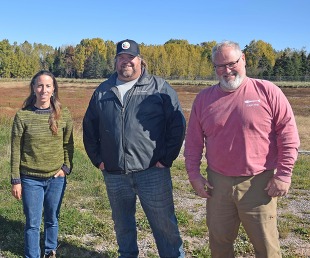
With the possible exception of pasties, no menu item is more iconic of Northern Michigan than whitefish. NRCS is assisting the Sault Ste. Marie Tribe of Chippewa Indians to help keep whitefish on the menu and in the waters surrounding Michigan.
Whitefish are an important resource for tribal fishermen. “There’s a big market for whitefish,” said Rusty Aikens, the tribe’s fisheries enhancement coordinator. Whitefish are more valuable to commercial fishermen than other harvested species like lake trout.
The tribe has been collecting and stocking whitefish eggs for seven years but only just started growing them in a rearing pond, said Aikens. They started raising whitefish in 2024, utilizing a rearing pond converted from a closed sanitary lagoon. Allowing the whitefish to grow from less than inch to over four inches in the rearing pond gives them a much higher chance of survival when they are released.
Pond raising whitefish is a new concept, said Aikens. He believes their facility is the only whitefish rearing pond operating in North America. Since the pond was not built to raise fish, NRCS is assisting the tribe with improvements to make it more suitable for its new purpose.
|
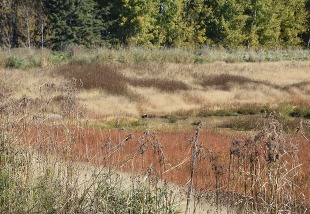
Currently the tribe uses nets to collect most of the 4-inch fish when it’s time for harvest. Planned improvements to the pond include a water control structure that will allow the pond to be drained faster and a grade stabilization structure to prevent erosion at the drain area. An access road for collecting the fish is also planned. Work will begin sometime after the fish are collected for stocking in June 2025.
Since raising whitefish before stocking is a new practice, it is a learning experience for the tribe’s fisheries division. The eggs are harvested from fish in Lake Huron in the fall and hatched at a tribal hatchery. Initially the eggs were hatching at the end of the year but were not transitioning well to eating food, said Aikens. By lowering the water temperature, the tribe is delaying the eggs hatching, making them more resilient.
Stocking whitefish has become a priority for Michigan’s American Indian tribes as the Great Lakes whitefish population has declined. Newly hatched whitefish feed on zooplankton, which are being depleted by invasive mussels that also live on the shallow reefs where whitefish hatch. Growing the whitefish to a larger size gives them an advantage because they can feed on food sources other than only zooplankton, Aikens said. The tribes are also experimenting with stocking both pond reared and newly hatched whitefish into tributaries where food is more abundant. The tribes are continuing to refine their methods to further improve the viability of stocked whitefish and expand their operations.
A video documenting the impact of invasive mussels on the Great Lakes ecosystem titled, All Too Clear, is available on YouTube.
|
Top of page
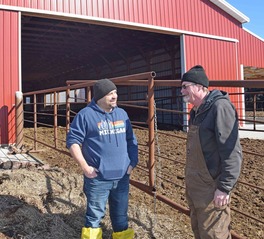
Like his father, and many others, Shiawassee County farmer Duane Leach is a part-time farmer. For producers who juggle an off-farm job, time and flexibility are valuable resources. Our soil, water, and air are also valuable resources and NRCS conservation programs help Leach conserve them all.
Leach farms over 1,000 acres of land in addition to raising around 45 head of beef cattle. He farms some of the same land his father did after moving from Pickford in the Upper Peninsula to work for General Motors. His job as a crop consultant for a local company requires him to make the most of his time. His most recent conservation practice with NRCS assistance will make managing animal waste from his operation easier.
Utilizing financial assistance from the Environmental Quality Incentives Program (EQIP), Leach had an animal waste storage facility built on his farm. The covered structure will prevent runoff and potential water contamination while cattle manure is waiting to be spread on crop fields.
“The problem with manure is logistics,” said Leach.
The facility will allow him to apply manure when conditions are optimal instead of when he has the time, said NRCS Soil Conservation Technician Greg Lienau. This means avoiding application on frozen ground or times when weather conditions may lead to runoff.
Another practice that saves Leach time is practicing no-till on his cropland. He has utilized no-till on nearly all his cropland for nearly 30 years. The biggest savings are time and fuel from utilizing the practice, he said. There are also soil health benefits from utilizing no-till including maintaining or increasing organic matter and improving biodiversity of beneficial soil organisms, no-till also greatly reduces soil erosion. Leach was an early adopter of no-till before financial assistance was available, now farmers wanting to convert to no-till can receive financial assistance through EQIP.
Leach has participated in NRCS conservation programs for decades, not only for his crop and livestock operation but also on forestland he manages. His participation in NRCS programs to implement practices including filter strips, cover crops, a forest management plan, and grade stabilization structures, helped his selection for the Conservation Stewardship Program (CSP).
Through CSP, Leach receives annual payments based on all the conservation practices he utilizes on his crop, livestock operation, and forestland. CSP requires participants to implement conservation enhancements in addition to the practices they already have in place. Leach has implemented enhancements to benefit wildlife and improve his forestland.
Leach has no plans to retire from farming but he may slow down by reducing his beef cattle herd. “This old boy is getting tired.”
|
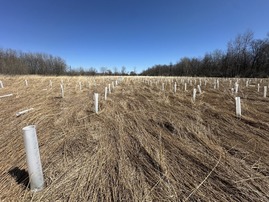
by Morgan Warda-Jennings, Area 4 Natural Resources Specialist
In April, Area 4 held Wetland Reserve Easement (WRE) training in Huron and Ingham counties on established easements. These sites were functional examples of wetland restorations, Compatible Use Authorizations (CUAs) and Operation and Maintenance (O&M) projects that showcase the collaboration between NRCS and the landowners to manage easements for ecological diversity.
Area 4, including counties in Southeast Michigan, leads the state in easement numbers with 162. These easements require annual monitoring from staff to ensure that program and landowner objectives are met. The trainings were designed for staff to learn the application process, review monitoring procedures, see in-field examples of installed practices, utilize GPS technology for site visits, hydric soils, wetland habitats, landowner perspectives, and more.
In Huron County, NRCS staff visited a 25-acre parcel that had a scheduled prescribed burn completed as site preparation for a 2,000-tree planting of white cedar, red maple, and pin oaks. O&M is a process that includes conservation planning and contracting along with collective efforts between the landowner, field office, area office and state office specialists.
Darcy Lipskey, district conservationist in Huron County, was highly involved in both organizing this field visit and with management efforts.
“We had ideal weather for a WRE training to showcase the soil features found in a site. It has a lot of uniqueness to it and the landowner is progressive on maintaining a site that has limited invasives, high plant diversity and promotes an environment appealing towards humans and animals. When our landowner first came to the office inquiring about planting trees on this tract, I hoped that we could match his goals with program policy. It was wonderful experiencing that vision come to life for the landowner and the future of this site.”
During the training, staff were able to ask questions of both the landowner and the district conservationist about their individual roles in bringing this project to fruition and the success of the practices.
|
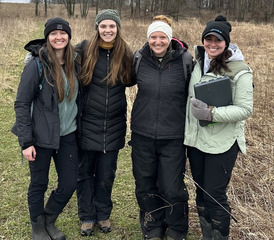
The second training was held at an easement in Ingham County that spans over 150 acres. This site offers deep open water habitat, microtopography, muck soils, water control structures, and vernal pools in forestland.
"The easement was an ideal example of an established, successful, and well-maintained wetland restoration site. It had varying examples of where successful management has taken place, and areas to brainstorm on how to further improve the site, providing invaluable context for how easement monitoring should take place. We are lucky to be able to work with such a dedicated landowner who is focused on improving his management and conservation techniques,” said Maria Weston who is currently the acting district conservationist for Ingham County and plays a key role in the monitoring of easements in the county.
Invasive species control is also a significant part of easement management to ensure long-term success and minimize the negative impact of a monoculture of, for example, phragmites. There is a shallow water feature on this property that phragmites dominates; the landowner and NRCS have a vested interest in working together to treat this area to allow for native vegetation to regenerate.
Both sites had an abundance of wildlife to observe including ducks, deer, geese, sandhill cranes and other marsh birds that were utilizing different habitat on the easements.
It was a great two days in the field enjoying easements, wildlife, and the company of NRCS staff and landowners. Thank you to the field office, area office, and state office (Angi Dietrich, easement program specialist) staff that helped facilitate event details and presented on the various topics of easement stewardship.
|
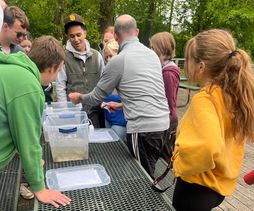
Western Michigan University in Kalamazoo is hosting the 2025 Michigan Envirothon State Competition that takes place May 14–16.
Approximately 13 high school teams from across the state will convene to demonstrate their knowledge and skills in forestry, agriculture, wildlife, aquatic ecology, energy, and soils. The event fosters environmental stewardship and is building the next generation of conservation leadership.
Michigan Envirothon is administered by the Michigan Association of Conservation Districts, a 501(C)3 non-profit organization. High school students from anywhere in Michigan are eligible to compete. Students or educators interested in competing in the event should contact their local conservation district.
|
Top of page

May
15 - Land Access Workshop for Beginning Farmers, 5:30 p.m. to 8:30 p.m., Kalamazoo Valley Community College Food Innovation Center - 224 E Crosstown Pkwy, Kalamazoo, for more information go to canr.msu.edu/events
22 - Urban Agriculture and Policy Workshop for Beginning Farmers, 5:30 p.m. to 8:30 p.m., Kalamazoo Valley Community College Food Innovation Center - 224 E Crosstown Pkwy, Kalamazoo, for more information go to canr.msu.edu/events
29 - Produce Safety Workshop for Beginning Farmers, 5:30 p.m. to 8:30 p.m., Kalamazoo Valley Community College Food Innovation Center - 224 E Crosstown Pkwy, Kalamazoo, for more information go to canr.msu.edu/events
|
June
1- 101 Mushroom Workshop, 11 a.m. to 1 p.m., Big Rapids Charter Township Hall - Big Rapids, $35 fee includes food and a mushroom grow kit, for more information go to www.mecostacd.org/whats-happening, or call 989/309-9229
1 - 103 Mushroom Workshop, 2 p.m. to 4 p.m., Big Rapids Charter Township Hall - Big Rapids, $35 fee includes food and take home bag, for more information go to www.mecostacd.org/whats-happening, or call 989/309-9229
5 - Soil Health Workshop for Beginning Farmers, 5:30 p.m. to 8:30 p.m., Kalamazoo Valley Community College Food Innovation Center - 224 E Crosstown Pkwy, Kalamazoo, for more information go to canr.msu.edu/events
12 - Integrated Pest Management Workshop for Beginning Farmers, 5:30 p.m. to 8:30 p.m., Kalamazoo Valley Community College Food Innovation Center - 224 E Crosstown Pkwy, Kalamazoo, for more information go to canr.msu.edu/events
19 - Pollinator Workshop for Beginning Farmers, 5:30 p.m. to 8:30 p.m., Kalamazoo Valley Community College Food Innovation Center - 224 E Crosstown Pkwy, Kalamazoo, for more information go to canr.msu.edu/events
26 - Farm Financial Management Workshop for Beginning Farmers, 5:30 p.m. to 8:30 p.m., Kalamazoo Valley Community College Food Innovation Center - 224 E Crosstown Pkwy, Kalamazoo, for more information go to canr.msu.edu/events
July
13 - Hands-On Composting Workshop, 11 a.m. to 1 p.m., Wheatland Township Park Pavilion - Remus, $35 registration fee includes lunch & composting bin, for more information go to www.mecostacd.org/whats-happening, or call 989/309-9229
Top of page
|








